


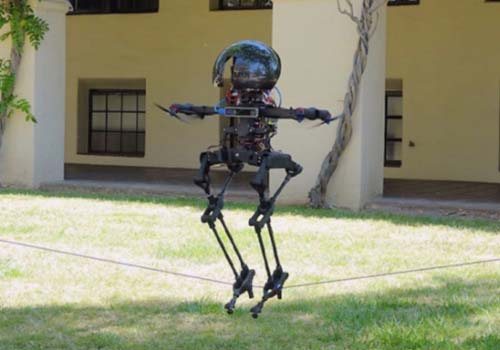
Den 9 oktober har forskare från California Institute of Technology utvecklat en tvåfotsrobot som kombinerar tvåbenta gång- och flygrörelser, vilket gör den extremt flexibel och kan utföra komplexa rörelser, som att glida. Skateboard, tightrope walking, etc.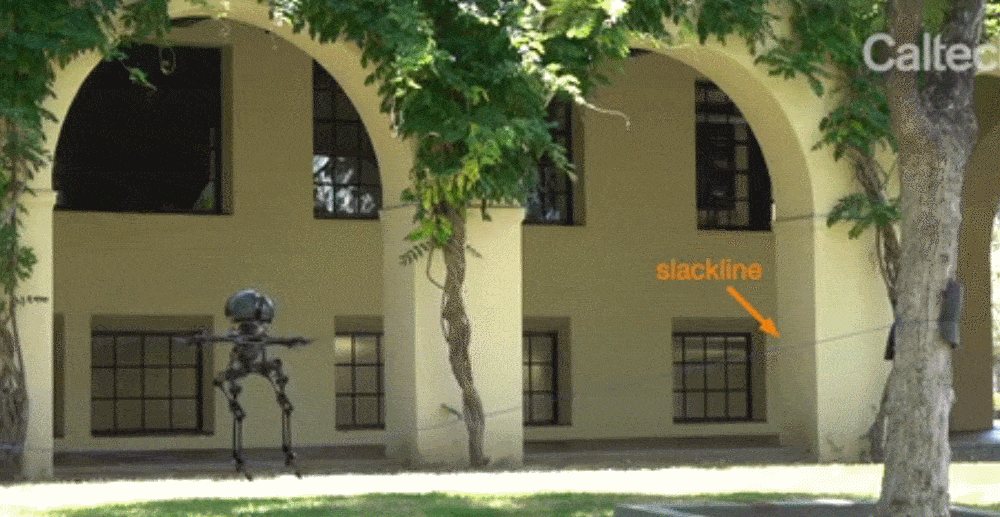
▲LEO walks along the rope tied between the treesThe design of this robot is inspired by the various behaviors of birds between walking and flying. The researchers named it LEONARDO (legs on the "legsonboarddrone" drone, or LEO for short). LEO can achieve fine control of its own balance through multi-articulated legs and propeller-based propellers.
The researchers stated in the research paper that LEO can perform various tasks that are difficult for humans and traditional robots to perform thanks to its hybrid motion capabilities. High-altitude operations will be one of the most suitable applications for LEO, such as the maintenance of high-voltage lines, and spray paint on high-altitude bridges.
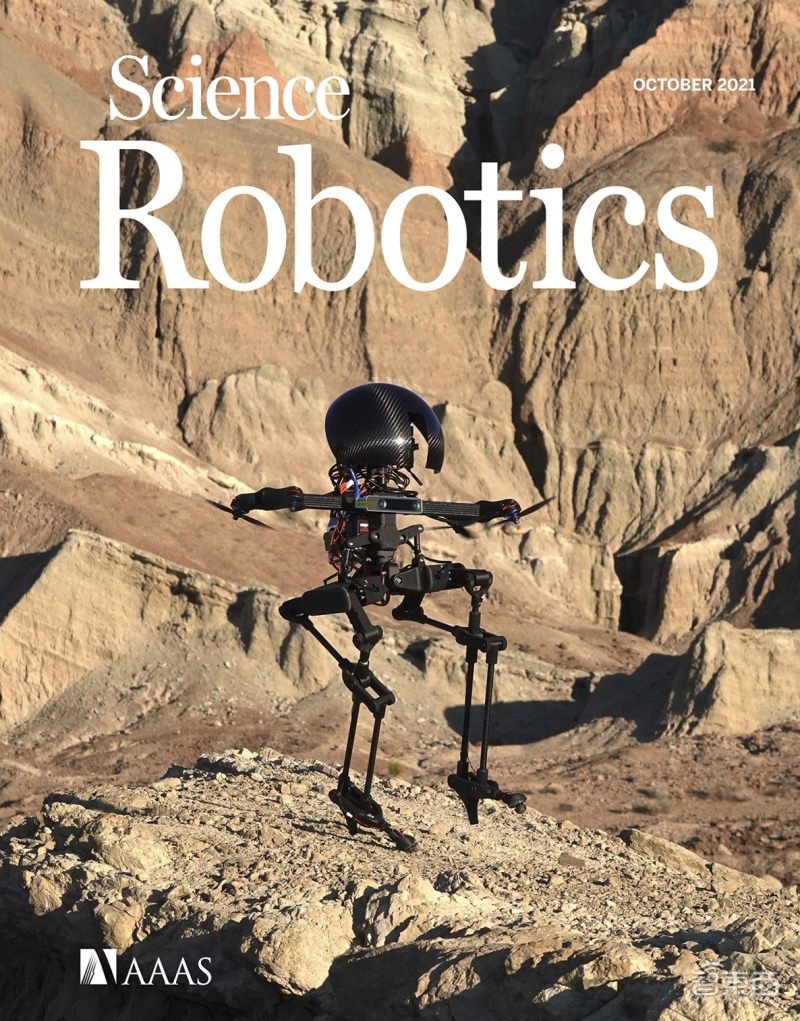
Forskningen publicerades i onsdags i Science Robotics, en undertidskrift för Science, och dök upp på omslaget till tidskriften denna månad. Titeln på avhandlingen är "Abipedalwalkingrobotthatcanfly, slackline, andskateboard (en bipedal walking robot that can fly, walk a tightrope, and skateboard)".
 Första. Ändra det traditionella sättet att rörelse, så att roboten kan springa och flyga
De flesta av de befintliga robotarna kan röra sig på marken eller i luften, men det finns nästan inga robotar som har båda dessa rörelsesätt. Dessutom har de befintliga robotarna sällan förmågan att utföra komplexa uppgifter.
Ground robots have legged, wheeled, crawling and other forms. Among them, biped robots have attracted much attention because they have the appearance of humans and can walk, run, and jump like humans. However, the movement of ground robots is easily restricted by rugged terrain, and its application range is also limited to near the ground, making it difficult to work at heights.
Flying robots can ignore all kinds of rugged terrain and engage in aerial work such as remote sensing, delivery, search and rescue, and inspection. But its own shortcomings are also very obvious, such as high energy consumption, short flight time, and limited load capacity. In addition, because aerial robots need to take care of their own stability when working in the air, it is more difficult to physically interact with objects than ground robots.
Forskarna kombinerade fördelarna med dessa två robotar, vilket gjorde att LEO kunde kombinera gång- och flygrörelselägen för blandad rörelse och anpassa sig till olika oländig terräng genom att växla mellan olika rörelselägen.
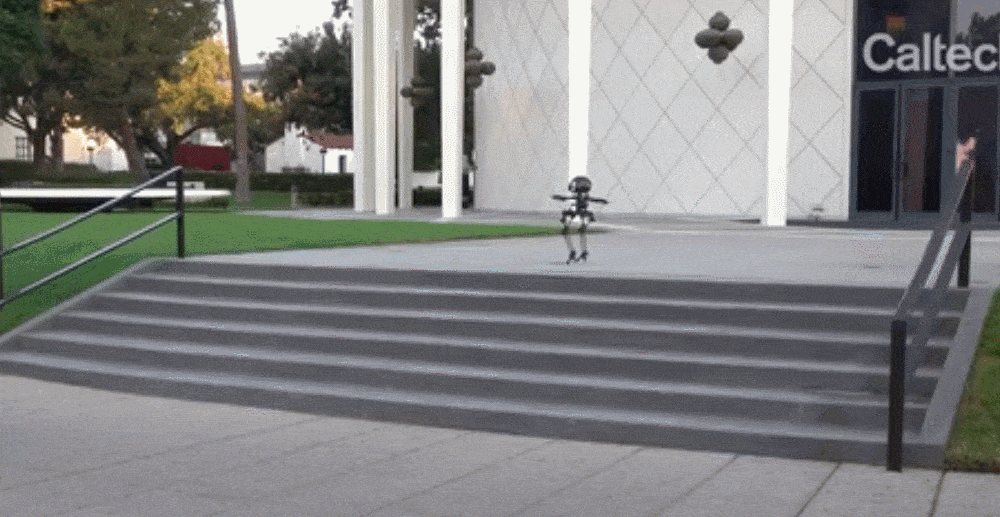
▲LEO gick fram till trappan och flög nerför trappanAndra. Höjden på 75 cm är bara 5 kg och vikten är 4 propellrar.
Vikten på LEO är 2,58 kg och totalhöjden vid gång är 75 cm. Den består huvudsakligen av en torso, ett propellerframdrivningssystem och två ben med spetsiga klackar.
In order to make it light enough, LEO’s leg structure uses carbon fiber tubes and 3D printed carbon fiber reinforced nylon joints to support ball bearings. Its two legs are symmetrical. Each leg has 3 servo motors. One is located at the pelvis and the other two are located at the front and back of the hip. The three servo motors jointly control the movement of the legs.
LEOs axlar är utrustade med 4 symmetriskt placerade propellrar för att stabilisera och kontrollera gång- och flygrörelser.
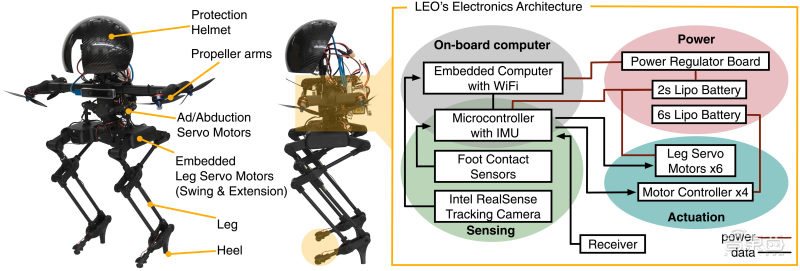
▲LEO:s elektroniska och mekaniska delarLEO kan arbeta helt autonomt genom sin inbyggda dator och sensorsvit. Beroende på vilken typ av hinder som måste passeras kan den välja att gå eller flyga, eller blanda de två efter behov.
Under gång ser LEO:s propellrar till att den kan hålla sig upprätt under gång, och benställdonen flyttar robotens tyngdpunkt framåt genom att ändra benens position för att uppnå gång. Under flygning kan LEO använda propellrar ensam och flyga som en drönare.För det tredje är skidåkning, att gå på linor, operation på hög höjd den största tillämpningsriktningen
Tack vare dess förmåga att blanda sport fann forskare att den kan utföra vissa åtgärder som är svåra för konventionella robotar, som att gå på rep och glida på skateboards. Och den har också en mycket hög anti-interferensförmåga, och den kan förbli stabil även vid vindhastigheter upp till 3,8m/s.
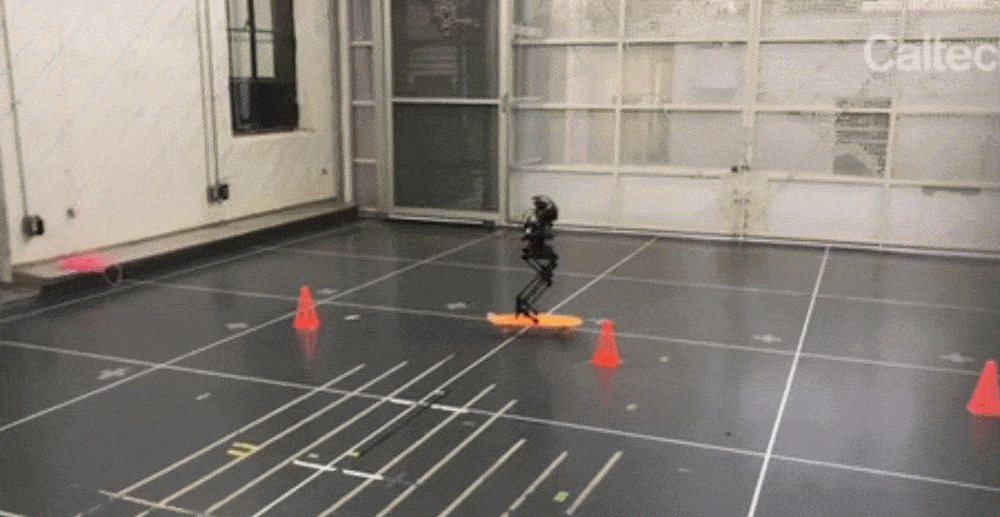
▲LEO skateboard för att kringgå hinder Forskarna sa i tidningen: "De kanske mest lämpliga tillämpningarna för LEO är de som involverar operationer på hög höjd. Dessa uppgifter är vanligtvis farliga för människor och kräver att robotar ersätter dem."
For example, the current high-voltage line inspection is done by professionals, who not only have to remotely inspect the line, but also go on the line for inspection and maintenance. Using LEO, there is no need to send personnel to climb up the wires, and only use the robot to fly onto high-voltage lines and walk along the wires for maintenance work. This will reduce maintenance costs and reduce the possibility of falling casualties.
In addition to these effects, the technology designed for LEO can also promote the development of adaptive landing gear systems. The research team envisions that future Martian rotorcraft can be equipped with legged landing gear so that they can maintain their balance when landing on sloping or uneven terrain, thereby reducing the risk of landing failure.
Next, the team plans to improve the performance of LEO by improving the leg design to make it stronger to support heavier robots and increase the thrust of the propeller. In addition, they also hope that LEO can be more autonomous, so that when the robot is walking on rugged terrain, it can understand how much weight the legs support and how much thrust is required by the propeller.
The researchers also plan to equip LEO with a newly developed control algorithm that uses a deep neural network to control the landing of the drone, allowing the robot to better understand the environment and decide on its own the best combination of walking, flying or mixed motion. The safest and least energy-consuming way to move from one place to another.
Slutsats:Robot Leo Kan springa och flyga, så att applikationsutrymmet för tvåbenta robotar är bredare
På grund av dess mänskliga utseende kan tvåbenta robotar imitera människor för att utföra olika uppgifter. Men på grund av miljö- och terrängförhållanden kommer rörelsen av tvåbenta robotar att vara begränsad i många fall.
LEO kombinerar att gå och flyga för att tillåta tvåbenta robotar att springa och flyga, vilket bryter terränghindret och gör den mer användbar.humanoid Robot;AI Service Robot;Mobil cobot


