


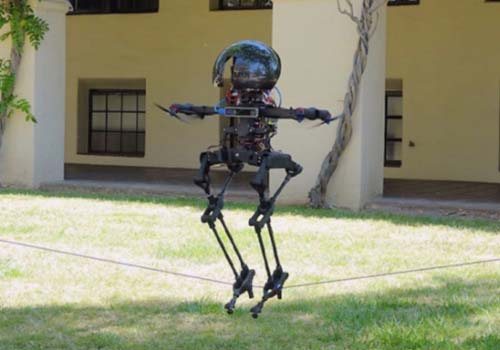
9. října vyvinuli vědci z California Institute of Technology bipedálního robota, který kombinuje bipedální chůzi a pohyby létání, díky čemuž je extrémně flexibilní a schopný provádět složité pohyby, jako je klouzání. Skateboarding, chůze po laně atd.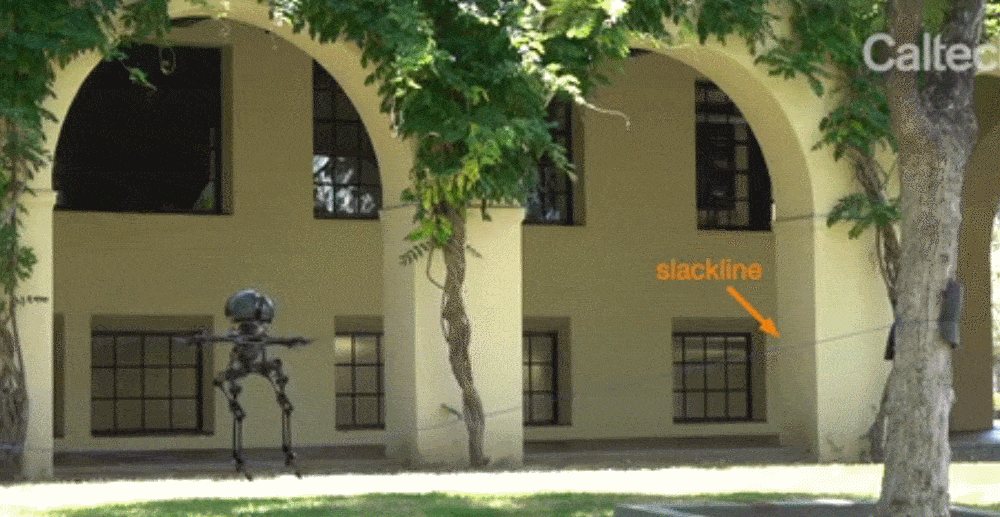
▲LEO walks along the rope tied between the treesThe design of this robot is inspired by the various behaviors of birds between walking and flying. The researchers named it LEONARDO (legs on the "legsonboarddrone" drone, or LEO for short). LEO can achieve fine control of its own balance through multi-articulated legs and propeller-based propellers.
The researchers stated in the research paper that LEO can perform various tasks that are difficult for humans and traditional robots to perform thanks to its hybrid motion capabilities. High-altitude operations will be one of the most suitable applications for LEO, such as the maintenance of high-voltage lines, and spray paint on high-altitude bridges.
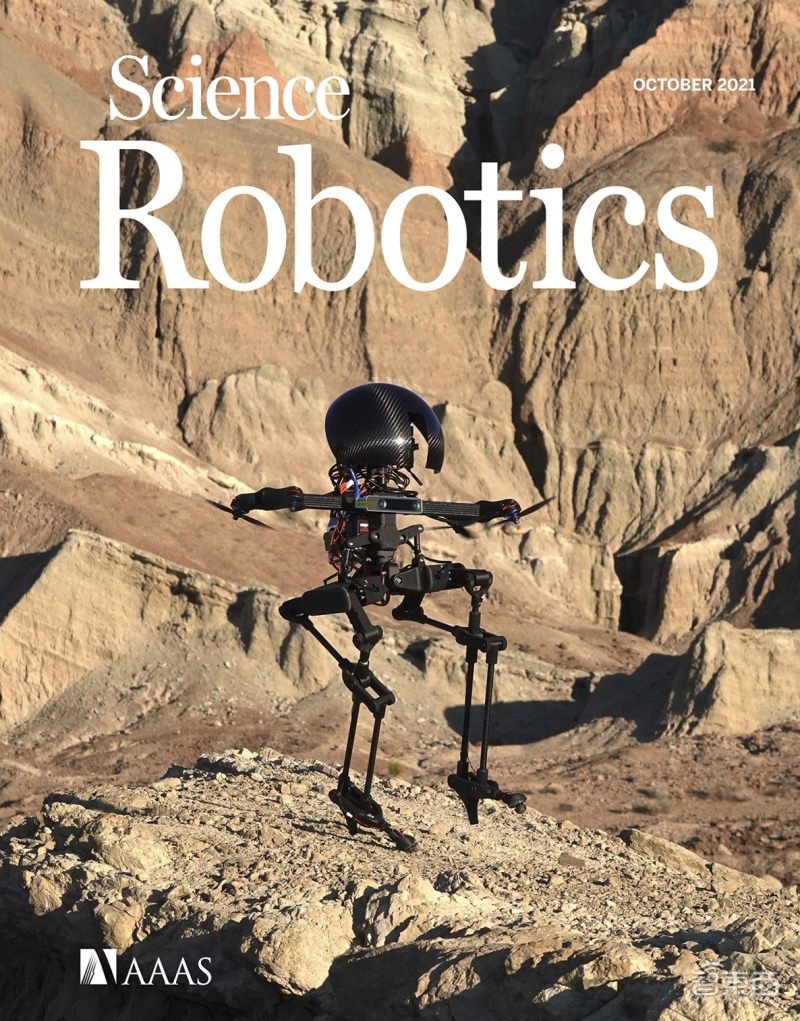
Výzkum byl zveřejněn tuto středu v Science Robotics, dílčím časopise Science, a tento měsíc se objevil na obálce časopisu. Název práce je "Abipedalwalkingrobot thatcanfly, slackline, and skateboard (dvounohý kráčející robot, který umí létat, chodit po laně a skateboard)".
 První. Změňte tradiční způsob pohybu, aby robot mohl běžet a létat
Většina stávajících robotů se může pohybovat po zemi nebo ve vzduchu, ale téměř neexistují roboti, kteří by měli oba tyto způsoby pohybu. Kromě toho mají stávající roboti jen zřídka schopnost provádět složité úkoly.
Ground robots have legged, wheeled, crawling and other forms. Among them, biped robots have attracted much attention because they have the appearance of humans and can walk, run, and jump like humans. However, the movement of ground robots is easily restricted by rugged terrain, and its application range is also limited to near the ground, making it difficult to work at heights.
Flying robots can ignore all kinds of rugged terrain and engage in aerial work such as remote sensing, delivery, search and rescue, and inspection. But its own shortcomings are also very obvious, such as high energy consumption, short flight time, and limited load capacity. In addition, because aerial robots need to take care of their own stability when working in the air, it is more difficult to physically interact with objects than ground robots.
Výzkumníci zkombinovali výhody těchto dvou robotů a umožnili LEO kombinovat režimy pohybu při chůzi a létání pro smíšený pohyb a přizpůsobit se různým drsným terénům přepínáním mezi různými režimy pohybu.
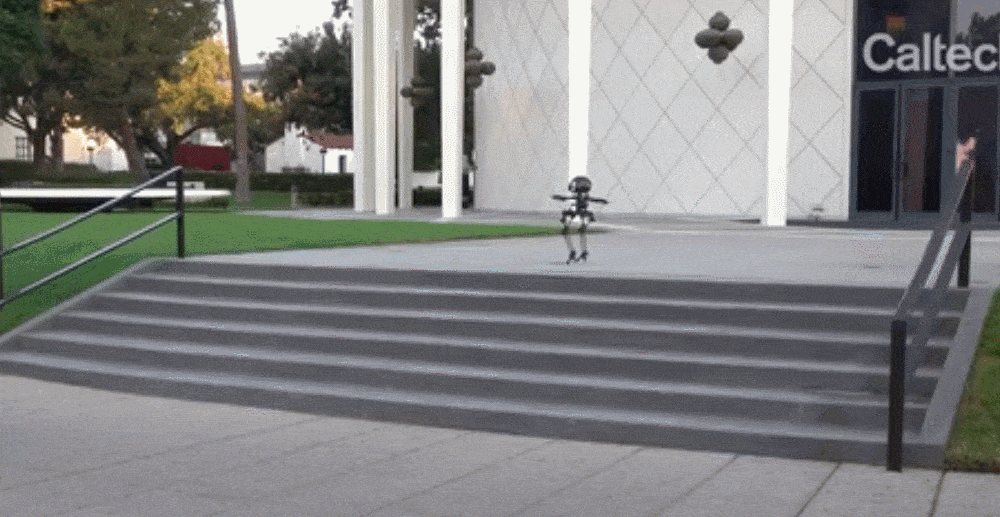
▲LEO došel před schody a sletěl ze schodů dolůDruhý. Výška 75 cm je pouhých 5 kg a hmotnost 4 vrtule.
Hmotnost LEO je 2,58 kg a celková výška při chůzi je 75 cm. Skládá se především z trupu, vrtulového pohonného systému a dvou nohou se špičatými patami.
In order to make it light enough, LEO’s leg structure uses carbon fiber tubes and 3D printed carbon fiber reinforced nylon joints to support ball bearings. Its two legs are symmetrical. Each leg has 3 servo motors. One is located at the pelvis and the other two are located at the front and back of the hip. The three servo motors jointly control the movement of the legs.
Ramena LEO jsou vybavena 4 symetricky umístěnými vrtulemi pro stabilizaci a kontrolu pohybů chůze a letu.
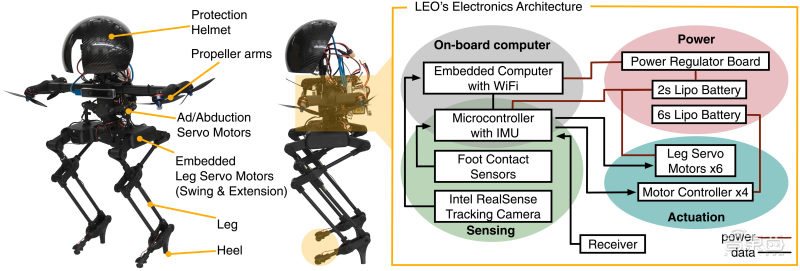
▲Elektronické a mechanické části LEO mohou pracovat zcela autonomně prostřednictvím palubního počítače a sady senzorů. V závislosti na typu překážky, kterou je třeba překonat, si může vybrat, zda použije chůzi nebo létání, případně obojí podle potřeby kombinovat.
Během chůze zajišťují vrtule LEO, že může zůstat při chůzi vzpřímeně, a ovladače nohou posouvají těžiště robota dopředu změnou polohy nohou, aby dosáhly chůze. Za letu může LEO používat vrtule sám a létat jako dron.Za třetí, lyžování, chůze po laně, provoz ve vysokých nadmořských výškách je největší směr aplikace
Díky své schopnosti kombinovat sporty vědci zjistili, že dokáže dokončit některé činnosti, které jsou pro konvenční roboty obtížné, jako je chůze po lanech a klouzání na skateboardu. A také má velmi vysokou schopnost rušení a může zůstat stabilní i při rychlosti větru až 3,8 m/s.
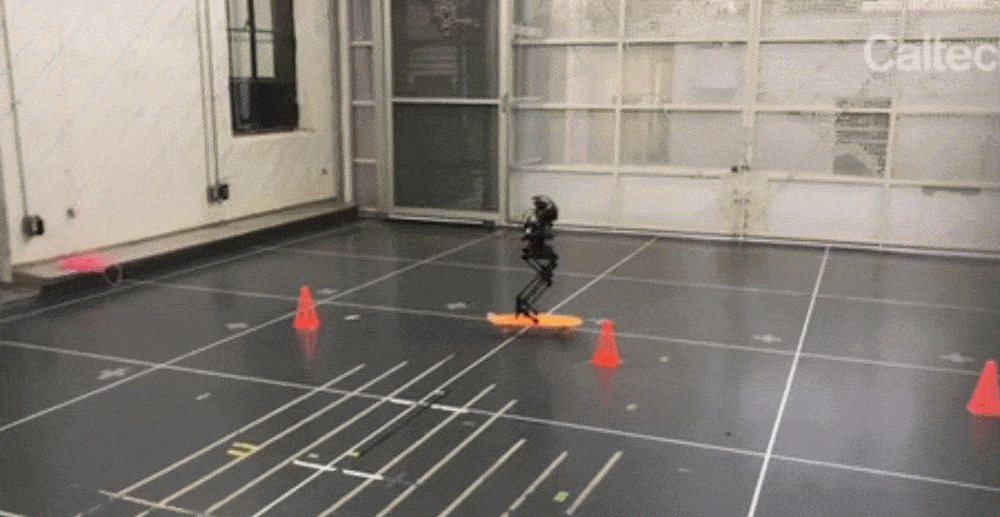
▲Leo skateboard k obcházení překážekVýzkumníci v článku uvedli: "Možná nejvhodnější aplikace pro LEO jsou ty, které zahrnují operace ve velkých nadmořských výškách. Tyto úkoly jsou obvykle nebezpečné pro lidi a vyžadují, aby je nahradili roboti."
For example, the current high-voltage line inspection is done by professionals, who not only have to remotely inspect the line, but also go on the line for inspection and maintenance. Using LEO, there is no need to send personnel to climb up the wires, and only use the robot to fly onto high-voltage lines and walk along the wires for maintenance work. This will reduce maintenance costs and reduce the possibility of falling casualties.
In addition to these effects, the technology designed for LEO can also promote the development of adaptive landing gear systems. The research team envisions that future Martian rotorcraft can be equipped with legged landing gear so that they can maintain their balance when landing on sloping or uneven terrain, thereby reducing the risk of landing failure.
Next, the team plans to improve the performance of LEO by improving the leg design to make it stronger to support heavier robots and increase the thrust of the propeller. In addition, they also hope that LEO can be more autonomous, so that when the robot is walking on rugged terrain, it can understand how much weight the legs support and how much thrust is required by the propeller.
The researchers also plan to equip LEO with a newly developed control algorithm that uses a deep neural network to control the landing of the drone, allowing the robot to better understand the environment and decide on its own the best combination of walking, flying or mixed motion. The safest and least energy-consuming way to move from one place to another.
Závěr:Robot Leo Umí běhat a létat, takže aplikační prostor dvounohých robotů je širší
Díky svému lidskému vzhledu mohou dvounozí roboti napodobovat lidi při plnění různých úkolů. Vzhledem k okolním a terénním podmínkám však bude pohyb dvounohých robotů v mnoha případech omezen.
LEO kombinuje chůzi a létání, aby umožnilo dvounohým robotům běhat a létat, překonávat překážky terénu a dělat to více široce používáno.humanoidní robot;obslužný robot AI;mobilní cobot


