


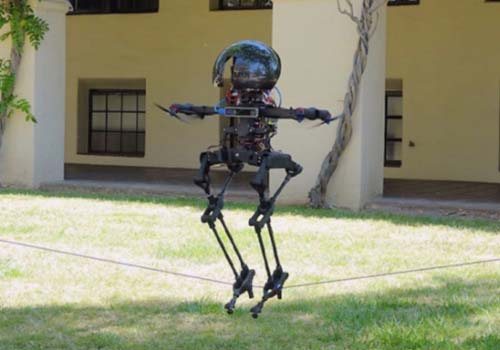
Il 9 ottobre, i ricercatori del California Institute of Technology hanno sviluppato un robot bipede che combina i movimenti bipedi di camminata e volo, rendendolo estremamente flessibile e in grado di eseguire movimenti complessi, come lo scivolamento. Skateboard, camminata sul filo del rasoio, ecc.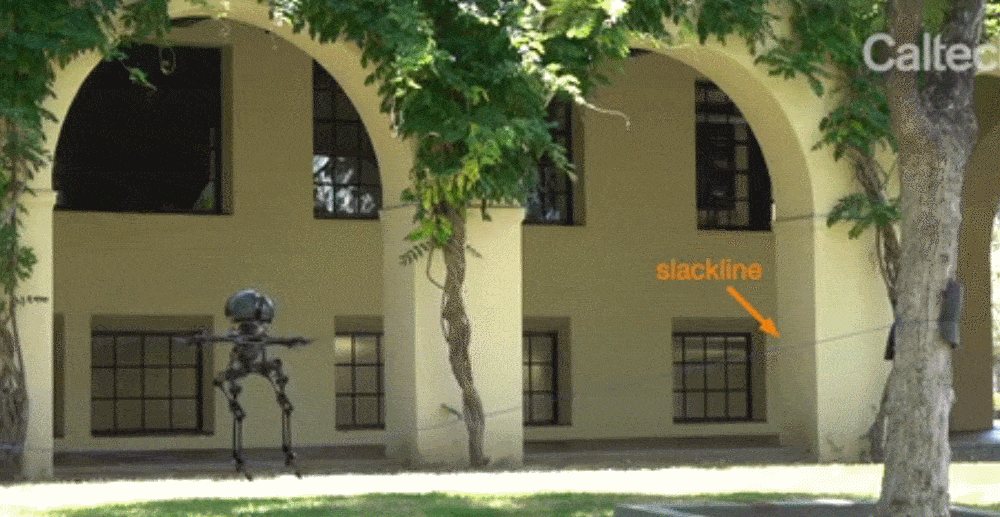
▲LEO walks along the rope tied between the treesThe design of this robot is inspired by the various behaviors of birds between walking and flying. The researchers named it LEONARDO (legs on the "legsonboarddrone" drone, or LEO for short). LEO can achieve fine control of its own balance through multi-articulated legs and propeller-based propellers.
The researchers stated in the research paper that LEO can perform various tasks that are difficult for humans and traditional robots to perform thanks to its hybrid motion capabilities. High-altitude operations will be one of the most suitable applications for LEO, such as the maintenance of high-voltage lines, and spray paint on high-altitude bridges.
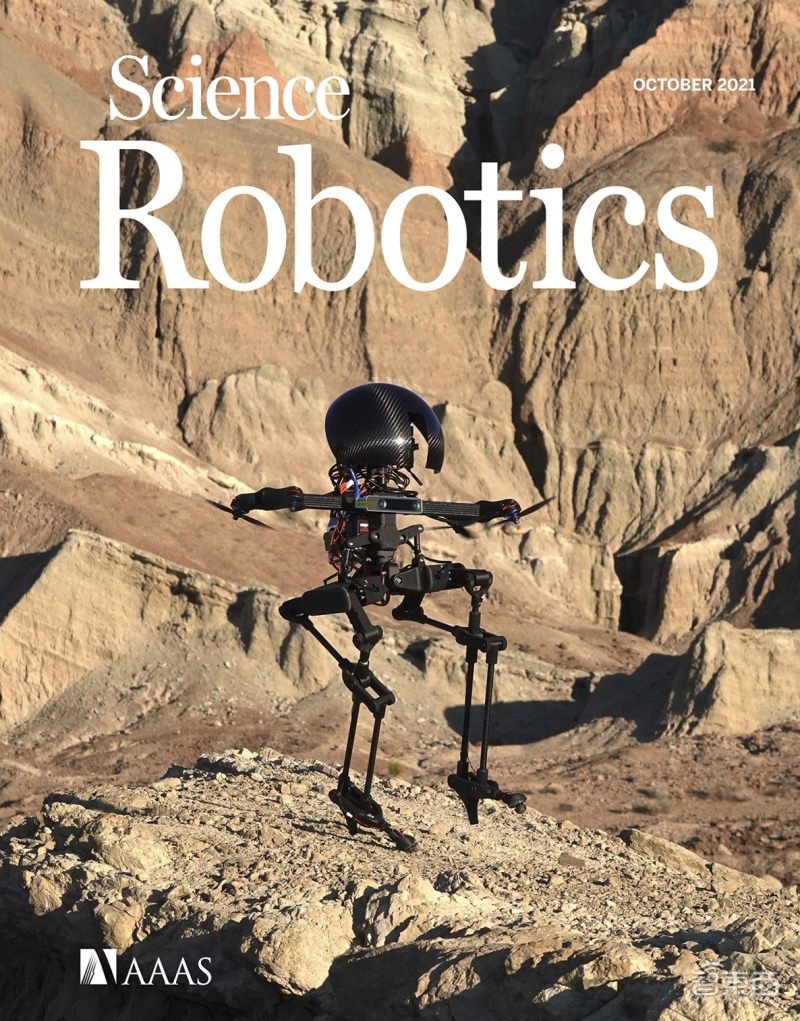
La ricerca è stata pubblicata questo mercoledì su Science Robotics, una rivista secondaria di Science, ed è apparsa sulla copertina della rivista questo mese. Il titolo della tesi è "Un robot che cammina bipede che può volare, slackline e skateboard (un robot che cammina bipede che può volare, camminare su una corda e fare skateboard)".
 Primo. Cambia il modo tradizionale di movimento, in modo che il robot possa correre e volare
La maggior parte dei robot esistenti può muoversi a terra o in aria, ma quasi nessun robot possiede entrambe queste modalità di movimento. Inoltre, i robot esistenti raramente hanno la capacità di eseguire compiti complessi.
Ground robots have legged, wheeled, crawling and other forms. Among them, biped robots have attracted much attention because they have the appearance of humans and can walk, run, and jump like humans. However, the movement of ground robots is easily restricted by rugged terrain, and its application range is also limited to near the ground, making it difficult to work at heights.
Flying robots can ignore all kinds of rugged terrain and engage in aerial work such as remote sensing, delivery, search and rescue, and inspection. But its own shortcomings are also very obvious, such as high energy consumption, short flight time, and limited load capacity. In addition, because aerial robots need to take care of their own stability when working in the air, it is more difficult to physically interact with objects than ground robots.
I ricercatori hanno combinato i vantaggi di questi due robot, consentendo a LEO di combinare le modalità di movimento camminata e volo per un movimento misto e di adattarsi a vari terreni accidentati passando da una modalità di movimento all’altra.
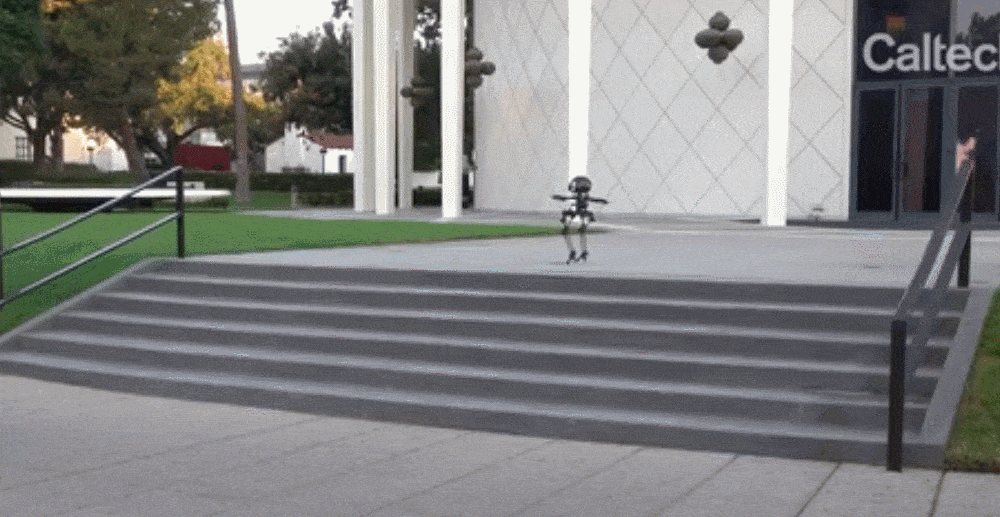
▲LEO si diresse davanti alle scale e volò giù dalle scaleSecondo. L'altezza di 75 cm è di soli 5 kg e il peso è di 4 eliche.
Il peso di LEO è di 2,58 kg e l'altezza complessiva quando si cammina è di 75 cm. È composto principalmente da un torso, un sistema di propulsione ad elica e due gambe con talloni appuntiti.
In order to make it light enough, LEO’s leg structure uses carbon fiber tubes and 3D printed carbon fiber reinforced nylon joints to support ball bearings. Its two legs are symmetrical. Each leg has 3 servo motors. One is located at the pelvis and the other two are located at the front and back of the hip. The three servo motors jointly control the movement of the legs.
Le spalle di LEO sono dotate di 4 eliche posizionate simmetricamente per stabilizzare e controllare i movimenti di camminata e volo.
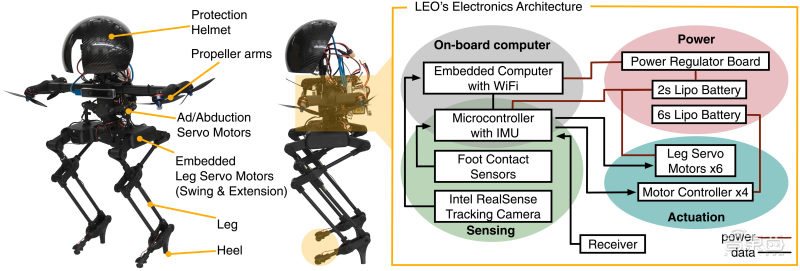
▲Parti elettroniche e meccaniche di LEOLEO può funzionare in modo completamente autonomo tramite il computer di bordo e la suite di sensori. A seconda del tipo di ostacolo che deve essere superato, può scegliere di camminare o volare, oppure mescolare i due a seconda delle necessità.
Durante la deambulazione, le eliche di LEO assicurano che possa rimanere in posizione verticale mentre cammina, e gli attuatori delle gambe spostano il baricentro del robot in avanti modificando la posizione delle gambe per riuscire a camminare. In volo, LEO può utilizzare solo le eliche e volare come un drone.In terzo luogo, sciare, camminare su una corda, l'operazione ad alta quota è la più grande direzione di applicazione
Grazie alla sua capacità di mescolare gli sport, i ricercatori hanno scoperto che può compiere alcune azioni difficili per i robot convenzionali, come camminare sulle corde e scivolare sugli skateboard. Inoltre ha un'elevata capacità anti-interferenza e può rimanere stabile anche con velocità del vento fino a 3,8 m/s.
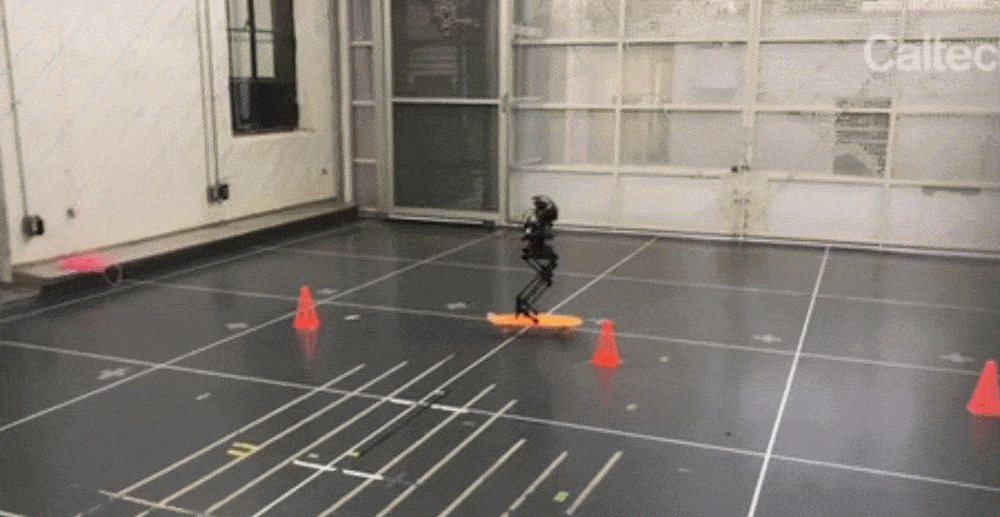
▲Lo skateboard LEO per aggirare gli ostacoliI ricercatori affermano nell'articolo: "Forse le applicazioni più adatte per LEO sono quelle che coinvolgono operazioni ad alta quota. Questi compiti sono generalmente pericolosi per gli esseri umani e richiedono che i robot li sostituiscano."
For example, the current high-voltage line inspection is done by professionals, who not only have to remotely inspect the line, but also go on the line for inspection and maintenance. Using LEO, there is no need to send personnel to climb up the wires, and only use the robot to fly onto high-voltage lines and walk along the wires for maintenance work. This will reduce maintenance costs and reduce the possibility of falling casualties.
In addition to these effects, the technology designed for LEO can also promote the development of adaptive landing gear systems. The research team envisions that future Martian rotorcraft can be equipped with legged landing gear so that they can maintain their balance when landing on sloping or uneven terrain, thereby reducing the risk of landing failure.
Next, the team plans to improve the performance of LEO by improving the leg design to make it stronger to support heavier robots and increase the thrust of the propeller. In addition, they also hope that LEO can be more autonomous, so that when the robot is walking on rugged terrain, it can understand how much weight the legs support and how much thrust is required by the propeller.
The researchers also plan to equip LEO with a newly developed control algorithm that uses a deep neural network to control the landing of the drone, allowing the robot to better understand the environment and decide on its own the best combination of walking, flying or mixed motion. The safest and least energy-consuming way to move from one place to another.
Conclusione:Robot Leo Può correre e volare, quindi lo spazio di applicazione dei robot bipedi è più ampio
A causa del suo aspetto umano, i robot bipedi possono imitare gli umani per completare vari compiti. Tuttavia, a causa delle condizioni ambientali e del terreno, in molti casi il movimento dei robot bipedi sarà limitato.
LEO combina la camminata e il volo per consentire ai robot bipedi di correre e volare, rompendo l'ostacolo del terreno e rendendolo più ampiamente utilizzato. Robot umanoide; Robot di servizio AI; Cobot mobile


