


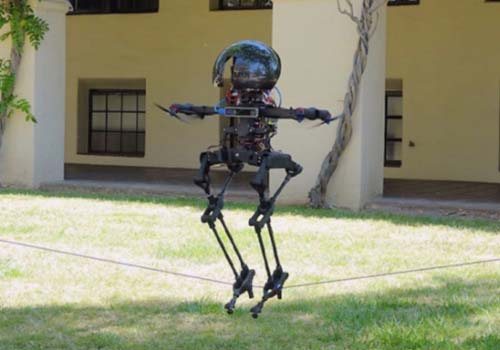
지난 10월 9일 캘리포니아 공과대학(California Institute of Technology) 연구진은 이족 보행과 비행 동작을 결합한 이족 보행 로봇을 개발해 유연성이 뛰어나고 슬라이딩과 같은 복잡한 동작도 수행할 수 있게 되었습니다. 스케이트보드, 줄타기 등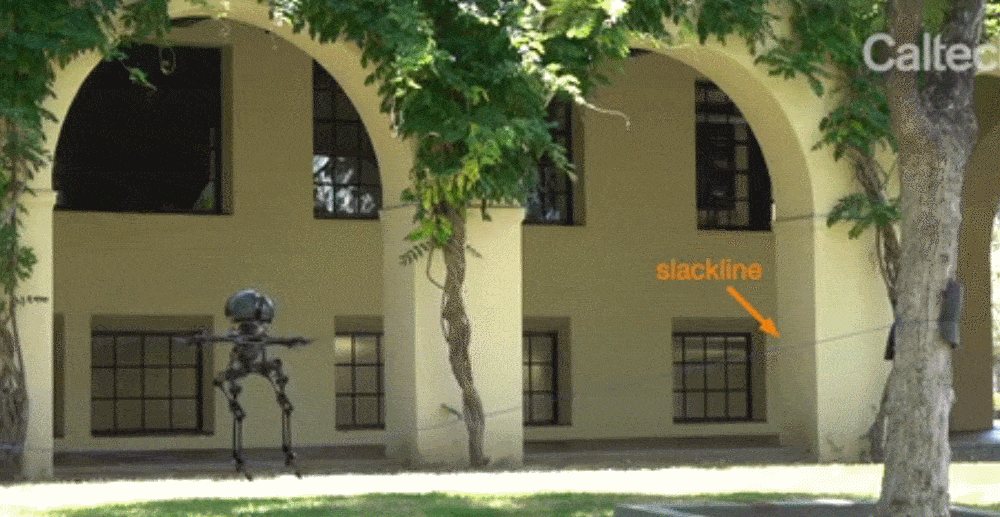
▲LEO walks along the rope tied between the treesThe design of this robot is inspired by the various behaviors of birds between walking and flying. The researchers named it LEONARDO (legs on the "legsonboarddrone" drone, or LEO for short). LEO can achieve fine control of its own balance through multi-articulated legs and propeller-based propellers.
The researchers stated in the research paper that LEO can perform various tasks that are difficult for humans and traditional robots to perform thanks to its hybrid motion capabilities. High-altitude operations will be one of the most suitable applications for LEO, such as the maintenance of high-voltage lines, and spray paint on high-altitude bridges.
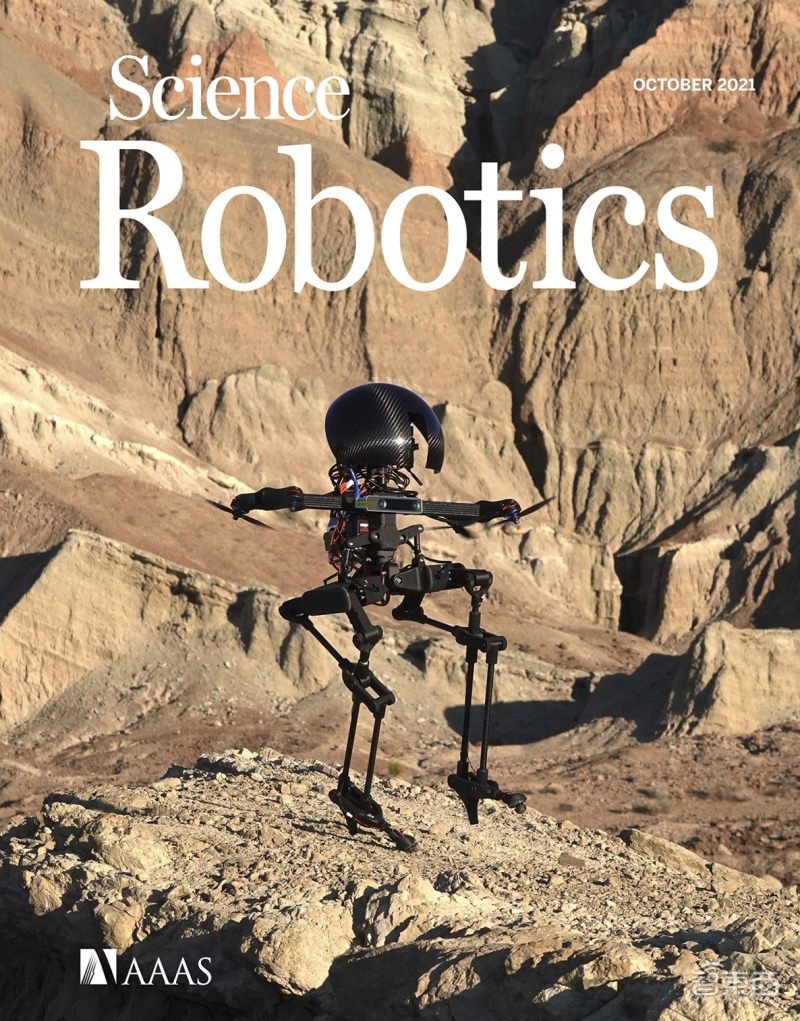
이 연구는 이번주 수요일 사이언스(Science)의 하위저널인 사이언스 로보틱스(Science Robotics)에 게재되었으며, 이번 달 저널 표지에 게재되었습니다. 논문 제목은 "날고, 슬랙라인, 스케이트보드를 할 수 있는 두 발로 걷는 로봇(날고, 줄타고, 스케이트보드를 탈 수 있는 두 발로 걷는 로봇)"이다.
 첫 번째. 로봇이 달리고 날 수 있도록 기존의 모션 방식을 변경하세요.
기존 로봇의 대부분은 지상이나 공중에서 이동할 수 있지만, 이 두 가지 이동 모드를 모두 갖춘 로봇은 거의 없습니다. 게다가 기존 로봇은 복잡한 작업을 수행하는 능력이 거의 없습니다.
Ground robots have legged, wheeled, crawling and other forms. Among them, biped robots have attracted much attention because they have the appearance of humans and can walk, run, and jump like humans. However, the movement of ground robots is easily restricted by rugged terrain, and its application range is also limited to near the ground, making it difficult to work at heights.
Flying robots can ignore all kinds of rugged terrain and engage in aerial work such as remote sensing, delivery, search and rescue, and inspection. But its own shortcomings are also very obvious, such as high energy consumption, short flight time, and limited load capacity. In addition, because aerial robots need to take care of their own stability when working in the air, it is more difficult to physically interact with objects than ground robots.
연구원들은 이 두 로봇의 장점을 결합하여 LEO가 혼합 모션을 위해 걷기 및 비행 모션 모드를 결합하고 서로 다른 모션 모드 간을 전환하여 다양한 거친 지형에 적응할 수 있도록 했습니다.
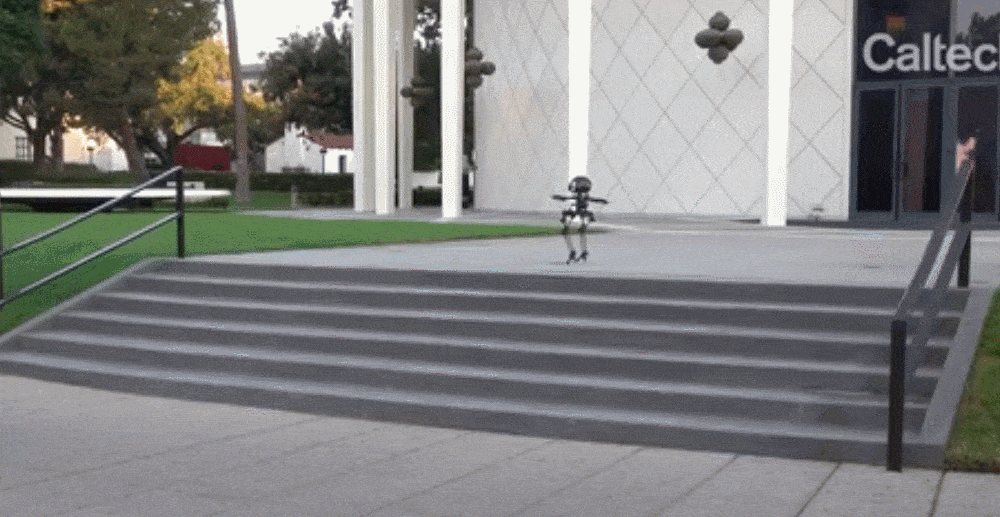
▲레오는 계단 앞으로 걸어가 계단 아래로 날아갔다두번째. 키 75cm에 무게는 5kg에 불과하고 무게는 프로펠러 4개다.
LEO의 무게는 2.58kg이고, 걸을 때의 전체 높이는 75cm입니다. 주로 몸통, 프로펠러 추진 시스템, 뾰족한 굽이 달린 두 개의 다리로 구성됩니다.
In order to make it light enough, LEO’s leg structure uses carbon fiber tubes and 3D printed carbon fiber reinforced nylon joints to support ball bearings. Its two legs are symmetrical. Each leg has 3 servo motors. One is located at the pelvis and the other two are located at the front and back of the hip. The three servo motors jointly control the movement of the legs.
LEO의 어깨에는 대칭으로 배치된 4개의 프로펠러가 장착되어 있어 걷기 및 비행 동작을 안정화하고 제어할 수 있습니다.
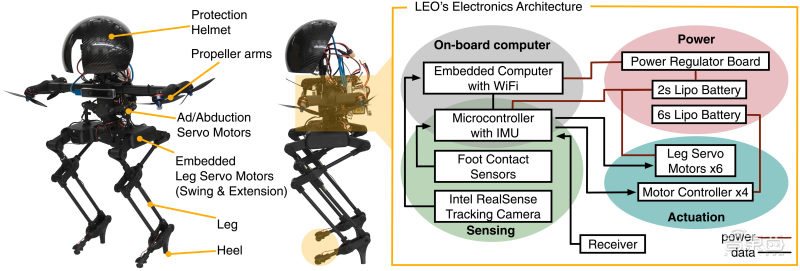
▲LEO의 전자 및 기계 부품LEO는 온보드 컴퓨터와 센서 제품군을 통해 완전히 자율적으로 작동할 수 있습니다. 통과해야 하는 장애물의 유형에 따라 걷기 또는 비행을 사용하거나 필요에 따라 두 가지를 혼합할 수 있습니다.
걷는 동안 LEO의 프로펠러는 로봇이 똑바로 서 있을 수 있도록 하고, 다리 액추에이터는 다리 위치를 변경하여 로봇의 무게 중심을 앞으로 이동시켜 보행을 구현합니다. 비행 중에는 LEO가 프로펠러만 사용해 드론처럼 비행할 수 있습니다.셋째, 스키, 줄타기, 고공작업이 가장 큰 응용방향이다.
스포츠를 혼합하는 능력 덕분에 연구원들은 밧줄 위를 걷거나 스케이트보드를 타고 미끄러지는 등 기존 로봇으로는 어려운 일부 동작을 수행할 수 있음을 발견했습니다. 또한 매우 높은 간섭 방지 능력을 갖추고 있어 최대 3.8m/s의 풍속에서도 안정적으로 유지될 수 있습니다.
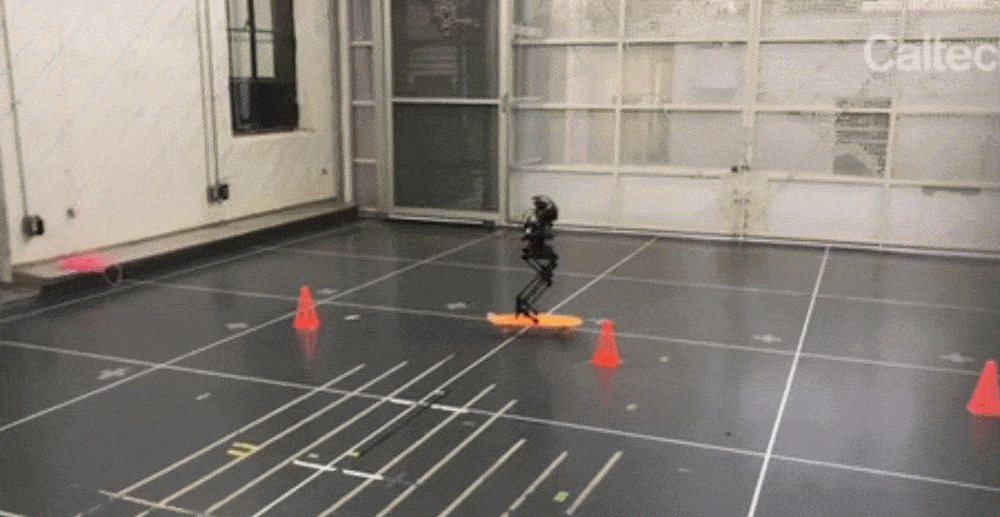
▲장애물을 우회하는 LEO 스케이트보드연구원들은 논문에서 "아마도 LEO에 가장 적합한 응용 분야는 고공 작업과 관련된 작업일 것입니다. 이러한 작업은 일반적으로 인간에게 위험하며 이를 대체하려면 로봇이 필요합니다."라고 말했습니다.
For example, the current high-voltage line inspection is done by professionals, who not only have to remotely inspect the line, but also go on the line for inspection and maintenance. Using LEO, there is no need to send personnel to climb up the wires, and only use the robot to fly onto high-voltage lines and walk along the wires for maintenance work. This will reduce maintenance costs and reduce the possibility of falling casualties.
In addition to these effects, the technology designed for LEO can also promote the development of adaptive landing gear systems. The research team envisions that future Martian rotorcraft can be equipped with legged landing gear so that they can maintain their balance when landing on sloping or uneven terrain, thereby reducing the risk of landing failure.
Next, the team plans to improve the performance of LEO by improving the leg design to make it stronger to support heavier robots and increase the thrust of the propeller. In addition, they also hope that LEO can be more autonomous, so that when the robot is walking on rugged terrain, it can understand how much weight the legs support and how much thrust is required by the propeller.
The researchers also plan to equip LEO with a newly developed control algorithm that uses a deep neural network to control the landing of the drone, allowing the robot to better understand the environment and decide on its own the best combination of walking, flying or mixed motion. The safest and least energy-consuming way to move from one place to another.
결론:로봇 레오 달리고 날 수 있어 이족보행 로봇의 활용 범위가 넓어진다
인간의 외모로 인해 이족 보행 로봇은 인간을 모방하여 다양한 작업을 완료할 수 있습니다. 그러나 환경 및 지형 조건으로 인해 2족 로봇의 움직임이 제한되는 경우가 많습니다.
LEO는 걷기와 비행을 결합하여 이족보행 로봇이 달리고 날아갈 수 있도록 하여 지형의 장애물을 무너뜨리고 보다 널리 활용되도록 합니다.휴머노이드 로봇;AI 서비스 로봇;모바일 협동로봇


