


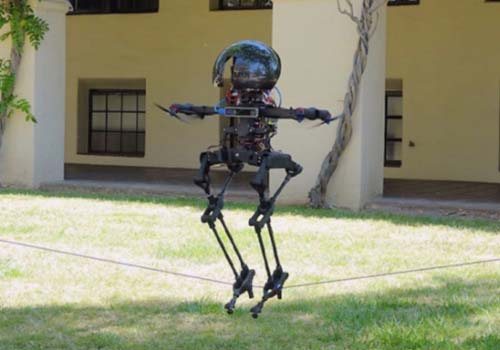
في 9 أكتوبر، قام باحثون من معهد كاليفورنيا للتكنولوجيا بتطوير روبوت ذو قدمين يجمع بين حركات المشي والطيران على قدمين، مما يجعله مرنًا للغاية وقادرًا على أداء حركات معقدة، مثل الانزلاق. التزلج، والمشي على حبل مشدود، وما إلى ذلك.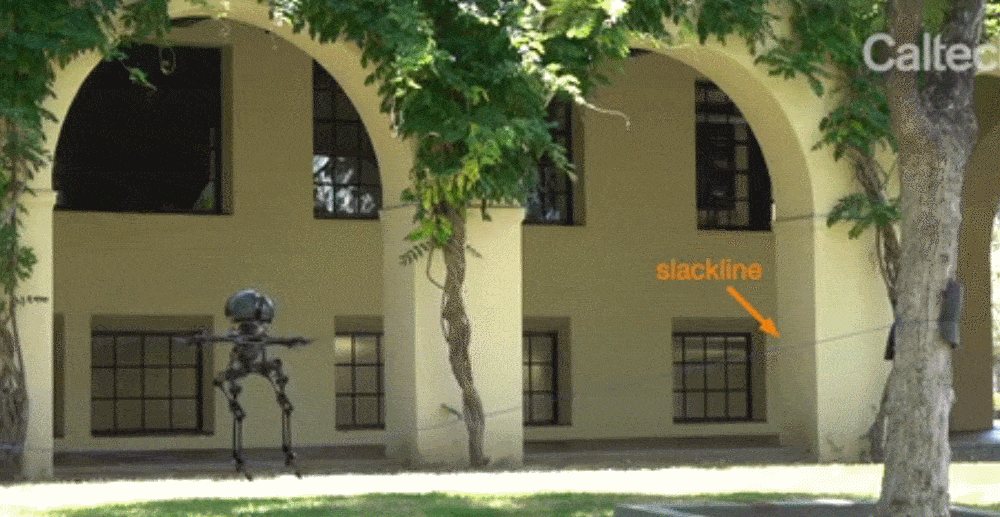
▲LEO walks along the rope tied between the treesThe design of this robot is inspired by the various behaviors of birds between walking and flying. The researchers named it LEONARDO (legs on the "legsonboarddrone" drone, or LEO for short). LEO can achieve fine control of its own balance through multi-articulated legs and propeller-based propellers.
The researchers stated in the research paper that LEO can perform various tasks that are difficult for humans and traditional robots to perform thanks to its hybrid motion capabilities. High-altitude operations will be one of the most suitable applications for LEO, such as the maintenance of high-voltage lines, and spray paint on high-altitude bridges.
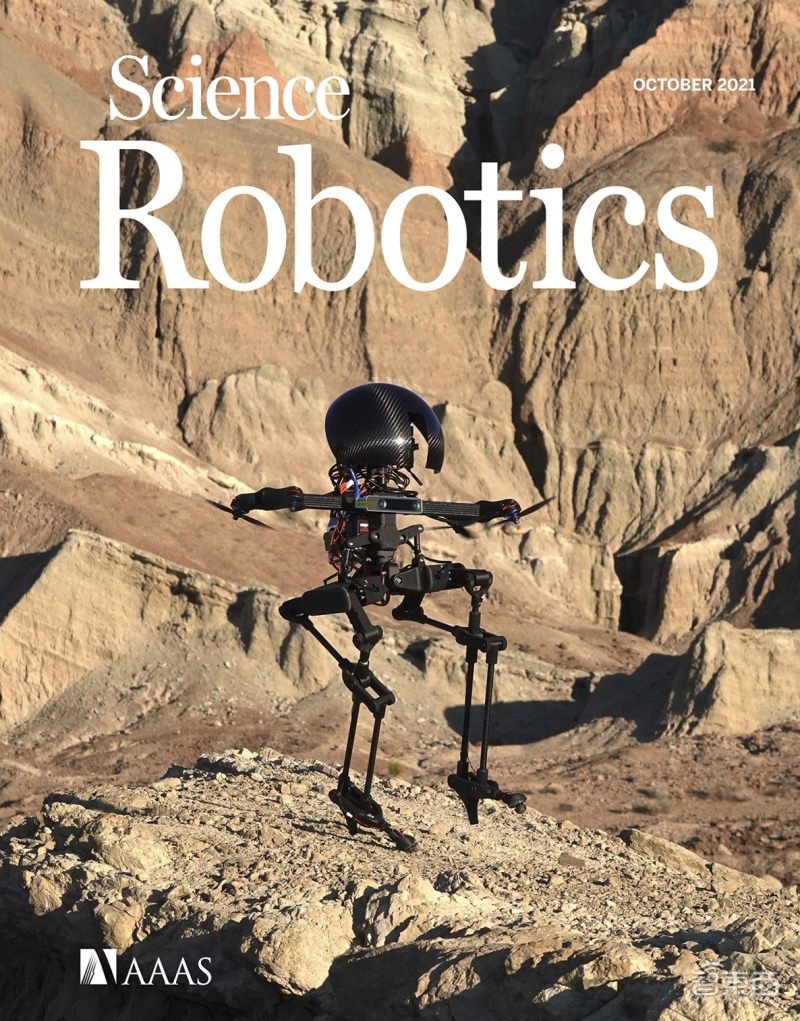
نُشر البحث يوم الأربعاء في مجلة Science Robotics، وهي مجلة فرعية للعلوم، وظهر على غلاف المجلة هذا الشهر. عنوان الأطروحة هو "روبوت يمشي على قدمين يمكنه الطيران، والمشي على حبل مشدود، ولوح التزلج (روبوت يمشي على قدمين يمكنه الطيران، والمشي على حبل مشدود، ولوح التزلج)".
 أولاً. تغيير طريقة الحركة التقليدية، حتى يتمكن الروبوت من الركض والطيران
يمكن لمعظم الروبوتات الموجودة التحرك على الأرض أو في الهواء، ولكن لا يوجد تقريبًا أي روبوتات تمتلك كلا الوضعين للحركة. بالإضافة إلى ذلك، نادراً ما تتمتع الروبوتات الموجودة بالقدرة على أداء مهام معقدة.
Ground robots have legged, wheeled, crawling and other forms. Among them, biped robots have attracted much attention because they have the appearance of humans and can walk, run, and jump like humans. However, the movement of ground robots is easily restricted by rugged terrain, and its application range is also limited to near the ground, making it difficult to work at heights.
Flying robots can ignore all kinds of rugged terrain and engage in aerial work such as remote sensing, delivery, search and rescue, and inspection. But its own shortcomings are also very obvious, such as high energy consumption, short flight time, and limited load capacity. In addition, because aerial robots need to take care of their own stability when working in the air, it is more difficult to physically interact with objects than ground robots.
وقد جمع الباحثون بين مزايا هذين الروبوتين، مما سمح لـ LEO بالجمع بين أوضاع حركة المشي والطيران للحركة المختلطة، والتكيف مع مختلف التضاريس الوعرة من خلال التبديل بين أوضاع الحركة المختلفة.
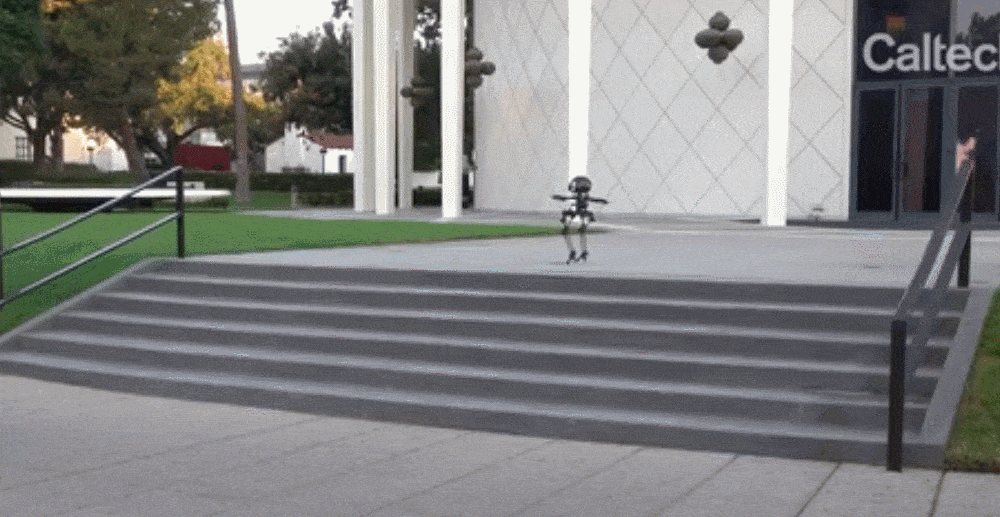
▲ مشى ليو إلى مقدمة الدرجات وطار إلى أسفل الدرجاتثانية. ارتفاع 75 سم 5 كجم فقط ووزن 4 مراوح.
يبلغ وزن LEO 2.58 كجم ويبلغ ارتفاعه الإجمالي عند المشي 75 سم. ويتكون بشكل أساسي من جذع ونظام دفع دافع وساقين بكعب مدبب.
In order to make it light enough, LEO’s leg structure uses carbon fiber tubes and 3D printed carbon fiber reinforced nylon joints to support ball bearings. Its two legs are symmetrical. Each leg has 3 servo motors. One is located at the pelvis and the other two are located at the front and back of the hip. The three servo motors jointly control the movement of the legs.
تم تجهيز أكتاف LEO بأربعة مراوح موضوعة بشكل متماثل لتحقيق الاستقرار والتحكم في حركات المشي والطيران.
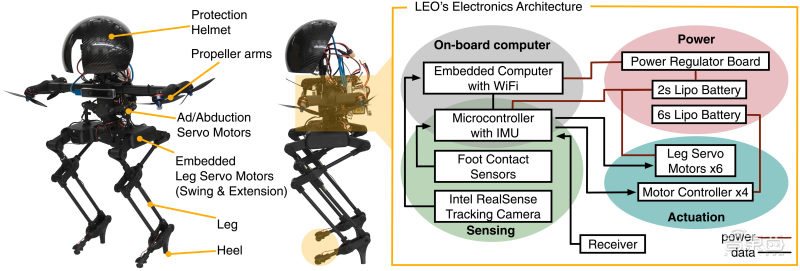
▲الأجزاء الإلكترونية والميكانيكية لمركبة LEO يمكن أن تعمل وحدة LEO بشكل مستقل تمامًا من خلال جهاز الكمبيوتر وأجهزة الاستشعار الموجودة على متنها. اعتمادًا على نوع العائق الذي يجب اجتيازه، يمكنه اختيار استخدام المشي أو الطيران، أو المزج بين الاثنين حسب الحاجة.
أثناء المشي، تضمن مراوح LEO إمكانية بقائه في وضع مستقيم أثناء المشي، وتقوم مشغلات الأرجل بتحريك مركز ثقل الروبوت للأمام عن طريق تغيير موضع الأرجل لتحقيق المشي. أثناء الطيران، يمكن لـ LEO استخدام المراوح وحدها والتحليق مثل الطائرة بدون طيار.ثالثًا، التزلج، والمشي على حبل مشدود، والعملية على ارتفاعات عالية هي أكبر اتجاه للتطبيق
وبفضل قدرته على المزج بين الرياضات، وجد الباحثون أنه يستطيع إكمال بعض الإجراءات التي يصعب على الروبوتات التقليدية القيام بها، مثل المشي على الحبال والانزلاق على ألواح التزلج. كما أنها تتمتع بقدرة عالية جدًا على مقاومة التداخل، ويمكن أن تظل ثابتة حتى عند سرعة الرياح التي تصل إلى 3.8 متر/الثانية.
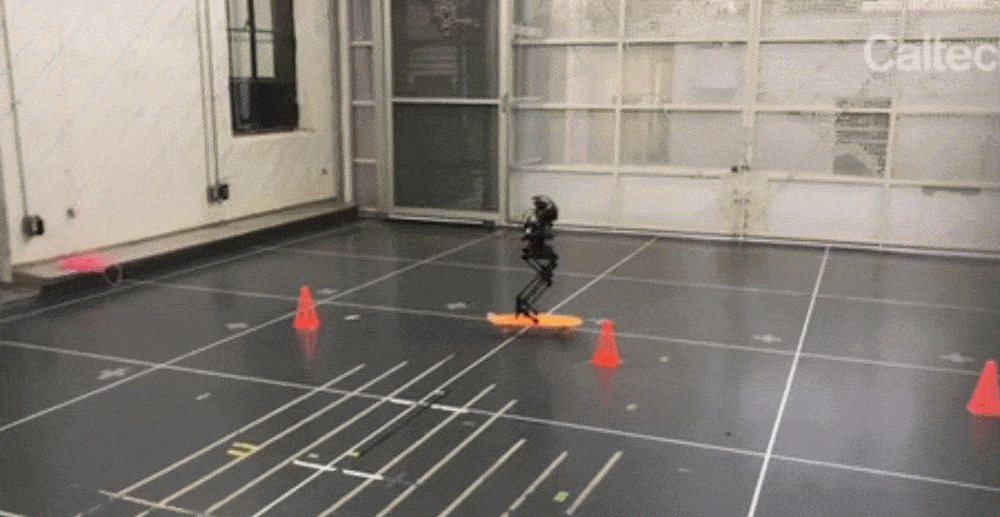
▲ لوح التزلج LEO لتجاوز العوائق قال الباحثون في الورقة: "ربما تكون التطبيقات الأكثر ملاءمة لـ LEO هي تلك التي تنطوي على عمليات على ارتفاعات عالية. وعادة ما تكون هذه المهام خطرة على البشر وتتطلب استبدالها بالروبوتات."
For example, the current high-voltage line inspection is done by professionals, who not only have to remotely inspect the line, but also go on the line for inspection and maintenance. Using LEO, there is no need to send personnel to climb up the wires, and only use the robot to fly onto high-voltage lines and walk along the wires for maintenance work. This will reduce maintenance costs and reduce the possibility of falling casualties.
In addition to these effects, the technology designed for LEO can also promote the development of adaptive landing gear systems. The research team envisions that future Martian rotorcraft can be equipped with legged landing gear so that they can maintain their balance when landing on sloping or uneven terrain, thereby reducing the risk of landing failure.
Next, the team plans to improve the performance of LEO by improving the leg design to make it stronger to support heavier robots and increase the thrust of the propeller. In addition, they also hope that LEO can be more autonomous, so that when the robot is walking on rugged terrain, it can understand how much weight the legs support and how much thrust is required by the propeller.
The researchers also plan to equip LEO with a newly developed control algorithm that uses a deep neural network to control the landing of the drone, allowing the robot to better understand the environment and decide on its own the best combination of walking, flying or mixed motion. The safest and least energy-consuming way to move from one place to another.
خاتمة:يمكن للروبوت ليو الركض والطيران، مما يجعل مساحة تطبيق الروبوتات ذات القدمين أوسع
بسبب مظهرها البشري، يمكن للروبوتات ذات القدمين تقليد البشر لإكمال المهام المختلفة. ومع ذلك، ونظرًا للظروف البيئية والتضاريسية، سيتم تقييد حركة الروبوتات ذات القدمين في كثير من الحالات.
يجمع LEO بين المشي والطيران للسماح للروبوتات ذات القدمين بالجري والطيران، وكسر عوائق التضاريس وجعلها مستخدمة على نطاق أوسع. روبوت بشري؛ روبوت خدمة الذكاء الاصطناعي؛ روبوت متنقل


