


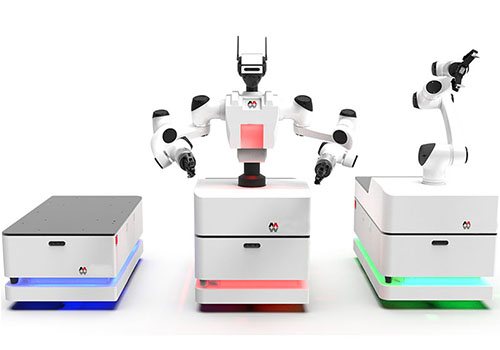
"Made in China 2025" plans the strategic goal of my country's manufacturing power, and intelligent manufacturing has become the top priority of industrial manufacturing transformation. Under the general trend of intelligence, the downstream application fields of intelligent equipment are accelerating the expansion, and the development of промышленные роботыможно ожидать.
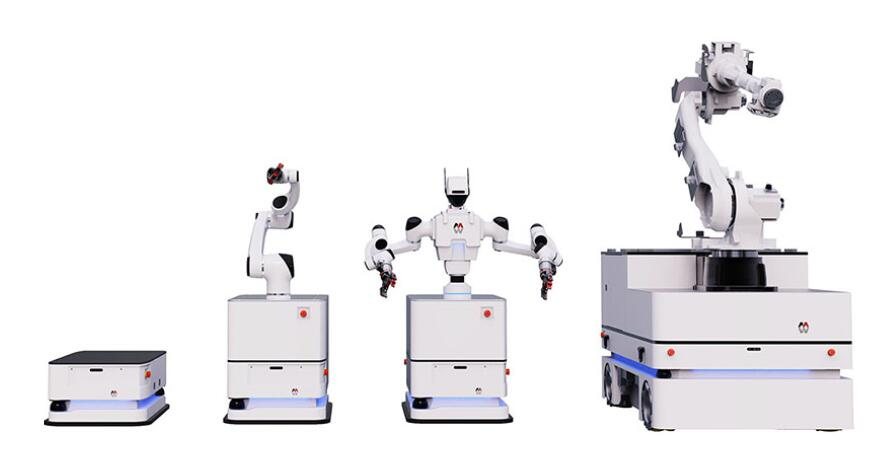
Industrial robots refer to multi-joint manipulators or multi-degree-of-freedom mechanical devices that can work intelligently under human control and can perfectly replace humans working on the production line. Compared with manpower, industrial robots have the characteristics of low cost, high efficiency and 24-hour work. In recent years, as domestic labor costs continue to rise, the labor advantage of my country's manufacturing industry is not obvious, the manufacturing industry urgently needs to transform to intelligence, and industrial robots are showing a strong development trend.
my country is a big consumer of industrial robots. Since 2013, it has become the world's largest consumer market for industrial robots for two consecutive years. There are often industrial robots in the fields of automobile manufacturing, electronics, rubber and plastics, military industry, aviation manufacturing, food industry, medical equipment and metal products. Among them, the automotive industry has the most applications, accounting for 38%.
Гуандун, Цзянсу, Шанхай, Пекин и другие места являются основными районами концентрации промышленности промышленных роботов моей страны, а количество принадлежащих им промышленных роботов составляет половину национального рынка промышленных роботов.
However, due to the lack of core technology, the consumption of industrial robots in my country is heavily dependent on foreign companies, especially in core components such as reducers, servo motors, and controllers. Domestic robot companies in my country are restricted by others and can only purchase expensive foreign equipment, which requires domestic industries. Robot manufacturers continue to improve their technology, increase R&D level, and get rid of the control of China's industrial robot consumer market by foreign robot brands as soon as possible.
Considering that the current density of industrial robots in the global manufacturing industry is 55, while the density of China's industrial robots is only 21, which is much lower than that of developed countries such as Japan, South Korea, Germany and the United States, and in the context of intelligent manufacturing, the policy of "machine substitution" continues to be implemented. There is still a lot of room for growth. Related concept companies such as Inovance Technology, Robotics, Zhiyun Co., Ltd., Keyuan Co., Ltd., and Qinchuan Machine Tool will achieve better development under the robot dividend.
Этап разработки промышленных роботов
Разработку промышленных роботов обычно можно разделить на три поколения:
1. Первое поколение промышленных роботов:
Usually refers to the “programmable industrial robots” that are currently commercialized and used internationally, also known as “teaching and reproducing industrial robots”, that is, in order for the industrial robot to complete a certain task, the operator will first complete the task. All kinds of knowledge (such as motion trajectory, operating conditions, operating sequence and operating time, etc.) of industrial robots can be "teached" through direct or indirect means.
After the industrial robots memorize this knowledge, they can "reproduce" Instructions, within a certain accuracy range, faithfully reproduce various taught actions repeatedly. In 1962, the first Unimate industrial robot of Universal Automation of the United States was put into use in General Motors of the United States, marking the birth of the first generation of industrial robots.
2. Второе поколение промышленных роботов:
usually refers to an "intelligent robot" with some kind of intelligence (such as touch, force, vision, etc.). That is, after the sensors receive information such as touch, force and vision, the computer controls the robot's operating machine to complete the corresponding appropriate operations. In 1982, General Motors in the United States equipped the industrial robot with a vision system on the assembly line, thus announcing the advent of a new generation of intelligent industrial robots.
3. Третье поколение промышленных роботов:
is the so-called "only-type industrial robot". It not only has a perception function, but also has certain decision-making and planning capabilities. The first generation of industrial robots is still in the laboratory research stage. After the birth-growth-maturity period, industrial robots have become indispensable core equipment in the manufacturing industry. There are about 750,000 industrial robots in the world fighting side by side with workers and friends on all production lines.
As a rising star of the robot family, special robots have a tendency to come from behind due to their wide range of uses. Special robots for various purposes such as humanoid robots, agricultural robots, сервисные роботыПоявились подводные роботы, медицинские роботы, военные роботы и развлекательные роботы. И они быстрыми темпами приближаются к практичности. Классификация промышленных роботов
Промышленные роботы по разным признакам можно разделить на следующие типы.
1. Промышленные роботы делятся на следующие категории по форме координат манипулятора: (Под формой координат понимается форма отсчетной системы координат, принимаемая рукой манипулятора при его движении.)
(1) Промышленный робот с декартовыми координатами
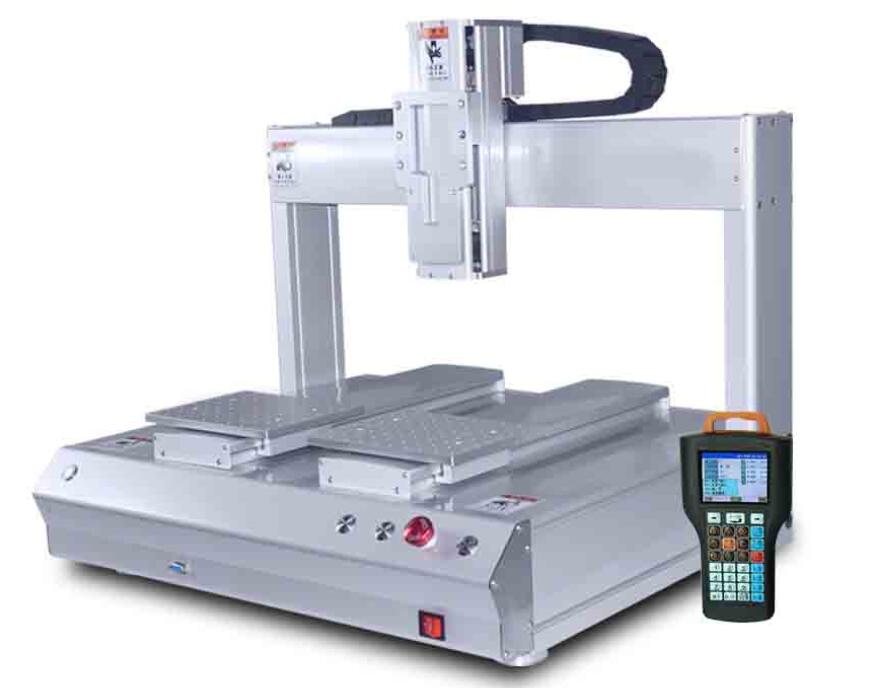
Its movement part is composed of three mutually perpendicular linear movements (namely PPP), and its working space is rectangular. Its moving distance in each axis can be read directly on each coordinate axis. It is intuitive, easy to program and calculate the position and posture, has high positioning accuracy, no coupling control, simple structure, but the body occupies a large space. The motion range is small, the flexibility is poor, and it is difficult to coordinate with other industrial robots.
(2) Промышленный робот с цилиндрическими координатами
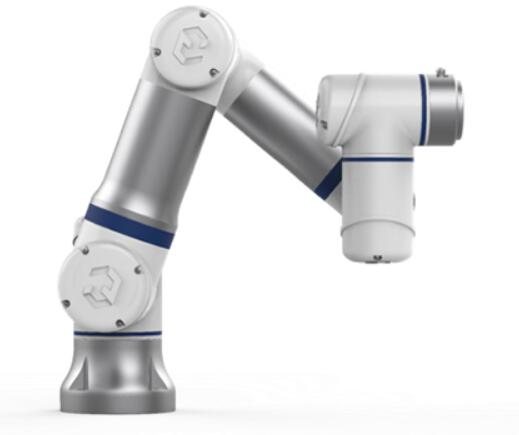
Its motion form is realized by a motion system composed of one rotation and two movements. Its working space is cylindrical. Compared with the rectangular coordinate industrial robot, under the same working space conditions, the body occupies a small volume. The range of motion is large, and its position accuracy is second only to Cartesian coordinate robots, and it is difficult to coordinate with other industrial robots.
(3) Промышленный робот со сферическими координатами
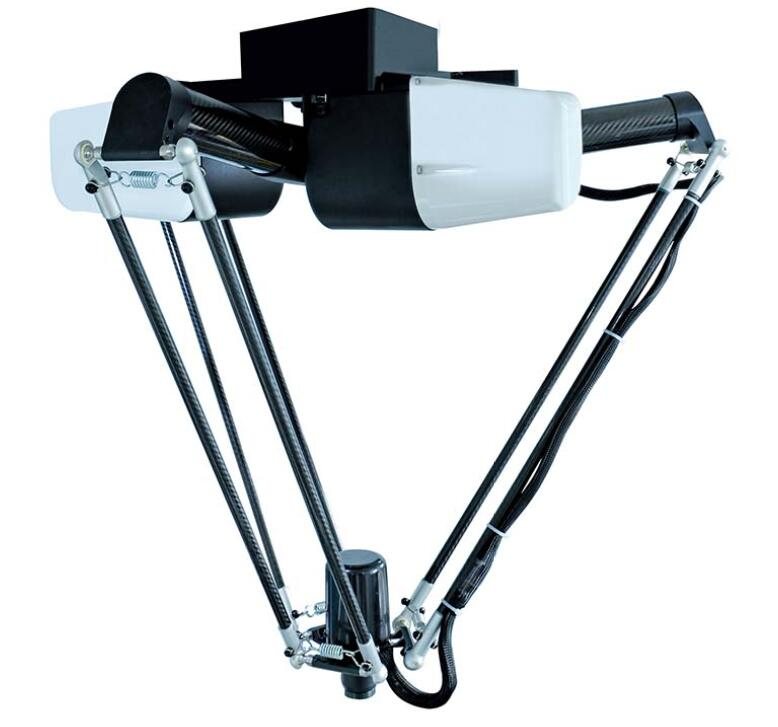
Also known as polar coordinate industrial robot, its arm movement consists of two rotations and one linear movement (ie RRP, one rotation, one pitching and one telescopic movement). Its working space is a sphere, which can make up and down pitching movements. And it can grasp the coordinated workpiece on the ground or teach low position, its position accuracy is high, and the position error is proportional to the arm length.
(4)Многосуставной промышленный робот
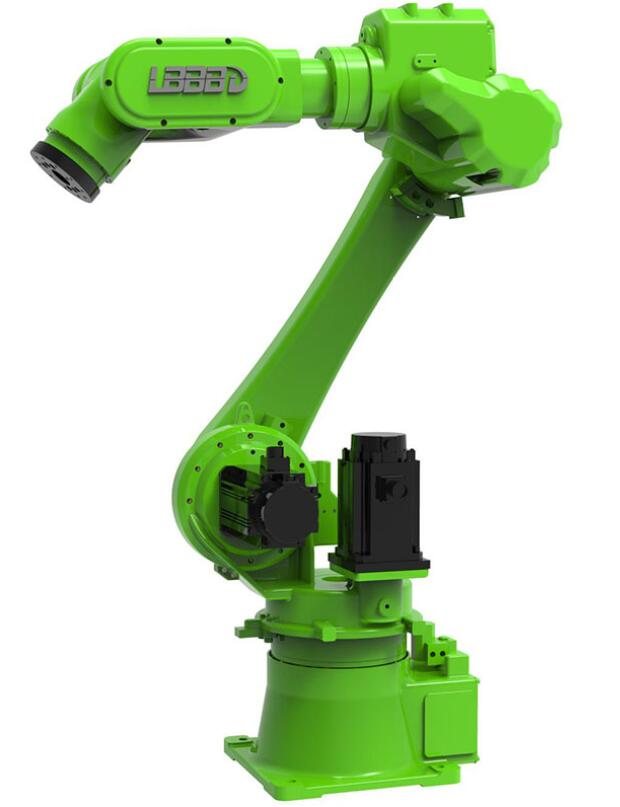
Also known as a rotary coordinate industrial robot. The arm of this industrial robot is similar to the upper limb of a human body. Its first three joints are the revolving joint (RRR). The industrial robot is generally composed of a column and a large and small arm. The column and the big arm are formed An elbow joint is formed between the shoulder joint, the upper arm and the forearm, which can make the upper arm rotate and pitch and swing, and the lower arm can make pitch swing.
Его структура является наиболее компактной, гибкой и занимает наименьшую площадь. Он может работать в координации с другими промышленными роботами, но имеет низкую точность позиционирования, проблемы с балансировкой и связью управления. Этот тип промышленных роботов находит все более широкое применение.
(5)Промышленный робот с плоским шарниром
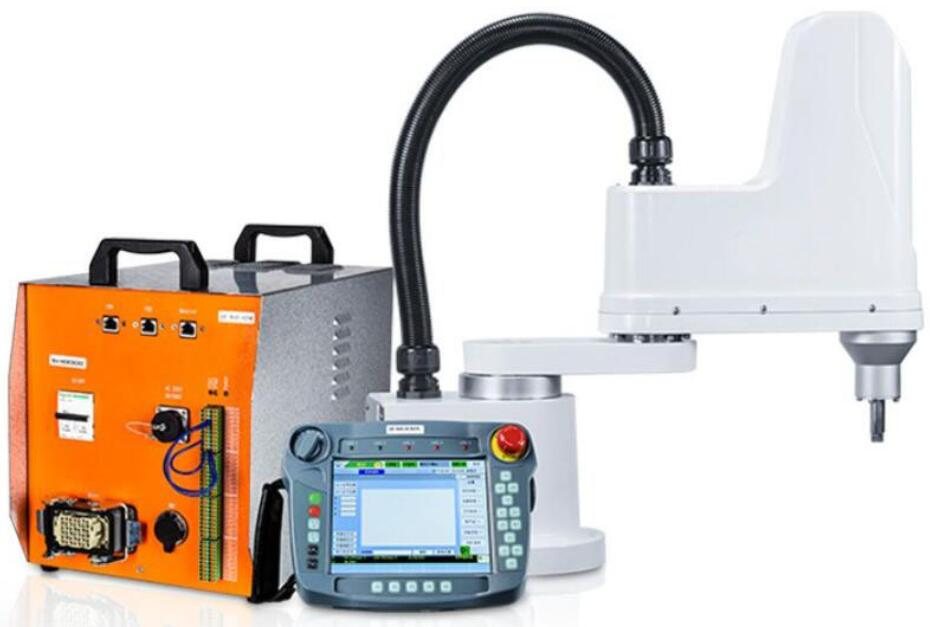
It uses a mobile joint and two rotary joints (PRR), the mobile joint realizes up and down movement, and the two rotary joints control the front and back, left and right movements. This form of industrial robot is also known as (SCARA (Seletive Compliance Assembly Robot Arm) assembly robot. It is flexible in the horizontal direction, and has great rigidity in the vertical direction. It has a simple structure and flexible movements, and is mostly used for assembly operations.
Он особенно подходит для вставной сборки небольших по размеру деталей, таких как вставная сборка в электронной промышленности.2. Промышленные роботы делятся на следующие категории по режиму движения:
(1) Пневматический промышленный робот
This type of industrial robot uses compressed air to drive the manipulator. Its advantages are convenient air source, rapid action, simple structure, low cost, and no pollution. The disadvantage is that the air is compressible, resulting in poor working speed stability. The source pressure is generally only about 6kPa, so the snatch force of this type of industrial robot is small, generally only tens of Newtons, and the maximum is more than 100 Newtons.
(2) Гидравлический промышленный робот
The hydraulic pressure is much higher than the air pressure, generally about 70kPa, so the hydraulic transmission industrial robot has a large snatch capacity, which can reach thousands of newtons. This type of industrial robot has compact structure, smooth transmission, and sensitive action, but it has high requirements for sealing and is not suitable for working in high or low temperature environments.
(3) Электрический промышленный робот
This is the most used type of industrial robot, not only because of the large variety of electric motors, it provides a variety of options for industrial robot design, but also because they can use a variety of flexible control methods. In the early days, stepper motors were used to drive, and then DC servo drive units were developed. At present, AC servo drive units are also developing rapidly. These drive units either directly drive the manipulator, or are driven after deceleration through a device such as a harmonic reducer. The structure is very compact and simple.
Система управления промышленным роботом
Структура робототехнической системы состоит из механической части робота, группы датчиков, части управления и части обработки информации. Система управления является основной частью робототехники.1. Функции, которые должна выполнять система управления промышленным роботом
Система управления роботом используется для управления манипулятором для выполнения конкретных задач. Его основные функции заключаются в следующем:
(1) Функция памяти:
Сохраняйте последовательность заданий, траекторию движения, режим движения, скорость движения и информацию, связанную с производственным процессом.
(2) Функция обучения:
Офлайн-программирование, онлайн-обучение, непрямое обучение. Онлайн-обучение включает в себя обучающий блок и обучение под руководством инструктора.
(3) Функция контакта с периферийным оборудованием:
Интерфейс ввода и вывода, интерфейс связи, сетевой интерфейс, интерфейс синхронизации.
(4) Функция установки координат:
Существует четыре системы координат: суставная, абсолютная, инструментальная и определяемая пользователем.
(5) Человеко-машинный интерфейс:
Учебный блок, панель управления, экран дисплея.
(6) Интерфейс датчика:
Обнаружение положения, зрение, прикосновение, сила и т. д.
(7) Функция сервопривода положения:
Многоосевая связь робота, управление движением, управление скоростью и ускорением, динамическая компенсация и т. д.
(8) Функция защиты безопасности диагностики неисправностей:
Мониторинг состояния системы во время работы, защита безопасности при возникновении неисправностей и самодиагностика неисправностей.
2. Состав системы управления промышленным роботом.
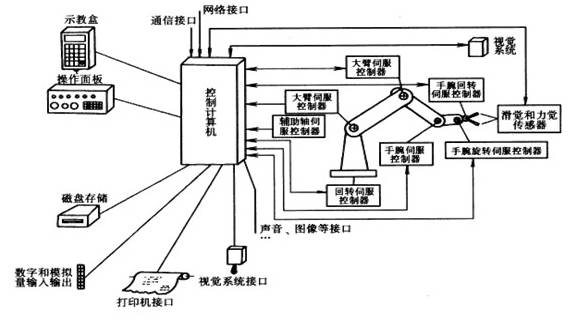 Структурная схема системы управления роботом(1) Управляющий компьютер:
Диспетчерско-командная организация системы управления. Как правило, микрокомпьютеры и микропроцессоры бывают 32-битными, 64-битными и т. д., например процессоры серии Pentium и другие типы процессоров.
(2) Учебный блок:
Обучите робота траектории работы и настройке параметров, а также взаимодействию человека с компьютером, получите собственный независимый процессор и блок хранения данных и реализуйте информационное взаимодействие с главным компьютером посредством последовательной связи.
(3) Панель управления:
состоит из различных кнопок управления и индикаторов состояния и выполняет только основные функциональные операции.
(4) Жесткий диск и дискета:
Периферийная память для хранения рабочих программ робота.
(5) Цифровой и аналоговый вход и выход:
Ввод или вывод различных команд состояния и управления.
(6) Интерфейс принтера:
Запишите различную информацию, которую необходимо вывести.
(7) Интерфейс датчика:
используется для автоматического обнаружения информации для реализации совместимого управления роботом, обычно с помощью датчиков силы, прикосновения и зрения.
(8) контроллер оси:
Завершите управление положением сустава робота, скоростью и ускорением.
(9) Управление вспомогательным оборудованием:
используется для управления вспомогательным оборудованием, взаимодействующим с роботом, например, позиционером захвата и т. д.
(10) Интерфейс связи:
Реализуйте обмен информацией между роботами и другими устройствами, как правило, через последовательные интерфейсы, параллельные интерфейсы и т. д.
(11) сетевой интерфейс
1) Ethernet interface: Direct PC communication of several or single robots can be realized through Ethernet, the data transmission rate is up to 10Mbit/s, and the application program can be programmed directly on the PC with windows library functions, and the TCP/IP communication protocol can be supported , Load data and programs into each robot controller through the Ethernet interface.
2) Интерфейс полевой шины: поддерживает различные популярные спецификации полевой шины, такие как сеть устройств, удаленный ввод-вывод AB, Interbus-s, profibus-DP, M-NET и т. д.
3. Классификация систем управления промышленными роботами.
(1) Система программного управления:
Примените к каждой степени свободы определенную регулярную функцию управления, и робот сможет реализовать необходимую космическую траекторию.
(2) Адаптивная система управления:
When the external conditions change, in order to ensure the required quality or to improve the control quality with the accumulation of experience, the process is based on the observation of the state of the operating machine and the servo error, and then adjust the parameters of the nonlinear model until the error Until it disappears. The structure and parameters of this system can change automatically with time and conditions.
(3) Система искусственного интеллекта:
Заранее составить программы движения невозможно, а требуется определение эффекта управления в реальном времени на основе полученной информации о состоянии окружающей среды во время движения.
Режим привода: см. систему привода промышленного робота.
Метод упражнения:
(4) Тип точки:
requires the robot to accurately control the pose of the end effector, regardless of the path;
(5) Тип гусеницы:
требует, чтобы робот двигался в соответствии с заданной траекторией и скоростью.
(6) Шина управления:
Система управления шиной международного стандарта. Используйте шину международного стандарта в качестве шины управления системой управления, например VME, MULTI-bus, STD-bus, PC-bus.
(7) Специальная система управления шиной:
В качестве шины системы управления используется шина, определенная и используемая самим производителем.
(8) Метод программирования:
Система программирования физических настроек. Оператор устанавливает фиксированный концевой выключатель для реализации программной операции запуска и остановки, который можно использовать только для простых операций комплектации и размещения.
(9) Онлайн-программирование:
Метод программирования процесса памяти для оперативной информации реализуется посредством обучения человека, включая прямое обучение (т.е. обучение из рук в руки), обучение с помощью моделирования и обучение в обучающей коробке.
(10) Автономное программирование:
Не обучайте непосредственно реального робота, а отделите его от реальной рабочей среды, создавайте программу обучения и генерируйте траекторию робота удаленно в автономном режиме, используя роботов высокого уровня и языки программирования.
4. Структура системы управления роботом
Системы управления роботами можно разделить на три категории в зависимости от методов управления.
(1) Централизованная система управления (Централизованная система управления):
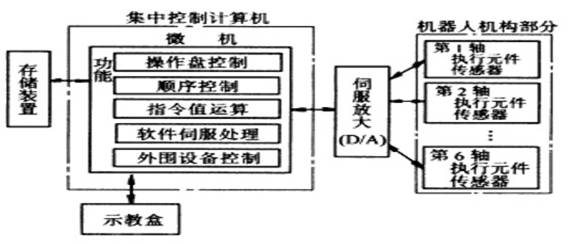 Структурная схема централизованной системы управления
Для реализации всех функций управления используется компьютер. Структура проста, стоимость низкая, но производительность в реальном времени низкая, и ее трудно расширять. Эта структура часто использовалась в ранних роботах. Блок-схема представлена на рисунке.
Централизованная система управления на базе ПК в полной мере использует преимущества открытости ресурсов ПК и может обеспечить хорошую открытость: различные карты управления, сенсорные устройства и т. д. могут быть интегрированы в систему управления через стандартные слоты PCI или через стандартные последовательные порты и параллельные порты. Система.
The advantages of centralized control systems are: low hardware costs, easy information collection and analysis, easy to achieve optimal control of the system, better integrity and coordination, and more convenient PC-based system hardware expansion. Its shortcomings are also obvious: the system control lacks flexibility, and the control danger is easy to concentrate. Once a failure occurs, its impact is wide and the consequences are serious; because the real-time requirements of industrial robots are very high, when the system performs a large amount of data calculation, it will reduce the real-time performance , The system’s responsiveness to multitasking will also conflict with the system’s real-time performance; in addition, the system’s complex wiring will reduce the system’s reliability.
(2) Система управления «главный-подчиненный»:
Using master and slave two-level processors to realize all control functions of the system. The main CPU realizes management, coordinate transformation, trajectory generation and system self-diagnosis, etc.; the slave CPU realizes the motion control of all joints. Its composition block diagram, as shown in the figure.
Система управления «главный-подчиненный» имеет хорошую производительность в режиме реального времени и подходит для высокоточного и высокоскоростного управления, но масштабируемость ее системы плохая, а обслуживание затруднено.
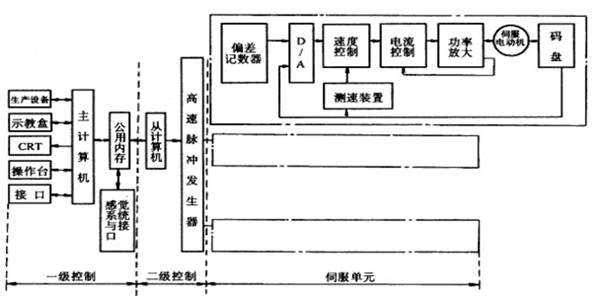 Блок-схема ведущей и ведомой системы управления
(3) Система управления распределением:
В зависимости от характера и метода управления система делится на несколько модулей. Каждый модуль имеет разные задачи управления и стратегии управления. Каждый режим может представлять собой отношения «главный-подчиненный» или равноправные отношения.
Этот метод имеет хорошую производительность в режиме реального времени, легко реализует высокоскоростное и высокоточное управление, легко расширяется и может реализовать интеллектуальное управление. В настоящее время это популярный метод.
The main idea is "decentralized control, centralized management", that is, the system can comprehensively coordinate and allocate its overall goals and tasks, and complete the control tasks through the coordination of subsystems. The entire system is functional, logical, and physical. It is decentralized, so the DCS system is also called a distributed control system or a distributed control system.
In this structure, the subsystem is composed of a controller and different controlled objects or devices, and each subsystem communicates with each other through a network. The distributed control structure provides an open, real-time and accurate robot control system. Two-level control methods are often used in distributed systems.
Two-level distributed control system, usually composed of upper computer, lower computer and network. The upper computer can carry out different trajectory planning and control algorithms, and the lower computer can carry out the research and realization of interpolation and subdivision and control optimization. The upper computer and the lower computer work in coordination with each other through the communication bus. The communication bus here can be in the form of RS-232, RS-485, EEE-488 and USB bus.
Now, the development of Ethernet and fieldbus technology provides robots with faster, stable and effective communication services. Especially the field bus, which is applied to the production site to realize two-way multi-node digital communication between microcomputerized measurement and control equipment, thus forming a new type of network integrated fully distributed control system-field bus control system FCS (Filed bus Control System) ).
In the factory production network, the devices that can be connected via fieldbus are collectively referred to as "field devices/instruments". From the perspective of system theory, industrial robots, as one of the production equipment of the factory, can also be summarized as field equipment. After the introduction of fieldbus technology in the robot system, it is more conducive to the integration of robots in the industrial production environment.
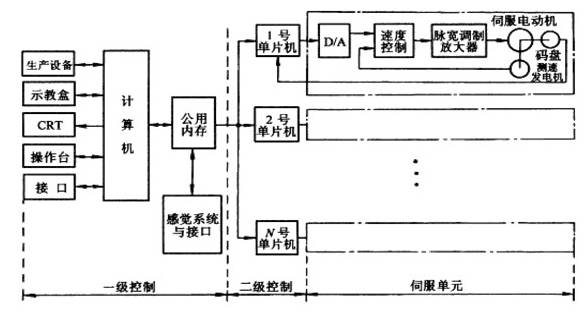 Block diagram of distributed control systemThe advantages of the distributed control system are: system flexibility is good, the risk of the control system is reduced, the use of multi-processor distributed control is conducive to the parallel execution of system functions, the processing efficiency of the system is improved, and the response time is shortened.
For industrial robots with multiple degrees of freedom, centralized control handles the coupling relationship between each control axis very well, and can be easily compensated. However, when the number of axes increases to make the control algorithm very complicated, its control performance will deteriorate. Moreover, when the number of axes in the system or the control algorithm becomes very complicated, it may lead to the redesign of the system.
Напротив, каждая ось движения распределенной структуры обрабатывается контроллером, а это означает, что система имеет меньшую связь между осями и более высокую реконфигурацию системы.
"Industry 4.0" refers to the fourth industrial revolution after steam engine, electrification and automation. It combines traditional industry with digital information technology and realizes intelligent production with the help of technologies such as big data and cloud computing. In China, "Industry 4.0" means the upgrading of the country's manufacturing industry. For this reason, China has specifically put forward the development goal of "Made in China 2025". The goal is to move from a major manufacturing country to a strong manufacturing country by 2025.


