


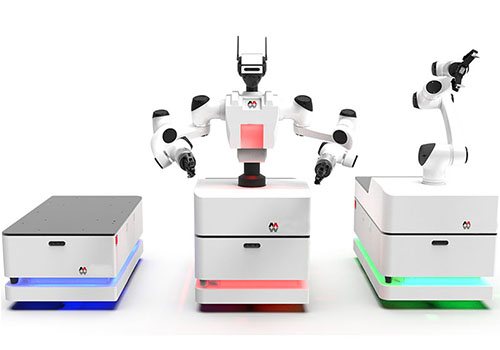
"Made in China 2025" plans the strategic goal of my country's manufacturing power, and intelligent manufacturing has become the top priority of industrial manufacturing transformation. Under the general trend of intelligence, the downstream application fields of intelligent equipment are accelerating the expansion, and the development of الروبوتات الصناعيةيمكن توقعه.
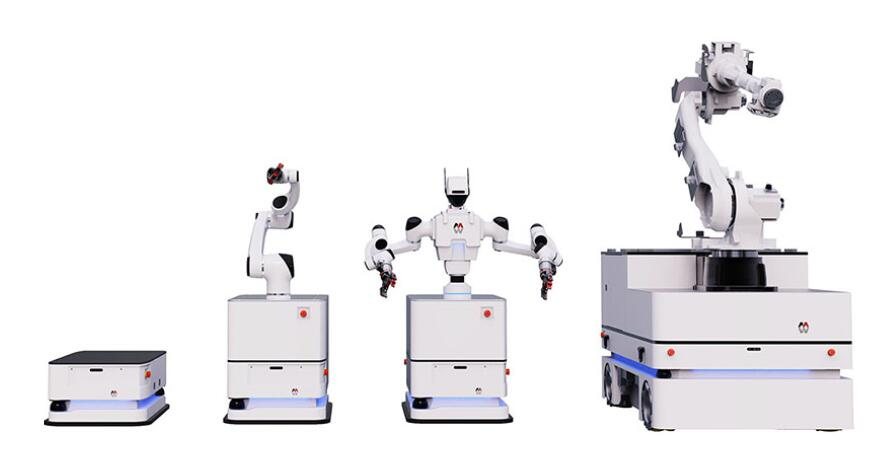
Industrial robots refer to multi-joint manipulators or multi-degree-of-freedom mechanical devices that can work intelligently under human control and can perfectly replace humans working on the production line. Compared with manpower, industrial robots have the characteristics of low cost, high efficiency and 24-hour work. In recent years, as domestic labor costs continue to rise, the labor advantage of my country's manufacturing industry is not obvious, the manufacturing industry urgently needs to transform to intelligence, and industrial robots are showing a strong development trend.
my country is a big consumer of industrial robots. Since 2013, it has become the world's largest consumer market for industrial robots for two consecutive years. There are often industrial robots in the fields of automobile manufacturing, electronics, rubber and plastics, military industry, aviation manufacturing, food industry, medical equipment and metal products. Among them, the automotive industry has the most applications, accounting for 38%.
تعد قوانغدونغ وجيانغسو وشانغهاي وبكين وأماكن أخرى المناطق الرئيسية التي تتركز فيها صناعة الروبوتات الصناعية في بلدي، ويمثل عدد الروبوتات الصناعية المملوكة نصف سوق الروبوتات الصناعية الوطنية.
However, due to the lack of core technology, the consumption of industrial robots in my country is heavily dependent on foreign companies, especially in core components such as reducers, servo motors, and controllers. Domestic robot companies in my country are restricted by others and can only purchase expensive foreign equipment, which requires domestic industries. Robot manufacturers continue to improve their technology, increase R&D level, and get rid of the control of China's industrial robot consumer market by foreign robot brands as soon as possible.
Considering that the current density of industrial robots in the global manufacturing industry is 55, while the density of China's industrial robots is only 21, which is much lower than that of developed countries such as Japan, South Korea, Germany and the United States, and in the context of intelligent manufacturing, the policy of "machine substitution" continues to be implemented. There is still a lot of room for growth. Related concept companies such as Inovance Technology, Robotics, Zhiyun Co., Ltd., Keyuan Co., Ltd., and Qinchuan Machine Tool will achieve better development under the robot dividend.
مرحلة تطوير الروبوتات الصناعية
يمكن تقسيم تطور الروبوتات الصناعية عادة إلى ثلاثة أجيال:
1. الجيل الأول من الروبوتات الصناعية:
Usually refers to the “programmable industrial robots” that are currently commercialized and used internationally, also known as “teaching and reproducing industrial robots”, that is, in order for the industrial robot to complete a certain task, the operator will first complete the task. All kinds of knowledge (such as motion trajectory, operating conditions, operating sequence and operating time, etc.) of industrial robots can be "teached" through direct or indirect means.
After the industrial robots memorize this knowledge, they can "reproduce" Instructions, within a certain accuracy range, faithfully reproduce various taught actions repeatedly. In 1962, the first Unimate industrial robot of Universal Automation of the United States was put into use in General Motors of the United States, marking the birth of the first generation of industrial robots.
2، الجيل الثاني من الروبوتات الصناعية:
usually refers to an "intelligent robot" with some kind of intelligence (such as touch, force, vision, etc.). That is, after the sensors receive information such as touch, force and vision, the computer controls the robot's operating machine to complete the corresponding appropriate operations. In 1982, General Motors in the United States equipped the industrial robot with a vision system on the assembly line, thus announcing the advent of a new generation of intelligent industrial robots.
3. الجيل الثالث من الروبوتات الصناعية:
is the so-called "only-type industrial robot". It not only has a perception function, but also has certain decision-making and planning capabilities. The first generation of industrial robots is still in the laboratory research stage. After the birth-growth-maturity period, industrial robots have become indispensable core equipment in the manufacturing industry. There are about 750,000 industrial robots in the world fighting side by side with workers and friends on all production lines.
As a rising star of the robot family, special robots have a tendency to come from behind due to their wide range of uses. Special robots for various purposes such as humanoid robots, agricultural robots, روبوتات الخدمةوظهرت الروبوتات تحت الماء، والروبوتات الطبية، والروبوتات العسكرية، والروبوتات الترفيهية، وهي تتجه نحو التطبيق العملي بوتيرة سريعة. تصنيف الروبوتات الصناعية
يمكن تقسيم الروبوتات الصناعية إلى الأنواع التالية وفقًا لطرق مختلفة
1. تنقسم الروبوتات الصناعية إلى الفئات التالية حسب الشكل الإحداثي للمناول: (يشير الشكل الإحداثي إلى شكل نظام الإحداثيات المرجعية الذي يتخذه ذراع المناول عندما يتحرك).
(1) الروبوت الصناعي ذو الإحداثيات الديكارتية
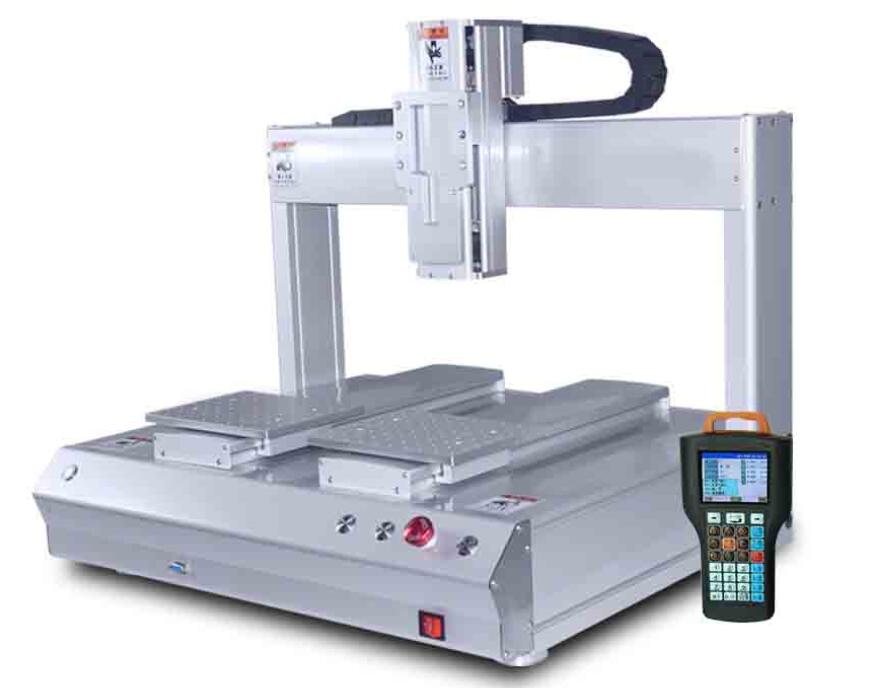
Its movement part is composed of three mutually perpendicular linear movements (namely PPP), and its working space is rectangular. Its moving distance in each axis can be read directly on each coordinate axis. It is intuitive, easy to program and calculate the position and posture, has high positioning accuracy, no coupling control, simple structure, but the body occupies a large space. The motion range is small, the flexibility is poor, and it is difficult to coordinate with other industrial robots.
(2) روبوت صناعي ذو تنسيق أسطواني
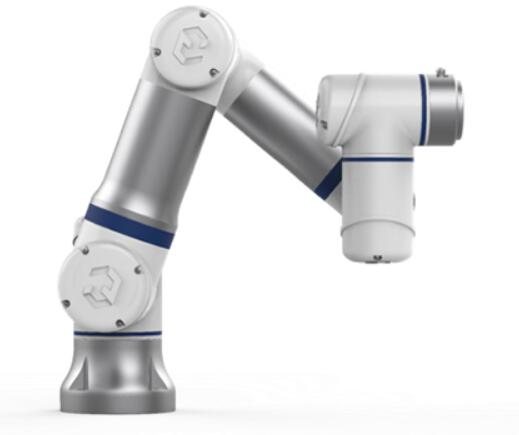
Its motion form is realized by a motion system composed of one rotation and two movements. Its working space is cylindrical. Compared with the rectangular coordinate industrial robot, under the same working space conditions, the body occupies a small volume. The range of motion is large, and its position accuracy is second only to Cartesian coordinate robots, and it is difficult to coordinate with other industrial robots.
(3) الروبوت الصناعي ذو الإحداثيات الكروية
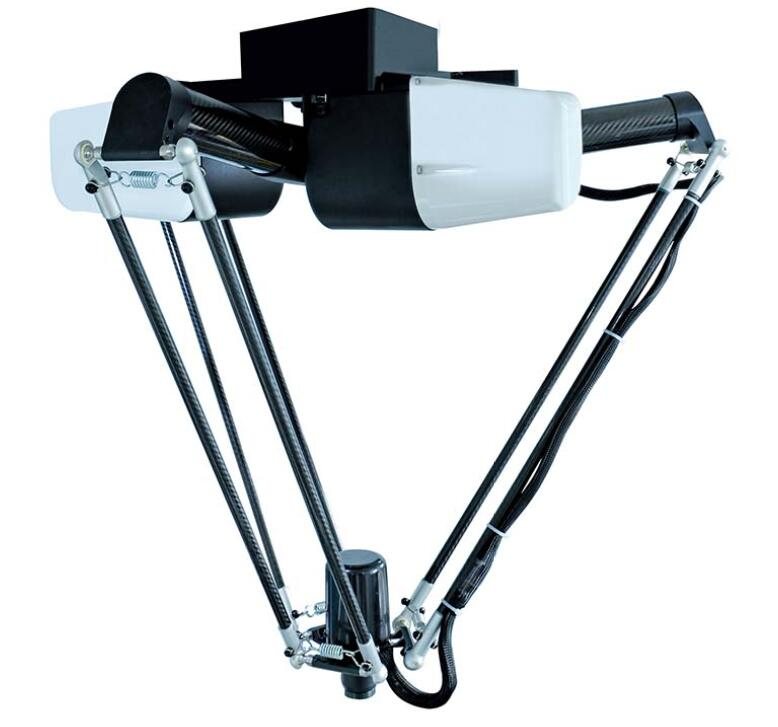
Also known as polar coordinate industrial robot, its arm movement consists of two rotations and one linear movement (ie RRP, one rotation, one pitching and one telescopic movement). Its working space is a sphere, which can make up and down pitching movements. And it can grasp the coordinated workpiece on the ground or teach low position, its position accuracy is high, and the position error is proportional to the arm length.
(4) روبوت صناعي متعدد المفاصل
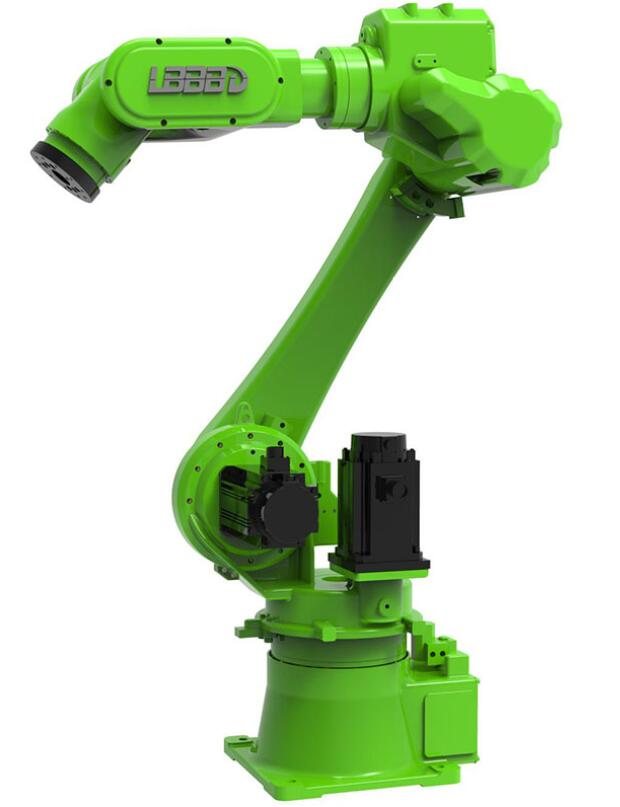
Also known as a rotary coordinate industrial robot. The arm of this industrial robot is similar to the upper limb of a human body. Its first three joints are the revolving joint (RRR). The industrial robot is generally composed of a column and a large and small arm. The column and the big arm are formed An elbow joint is formed between the shoulder joint, the upper arm and the forearm, which can make the upper arm rotate and pitch and swing, and the lower arm can make pitch swing.
هيكلها هو الأكثر إحكاما ومرونة، ولها أصغر مساحة. يمكن أن تعمل بالتنسيق مع الروبوتات الصناعية الأخرى، ولكنها تتمتع بدقة منخفضة في تحديد الموقع، ومشاكل في التوازن، واقتران التحكم. يتم استخدام هذا النوع من الروبوتات الصناعية على نطاق واسع.
(5) روبوت صناعي من النوع المستوي
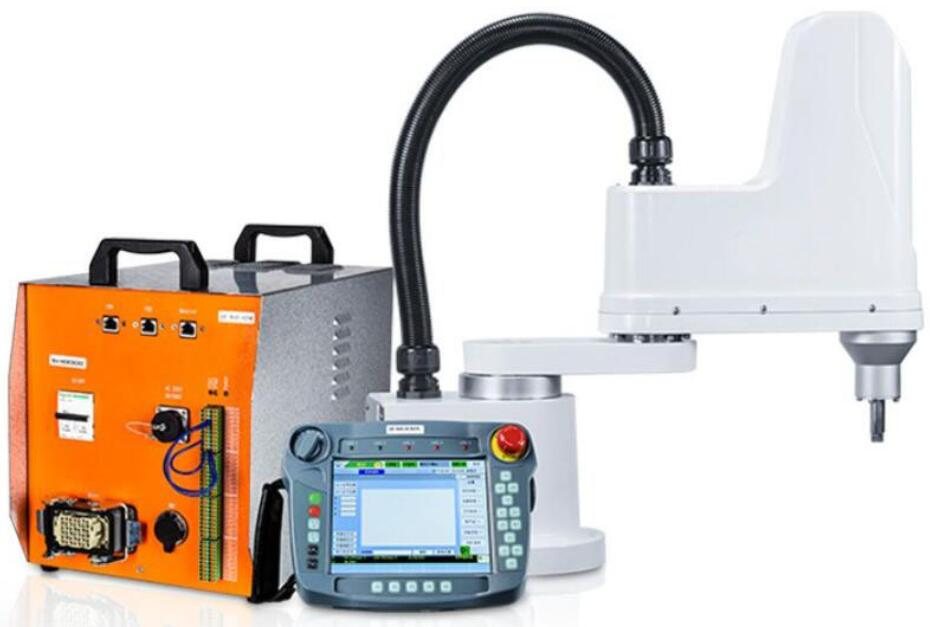
It uses a mobile joint and two rotary joints (PRR), the mobile joint realizes up and down movement, and the two rotary joints control the front and back, left and right movements. This form of industrial robot is also known as (SCARA (Seletive Compliance Assembly Robot Arm) assembly robot. It is flexible in the horizontal direction, and has great rigidity in the vertical direction. It has a simple structure and flexible movements, and is mostly used for assembly operations.
إنها مناسبة بشكل خاص لتجميع الأجزاء الصغيرة الحجم، مثل المكونات الإضافية والتجميع في صناعة الإلكترونيات.2. تنقسم الروبوتات الصناعية إلى الفئات التالية حسب وضع القيادة:
(1) الروبوت الصناعي الهوائي
This type of industrial robot uses compressed air to drive the manipulator. Its advantages are convenient air source, rapid action, simple structure, low cost, and no pollution. The disadvantage is that the air is compressible, resulting in poor working speed stability. The source pressure is generally only about 6kPa, so the snatch force of this type of industrial robot is small, generally only tens of Newtons, and the maximum is more than 100 Newtons.
(2) الروبوت الصناعي الهيدروليكي
The hydraulic pressure is much higher than the air pressure, generally about 70kPa, so the hydraulic transmission industrial robot has a large snatch capacity, which can reach thousands of newtons. This type of industrial robot has compact structure, smooth transmission, and sensitive action, but it has high requirements for sealing and is not suitable for working in high or low temperature environments.
(3) الروبوت الصناعي الكهربائي
This is the most used type of industrial robot, not only because of the large variety of electric motors, it provides a variety of options for industrial robot design, but also because they can use a variety of flexible control methods. In the early days, stepper motors were used to drive, and then DC servo drive units were developed. At present, AC servo drive units are also developing rapidly. These drive units either directly drive the manipulator, or are driven after deceleration through a device such as a harmonic reducer. The structure is very compact and simple.
نظام التحكم بالروبوت الصناعي
يتكون هيكل نظام الروبوت من جزء آلية الروبوت ومجموعة الاستشعار وجزء التحكم وجزء معالجة المعلومات. يعد نظام التحكم جزءًا أساسيًا من صناعة الروبوت.1. الوظائف التي يجب أن يحققها نظام التحكم بالروبوت الصناعي
يتم استخدام نظام التحكم في الروبوت للتحكم في المناور لإكمال مهام محددة. وظائفها الأساسية هي كما يلي:
(1) وظيفة الذاكرة:
تخزين تسلسل العمل ومسار الحركة ووضع الحركة وسرعة الحركة والمعلومات المتعلقة بعملية الإنتاج.
(2) وظيفة التدريس:
البرمجة دون اتصال بالإنترنت، التدريس عبر الإنترنت، التدريس غير المباشر. يشمل التدريس عبر الإنترنت صندوق التدريس والتدريس الموجه.
(3) وظيفة الاتصال بالمعدات الطرفية:
واجهة الإدخال والإخراج، واجهة الاتصال، واجهة الشبكة، واجهة المزامنة.
(4) وظيفة إعداد الإحداثيات:
هناك أربعة أنظمة إحداثيات: مشترك، ومطلق، وأداة، ومحدد من قبل المستخدم.
(5) واجهة الإنسان والآلة:
صندوق التدريس، لوحة التشغيل، شاشة العرض.
(6) واجهة الاستشعار:
كشف الموقف، والرؤية، واللمس، والقوة، وما إلى ذلك.
(7) وظيفة المؤازرة الموقف:
ربط الروبوت متعدد المحاور، التحكم في الحركة، التحكم في السرعة والتسارع، التعويض الديناميكي، إلخ.
(8) وظيفة حماية سلامة تشخيص الأخطاء:
مراقبة حالة النظام أثناء التشغيل، وحماية السلامة في ظل ظروف الخطأ والتشخيص الذاتي للأخطاء.
2. تكوين نظام التحكم في الروبوت الصناعي
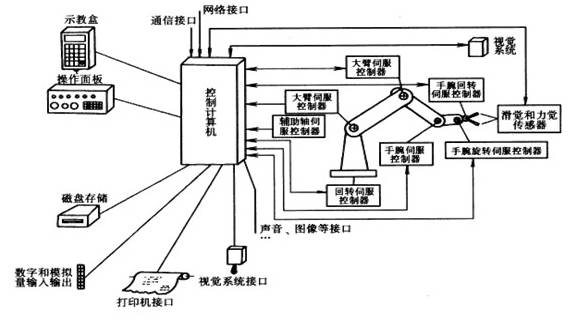 الرسم التخطيطي لنظام التحكم في الروبوت (1) كمبيوتر التحكم:
تنظيم الإرسال والقيادة لنظام التحكم. بشكل عام، الحواسيب الصغيرة والمعالجات الدقيقة هي 32 بت، 64 بت، وما إلى ذلك، مثل وحدات المعالجة المركزية من سلسلة بنتيوم وأنواع أخرى من وحدات المعالجة المركزية.
(2) صندوق التدريس:
قم بتعليم مسار عمل الروبوت وإعدادات المعلمات، بالإضافة إلى التفاعل بين الإنسان والكمبيوتر، وامتلاك وحدة المعالجة المركزية ووحدة التخزين المستقلة الخاصة به، وتحقيق تفاعل المعلومات مع الكمبيوتر المضيف من خلال الاتصال التسلسلي.
(3) لوحة التشغيل:
يتكون من أزرار تشغيل ومؤشرات حالة مختلفة، ويكمل العمليات الوظيفية الأساسية فقط.
(4) تخزين القرص الصلب والأقراص المرنة:
ذاكرة محيطية لتخزين برامج عمل الروبوت.
(5) المدخلات والمخرجات الرقمية والتناظرية:
إدخال أو إخراج أوامر الحالة والتحكم المختلفة.
(6) واجهة الطابعة:
تسجيل المعلومات المختلفة التي يجب إخراجها.
(7) واجهة الاستشعار:
يتم استخدامه للكشف التلقائي عن المعلومات لتحقيق التحكم المتوافق في الروبوت، وأجهزة استشعار القوة واللمس والرؤية بشكل عام.
(8) تحكم المحور:
أكمل وضع مفصل الروبوت والتحكم في السرعة والتسارع.
(9) التحكم في المعدات المساعدة:
يستخدم للتحكم في المعدات المساعدة التي تتعاون مع الروبوت، مثل أداة تحديد موضع المقبض، وما إلى ذلك.
(10) واجهة الاتصال:
تحقيق تبادل المعلومات بين الروبوتات والأجهزة الأخرى، بشكل عام الواجهات التسلسلية، والواجهات المتوازية، وما إلى ذلك.
(11) واجهة الشبكة
1) Ethernet interface: Direct PC communication of several or single robots can be realized through Ethernet, the data transmission rate is up to 10Mbit/s, and the application program can be programmed directly on the PC with windows library functions, and the TCP/IP communication protocol can be supported , Load data and programs into each robot controller through the Ethernet interface.
2) واجهة Fieldbus: تدعم مجموعة متنوعة من مواصفات ناقل المجال الشائعة، مثل Device net، وAB Remote I/O، وInterbus-s، وprofibus-DP، وM-NET، وما إلى ذلك.
3. تصنيف أنظمة التحكم بالروبوت الصناعي
(1) نظام التحكم في البرنامج:
قم بتطبيق وظيفة تحكم منتظمة معينة على كل درجة من الحرية، ويمكن للروبوت أن يحقق المسار الفضائي المطلوب.
(2) نظام التحكم التكيفي:
When the external conditions change, in order to ensure the required quality or to improve the control quality with the accumulation of experience, the process is based on the observation of the state of the operating machine and the servo error, and then adjust the parameters of the nonlinear model until the error Until it disappears. The structure and parameters of this system can change automatically with time and conditions.
(3) نظام الذكاء الاصطناعي:
من المستحيل تجميع برامج الحركة مسبقًا، ولكنها تتطلب تحديدًا في الوقت الفعلي لتأثير التحكم استنادًا إلى معلومات الحالة المحيطة التي تم الحصول عليها أثناء الحركة.
وضع القيادة: انظر نظام قيادة الروبوت الصناعي.
طريقة التمرين:
(4) نوع النقطة:
requires the robot to accurately control the pose of the end effector, regardless of the path;
(5) نوع المسار:
يتطلب من الروبوت أن يتحرك وفقًا للمسار والسرعة التي يتم تدريسها.
(6) حافلة التحكم:
نظام التحكم بالحافلات القياسي الدولي. استخدم الناقل القياسي الدولي كناقل تحكم لنظام التحكم، مثل VME، MULTI-bus، STD-bus، PC-bus.
(7) نظام التحكم المخصص للحافلات:
يتم استخدام الناقل المحدد والمستخدم من قبل الشركة المصنعة نفسها كناقل نظام التحكم.
(8) طريقة البرمجة:
نظام برمجة الإعدادات الفيزيائية. يقوم المشغل بتعيين مفتاح حد ثابت لتحقيق تشغيل البرنامج للتشغيل والإيقاف، والذي يمكن استخدامه فقط لعمليات الالتقاط والوضع البسيطة.
(9) البرمجة عبر الإنترنت:
يتم إكمال طريقة برمجة عملية الذاكرة لتشغيل المعلومات من خلال التدريس البشري، بما في ذلك التدريس المباشر (أي التدريس اليدوي) وتدريس المحاكاة وتعليم صندوق التدريس.
(10) البرمجة دون اتصال:
لا تقم بالتدريس مباشرة للروبوت الفعلي، ولكن قم بفصله عن بيئة العمل الفعلية، وقم بإنشاء برنامج تعليمي، وإنشاء مسار الروبوت عن بعد دون الاتصال بالإنترنت باستخدام روبوتات عالية المستوى ولغات برمجة.
4. هيكل نظام التحكم بالروبوت
يمكن تقسيم أنظمة التحكم بالروبوت إلى ثلاث فئات وفقًا لطرق التحكم الخاصة بها.
(1) نظام التحكم المركزي (نظام التحكم المركزي):
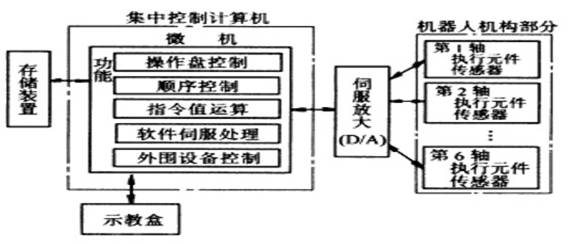 مخطط كتلة نظام التحكم المركزي
يتم استخدام الكمبيوتر لتحقيق جميع وظائف التحكم. الهيكل بسيط والتكلفة منخفضة، ولكن الأداء في الوقت الحقيقي ضعيف ومن الصعب التوسع. غالبًا ما يستخدم هذا الهيكل في الروبوتات المبكرة. يظهر مخطط الكتلة في الشكل.
يستفيد نظام التحكم المركزي القائم على الكمبيوتر الشخصي استفادة كاملة من انفتاح موارد الكمبيوتر، ويمكنه تحقيق انفتاح جيد: يمكن دمج مجموعة متنوعة من بطاقات التحكم وأجهزة الاستشعار وما إلى ذلك في التحكم من خلال فتحات PCI القياسية أو من خلال المنافذ التسلسلية القياسية والمنافذ المتوازية. نظام.
The advantages of centralized control systems are: low hardware costs, easy information collection and analysis, easy to achieve optimal control of the system, better integrity and coordination, and more convenient PC-based system hardware expansion. Its shortcomings are also obvious: the system control lacks flexibility, and the control danger is easy to concentrate. Once a failure occurs, its impact is wide and the consequences are serious; because the real-time requirements of industrial robots are very high, when the system performs a large amount of data calculation, it will reduce the real-time performance , The system’s responsiveness to multitasking will also conflict with the system’s real-time performance; in addition, the system’s complex wiring will reduce the system’s reliability.
(2) نظام التحكم الرئيسي والعبد:
Using master and slave two-level processors to realize all control functions of the system. The main CPU realizes management, coordinate transformation, trajectory generation and system self-diagnosis, etc.; the slave CPU realizes the motion control of all joints. Its composition block diagram, as shown in the figure.
يتمتع نظام التحكم الرئيسي والتابع بأداء جيد في الوقت الفعلي ومناسب للتحكم عالي الدقة والسرعة، ولكن قابلية تطوير النظام ضعيفة والصيانة صعبة.
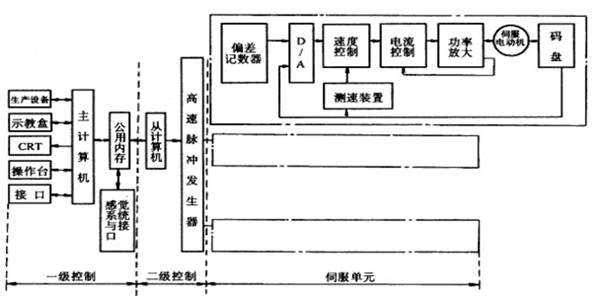 رسم تخطيطي لنظام التحكم الرئيسي والتابع
(3) نظام التحكم في التوزيع:
وفقا لطبيعة وطريقة النظام، يتم تقسيم التحكم في النظام إلى عدة وحدات. كل وحدة لها مهام تحكم واستراتيجيات تحكم مختلفة. يمكن أن يكون كل وضع علاقة سيد-عبد أو علاقة متساوية.
تتمتع هذه الطريقة بأداء جيد في الوقت الفعلي، ومن السهل تحقيق تحكم عالي السرعة وعالي الدقة، ومن السهل توسيعها، ويمكنها تحقيق تحكم ذكي. إنها طريقة شائعة في الوقت الحاضر.
The main idea is "decentralized control, centralized management", that is, the system can comprehensively coordinate and allocate its overall goals and tasks, and complete the control tasks through the coordination of subsystems. The entire system is functional, logical, and physical. It is decentralized, so the DCS system is also called a distributed control system or a distributed control system.
In this structure, the subsystem is composed of a controller and different controlled objects or devices, and each subsystem communicates with each other through a network. The distributed control structure provides an open, real-time and accurate robot control system. Two-level control methods are often used in distributed systems.
Two-level distributed control system, usually composed of upper computer, lower computer and network. The upper computer can carry out different trajectory planning and control algorithms, and the lower computer can carry out the research and realization of interpolation and subdivision and control optimization. The upper computer and the lower computer work in coordination with each other through the communication bus. The communication bus here can be in the form of RS-232, RS-485, EEE-488 and USB bus.
Now, the development of Ethernet and fieldbus technology provides robots with faster, stable and effective communication services. Especially the field bus, which is applied to the production site to realize two-way multi-node digital communication between microcomputerized measurement and control equipment, thus forming a new type of network integrated fully distributed control system-field bus control system FCS (Filed bus Control System) ).
In the factory production network, the devices that can be connected via fieldbus are collectively referred to as "field devices/instruments". From the perspective of system theory, industrial robots, as one of the production equipment of the factory, can also be summarized as field equipment. After the introduction of fieldbus technology in the robot system, it is more conducive to the integration of robots in the industrial production environment.
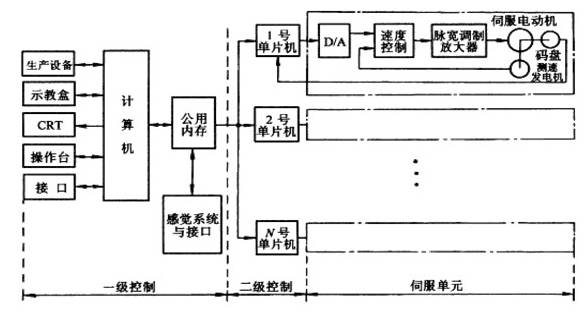 Block diagram of distributed control systemThe advantages of the distributed control system are: system flexibility is good, the risk of the control system is reduced, the use of multi-processor distributed control is conducive to the parallel execution of system functions, the processing efficiency of the system is improved, and the response time is shortened.
For industrial robots with multiple degrees of freedom, centralized control handles the coupling relationship between each control axis very well, and can be easily compensated. However, when the number of axes increases to make the control algorithm very complicated, its control performance will deteriorate. Moreover, when the number of axes in the system or the control algorithm becomes very complicated, it may lead to the redesign of the system.
في المقابل، تتم معالجة كل محور حركة للهيكل الموزع بواسطة وحدة تحكم، مما يعني أن النظام لديه اقتران أقل بين المحاور وإعادة تشكيل النظام بشكل أعلى.
"Industry 4.0" refers to the fourth industrial revolution after steam engine, electrification and automation. It combines traditional industry with digital information technology and realizes intelligent production with the help of technologies such as big data and cloud computing. In China, "Industry 4.0" means the upgrading of the country's manufacturing industry. For this reason, China has specifically put forward the development goal of "Made in China 2025". The goal is to move from a major manufacturing country to a strong manufacturing country by 2025.


