


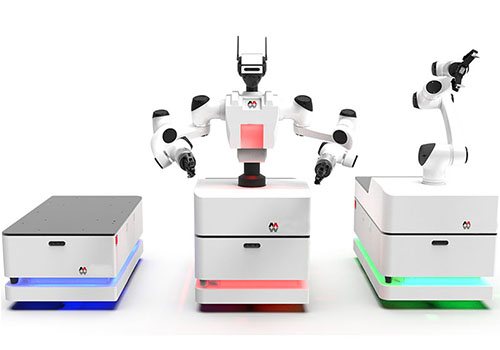
"Made in China 2025" plans the strategic goal of my country's manufacturing power, and intelligent manufacturing has become the top priority of industrial manufacturing transformation. Under the general trend of intelligence, the downstream application fields of intelligent equipment are accelerating the expansion, and the development of robots industrialesse puede esperar.
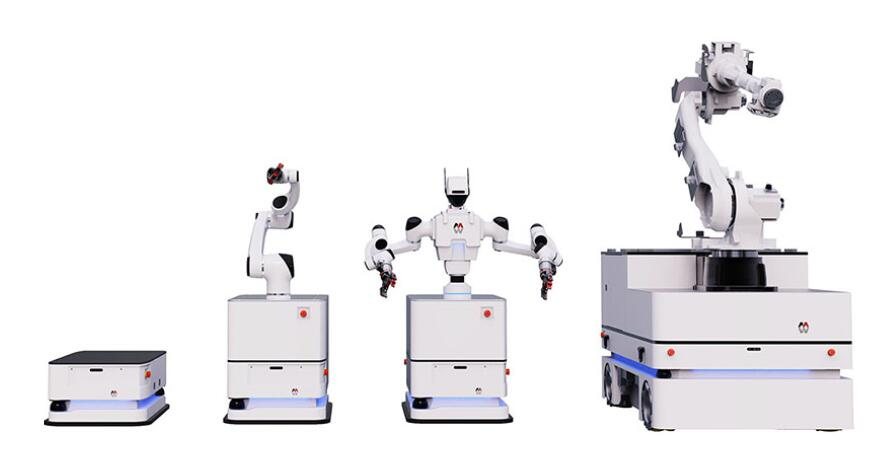
Industrial robots refer to multi-joint manipulators or multi-degree-of-freedom mechanical devices that can work intelligently under human control and can perfectly replace humans working on the production line. Compared with manpower, industrial robots have the characteristics of low cost, high efficiency and 24-hour work. In recent years, as domestic labor costs continue to rise, the labor advantage of my country's manufacturing industry is not obvious, the manufacturing industry urgently needs to transform to intelligence, and industrial robots are showing a strong development trend.
my country is a big consumer of industrial robots. Since 2013, it has become the world's largest consumer market for industrial robots for two consecutive years. There are often industrial robots in the fields of automobile manufacturing, electronics, rubber and plastics, military industry, aviation manufacturing, food industry, medical equipment and metal products. Among them, the automotive industry has the most applications, accounting for 38%.
Guangdong, Jiangsu, Shanghai, Beijing y otros lugares son las principales áreas de concentración de la industria de robots industriales de mi país, y el número de robots industriales que posee representa la mitad del mercado nacional de robots industriales.
However, due to the lack of core technology, the consumption of industrial robots in my country is heavily dependent on foreign companies, especially in core components such as reducers, servo motors, and controllers. Domestic robot companies in my country are restricted by others and can only purchase expensive foreign equipment, which requires domestic industries. Robot manufacturers continue to improve their technology, increase R&D level, and get rid of the control of China's industrial robot consumer market by foreign robot brands as soon as possible.
Considering that the current density of industrial robots in the global manufacturing industry is 55, while the density of China's industrial robots is only 21, which is much lower than that of developed countries such as Japan, South Korea, Germany and the United States, and in the context of intelligent manufacturing, the policy of "machine substitution" continues to be implemented. There is still a lot of room for growth. Related concept companies such as Inovance Technology, Robotics, Zhiyun Co., Ltd., Keyuan Co., Ltd., and Qinchuan Machine Tool will achieve better development under the robot dividend.
La etapa de desarrollo de los robots industriales.
El desarrollo de los robots industriales suele dividirse en tres generaciones:
1. Primera generación de robots industriales:
Usually refers to the “programmable industrial robots” that are currently commercialized and used internationally, also known as “teaching and reproducing industrial robots”, that is, in order for the industrial robot to complete a certain task, the operator will first complete the task. All kinds of knowledge (such as motion trajectory, operating conditions, operating sequence and operating time, etc.) of industrial robots can be "teached" through direct or indirect means.
After the industrial robots memorize this knowledge, they can "reproduce" Instructions, within a certain accuracy range, faithfully reproduce various taught actions repeatedly. In 1962, the first Unimate industrial robot of Universal Automation of the United States was put into use in General Motors of the United States, marking the birth of the first generation of industrial robots.
2, Segunda generación de robots industriales:
usually refers to an "intelligent robot" with some kind of intelligence (such as touch, force, vision, etc.). That is, after the sensors receive information such as touch, force and vision, the computer controls the robot's operating machine to complete the corresponding appropriate operations. In 1982, General Motors in the United States equipped the industrial robot with a vision system on the assembly line, thus announcing the advent of a new generation of intelligent industrial robots.
3, tercera generación de robots industriales:
is the so-called "only-type industrial robot". It not only has a perception function, but also has certain decision-making and planning capabilities. The first generation of industrial robots is still in the laboratory research stage. After the birth-growth-maturity period, industrial robots have become indispensable core equipment in the manufacturing industry. There are about 750,000 industrial robots in the world fighting side by side with workers and friends on all production lines.
As a rising star of the robot family, special robots have a tendency to come from behind due to their wide range of uses. Special robots for various purposes such as humanoid robots, agricultural robots, robots de servicioHan surgido robots submarinos, robots médicos, robots militares y robots de entretenimiento, y están avanzando hacia la practicidad a un ritmo rápido.Clasificación de robots industriales
Los robots industriales se pueden dividir en los siguientes tipos según diferentes métodos
1. Los robots industriales se dividen en las siguientes categorías según la forma de coordenadas del manipulador: (La forma de coordenadas se refiere a la forma del sistema de coordenadas de referencia que adopta el brazo del manipulador cuando se mueve).
(1) Robot industrial de coordenadas cartesianas
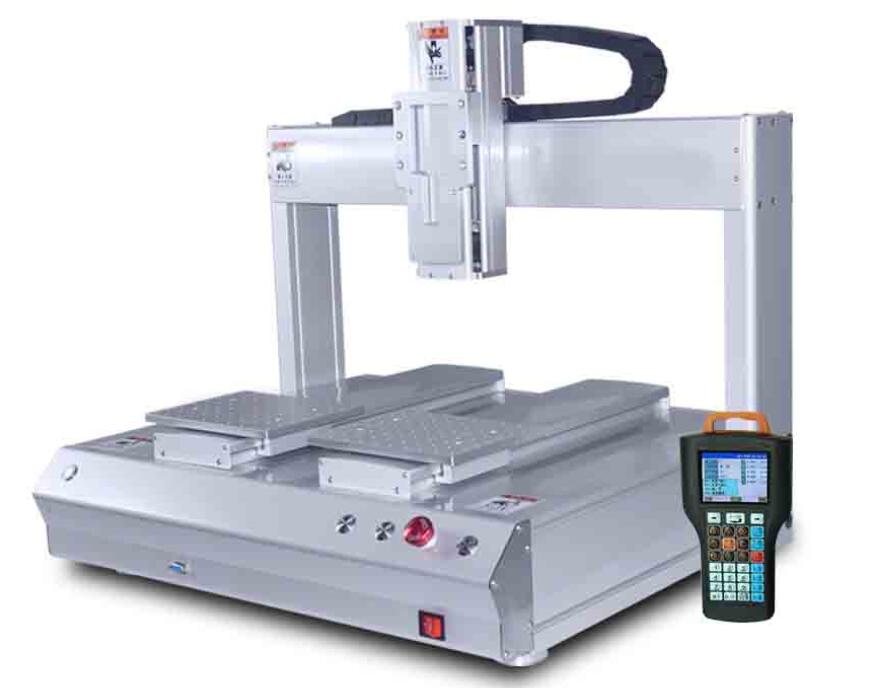
Its movement part is composed of three mutually perpendicular linear movements (namely PPP), and its working space is rectangular. Its moving distance in each axis can be read directly on each coordinate axis. It is intuitive, easy to program and calculate the position and posture, has high positioning accuracy, no coupling control, simple structure, but the body occupies a large space. The motion range is small, the flexibility is poor, and it is difficult to coordinate with other industrial robots.
(2) Robot industrial de coordenadas cilíndricas
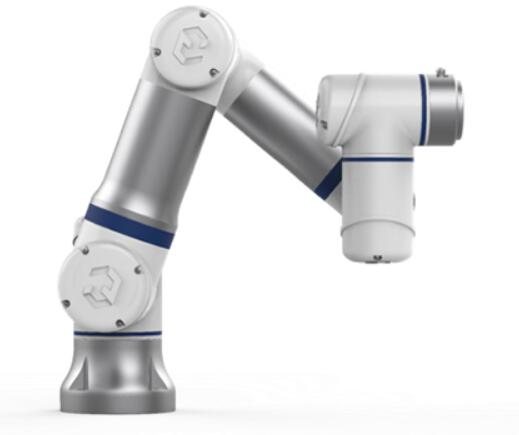
Its motion form is realized by a motion system composed of one rotation and two movements. Its working space is cylindrical. Compared with the rectangular coordinate industrial robot, under the same working space conditions, the body occupies a small volume. The range of motion is large, and its position accuracy is second only to Cartesian coordinate robots, and it is difficult to coordinate with other industrial robots.
(3) Robot industrial de coordenadas esféricas
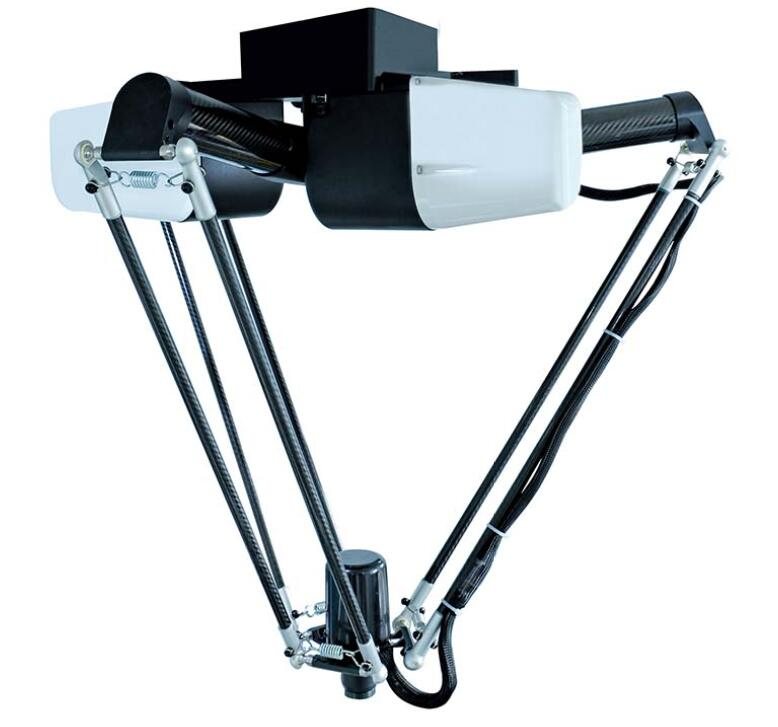
Also known as polar coordinate industrial robot, its arm movement consists of two rotations and one linear movement (ie RRP, one rotation, one pitching and one telescopic movement). Its working space is a sphere, which can make up and down pitching movements. And it can grasp the coordinated workpiece on the ground or teach low position, its position accuracy is high, and the position error is proportional to the arm length.
(4) Robot industrial multiarticular
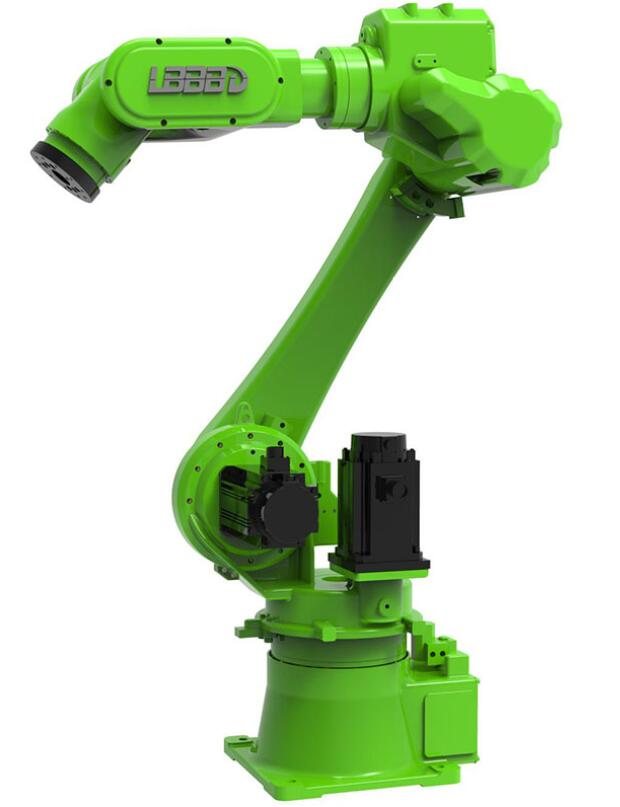
Also known as a rotary coordinate industrial robot. The arm of this industrial robot is similar to the upper limb of a human body. Its first three joints are the revolving joint (RRR). The industrial robot is generally composed of a column and a large and small arm. The column and the big arm are formed An elbow joint is formed between the shoulder joint, the upper arm and the forearm, which can make the upper arm rotate and pitch and swing, and the lower arm can make pitch swing.
Su estructura es la más compacta, flexible y ocupa el menor espacio. Puede trabajar en coordinación con otros robots industriales, pero tiene baja precisión de posición, problemas de equilibrio y acoplamiento de control. Este tipo de robots industriales son cada vez más utilizados.
(5) Robot industrial de tipo junta plana
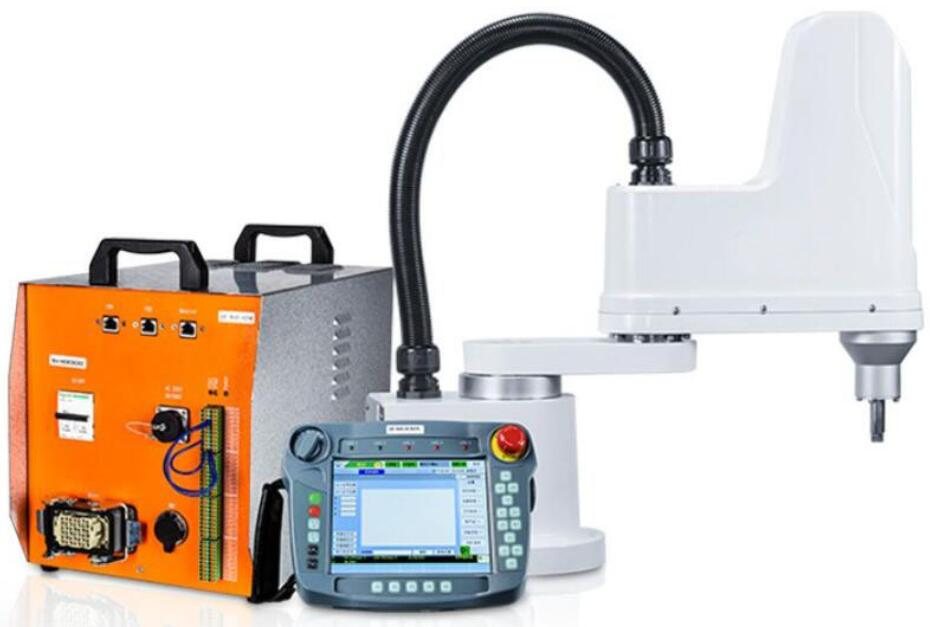
It uses a mobile joint and two rotary joints (PRR), the mobile joint realizes up and down movement, and the two rotary joints control the front and back, left and right movements. This form of industrial robot is also known as (SCARA (Seletive Compliance Assembly Robot Arm) assembly robot. It is flexible in the horizontal direction, and has great rigidity in the vertical direction. It has a simple structure and flexible movements, and is mostly used for assembly operations.
Es especialmente adecuado para el ensamblaje enchufable de piezas de tamaño pequeño, como el ensamblaje enchufable en la industria electrónica.2. Los robots industriales se dividen en las siguientes categorías según el modo de conducción:
(1) Robot industrial neumático
This type of industrial robot uses compressed air to drive the manipulator. Its advantages are convenient air source, rapid action, simple structure, low cost, and no pollution. The disadvantage is that the air is compressible, resulting in poor working speed stability. The source pressure is generally only about 6kPa, so the snatch force of this type of industrial robot is small, generally only tens of Newtons, and the maximum is more than 100 Newtons.
(2) Robot industrial hidráulico
The hydraulic pressure is much higher than the air pressure, generally about 70kPa, so the hydraulic transmission industrial robot has a large snatch capacity, which can reach thousands of newtons. This type of industrial robot has compact structure, smooth transmission, and sensitive action, but it has high requirements for sealing and is not suitable for working in high or low temperature environments.
(3) Robot industrial eléctrico
This is the most used type of industrial robot, not only because of the large variety of electric motors, it provides a variety of options for industrial robot design, but also because they can use a variety of flexible control methods. In the early days, stepper motors were used to drive, and then DC servo drive units were developed. At present, AC servo drive units are also developing rapidly. These drive units either directly drive the manipulator, or are driven after deceleration through a device such as a harmonic reducer. The structure is very compact and simple.
Sistema de control de robots industriales.
La estructura del sistema robótico consta de la parte del mecanismo del robot, el grupo de sensores, la parte de control y la parte de procesamiento de información. El sistema de control es una parte fundamental de la industria robótica.1. Funciones que debe lograr el sistema de control del robot industrial
El sistema de control del robot se utiliza para controlar el manipulador para completar tareas específicas. Sus funciones básicas son las siguientes:
(1) Función de memoria:
Almacene la secuencia del trabajo, la ruta del movimiento, el modo de movimiento, la velocidad del movimiento e información relacionada con el proceso de producción.
(2) Función docente:
Programación offline, enseñanza online, enseñanza indirecta. La docencia online incluye box didáctico y enseñanza guiada.
(3) Función de contacto con equipos periféricos:
Interfaz de entrada y salida, interfaz de comunicación, interfaz de red, interfaz de sincronización.
(4) Función de configuración de coordenadas:
Hay cuatro sistemas de coordenadas: conjunto, absoluto, herramienta y definido por el usuario.
(5) Interfaz hombre-máquina:
Caja de enseñanza, panel de operación, pantalla de visualización.
(6) Interfaz del sensor:
Detección de posición, visión, tacto, fuerza, etc.
(7) Función de servo de posición:
Varillaje de robot multieje, control de movimiento, control de velocidad y aceleración, compensación dinámica, etc.
(8) Función de protección de seguridad de diagnóstico de fallas:
Monitoreo del estado del sistema durante la operación, protección de seguridad en condiciones de falla y autodiagnóstico de fallas.
2. Composición del sistema de control de robots industriales.
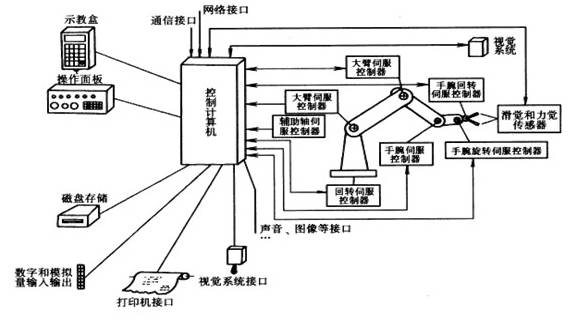 El diagrama de bloques del sistema de control del robot (1) Computadora de control:
La organización de despacho y mando del sistema de control. Generalmente, las microcomputadoras y microprocesadores son de 32 bits, 64 bits, etc., como las CPU de la serie Pentium y otros tipos de CPU.
(2) Cuadro de enseñanza:
Enseñe la trayectoria de trabajo del robot y la configuración de parámetros, así como la interacción persona-computadora, tenga su propia CPU y unidad de almacenamiento independientes y realice la interacción de información con la computadora host a través de comunicación en serie.
(3) Panel de operación:
Se compone de varios botones de operación e indicadores de estado, y solo completa operaciones funcionales básicas.
(4) Almacenamiento en disco duro y disquete:
Memoria periférica para almacenamiento de programas de trabajo del robot.
(5) Entradas y salidas digitales y analógicas:
Entrada o salida de varios comandos de estado y control.
(6) Interfaz de impresora:
Registre diversa información que debe generarse.
(7) Interfaz del sensor:
Se utiliza para la detección automática de información para realizar el control compatible del robot, generalmente sensores de fuerza, tacto y visión.
(8) controlador de eje:
Complete el control de posición, velocidad y aceleración de la articulación del robot.
(9) Control de equipos auxiliares:
se utiliza para controlar equipos auxiliares que cooperan con el robot, como el posicionador de pinzas, etc.
(10) Interfaz de comunicación:
Realizar el intercambio de información entre robots y otros dispositivos, generalmente interfaces seriales, interfaces paralelas, etc.
(11) interfaz de red
1) Ethernet interface: Direct PC communication of several or single robots can be realized through Ethernet, the data transmission rate is up to 10Mbit/s, and the application program can be programmed directly on the PC with windows library functions, and the TCP/IP communication protocol can be supported , Load data and programs into each robot controller through the Ethernet interface.
2) Interfaz de bus de campo: admite una variedad de especificaciones de bus de campo populares, como Device net, AB Remote I/O, Interbus-s, profibus-DP, M-NET, etc.
3. Clasificación de los sistemas de control de robots industriales.
(1) Sistema de control del programa:
Aplique una determinada función de control regular a cada grado de libertad y el robot podrá realizar la trayectoria espacial requerida.
(2) Sistema de control adaptativo:
When the external conditions change, in order to ensure the required quality or to improve the control quality with the accumulation of experience, the process is based on the observation of the state of the operating machine and the servo error, and then adjust the parameters of the nonlinear model until the error Until it disappears. The structure and parameters of this system can change automatically with time and conditions.
(3) Sistema de Inteligencia Artificial:
Es imposible compilar programas de movimiento de antemano, pero requiere una determinación en tiempo real del efecto de control en función de la información del estado circundante obtenida durante el movimiento.
Modo de conducción: ver sistema de accionamiento de robot industrial.
Método de ejercicio:
(4) Tipo de punto:
requires the robot to accurately control the pose of the end effector, regardless of the path;
(5) Tipo de pista:
Requiere que el robot se mueva de acuerdo con la trayectoria y la velocidad enseñadas.
(6) Autobús de control:
Sistema de control de autobuses estándar internacional. Utilice un bus estándar internacional como bus de control del sistema de control, como VME, MULTI-bus, STD-bus, PC-bus.
(7) Sistema de control de bus personalizado:
Como bus del sistema de control se utiliza el bus definido y utilizado por el propio fabricante.
(8) Método de programación:
Sistema de programación de entornos físicos. El operador establece un interruptor de límite fijo para realizar la operación del programa de inicio y parada, que solo se puede utilizar para operaciones simples de recogida y colocación.
(9) Programación en línea:
El método de programación del proceso de memoria para operar la información se completa mediante la enseñanza humana, incluida la enseñanza directa (es decir, la enseñanza mano a mano), la enseñanza por simulación y la enseñanza en caja de enseñanza.
(10) Programación fuera de línea:
No enseñe directamente al robot real, sino sepárelo del entorno de trabajo real, genere un programa de enseñanza y genere la trayectoria del robot de forma remota fuera de línea mediante el uso de robots y lenguajes de programación de alto nivel.
4. Estructura del sistema de control del robot.
Los sistemas de control de robots se pueden dividir en tres categorías según sus métodos de control.
(1) Sistema de Control Centralizado (Sistema de Control Centralizado):
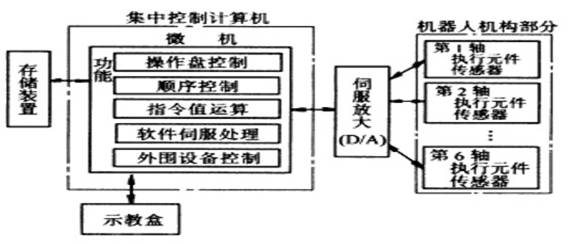 Diagrama de bloques del sistema de control centralizado.
Se utiliza una computadora para realizar todas las funciones de control. La estructura es simple y el costo es bajo, pero el rendimiento en tiempo real es deficiente y es difícil de expandir. Esta estructura se utiliza a menudo en los primeros robots. El diagrama de bloques se muestra en la figura.
El sistema de control centralizado basado en PC aprovecha al máximo la apertura de los recursos de la PC y puede lograr una buena apertura: se puede integrar una variedad de tarjetas de control, dispositivos sensores, etc. en el control a través de ranuras PCI estándar o mediante puertos serie estándar y puertos paralelos. Sistema.
The advantages of centralized control systems are: low hardware costs, easy information collection and analysis, easy to achieve optimal control of the system, better integrity and coordination, and more convenient PC-based system hardware expansion. Its shortcomings are also obvious: the system control lacks flexibility, and the control danger is easy to concentrate. Once a failure occurs, its impact is wide and the consequences are serious; because the real-time requirements of industrial robots are very high, when the system performs a large amount of data calculation, it will reduce the real-time performance , The system’s responsiveness to multitasking will also conflict with the system’s real-time performance; in addition, the system’s complex wiring will reduce the system’s reliability.
(2) Sistema de control maestro-esclavo:
Using master and slave two-level processors to realize all control functions of the system. The main CPU realizes management, coordinate transformation, trajectory generation and system self-diagnosis, etc.; the slave CPU realizes the motion control of all joints. Its composition block diagram, as shown in the figure.
El sistema de control maestro-esclavo tiene un buen rendimiento en tiempo real y es adecuado para control de alta precisión y alta velocidad, pero la escalabilidad del sistema es deficiente y el mantenimiento es difícil.
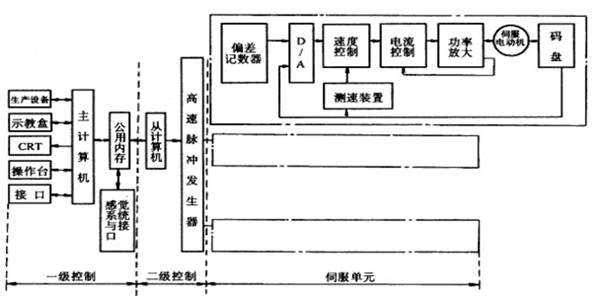 Diagrama de bloques del sistema de control maestro y esclavo.
(3) Distribuir el sistema de control:
Según la naturaleza y el método del sistema, el control del sistema se divide en varios módulos. Cada módulo tiene diferentes tareas de control y estrategias de control. Cada modo puede ser una relación maestro-esclavo o una relación de igualdad.
Este método tiene un buen rendimiento en tiempo real, es fácil de realizar un control de alta velocidad y alta precisión, es fácil de expandir y puede realizar un control inteligente. Es un método popular en la actualidad.
The main idea is "decentralized control, centralized management", that is, the system can comprehensively coordinate and allocate its overall goals and tasks, and complete the control tasks through the coordination of subsystems. The entire system is functional, logical, and physical. It is decentralized, so the DCS system is also called a distributed control system or a distributed control system.
In this structure, the subsystem is composed of a controller and different controlled objects or devices, and each subsystem communicates with each other through a network. The distributed control structure provides an open, real-time and accurate robot control system. Two-level control methods are often used in distributed systems.
Two-level distributed control system, usually composed of upper computer, lower computer and network. The upper computer can carry out different trajectory planning and control algorithms, and the lower computer can carry out the research and realization of interpolation and subdivision and control optimization. The upper computer and the lower computer work in coordination with each other through the communication bus. The communication bus here can be in the form of RS-232, RS-485, EEE-488 and USB bus.
Now, the development of Ethernet and fieldbus technology provides robots with faster, stable and effective communication services. Especially the field bus, which is applied to the production site to realize two-way multi-node digital communication between microcomputerized measurement and control equipment, thus forming a new type of network integrated fully distributed control system-field bus control system FCS (Filed bus Control System) ).
In the factory production network, the devices that can be connected via fieldbus are collectively referred to as "field devices/instruments". From the perspective of system theory, industrial robots, as one of the production equipment of the factory, can also be summarized as field equipment. After the introduction of fieldbus technology in the robot system, it is more conducive to the integration of robots in the industrial production environment.
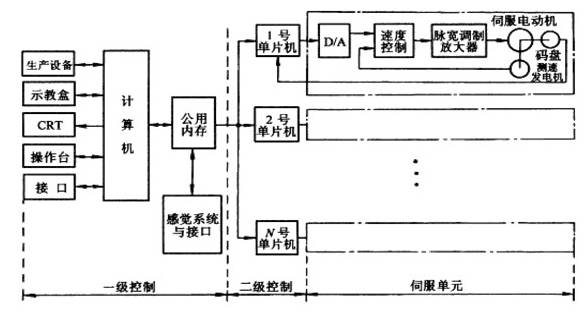 Block diagram of distributed control systemThe advantages of the distributed control system are: system flexibility is good, the risk of the control system is reduced, the use of multi-processor distributed control is conducive to the parallel execution of system functions, the processing efficiency of the system is improved, and the response time is shortened.
For industrial robots with multiple degrees of freedom, centralized control handles the coupling relationship between each control axis very well, and can be easily compensated. However, when the number of axes increases to make the control algorithm very complicated, its control performance will deteriorate. Moreover, when the number of axes in the system or the control algorithm becomes very complicated, it may lead to the redesign of the system.
Por el contrario, cada eje de movimiento de la estructura distribuida es procesado por un controlador, lo que significa que el sistema tiene un menor acoplamiento entre ejes y una mayor reconfiguración del sistema.
"Industry 4.0" refers to the fourth industrial revolution after steam engine, electrification and automation. It combines traditional industry with digital information technology and realizes intelligent production with the help of technologies such as big data and cloud computing. In China, "Industry 4.0" means the upgrading of the country's manufacturing industry. For this reason, China has specifically put forward the development goal of "Made in China 2025". The goal is to move from a major manufacturing country to a strong manufacturing country by 2025.


