


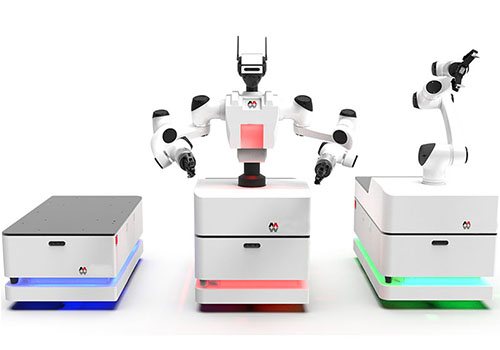
"Made in China 2025" plans the strategic goal of my country's manufacturing power, and intelligent manufacturing has become the top priority of industrial manufacturing transformation. Under the general trend of intelligence, the downstream application fields of intelligent equipment are accelerating the expansion, and the development of robot industrialici si può aspettare.
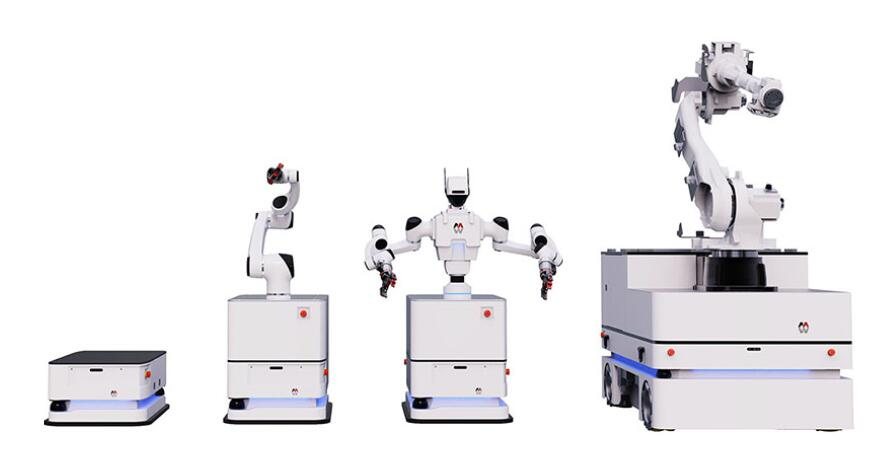
Industrial robots refer to multi-joint manipulators or multi-degree-of-freedom mechanical devices that can work intelligently under human control and can perfectly replace humans working on the production line. Compared with manpower, industrial robots have the characteristics of low cost, high efficiency and 24-hour work. In recent years, as domestic labor costs continue to rise, the labor advantage of my country's manufacturing industry is not obvious, the manufacturing industry urgently needs to transform to intelligence, and industrial robots are showing a strong development trend.
my country is a big consumer of industrial robots. Since 2013, it has become the world's largest consumer market for industrial robots for two consecutive years. There are often industrial robots in the fields of automobile manufacturing, electronics, rubber and plastics, military industry, aviation manufacturing, food industry, medical equipment and metal products. Among them, the automotive industry has the most applications, accounting for 38%.
Guangdong, Jiangsu, Shanghai, Pechino e altri luoghi sono le principali aree concentrate dell'industria dei robot industriali del mio paese e il numero di robot industriali posseduti rappresenta la metà del mercato nazionale dei robot industriali.
However, due to the lack of core technology, the consumption of industrial robots in my country is heavily dependent on foreign companies, especially in core components such as reducers, servo motors, and controllers. Domestic robot companies in my country are restricted by others and can only purchase expensive foreign equipment, which requires domestic industries. Robot manufacturers continue to improve their technology, increase R&D level, and get rid of the control of China's industrial robot consumer market by foreign robot brands as soon as possible.
Considering that the current density of industrial robots in the global manufacturing industry is 55, while the density of China's industrial robots is only 21, which is much lower than that of developed countries such as Japan, South Korea, Germany and the United States, and in the context of intelligent manufacturing, the policy of "machine substitution" continues to be implemented. There is still a lot of room for growth. Related concept companies such as Inovance Technology, Robotics, Zhiyun Co., Ltd., Keyuan Co., Ltd., and Qinchuan Machine Tool will achieve better development under the robot dividend.
La fase di sviluppo dei robot industriali
Lo sviluppo dei robot industriali può solitamente essere suddiviso in tre generazioni:
1. Prima generazione di robot industriali:
Usually refers to the “programmable industrial robots” that are currently commercialized and used internationally, also known as “teaching and reproducing industrial robots”, that is, in order for the industrial robot to complete a certain task, the operator will first complete the task. All kinds of knowledge (such as motion trajectory, operating conditions, operating sequence and operating time, etc.) of industrial robots can be "teached" through direct or indirect means.
After the industrial robots memorize this knowledge, they can "reproduce" Instructions, within a certain accuracy range, faithfully reproduce various taught actions repeatedly. In 1962, the first Unimate industrial robot of Universal Automation of the United States was put into use in General Motors of the United States, marking the birth of the first generation of industrial robots.
2, Seconda generazione di robot industriali:
usually refers to an "intelligent robot" with some kind of intelligence (such as touch, force, vision, etc.). That is, after the sensors receive information such as touch, force and vision, the computer controls the robot's operating machine to complete the corresponding appropriate operations. In 1982, General Motors in the United States equipped the industrial robot with a vision system on the assembly line, thus announcing the advent of a new generation of intelligent industrial robots.
3, Terza generazione di robot industriali:
is the so-called "only-type industrial robot". It not only has a perception function, but also has certain decision-making and planning capabilities. The first generation of industrial robots is still in the laboratory research stage. After the birth-growth-maturity period, industrial robots have become indispensable core equipment in the manufacturing industry. There are about 750,000 industrial robots in the world fighting side by side with workers and friends on all production lines.
As a rising star of the robot family, special robots have a tendency to come from behind due to their wide range of uses. Special robots for various purposes such as humanoid robots, agricultural robots, robot di servizioSono emersi robot sottomarini, robot medici, robot militari e robot di intrattenimento, e si sta muovendo verso la praticità a un ritmo rapido. Classificazione dei robot industriali
I robot industriali possono essere suddivisi nei seguenti tipi in base a diversi metodi
1. I robot industriali sono suddivisi nelle seguenti categorie in base alla forma delle coordinate del manipolatore: (La forma delle coordinate si riferisce alla forma del sistema di coordinate di riferimento assunto dal braccio del manipolatore quando è in movimento.)
(1) Robot industriale a coordinate cartesiane
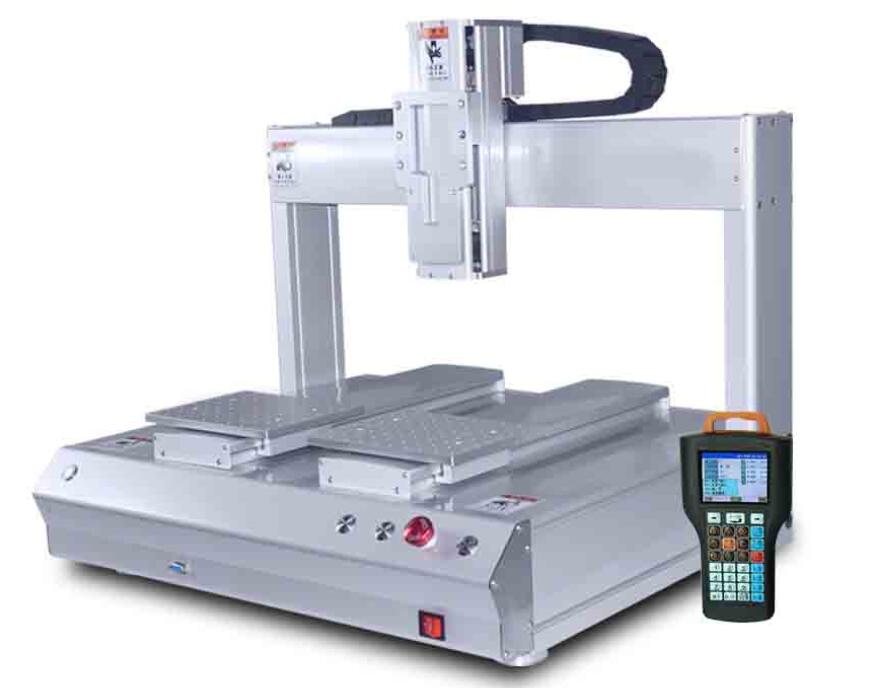
Its movement part is composed of three mutually perpendicular linear movements (namely PPP), and its working space is rectangular. Its moving distance in each axis can be read directly on each coordinate axis. It is intuitive, easy to program and calculate the position and posture, has high positioning accuracy, no coupling control, simple structure, but the body occupies a large space. The motion range is small, the flexibility is poor, and it is difficult to coordinate with other industrial robots.
(2) Robot industriale a coordinate cilindriche
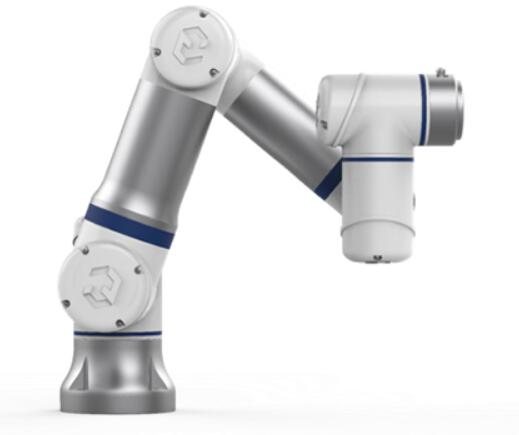
Its motion form is realized by a motion system composed of one rotation and two movements. Its working space is cylindrical. Compared with the rectangular coordinate industrial robot, under the same working space conditions, the body occupies a small volume. The range of motion is large, and its position accuracy is second only to Cartesian coordinate robots, and it is difficult to coordinate with other industrial robots.
(3) Robot industriale a coordinate sferiche
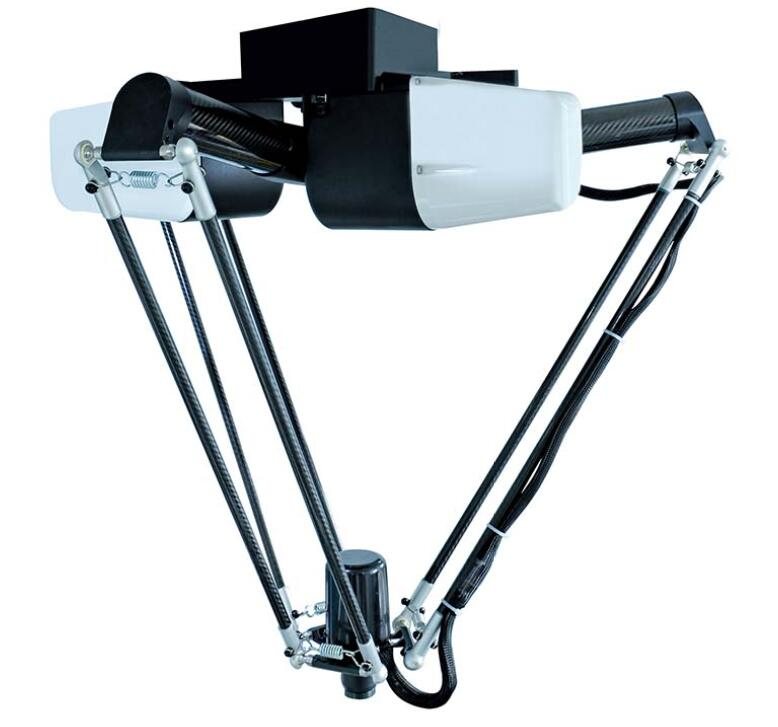
Also known as polar coordinate industrial robot, its arm movement consists of two rotations and one linear movement (ie RRP, one rotation, one pitching and one telescopic movement). Its working space is a sphere, which can make up and down pitching movements. And it can grasp the coordinated workpiece on the ground or teach low position, its position accuracy is high, and the position error is proportional to the arm length.
(4)Robot industriale multi-articolazione
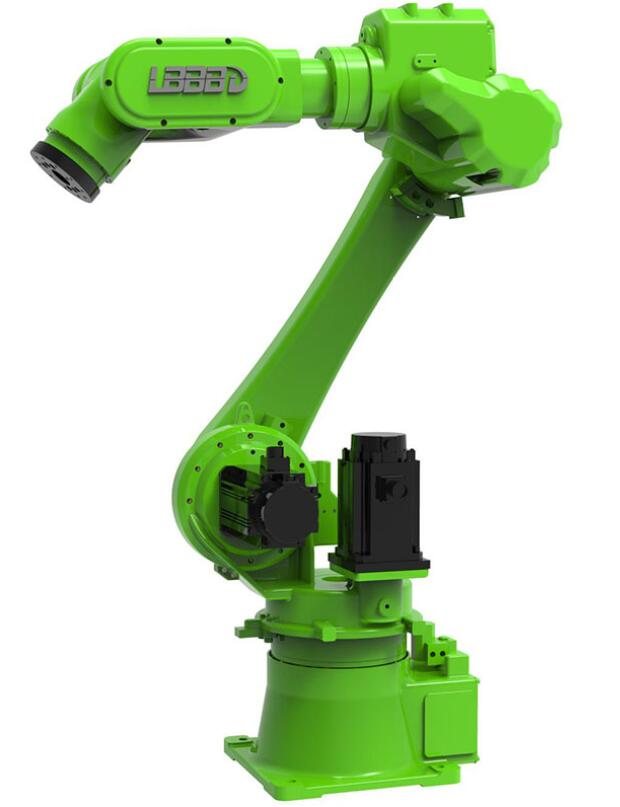
Also known as a rotary coordinate industrial robot. The arm of this industrial robot is similar to the upper limb of a human body. Its first three joints are the revolving joint (RRR). The industrial robot is generally composed of a column and a large and small arm. The column and the big arm are formed An elbow joint is formed between the shoulder joint, the upper arm and the forearm, which can make the upper arm rotate and pitch and swing, and the lower arm can make pitch swing.
La sua struttura è la più compatta, flessibile e ha il minimo ingombro. Può funzionare in coordinamento con altri robot industriali, ma presenta scarsa precisione di posizione, problemi di equilibrio e accoppiamento di controllo. Questo tipo di robot industriale è sempre più diffuso.
(5)Robot industriale di tipo con giunto planare
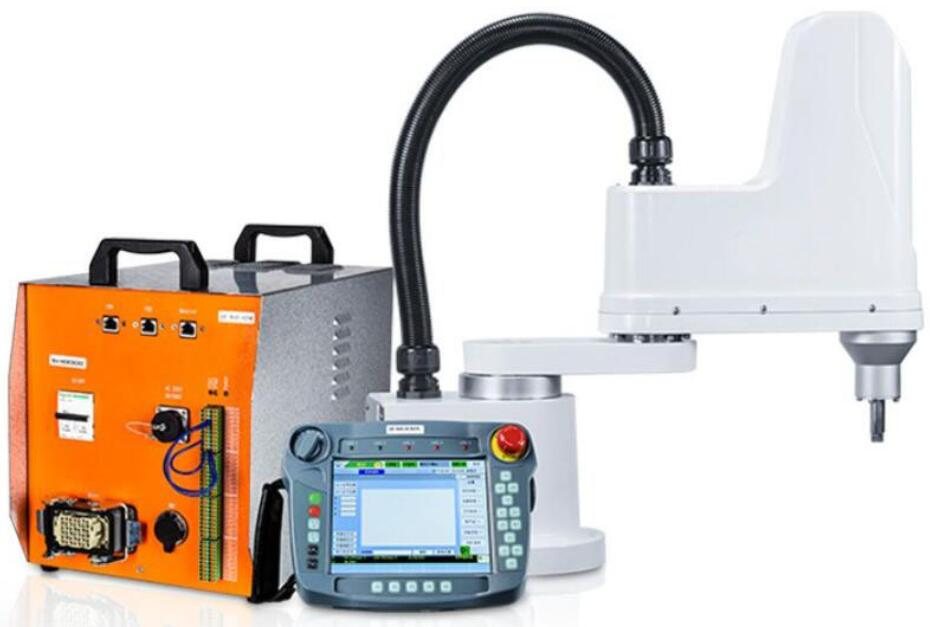
It uses a mobile joint and two rotary joints (PRR), the mobile joint realizes up and down movement, and the two rotary joints control the front and back, left and right movements. This form of industrial robot is also known as (SCARA (Seletive Compliance Assembly Robot Arm) assembly robot. It is flexible in the horizontal direction, and has great rigidity in the vertical direction. It has a simple structure and flexible movements, and is mostly used for assembly operations.
È particolarmente adatto per l'assemblaggio a innesto di parti di piccole dimensioni, come ad esempio l'assemblaggio a innesto e nell'industria elettronica.2. I robot industriali sono suddivisi nelle seguenti categorie in base alla modalità di guida:
(1) Robot industriale pneumatico
This type of industrial robot uses compressed air to drive the manipulator. Its advantages are convenient air source, rapid action, simple structure, low cost, and no pollution. The disadvantage is that the air is compressible, resulting in poor working speed stability. The source pressure is generally only about 6kPa, so the snatch force of this type of industrial robot is small, generally only tens of Newtons, and the maximum is more than 100 Newtons.
(2) Robot industriale idraulico
The hydraulic pressure is much higher than the air pressure, generally about 70kPa, so the hydraulic transmission industrial robot has a large snatch capacity, which can reach thousands of newtons. This type of industrial robot has compact structure, smooth transmission, and sensitive action, but it has high requirements for sealing and is not suitable for working in high or low temperature environments.
(3) Robot industriale elettrico
This is the most used type of industrial robot, not only because of the large variety of electric motors, it provides a variety of options for industrial robot design, but also because they can use a variety of flexible control methods. In the early days, stepper motors were used to drive, and then DC servo drive units were developed. At present, AC servo drive units are also developing rapidly. These drive units either directly drive the manipulator, or are driven after deceleration through a device such as a harmonic reducer. The structure is very compact and simple.
Sistema di controllo robot industriale
La struttura del sistema robotico è costituita dalla parte del meccanismo del robot, dal gruppo di sensori, dalla parte di controllo e dalla parte di elaborazione delle informazioni. Il sistema di controllo è una parte fondamentale dell'industria dei robot.1. Funzioni che devono essere raggiunte dal sistema di controllo del robot industriale
Il sistema di controllo del robot viene utilizzato per controllare il manipolatore per completare attività specifiche. Le sue funzioni di base sono le seguenti:
(1) Funzione di memoria:
Memorizza sequenza di lavoro, percorso di movimento, modalità di movimento, velocità di movimento e informazioni relative al processo di produzione.
(2) Funzione didattica:
Programmazione offline, didattica online, didattica indiretta. La didattica on-line prevede la didattica box e la didattica guidata.
(3) Funzione di contatto con apparecchiature periferiche:
Interfaccia di ingresso e uscita, interfaccia di comunicazione, interfaccia di rete, interfaccia di sincronizzazione.
(4) Funzione di impostazione delle coordinate:
Esistono quattro sistemi di coordinate: giunto, assoluto, utensile e definito dall'utente.
(5) Interfaccia uomo-macchina:
Scatola di insegnamento, pannello operativo, schermo di visualizzazione.
(6) Interfaccia sensore:
Rilevamento della posizione, visione, tocco, forza, ecc.
(7) Funzione servo di posizione:
Collegamento multiasse del robot, controllo del movimento, controllo della velocità e dell'accelerazione, compensazione dinamica, ecc.
(8) Funzione di protezione di sicurezza per la diagnosi dei guasti:
Monitoraggio dello stato del sistema durante il funzionamento, protezione di sicurezza in condizioni di guasto e autodiagnosi dei guasti.
2. Composizione del sistema di controllo dei robot industriali
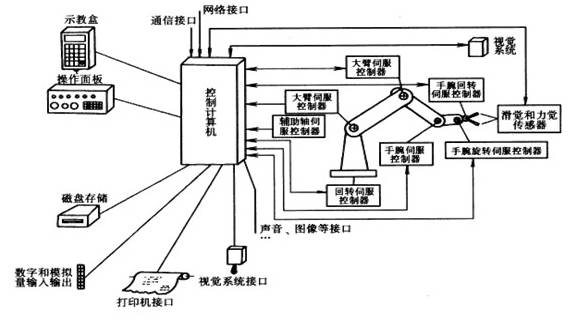 Lo schema a blocchi del sistema di controllo del robot(1) Computer di controllo:
L'organizzazione del dispacciamento e del comando del sistema di controllo. Generalmente, microcomputer e microprocessori sono a 32 bit, 64 bit, ecc., come le CPU della serie Pentium e altri tipi di CPU.
(2) Scatola didattica:
Insegna la traiettoria di lavoro e le impostazioni dei parametri del robot, nonché l'interazione uomo-computer, dispone di una propria CPU e unità di archiviazione indipendenti e realizza l'interazione delle informazioni con il computer host attraverso la comunicazione seriale.
(3) Pannello operativo:
è composto da vari pulsanti operativi e indicatori di stato e completa solo le operazioni funzionali di base.
(4) Memorizzazione su disco rigido e floppy disk:
Memoria periferica per la memorizzazione dei programmi di lavoro del robot.
(5) Ingresso e uscita digitale e analogica:
Ingresso o uscita di vari comandi di stato e controllo.
(6) Interfaccia stampante:
Registrare varie informazioni che devono essere emesse.
(7) Interfaccia sensore:
viene utilizzato per il rilevamento automatico delle informazioni per realizzare il controllo conforme del robot, generalmente sensori di forza, tocco e visione.
(8) controllore dell'asse:
Completare il controllo della posizione, della velocità e dell'accelerazione del giunto del robot.
(9) Controllo delle apparecchiature ausiliarie:
viene utilizzato per controllare l'attrezzatura ausiliaria che collabora con il robot, come il posizionatore della pinza, ecc.
(10) Interfaccia di comunicazione:
Realizzare lo scambio di informazioni tra robot e altri dispositivi, generalmente interfacce seriali, interfacce parallele, ecc.
(11) interfaccia di rete
1) Ethernet interface: Direct PC communication of several or single robots can be realized through Ethernet, the data transmission rate is up to 10Mbit/s, and the application program can be programmed directly on the PC with windows library functions, and the TCP/IP communication protocol can be supported , Load data and programs into each robot controller through the Ethernet interface.
2) Interfaccia bus di campo: supporta una varietà di specifiche bus di campo popolari, come Device net, AB Remote I/O, Interbus-s, profibus-DP, M-NET, ecc.
3. Classificazione dei sistemi di controllo dei robot industriali
(1) Sistema di controllo del programma:
Applica una determinata funzione di controllo regolare a ciascun grado di libertà e il robot può realizzare la traiettoria spaziale richiesta.
(2) Sistema di controllo adattivo:
When the external conditions change, in order to ensure the required quality or to improve the control quality with the accumulation of experience, the process is based on the observation of the state of the operating machine and the servo error, and then adjust the parameters of the nonlinear model until the error Until it disappears. The structure and parameters of this system can change automatically with time and conditions.
(3) Sistema di intelligenza artificiale:
È impossibile compilare programmi di movimento in anticipo, ma richiede la determinazione in tempo reale dell'effetto di controllo in base alle informazioni sullo stato circostante ottenute durante il movimento.
Modalità di guida: vedere il sistema di guida del robot industriale.
Metodo di esercizio:
(4) Tipo di punto:
requires the robot to accurately control the pose of the end effector, regardless of the path;
(5) Tipo di traccia:
richiede che il robot si muova secondo la traiettoria e la velocità insegnate.
(6) Bus di controllo:
Sistema di controllo bus standard internazionale. Utilizzare bus standard internazionali come bus di controllo del sistema di controllo, come VME, MULTI-bus, STD-bus, PC-bus.
(7) Sistema di controllo bus personalizzato:
Come bus del sistema di controllo viene utilizzato il bus definito e utilizzato dal produttore stesso.
(8) Metodo di programmazione:
Sistema di programmazione delle impostazioni fisiche. L'operatore imposta un finecorsa fisso per realizzare l'operazione di programma di avvio e arresto, che può essere utilizzato solo per semplici operazioni di prelievo e posizionamento.
(9) Programmazione on-line:
Il metodo di programmazione del processo di memoria delle informazioni operative viene completato attraverso l'insegnamento umano, compreso l'insegnamento diretto (cioè insegnamento corpo a corpo), l'insegnamento simulato e l'insegnamento tramite scatola di insegnamento.
(10) Programmazione offline:
Non insegnare direttamente al robot reale, ma separarlo dall'ambiente di lavoro reale, generare un programma di insegnamento e generare la traiettoria del robot in remoto offline utilizzando robot e linguaggi di programmazione di alto livello.
4. Struttura del sistema di controllo del robot
I sistemi di controllo robot possono essere suddivisi in tre categorie in base ai loro metodi di controllo.
(1) Sistema di controllo centralizzato (Sistema di controllo centralizzato):
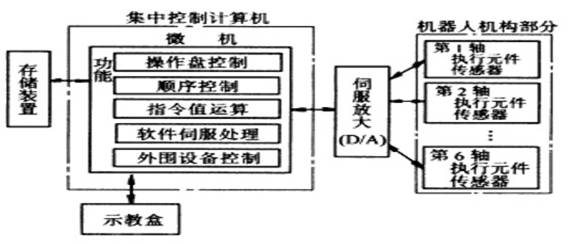 Schema a blocchi del sistema di controllo centralizzato
Per realizzare tutte le funzioni di controllo viene utilizzato un computer. La struttura è semplice e il costo è basso, ma le prestazioni in tempo reale sono scarse ed è difficile espandersi. Questa struttura è spesso utilizzata nei primi robot. Lo schema a blocchi è mostrato in figura.
Il sistema di controllo centralizzato basato su PC sfrutta appieno l'apertura delle risorse del PC e può raggiungere una buona apertura: una varietà di schede di controllo, dispositivi sensore, ecc. possono essere integrati nel controllo tramite slot PCI standard o tramite porte seriali standard e porte parallele. Sistema.
The advantages of centralized control systems are: low hardware costs, easy information collection and analysis, easy to achieve optimal control of the system, better integrity and coordination, and more convenient PC-based system hardware expansion. Its shortcomings are also obvious: the system control lacks flexibility, and the control danger is easy to concentrate. Once a failure occurs, its impact is wide and the consequences are serious; because the real-time requirements of industrial robots are very high, when the system performs a large amount of data calculation, it will reduce the real-time performance , The system’s responsiveness to multitasking will also conflict with the system’s real-time performance; in addition, the system’s complex wiring will reduce the system’s reliability.
(2) Sistema di controllo master-slave:
Using master and slave two-level processors to realize all control functions of the system. The main CPU realizes management, coordinate transformation, trajectory generation and system self-diagnosis, etc.; the slave CPU realizes the motion control of all joints. Its composition block diagram, as shown in the figure.
Il sistema di controllo master-slave ha buone prestazioni in tempo reale ed è adatto per controlli ad alta precisione e ad alta velocità, ma la scalabilità del sistema è scarsa e la manutenzione è difficile.
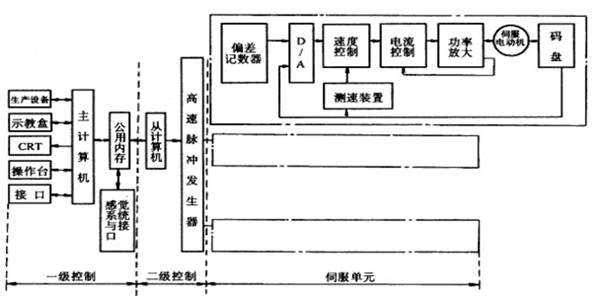 Schema a blocchi del sistema di controllo master e slave
(3) Sistema di controllo distribuito:
A seconda della natura e della modalità del sistema, il controllo del sistema è suddiviso in più moduli. Ogni modulo ha compiti di controllo e strategie di controllo diversi. Ciascuna modalità può essere una relazione master-slave o una relazione paritaria.
Questo metodo ha buone prestazioni in tempo reale, è facile da realizzare un controllo ad alta velocità e precisione, è facile da espandere e può realizzare un controllo intelligente. È un metodo popolare al momento.
The main idea is "decentralized control, centralized management", that is, the system can comprehensively coordinate and allocate its overall goals and tasks, and complete the control tasks through the coordination of subsystems. The entire system is functional, logical, and physical. It is decentralized, so the DCS system is also called a distributed control system or a distributed control system.
In this structure, the subsystem is composed of a controller and different controlled objects or devices, and each subsystem communicates with each other through a network. The distributed control structure provides an open, real-time and accurate robot control system. Two-level control methods are often used in distributed systems.
Two-level distributed control system, usually composed of upper computer, lower computer and network. The upper computer can carry out different trajectory planning and control algorithms, and the lower computer can carry out the research and realization of interpolation and subdivision and control optimization. The upper computer and the lower computer work in coordination with each other through the communication bus. The communication bus here can be in the form of RS-232, RS-485, EEE-488 and USB bus.
Now, the development of Ethernet and fieldbus technology provides robots with faster, stable and effective communication services. Especially the field bus, which is applied to the production site to realize two-way multi-node digital communication between microcomputerized measurement and control equipment, thus forming a new type of network integrated fully distributed control system-field bus control system FCS (Filed bus Control System) ).
In the factory production network, the devices that can be connected via fieldbus are collectively referred to as "field devices/instruments". From the perspective of system theory, industrial robots, as one of the production equipment of the factory, can also be summarized as field equipment. After the introduction of fieldbus technology in the robot system, it is more conducive to the integration of robots in the industrial production environment.
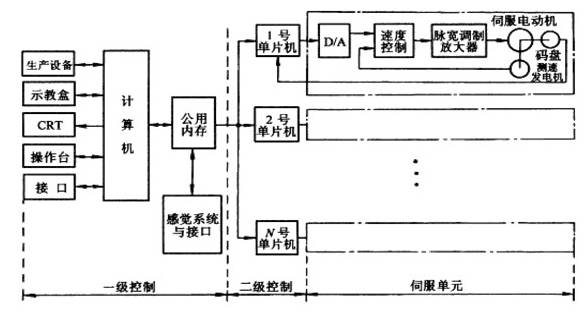 Block diagram of distributed control systemThe advantages of the distributed control system are: system flexibility is good, the risk of the control system is reduced, the use of multi-processor distributed control is conducive to the parallel execution of system functions, the processing efficiency of the system is improved, and the response time is shortened.
For industrial robots with multiple degrees of freedom, centralized control handles the coupling relationship between each control axis very well, and can be easily compensated. However, when the number of axes increases to make the control algorithm very complicated, its control performance will deteriorate. Moreover, when the number of axes in the system or the control algorithm becomes very complicated, it may lead to the redesign of the system.
Al contrario, ciascun asse di movimento della struttura distribuita viene elaborato da un controller, il che significa che il sistema ha un minore accoppiamento tra gli assi e una maggiore riconfigurazione del sistema.
"Industry 4.0" refers to the fourth industrial revolution after steam engine, electrification and automation. It combines traditional industry with digital information technology and realizes intelligent production with the help of technologies such as big data and cloud computing. In China, "Industry 4.0" means the upgrading of the country's manufacturing industry. For this reason, China has specifically put forward the development goal of "Made in China 2025". The goal is to move from a major manufacturing country to a strong manufacturing country by 2025.


