


"Made in China 2025" plans the strategic goal of my country's manufacturing power, and intelligent manufacturing has become the top priority of industrial manufacturing transformation. Under the general trend of intelligence, the downstream application fields of intelligent equipment are accelerating the expansion, and the development of roboty przemysłowemożna się spodziewać.
Industrial robots refer to multi-joint manipulators or multi-degree-of-freedom mechanical devices that can work intelligently under human control and can perfectly replace humans working on the production line. Compared with manpower, industrial robots have the characteristics of low cost, high efficiency and 24-hour work. In recent years, as domestic labor costs continue to rise, the labor advantage of my country's manufacturing industry is not obvious, the manufacturing industry urgently needs to transform to intelligence, and industrial robots are showing a strong development trend.
my country is a big consumer of industrial robots. Since 2013, it has become the world's largest consumer market for industrial robots for two consecutive years. There are often industrial robots in the fields of automobile manufacturing, electronics, rubber and plastics, military industry, aviation manufacturing, food industry, medical equipment and metal products. Among them, the automotive industry has the most applications, accounting for 38%.
Guangdong, Jiangsu, Szanghaj, Pekin i inne miejsca to główne skoncentrowane obszary przemysłu robotów przemysłowych w moim kraju, a liczba posiadanych robotów przemysłowych stanowi połowę krajowego rynku robotów przemysłowych.
However, due to the lack of core technology, the consumption of industrial robots in my country is heavily dependent on foreign companies, especially in core components such as reducers, servo motors, and controllers. Domestic robot companies in my country are restricted by others and can only purchase expensive foreign equipment, which requires domestic industries. Robot manufacturers continue to improve their technology, increase R&D level, and get rid of the control of China's industrial robot consumer market by foreign robot brands as soon as possible.
Considering that the current density of industrial robots in the global manufacturing industry is 55, while the density of China's industrial robots is only 21, which is much lower than that of developed countries such as Japan, South Korea, Germany and the United States, and in the context of intelligent manufacturing, the policy of "machine substitution" continues to be implemented. There is still a lot of room for growth. Related concept companies such as Inovance Technology, Robotics, Zhiyun Co., Ltd., Keyuan Co., Ltd., and Qinchuan Machine Tool will achieve better development under the robot dividend.
Etap rozwoju robotów przemysłowych
Rozwój robotów przemysłowych można zazwyczaj podzielić na trzy generacje:
1. Pierwsza generacja robotów przemysłowych:
Usually refers to the “programmable industrial robots” that are currently commercialized and used internationally, also known as “teaching and reproducing industrial robots”, that is, in order for the industrial robot to complete a certain task, the operator will first complete the task. All kinds of knowledge (such as motion trajectory, operating conditions, operating sequence and operating time, etc.) of industrial robots can be "teached" through direct or indirect means.
After the industrial robots memorize this knowledge, they can "reproduce" Instructions, within a certain accuracy range, faithfully reproduce various taught actions repeatedly. In 1962, the first Unimate industrial robot of Universal Automation of the United States was put into use in General Motors of the United States, marking the birth of the first generation of industrial robots.
2, Druga generacja robotów przemysłowych:
usually refers to an "intelligent robot" with some kind of intelligence (such as touch, force, vision, etc.). That is, after the sensors receive information such as touch, force and vision, the computer controls the robot's operating machine to complete the corresponding appropriate operations. In 1982, General Motors in the United States equipped the industrial robot with a vision system on the assembly line, thus announcing the advent of a new generation of intelligent industrial robots.
3, Trzecia generacja robotów przemysłowych:
is the so-called "only-type industrial robot". It not only has a perception function, but also has certain decision-making and planning capabilities. The first generation of industrial robots is still in the laboratory research stage. After the birth-growth-maturity period, industrial robots have become indispensable core equipment in the manufacturing industry. There are about 750,000 industrial robots in the world fighting side by side with workers and friends on all production lines.
As a rising star of the robot family, special robots have a tendency to come from behind due to their wide range of uses. Special robots for various purposes such as humanoid robots, agricultural robots, roboty serwisowepojawiły się roboty podwodne, roboty medyczne, roboty wojskowe i roboty rozrywkowe. I w szybkim tempie zmierza to w stronę praktyczności. Klasyfikacja robotów przemysłowych
Roboty przemysłowe można podzielić na następujące typy według różnych metod
1. Roboty przemysłowe dzieli się na następujące kategorie ze względu na postać współrzędnych manipulatora: (Forma współrzędnych odnosi się do postaci układu współrzędnych odniesienia, jaki przyjmuje ramię manipulatora w czasie jego ruchu.)
(1) Robot przemysłowy o współrzędnych kartezjańskich
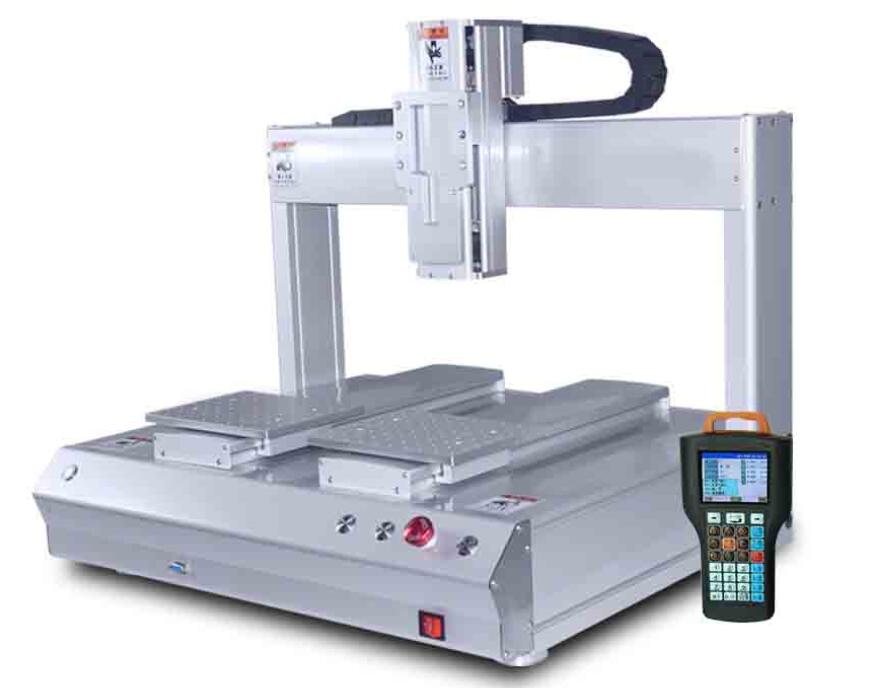
Its movement part is composed of three mutually perpendicular linear movements (namely PPP), and its working space is rectangular. Its moving distance in each axis can be read directly on each coordinate axis. It is intuitive, easy to program and calculate the position and posture, has high positioning accuracy, no coupling control, simple structure, but the body occupies a large space. The motion range is small, the flexibility is poor, and it is difficult to coordinate with other industrial robots.
(2) Robot przemysłowy o współrzędnych cylindrycznych
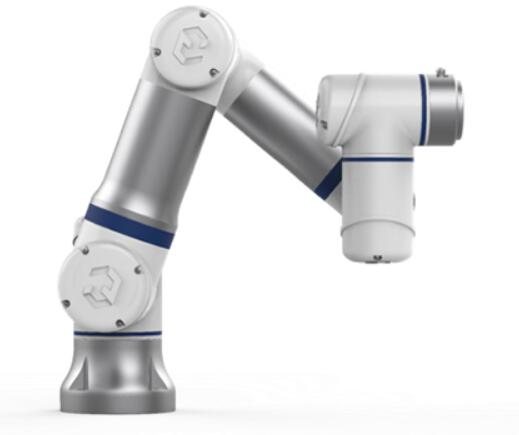
Its motion form is realized by a motion system composed of one rotation and two movements. Its working space is cylindrical. Compared with the rectangular coordinate industrial robot, under the same working space conditions, the body occupies a small volume. The range of motion is large, and its position accuracy is second only to Cartesian coordinate robots, and it is difficult to coordinate with other industrial robots.
(3) Robot przemysłowy o współrzędnych sferycznych
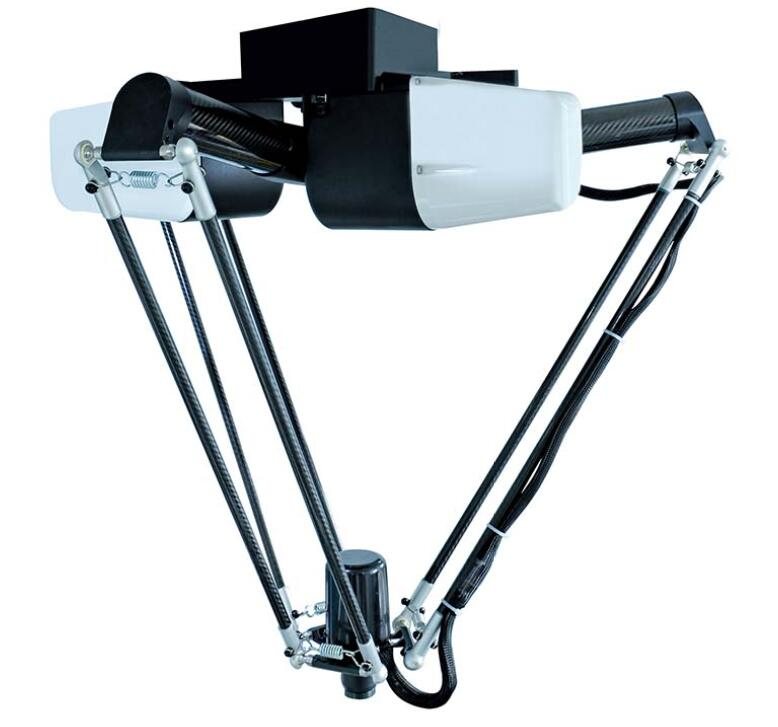
Also known as polar coordinate industrial robot, its arm movement consists of two rotations and one linear movement (ie RRP, one rotation, one pitching and one telescopic movement). Its working space is a sphere, which can make up and down pitching movements. And it can grasp the coordinated workpiece on the ground or teach low position, its position accuracy is high, and the position error is proportional to the arm length.
(4) Wieloprzegubowy robot przemysłowy
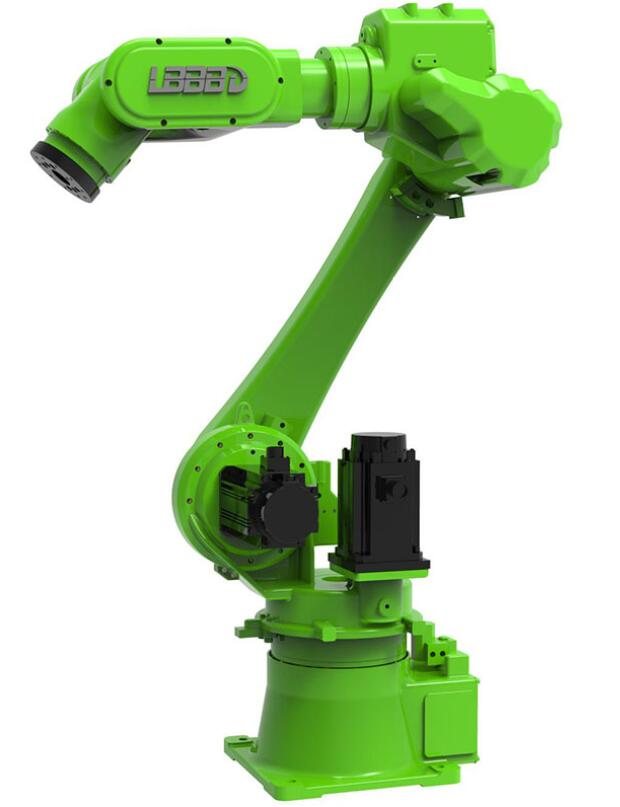
Also known as a rotary coordinate industrial robot. The arm of this industrial robot is similar to the upper limb of a human body. Its first three joints are the revolving joint (RRR). The industrial robot is generally composed of a column and a large and small arm. The column and the big arm are formed An elbow joint is formed between the shoulder joint, the upper arm and the forearm, which can make the upper arm rotate and pitch and swing, and the lower arm can make pitch swing.
Jego konstrukcja jest najbardziej zwarta, elastyczna i ma najmniejszą powierzchnię. Może współpracować z innymi robotami przemysłowymi, ale ma niską dokładność pozycjonowania, problemy z równowagą i sprzężeniem sterującym. Ten typ robota przemysłowego znajduje coraz szersze zastosowanie.
(5) Robot przemysłowy ze złączem planarnym
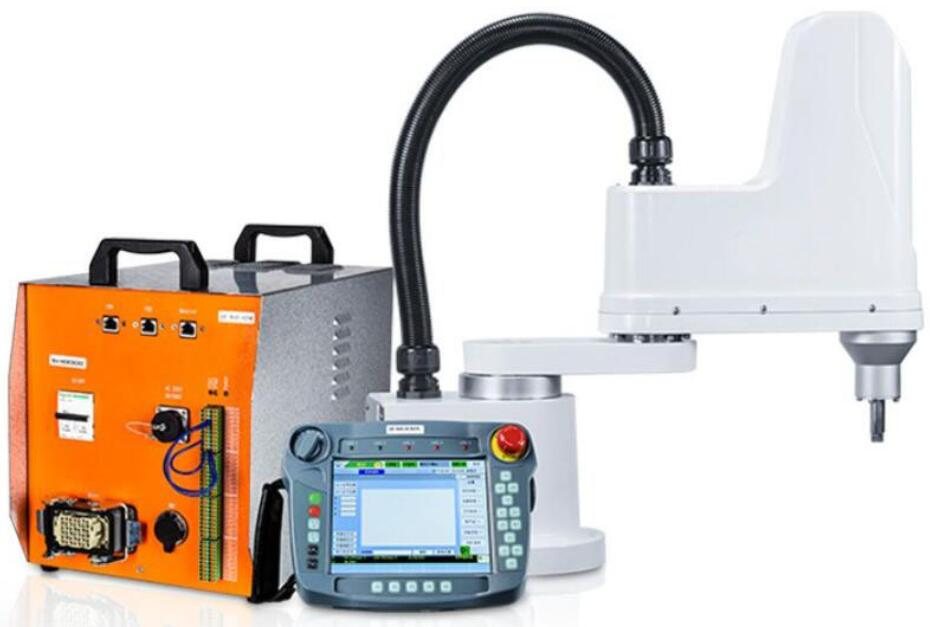
It uses a mobile joint and two rotary joints (PRR), the mobile joint realizes up and down movement, and the two rotary joints control the front and back, left and right movements. This form of industrial robot is also known as (SCARA (Seletive Compliance Assembly Robot Arm) assembly robot. It is flexible in the horizontal direction, and has great rigidity in the vertical direction. It has a simple structure and flexible movements, and is mostly used for assembly operations.
Szczególnie nadaje się do montażu wtykowego małych części, np. wtykowego i montażu w przemyśle elektronicznym.2. Roboty przemysłowe dzielimy ze względu na tryb jazdy na następujące kategorie:
(1) Pneumatyczny robot przemysłowy
This type of industrial robot uses compressed air to drive the manipulator. Its advantages are convenient air source, rapid action, simple structure, low cost, and no pollution. The disadvantage is that the air is compressible, resulting in poor working speed stability. The source pressure is generally only about 6kPa, so the snatch force of this type of industrial robot is small, generally only tens of Newtons, and the maximum is more than 100 Newtons.
(2) Hydrauliczny robot przemysłowy
The hydraulic pressure is much higher than the air pressure, generally about 70kPa, so the hydraulic transmission industrial robot has a large snatch capacity, which can reach thousands of newtons. This type of industrial robot has compact structure, smooth transmission, and sensitive action, but it has high requirements for sealing and is not suitable for working in high or low temperature environments.
(3) Elektryczny robot przemysłowy
This is the most used type of industrial robot, not only because of the large variety of electric motors, it provides a variety of options for industrial robot design, but also because they can use a variety of flexible control methods. In the early days, stepper motors were used to drive, and then DC servo drive units were developed. At present, AC servo drive units are also developing rapidly. These drive units either directly drive the manipulator, or are driven after deceleration through a device such as a harmonic reducer. The structure is very compact and simple.
System sterowania robotem przemysłowym
Struktura systemu robota składa się z części mechanizmu robota, grupy czujników, części sterującej i części przetwarzającej informacje. System sterowania jest podstawową częścią przemysłu robotycznego.1. Funkcje jakie ma spełniać system sterowania robotem przemysłowym
Układ sterowania robotem służy do sterowania manipulatorem w celu wykonania określonych zadań. Jego podstawowe funkcje są następujące:
(1) Funkcja pamięci:
Przechowuj sekwencję zadań, ścieżkę ruchu, tryb ruchu, prędkość ruchu i informacje związane z procesem produkcyjnym.
(2) Funkcja nauczania:
Programowanie offline, nauczanie online, nauczanie pośrednie. Nauczanie online obejmuje skrzynkę dydaktyczną i nauczanie z przewodnikiem.
(3) Funkcja kontaktu z urządzeniami peryferyjnymi:
Interfejs wejściowy i wyjściowy, interfejs komunikacyjny, interfejs sieciowy, interfejs synchronizacji.
(4) Funkcja ustawiania współrzędnych:
Istnieją cztery układy współrzędnych: wspólny, absolutny, narzędziowy i zdefiniowany przez użytkownika.
(5) Interfejs człowiek-maszyna:
Pole nauczania, panel operacyjny, ekran wyświetlacza.
(6) Interfejs czujnika:
Detekcja pozycji, wizja, dotyk, siła itp.
(7) Funkcja serwa pozycji:
Wieloosiowe połączenie robota, sterowanie ruchem, kontrola prędkości i przyspieszenia, kompensacja dynamiczna itp.
(8) Funkcja zabezpieczająca diagnostyka usterek:
Monitorowanie stanu systemu podczas pracy, ochrona bezpieczeństwa w przypadku awarii i autodiagnostyka usterek.
2. Skład układu sterowania robotem przemysłowym
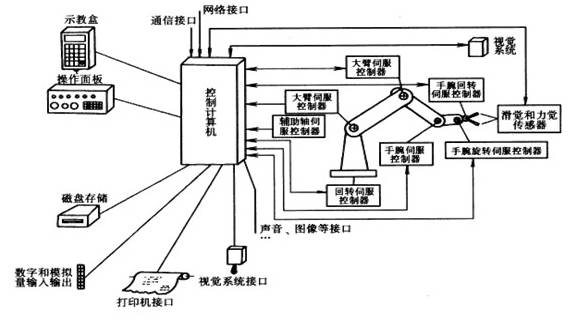 Schemat blokowy układu sterowania robotem(1) Komputer sterujący:
Organizacja dyspozytorska i dowodzenia systemem sterowania. Ogólnie rzecz biorąc, mikrokomputery i mikroprocesory są 32-bitowe, 64-bitowe itp., takie jak procesory z serii Pentium i inne typy procesorów.
(2) Pole nauczania:
Naucz robota trajektorii pracy i ustawień parametrów, a także interakcji człowiek-komputer, posiadaj własny niezależny procesor i jednostkę pamięci oraz realizuj interakcję informacyjną z komputerem hosta poprzez komunikację szeregową.
(3) Panel operacyjny:
składa się z różnych przycisków operacyjnych i wskaźników stanu i wykonuje jedynie podstawowe operacje funkcjonalne.
(4) Pamięć na dysku twardym i dyskietce:
Pamięć peryferyjna do przechowywania programów pracy robota.
(5) Wejście i wyjście cyfrowe i analogowe:
Wejście lub wyjście różnych poleceń stanu i sterowania.
(6) Interfejs drukarki:
Zapisz różne informacje, które należy wyprowadzić.
(7) Interfejs czujnika:
służy do automatycznego wykrywania informacji w celu zapewnienia zgodnego sterowania robotem, zazwyczaj z czujników siły, dotyku i wzroku.
(8) kontroler osi:
Ukończ kontrolę pozycji, prędkości i przyspieszenia robota.
(9) Sterowanie urządzeniami pomocniczymi:
służy do sterowania urządzeniami pomocniczymi współpracującymi z robotem, takimi jak pozycjoner chwytaka itp.
(10) Interfejs komunikacyjny:
Realizować wymianę informacji pomiędzy robotami i innymi urządzeniami, zazwyczaj interfejsami szeregowymi, interfejsami równoległymi itp.
(11) interfejs sieciowy
1) Ethernet interface: Direct PC communication of several or single robots can be realized through Ethernet, the data transmission rate is up to 10Mbit/s, and the application program can be programmed directly on the PC with windows library functions, and the TCP/IP communication protocol can be supported , Load data and programs into each robot controller through the Ethernet interface.
2) Interfejs magistrali polowej: obsługuje wiele popularnych specyfikacji magistrali polowych, takich jak sieć urządzeń, zdalne wejścia/wyjścia AB, Interbus-s, profibus-DP, M-NET itp.
3. Klasyfikacja systemów sterowania robotami przemysłowymi
(1) System kontroli programu:
Zastosuj pewną regularną funkcję sterowania do każdego stopnia swobody, a robot będzie mógł zrealizować wymaganą trajektorię przestrzenną.
(2) Adaptacyjny system sterowania:
When the external conditions change, in order to ensure the required quality or to improve the control quality with the accumulation of experience, the process is based on the observation of the state of the operating machine and the servo error, and then adjust the parameters of the nonlinear model until the error Until it disappears. The structure and parameters of this system can change automatically with time and conditions.
(3) System sztucznej inteligencji:
Nie ma możliwości skompilowania programów ruchu z wyprzedzeniem, wymaga to jednak określenia w czasie rzeczywistym efektu sterowania na podstawie uzyskanych informacji o stanie otoczenia w trakcie ruchu.
Tryb jazdy: patrz układ napędowy robota przemysłowego.
Metoda ćwiczeń:
(4) Typ punktu:
requires the robot to accurately control the pose of the end effector, regardless of the path;
(5) Typ toru:
wymaga, aby robot poruszał się zgodnie z nauczoną trajektorią i prędkością.
(6) Magistrala sterująca:
Międzynarodowy standardowy system sterowania autobusami. Użyj międzynarodowej standardowej magistrali jako magistrali sterującej systemu sterowania, takiej jak VME, MULTI-bus, STD-bus, PC-bus.
(7) Niestandardowy system sterowania magistralą:
Jako magistralę systemu sterowania wykorzystywana jest magistrala zdefiniowana i używana przez samego producenta.
(8) Metoda programowania:
System programowania ustawień fizycznych. Operator ustawia stały wyłącznik krańcowy w celu realizacji programu uruchamiania i zatrzymywania, którego można używać wyłącznie do prostych operacji podnoszenia i odkładania.
(9) Programowanie online:
Metoda programowania procesu pamięciowego informacji operacyjnych jest uzupełniana poprzez nauczanie przez człowieka, w tym nauczanie bezpośrednie (tj. nauczanie ręczne), nauczanie symulacyjne i nauczanie metodą pudełkową.
(10) Programowanie offline:
Nie ucz bezpośrednio rzeczywistego robota, ale oddziel go od rzeczywistego środowiska pracy, wygeneruj program nauczania i wygeneruj trajektorię robota zdalnie w trybie offline, używając robotów wysokiego poziomu i języków programowania.
4. Struktura systemu sterowania robotem
Systemy sterowania robotami można podzielić na trzy kategorie w zależności od metod sterowania.
(1) Scentralizowany system kontroli (scentralizowany system kontroli):
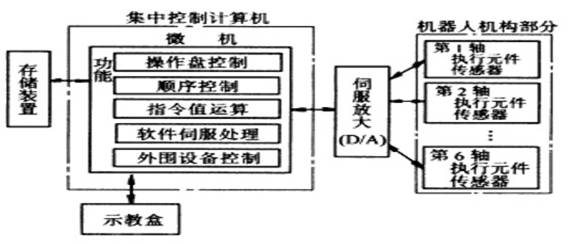 Schemat blokowy scentralizowanego układu sterowania
Do realizacji wszystkich funkcji sterujących wykorzystywany jest komputer. Struktura jest prosta, a koszt niski, ale wydajność w czasie rzeczywistym jest słaba i trudno ją rozszerzyć. Struktura ta jest często stosowana we wczesnych robotach. Schemat blokowy pokazano na rysunku.
Scentralizowany system sterowania oparty na komputerze PC w pełni wykorzystuje otwartość zasobów komputera PC i może osiągnąć dobrą otwartość: różne karty sterujące, urządzenia czujnikowe itp. można zintegrować ze sterowaniem za pośrednictwem standardowych gniazd PCI lub standardowych portów szeregowych i portów równoległych. System.
The advantages of centralized control systems are: low hardware costs, easy information collection and analysis, easy to achieve optimal control of the system, better integrity and coordination, and more convenient PC-based system hardware expansion. Its shortcomings are also obvious: the system control lacks flexibility, and the control danger is easy to concentrate. Once a failure occurs, its impact is wide and the consequences are serious; because the real-time requirements of industrial robots are very high, when the system performs a large amount of data calculation, it will reduce the real-time performance , The system’s responsiveness to multitasking will also conflict with the system’s real-time performance; in addition, the system’s complex wiring will reduce the system’s reliability.
(2) Układ sterowania master-slave:
Using master and slave two-level processors to realize all control functions of the system. The main CPU realizes management, coordinate transformation, trajectory generation and system self-diagnosis, etc.; the slave CPU realizes the motion control of all joints. Its composition block diagram, as shown in the figure.
System sterowania master-slave charakteryzuje się dobrą wydajnością w czasie rzeczywistym i nadaje się do precyzyjnego i szybkiego sterowania, ale jego skalowalność systemu jest słaba, a konserwacja jest trudna.
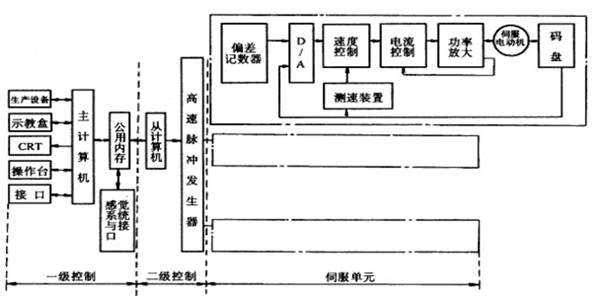 Schemat blokowy układu sterowania master i slave
(3) System kontroli dystrybucji:
Ze względu na charakter i sposób działania systemu sterowanie systemem podzielone jest na kilka modułów. Każdy moduł ma inne zadania kontrolne i strategie sterowania. Każdy tryb może być relacją master-slave lub relacją równą.
Metoda ta charakteryzuje się dobrą wydajnością w czasie rzeczywistym, jest łatwa w realizacji, zapewnia szybkie i precyzyjne sterowanie, jest łatwa do rozbudowy i pozwala na realizację inteligentnego sterowania. Jest to obecnie popularna metoda.
The main idea is "decentralized control, centralized management", that is, the system can comprehensively coordinate and allocate its overall goals and tasks, and complete the control tasks through the coordination of subsystems. The entire system is functional, logical, and physical. It is decentralized, so the DCS system is also called a distributed control system or a distributed control system.
In this structure, the subsystem is composed of a controller and different controlled objects or devices, and each subsystem communicates with each other through a network. The distributed control structure provides an open, real-time and accurate robot control system. Two-level control methods are often used in distributed systems.
Two-level distributed control system, usually composed of upper computer, lower computer and network. The upper computer can carry out different trajectory planning and control algorithms, and the lower computer can carry out the research and realization of interpolation and subdivision and control optimization. The upper computer and the lower computer work in coordination with each other through the communication bus. The communication bus here can be in the form of RS-232, RS-485, EEE-488 and USB bus.
Now, the development of Ethernet and fieldbus technology provides robots with faster, stable and effective communication services. Especially the field bus, which is applied to the production site to realize two-way multi-node digital communication between microcomputerized measurement and control equipment, thus forming a new type of network integrated fully distributed control system-field bus control system FCS (Filed bus Control System) ).
In the factory production network, the devices that can be connected via fieldbus are collectively referred to as "field devices/instruments". From the perspective of system theory, industrial robots, as one of the production equipment of the factory, can also be summarized as field equipment. After the introduction of fieldbus technology in the robot system, it is more conducive to the integration of robots in the industrial production environment.
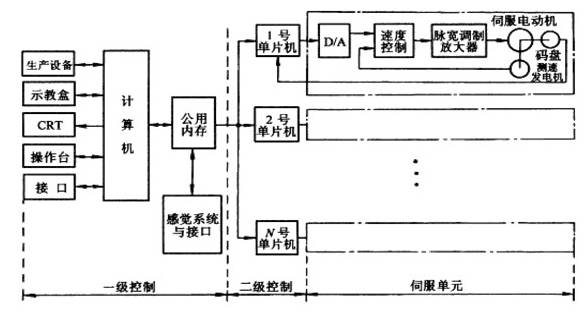 Block diagram of distributed control systemThe advantages of the distributed control system are: system flexibility is good, the risk of the control system is reduced, the use of multi-processor distributed control is conducive to the parallel execution of system functions, the processing efficiency of the system is improved, and the response time is shortened.
For industrial robots with multiple degrees of freedom, centralized control handles the coupling relationship between each control axis very well, and can be easily compensated. However, when the number of axes increases to make the control algorithm very complicated, its control performance will deteriorate. Moreover, when the number of axes in the system or the control algorithm becomes very complicated, it may lead to the redesign of the system.
Natomiast każda oś ruchu rozproszonej struktury jest przetwarzana przez sterownik, co oznacza, że system ma mniejsze sprzężenie między osiami i większą rekonfigurację systemu.
"Industry 4.0" refers to the fourth industrial revolution after steam engine, electrification and automation. It combines traditional industry with digital information technology and realizes intelligent production with the help of technologies such as big data and cloud computing. In China, "Industry 4.0" means the upgrading of the country's manufacturing industry. For this reason, China has specifically put forward the development goal of "Made in China 2025". The goal is to move from a major manufacturing country to a strong manufacturing country by 2025.


