Khi còn hai tháng cuối năm 2020, dịch bệnh toàn cầu vẫn còn đáng lo ngại. Mặc dù dịch bệnh đã mở ra khoảng cách giữa con người với nhau nhưng nó cũng thúc đẩy sự phát triển ứng dụng của từng ngành nghề riêng lẻ. Robot hậu cần kho bãi là một trong số đó.
Tại Triển lãm Hậu cần Quốc tế Châu Á CeMAT Châu Á vừa kết thúc vào tuần trước, nhiều giải pháp robot khác nhau đã thu hút rất nhiều sự chú ý. Từ các kệ được triển khai lại đến con người, thùng rác đến con người, cho đến các đơn hàng nhấn mạnh đến sự nhẹ nhàng và linh hoạt, công nghệ tự động hóa có mặt ở khắp mọi nơi.
Không khó để nhận thấy, dịch bệnh không chỉ giúp công chúng thực sự nhận ra giá trị của những công nghệ như robot, trí tuệ nhân tạo mà còn thúc đẩy mọi tầng lớp xã hội đánh giá lại tính cấp thiết của việc cải cách phương thức sản xuất.
At the end of October, the National Development and Reform Commission and other six ministries and commissions jointly issued a document, proposing the implementation of a robot and smart equipment promotion plan, and speeding up the promotion and application of automation and intelligent equipment. For enterprises, it is the general trend to introduce suitable man-machine collaboration solutions to improve efficiency and stability.
Under the joint attention of policy, capital and public opinion, the concept of robot automation that has attracted much attention has been further pushed to the front. However, the lessons learned from the robot industry bubble around 2014 are still vivid. Is this new wave of enthusiasm to follow the trend and create a gimmick, or is it true?
trùng với "Double 11", chúng ta cũng có thể khám phá các robot hậu cần và kho bãi thương mại điện tử làm mẫu.
Động lực: Amazon tiếp quản một công ty robot kho hàng với giá 775 triệu USD
Vào tháng 3 năm 2012, Amazon công bố mua lại một công ty có tên Kiva Systems với giá 775 triệu USD tiền mặt và đưa các sản phẩm AGV (phương tiện dẫn đường tự động) của mình vào mạng lưới kho hàng của Amazon.
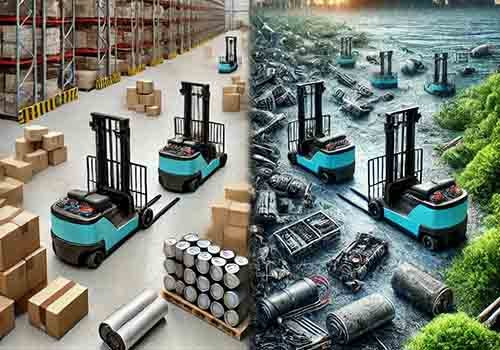
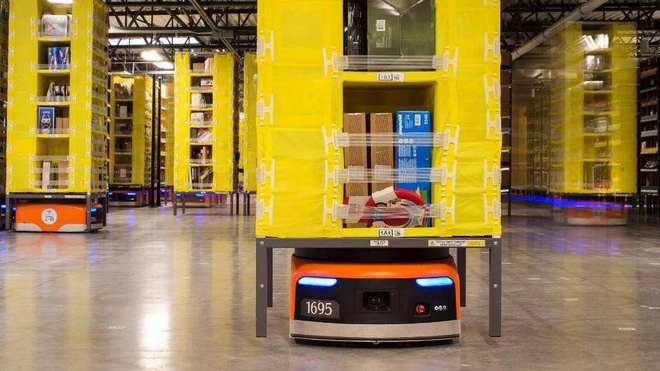 Simply put, an AGV is a robot car that can walk along a prescribed navigation path through navigation methods such as electromagnetic tracks and QR codes. This type of robot was mainly used in the field of manufacturing in the early days. Major global auto factories such as Toyota and Volkswagen all widely used AGV in manufacturing and assembly lines.
With the "blessing" of the big brother and weather vane Amazon, the AGV concept quickly became popular in the e-commerce logistics circle. In China on the other side of the ocean, recruits and veterans such as Hairou Innovation, Siasun, Kuaicang, and Jizhijia are competing to enter the game. According to the Geek Park report, as of the end of 2018, according to incomplete statistics, more than 50 warehousing AGV companies have appeared in China.
In fact, around 2018, the European and American industries began to reassess the general applicability of AGV in the field of e-commerce warehousing. After several years of verification, everyone found that the flexibility of AGV seems to be unable to adapt to the impulsive fluctuations in e-commerce business volume-because every time an AGV is added to the warehouse, the environment must be rearranged. The heavy investment in the early stage and the superimposed cost in the later stage have put the payback cycle to the test.
In the Asian market, e-commerce warehousing AGVs have also experienced inadequacy. For example, Asian customers generally attach great importance to the effective use of the warehouse area, and the navigation guidance such as the QR code and track required by the AGV, as well as its fixed movement track, are not conducive to the improvement of the utilization rate of the warehouse area.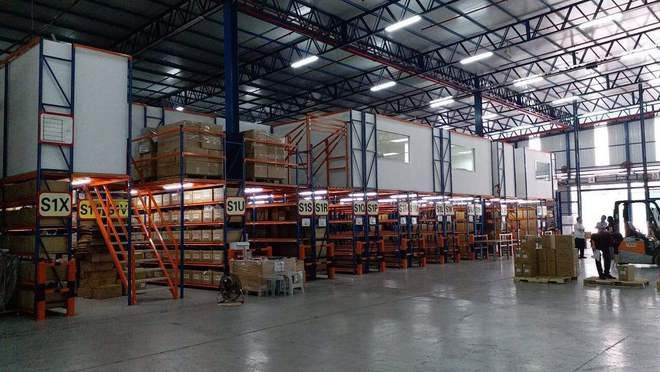 Ngoài ra, nhiều quốc gia ở Đông Nam Á là những quốc gia có nguồn nguyên liệu và sản xuất lớn, quá trình từ sản xuất đến bán hàng của thương mại điện tử địa phương tương đối ngắn.
Unlike major importing countries such as Europe and the United States, e-commerce warehouses in Southeast Asia do not have excessive storage requirements. Instead, distribution centers and picking centers dominate. Therefore, the AGV that is good at material handling seems to be in a dilemma of uselessness.
Vì vậy, trong vài năm tới, một loại robot khác dần thay thế AGV và thường xuyên xuất hiện trong các cuộc thảo luận về hậu cần kho bãi thương mại điện tử. Đó là AMR.
Sự tiến hóa: Khi robot di chuyển tự động như một chiếc ô tô không người lái
AMR được gọi là tự trịrobot di động(robot di động tự động). Mặc dù tất cả đều bắt đầu bằng chữ "A", AGV là "lực kéo tự động" và AMR là "chuyển động tự chủ", điều này cho thấy có sự khác biệt cơ bản giữa hai loại này.
Relying on visual perception and AI algorithms, the core value of AMR is to perceive the surrounding environment in real time and quickly respond appropriately. Just like a driverless car, the route can be adjusted at any time according to road conditions. In the warehouse environment, AMR is like a "superman" with ultra-high precision, autonomously and flexibly cooperating with human partners. Lấy việc chọn AMR làm ví dụ.
After the robot receives the order, it will immediately plan the optimal route according to the location of each product. After "walking" to the corresponding position, the robot in the area will be prompted to put the product into the bin, and then move to the next picking point until The whole order picking is completed and transported to the packing station. Moreover, multiple orders can be picked per trip.
Bằng cách này, nhân viên chỉ cần hợp tác với việc bốc hàng hoặc đóng gói hàng hóa trong khu vực tương ứng của họ và AMR sẽ mở ra hiệu quả từ việc tiếp nhận đơn hàng đến đóng gói và hiện thực hóa việc tự động hóa đơn đặt hàng cho mọi người.
Điều thú vị là đội ngũ ban đầu của Kiva Systems được đề cập ở trên đã tách hai thương hiệu AMR kho bãi nổi tiếng nhất thế giới: Locus Robotics và 6 River Systems. Sau này được gã khổng lồ thương mại điện tử Shopify mua lại với giá 450 triệu USD vào năm 2019.
Ở Trung Quốc, có công nghệ thông minh và ngọn đuốc Syrius, được ưa chuộng ở thị trường nước ngoài, và các công ty tập trung vào AMR khác đã ra đời. Ngoài ra, một số lượng lớn người chơi AGV hậu cần truyền thống cũng đã chuyển đổi sang AMR.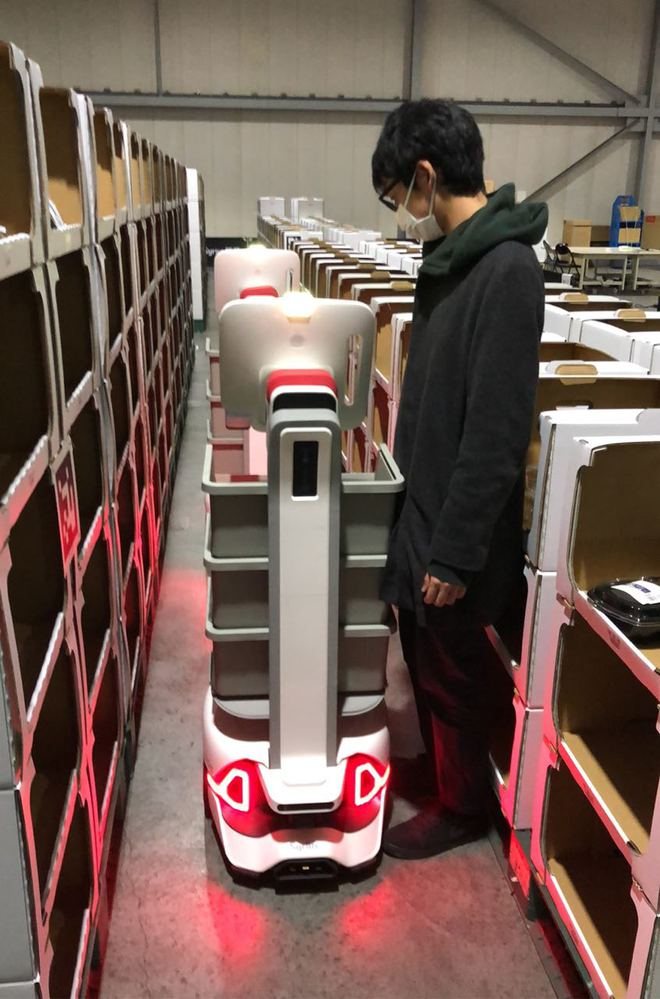 Theo báo cáo của Interact Analysis, một cơ quan dữ liệu có thẩm quyền, tổng doanh thu của ngành AMR toàn cầu năm 2019 là 749 triệu USD, tăng 70% so với cùng kỳ năm ngoái; ngay cả trong năm 2020, vốn bị che phủ bởi cái bóng của vương miện mới, tốc độ tăng trưởng hàng năm dự kiến sẽ đạt 45%.
Sự phát triển của nó trong thời kỳ hậu dịch bệnh đã thu hút được sự chú ý đáng kể.
Tương lai: Kịch bản phân khúc dịch vụ dạng đa sản phẩm, hướng tới tự động hóa vòng kín
Although the future can be expected, it cannot be ignored that AMR is still in the early stage of landing as a whole. In the sub-scenarios of e-commerce warehousing and logistics such as picking, warehousing, etc., we have seen some commercial-proven solutions, but a mature full-scenario product closed loop has not yet been formed.
There is no doubt that for the application and promotion of new technologies, first focusing on subdivided scenes for refined polishing, and then considering platform expansion is the most practical and reliable path. Even in the companies that have grown from the AGV era, we have seen Hairou's innovation that still focuses on box-type storage robots, and we have also seen Jizhijia who focus on building a product matrix.
In contrast, there are still large blanks of the e-commerce warehousing AMR market to be explored. Whether companies can get through customer pain points and product experience as soon as possible, and whether core technologies can be quickly transplanted and product platformization will be the key to determining the next competitive landscape. We sincerely hope that people who believe in the value of science and technology can move forward steadily with awe and focus, and do not let new production methods become a bargaining chip for capital games.
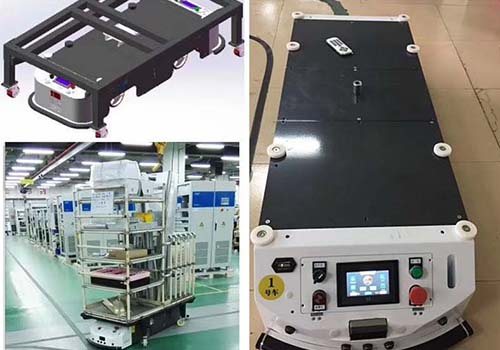
xe agv