До конца 2020 года осталось два месяца, но глобальная эпидемия все еще вызывает тревогу. Хотя эпидемия и увеличила расстояние между людьми, она также способствовала развитию приложений в отдельных отраслях. Робот складской логистики — один из них.
На завершившейся на прошлой неделе международной логистической выставке CeMAT Asia Asia большое внимание привлекли различные роботизированные решения. От перераспределения полок до людей, от контейнеров до людей и до заказов, которые подчеркивают легкость и гибкость, технологии автоматизации используются повсюду.
Нетрудно увидеть, что эпидемия не только позволяет общественности по-настоящему осознать ценность таких технологий, как роботы и искусственный интеллект, но и побуждает все слои общества переоценить необходимость реформирования методов производства.
At the end of October, the National Development and Reform Commission and other six ministries and commissions jointly issued a document, proposing the implementation of a robot and smart equipment promotion plan, and speeding up the promotion and application of automation and intelligent equipment. For enterprises, it is the general trend to introduce suitable man-machine collaboration solutions to improve efficiency and stability.
Under the joint attention of policy, capital and public opinion, the concept of robot automation that has attracted much attention has been further pushed to the front. However, the lessons learned from the robot industry bubble around 2014 are still vivid. Is this new wave of enthusiasm to follow the trend and create a gimmick, or is it true?
совпадает с «Двойным 11», мы могли бы также рассмотреть в качестве образца складских и логистических роботов электронной коммерции.
Импульс: Amazon приобрела компанию по производству складских роботов за 775 миллионов долларов.
В марте 2012 года Amazon объявила о приобретении компании Kiva Systems за 775 миллионов долларов наличными и представила свои продукты AGV (автоматизированные транспортные средства) в складской сети Amazon.
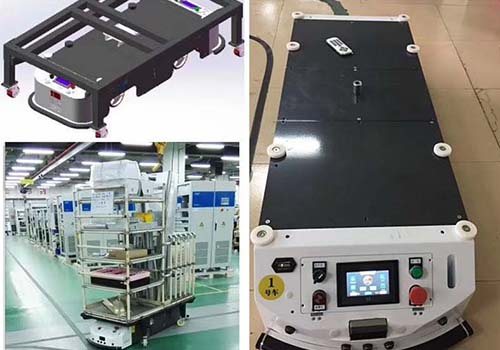
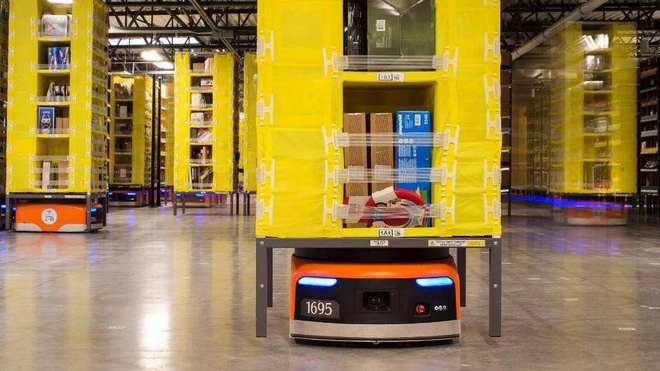 Simply put, an AGV is a robot car that can walk along a prescribed navigation path through navigation methods such as electromagnetic tracks and QR codes. This type of robot was mainly used in the field of manufacturing in the early days. Major global auto factories such as Toyota and Volkswagen all widely used AGV in manufacturing and assembly lines.
With the "blessing" of the big brother and weather vane Amazon, the AGV concept quickly became popular in the e-commerce logistics circle. In China on the other side of the ocean, recruits and veterans such as Hairou Innovation, Siasun, Kuaicang, and Jizhijia are competing to enter the game. According to the Geek Park report, as of the end of 2018, according to incomplete statistics, more than 50 warehousing AGV companies have appeared in China.
In fact, around 2018, the European and American industries began to reassess the general applicability of AGV in the field of e-commerce warehousing. After several years of verification, everyone found that the flexibility of AGV seems to be unable to adapt to the impulsive fluctuations in e-commerce business volume-because every time an AGV is added to the warehouse, the environment must be rearranged. The heavy investment in the early stage and the superimposed cost in the later stage have put the payback cycle to the test.
In the Asian market, e-commerce warehousing AGVs have also experienced inadequacy. For example, Asian customers generally attach great importance to the effective use of the warehouse area, and the navigation guidance such as the QR code and track required by the AGV, as well as its fixed movement track, are not conducive to the improvement of the utilization rate of the warehouse area.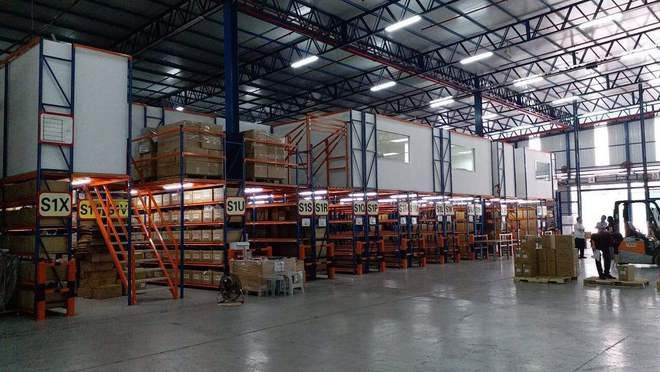 Кроме того, многие страны Юго-Восточной Азии являются крупными сырьевыми и производственными странами, и процесс от производства до продаж местной электронной коммерции относительно короткий.
Unlike major importing countries such as Europe and the United States, e-commerce warehouses in Southeast Asia do not have excessive storage requirements. Instead, distribution centers and picking centers dominate. Therefore, the AGV that is good at material handling seems to be in a dilemma of uselessness.
Итак, в следующие несколько лет другой тип роботов постепенно заменил AGV и часто появлялся в обсуждениях складской логистики электронной коммерции. Это АМР.
Эволюция: когда робот движется автономно, как беспилотный автомобиль
AMR называется автономныммобильные роботы(автономные мобильные роботы). Хотя все они начинаются с буквы «А», AGV — это «автоматическое тяговое усилие», а AMR — «автономное движение», что показывает, что между ними существуют существенные различия.
Relying on visual perception and AI algorithms, the core value of AMR is to perceive the surrounding environment in real time and quickly respond appropriately. Just like a driverless car, the route can be adjusted at any time according to road conditions. In the warehouse environment, AMR is like a "superman" with ultra-high precision, autonomously and flexibly cooperating with human partners. Возьмем, к примеру, выбор AMR.
After the robot receives the order, it will immediately plan the optimal route according to the location of each product. After "walking" to the corresponding position, the robot in the area will be prompted to put the product into the bin, and then move to the next picking point until The whole order picking is completed and transported to the packing station. Moreover, multiple orders can be picked per trip.
Таким образом, сотрудникам нужно будет сотрудничать только с погрузкой или упаковкой товаров на своих участках, а AMR повысит эффективность от приема заказов до упаковки и осуществит автоматизацию заказов для людей.
Интересно, что первая команда упомянутой выше компании Kiva Systems разделила два самых известных складских бренда AMR в мире: Locus Robotics и 6 River Systems. Последний был приобретен гигантом электронной коммерции Shopify за 450 миллионов долларов в 2019 году.
В Китае появились интеллектуальные технологии и фонарик Syrius, популярный на зарубежных рынках, а также родились другие компании, ориентированные на AMR. Кроме того, большое количество традиционных логистических игроков AGV также перешли на AMR.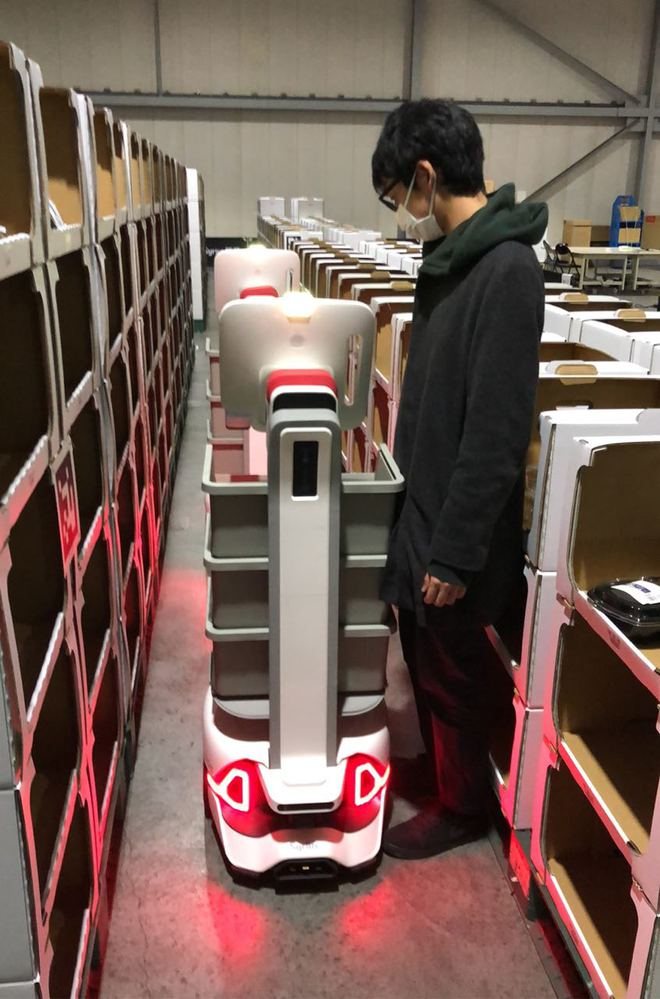 Согласно отчету авторитетного агентства данных Interact Analysis, общий доход мировой индустрии AMR в 2019 году составил 749 миллионов долларов США, что на 70% больше, чем в прошлом году; даже в 2020 году, который окутан тенью новой короны, ожидается, что ежегодные темпы роста достигнут 45%.
Его развитие в постэпидемическую эпоху привлекло значительное внимание.
Будущее: сценарии сегментации услуг по нескольким продуктам в направлении автоматизации с замкнутым контуром.
Although the future can be expected, it cannot be ignored that AMR is still in the early stage of landing as a whole. In the sub-scenarios of e-commerce warehousing and logistics such as picking, warehousing, etc., we have seen some commercial-proven solutions, but a mature full-scenario product closed loop has not yet been formed.
There is no doubt that for the application and promotion of new technologies, first focusing on subdivided scenes for refined polishing, and then considering platform expansion is the most practical and reliable path. Even in the companies that have grown from the AGV era, we have seen Hairou's innovation that still focuses on box-type storage robots, and we have also seen Jizhijia who focus on building a product matrix.
In contrast, there are still large blanks of the e-commerce warehousing AMR market to be explored. Whether companies can get through customer pain points and product experience as soon as possible, and whether core technologies can be quickly transplanted and product platformization will be the key to determining the next competitive landscape. We sincerely hope that people who believe in the value of science and technology can move forward steadily with awe and focus, and do not let new production methods become a bargaining chip for capital games.
автомобили АГВ