Con gli ultimi due mesi rimasti nel 2020, l’epidemia globale è ancora preoccupante. Sebbene l’epidemia abbia ampliato la distanza tra le persone, ha anche favorito lo sviluppo delle applicazioni dei singoli settori. Il robot per la logistica di magazzino è uno di questi.
Alla fiera internazionale della logistica CeMAT Asia Asia, che si è conclusa la scorsa settimana, diverse soluzioni robotiche hanno attirato molta attenzione. Dagli scaffali ridistribuiti alle persone, dai contenitori alle persone, agli ordini che enfatizzano leggerezza e flessibilità, la tecnologia di automazione è ovunque.
Non è difficile vedere che l’epidemia non solo consente al pubblico di comprendere veramente il valore di tecnologie come i robot e l’intelligenza artificiale, ma spinge anche tutti i ceti sociali a rivalutare l’urgenza di riformare i metodi di produzione.
At the end of October, the National Development and Reform Commission and other six ministries and commissions jointly issued a document, proposing the implementation of a robot and smart equipment promotion plan, and speeding up the promotion and application of automation and intelligent equipment. For enterprises, it is the general trend to introduce suitable man-machine collaboration solutions to improve efficiency and stability.
Under the joint attention of policy, capital and public opinion, the concept of robot automation that has attracted much attention has been further pushed to the front. However, the lessons learned from the robot industry bubble around 2014 are still vivid. Is this new wave of enthusiasm to follow the trend and create a gimmick, or is it true?
coincide con "Double 11", potremmo anche esplorare i robot logistici e di stoccaggio dell'e-commerce come esempio.
Lo slancio: Amazon ha rilevato un’azienda di robot da magazzino per 775 milioni di dollari
Nel marzo 2012, Amazon ha annunciato l'acquisizione di una società chiamata Kiva Systems per 775 milioni di dollari in contanti e ha introdotto i suoi prodotti AGV (veicoli a guida automatizzata) nella rete di magazzini di Amazon.
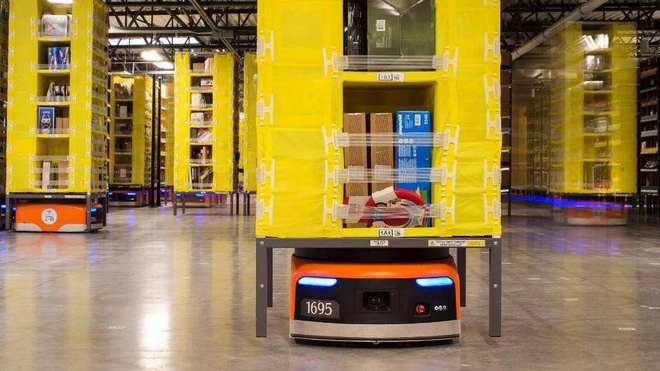 Simply put, an AGV is a robot car that can walk along a prescribed navigation path through navigation methods such as electromagnetic tracks and QR codes. This type of robot was mainly used in the field of manufacturing in the early days. Major global auto factories such as Toyota and Volkswagen all widely used AGV in manufacturing and assembly lines.
With the "blessing" of the big brother and weather vane Amazon, the AGV concept quickly became popular in the e-commerce logistics circle. In China on the other side of the ocean, recruits and veterans such as Hairou Innovation, Siasun, Kuaicang, and Jizhijia are competing to enter the game. According to the Geek Park report, as of the end of 2018, according to incomplete statistics, more than 50 warehousing AGV companies have appeared in China.
In fact, around 2018, the European and American industries began to reassess the general applicability of AGV in the field of e-commerce warehousing. After several years of verification, everyone found that the flexibility of AGV seems to be unable to adapt to the impulsive fluctuations in e-commerce business volume-because every time an AGV is added to the warehouse, the environment must be rearranged. The heavy investment in the early stage and the superimposed cost in the later stage have put the payback cycle to the test.
In the Asian market, e-commerce warehousing AGVs have also experienced inadequacy. For example, Asian customers generally attach great importance to the effective use of the warehouse area, and the navigation guidance such as the QR code and track required by the AGV, as well as its fixed movement track, are not conducive to the improvement of the utilization rate of the warehouse area.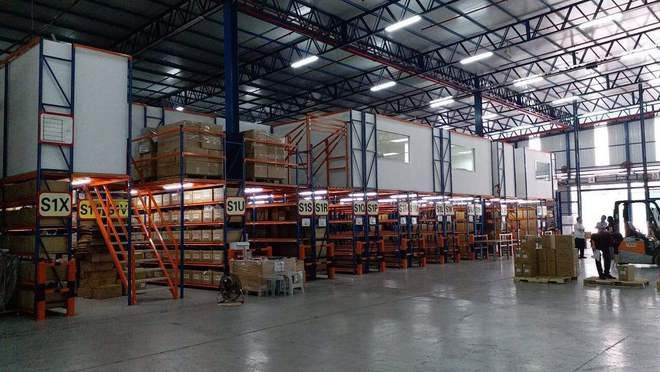 Inoltre, molti paesi del Sud-Est asiatico sono grandi paesi di produzione e materie prime e il processo dalla produzione alla vendita dell’e-commerce locale è relativamente breve.
Unlike major importing countries such as Europe and the United States, e-commerce warehouses in Southeast Asia do not have excessive storage requirements. Instead, distribution centers and picking centers dominate. Therefore, the AGV that is good at material handling seems to be in a dilemma of uselessness.
Così, negli anni successivi, un altro tipo di robot sostituì gradualmente l’AGV e fece spesso la sua comparsa nella discussione sulla logistica di magazzinaggio nell’e-commerce. È l'AMR.
Evoluzione: quando un robot si muove autonomamente come un'auto senza conducente
L’AMR è chiamato autonomorobot mobili(robot mobili autonomi). Anche se iniziano tutti con la lettera "A", AGV è "trazione automatica" e AMR è "movimento autonomo", il che dimostra che esistono differenze essenziali tra i due.
Relying on visual perception and AI algorithms, the core value of AMR is to perceive the surrounding environment in real time and quickly respond appropriately. Just like a driverless car, the route can be adjusted at any time according to road conditions. In the warehouse environment, AMR is like a "superman" with ultra-high precision, autonomously and flexibly cooperating with human partners. Prendiamo ad esempio la scelta della resistenza antimicrobica.
After the robot receives the order, it will immediately plan the optimal route according to the location of each product. After "walking" to the corresponding position, the robot in the area will be prompted to put the product into the bin, and then move to the next picking point until The whole order picking is completed and transported to the packing station. Moreover, multiple orders can be picked per trip.
In questo modo, il personale deve solo collaborare con il caricamento o l'imballaggio delle merci nelle rispettive aree e AMR aumenterà l'efficienza dall'acquisizione degli ordini all'imballaggio e realizzerà l'automazione degli ordini alle persone.
È interessante notare che il primo team di Kiva Systems sopra menzionato separava i due marchi AMR di magazzino più noti al mondo: Locus Robotics e 6 River Systems. Quest’ultima è stata acquisita dal colosso dell’e-commerce Shopify per 450 milioni di dollari nel 2019.
In Cina esistono la tecnologia intelligente e la torcia Syrius, popolare nei mercati esteri, e sono nate altre società focalizzate sulla resistenza antimicrobica. Inoltre, anche un gran numero di operatori logistici tradizionali AGV si sono trasformati in AMR.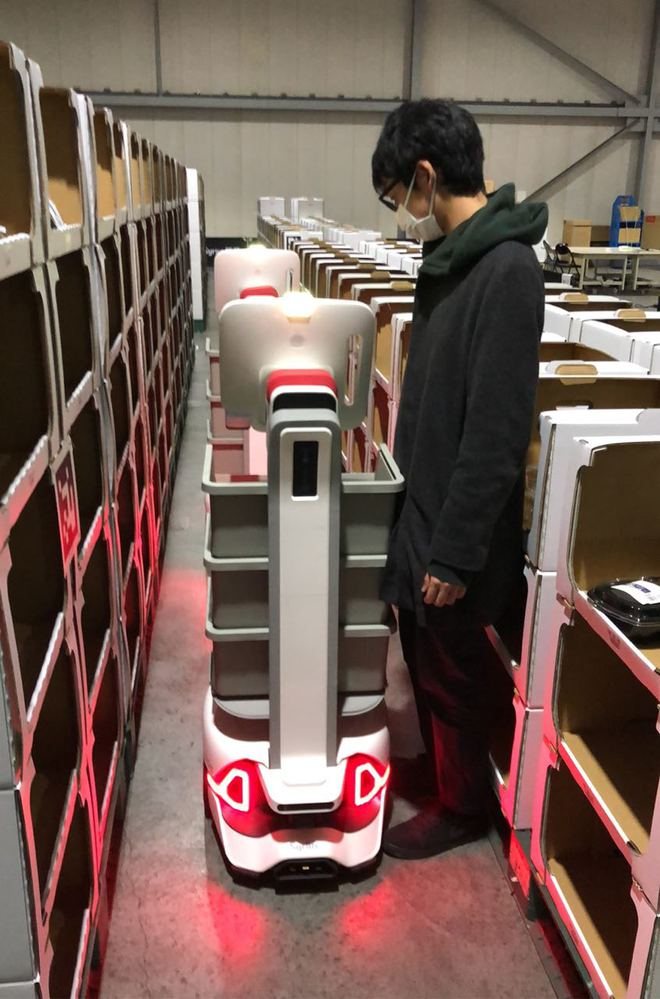 Secondo un rapporto di Interact Analysis, un'autorevole agenzia di dati, il fatturato totale del settore antimicrobico globale nel 2019 è stato di 749 milioni di dollari, con un aumento del 70% su base annua; anche nel 2020, avvolto dall’ombra della nuova corona, si prevede che il tasso di crescita annuo raggiungerà il 45%.
Il suo sviluppo nell’era post-epidemica ha attirato notevole attenzione.
Futuro: scenari di segmentazione dei servizi con moduli multiprodotto, verso l'automazione a circuito chiuso
Although the future can be expected, it cannot be ignored that AMR is still in the early stage of landing as a whole. In the sub-scenarios of e-commerce warehousing and logistics such as picking, warehousing, etc., we have seen some commercial-proven solutions, but a mature full-scenario product closed loop has not yet been formed.
There is no doubt that for the application and promotion of new technologies, first focusing on subdivided scenes for refined polishing, and then considering platform expansion is the most practical and reliable path. Even in the companies that have grown from the AGV era, we have seen Hairou's innovation that still focuses on box-type storage robots, and we have also seen Jizhijia who focus on building a product matrix.
In contrast, there are still large blanks of the e-commerce warehousing AMR market to be explored. Whether companies can get through customer pain points and product experience as soon as possible, and whether core technologies can be quickly transplanted and product platformization will be the key to determining the next competitive landscape. We sincerely hope that people who believe in the value of science and technology can move forward steadily with awe and focus, and do not let new production methods become a bargaining chip for capital games.
vetture agv