Med de sista två månaderna kvar av 2020 är den globala epidemin fortfarande orolig. Även om epidemin har öppnat avståndet mellan människor, har den också främjat applikationsutvecklingen för enskilda branscher. Lagerlogistikrobot är en av dem.
På CeMAT Asia Asia International Logistics Exhibition, som avslutades förra veckan, väckte olika robotlösningar stor uppmärksamhet. Från omplacerade hyllor till människor, papperskorgar till människor, till beställningar som betonar lätthet och flexibilitet, automationsteknik finns överallt.
Det är inte svårt att se att epidemin inte bara gör det möjligt för allmänheten att verkligen inse värdet av teknologier som robotar och artificiell intelligens, utan också främjar alla samhällsskikt att omvärdera hur brådskande det är att reformera produktionsmetoderna.
At the end of October, the National Development and Reform Commission and other six ministries and commissions jointly issued a document, proposing the implementation of a robot and smart equipment promotion plan, and speeding up the promotion and application of automation and intelligent equipment. For enterprises, it is the general trend to introduce suitable man-machine collaboration solutions to improve efficiency and stability.
Under the joint attention of policy, capital and public opinion, the concept of robot automation that has attracted much attention has been further pushed to the front. However, the lessons learned from the robot industry bubble around 2014 are still vivid. Is this new wave of enthusiasm to follow the trend and create a gimmick, or is it true?
sammanfaller med "Double 11", kan vi lika gärna utforska e-handelslager och logistikrobotar som ett exemplar.
Drivkraften: Amazon tog över ett lagerrobotföretag för 775 miljoner dollar
I mars 2012 tillkännagav Amazon förvärvet av ett företag som heter Kiva Systems för 775 miljoner dollar i kontanter och introducerade sina AGV-produkter (automatiserade styrda fordon) i Amazons lagernätverk.
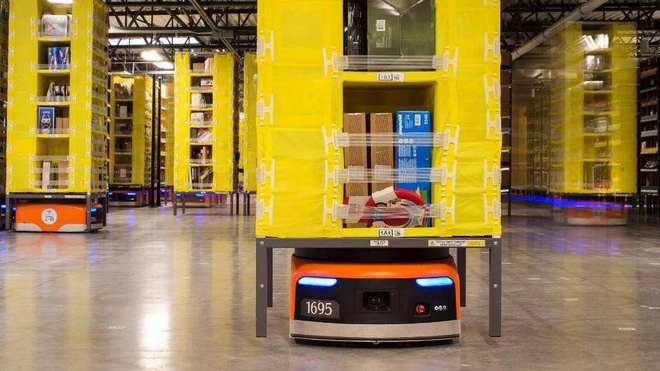 Simply put, an AGV is a robot car that can walk along a prescribed navigation path through navigation methods such as electromagnetic tracks and QR codes. This type of robot was mainly used in the field of manufacturing in the early days. Major global auto factories such as Toyota and Volkswagen all widely used AGV in manufacturing and assembly lines.
With the "blessing" of the big brother and weather vane Amazon, the AGV concept quickly became popular in the e-commerce logistics circle. In China on the other side of the ocean, recruits and veterans such as Hairou Innovation, Siasun, Kuaicang, and Jizhijia are competing to enter the game. According to the Geek Park report, as of the end of 2018, according to incomplete statistics, more than 50 warehousing AGV companies have appeared in China.
In fact, around 2018, the European and American industries began to reassess the general applicability of AGV in the field of e-commerce warehousing. After several years of verification, everyone found that the flexibility of AGV seems to be unable to adapt to the impulsive fluctuations in e-commerce business volume-because every time an AGV is added to the warehouse, the environment must be rearranged. The heavy investment in the early stage and the superimposed cost in the later stage have put the payback cycle to the test.
In the Asian market, e-commerce warehousing AGVs have also experienced inadequacy. For example, Asian customers generally attach great importance to the effective use of the warehouse area, and the navigation guidance such as the QR code and track required by the AGV, as well as its fixed movement track, are not conducive to the improvement of the utilization rate of the warehouse area.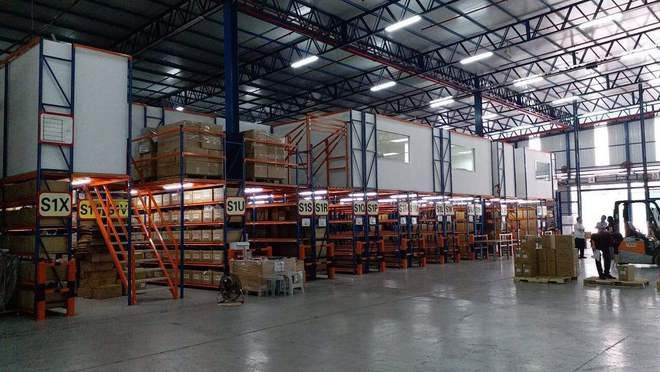 Dessutom är många länder i Sydostasien stora råvaru- och produktionsländer och processen från produktion till försäljning av lokal e-handel är relativt kort.
Unlike major importing countries such as Europe and the United States, e-commerce warehouses in Southeast Asia do not have excessive storage requirements. Instead, distribution centers and picking centers dominate. Therefore, the AGV that is good at material handling seems to be in a dilemma of uselessness.
Så under de närmaste åren ersatte en annan typ av robot gradvis AGV och dök ofta upp i diskussionen om e-handelslogistik för lager. Det är AMR.
Evolution: När en robot rör sig autonomt som en förarlös bil
AMR kallas autonommobila robotar(autonoma mobila robotar). Även om de alla börjar med bokstaven "A", är AGV "automatisk dragkraft" och AMR är "autonom rörelse", vilket visar att det finns väsentliga skillnader mellan de två.
Relying on visual perception and AI algorithms, the core value of AMR is to perceive the surrounding environment in real time and quickly respond appropriately. Just like a driverless car, the route can be adjusted at any time according to road conditions. In the warehouse environment, AMR is like a "superman" with ultra-high precision, autonomously and flexibly cooperating with human partners. Ta att välja AMR som ett exempel.
After the robot receives the order, it will immediately plan the optimal route according to the location of each product. After "walking" to the corresponding position, the robot in the area will be prompted to put the product into the bin, and then move to the next picking point until The whole order picking is completed and transported to the packing station. Moreover, multiple orders can be picked per trip.
På så sätt behöver personalen bara samarbeta med lastning eller paketering av varor i sina respektive områden och AMR kommer att öppna upp effektiviteten från orderhämtning till paketering, och realisera automatisering av order till människor.
Intressant nog skilde det tidiga teamet av Kiva Systems som nämns ovan de två mest välkända AMR-varumärkena i världen: Locus Robotics och 6 River Systems. Den sistnämnda förvärvades av e-handelsjätten Shopify för 450 miljoner dollar 2019.
I Kina finns smart teknik och Syrius-fackla, som är populär på utomeuropeiska marknader, och andra AMR-fokuserade företag föddes. Dessutom har ett stort antal traditionella logistik-AGV-aktörer också omvandlats till AMR.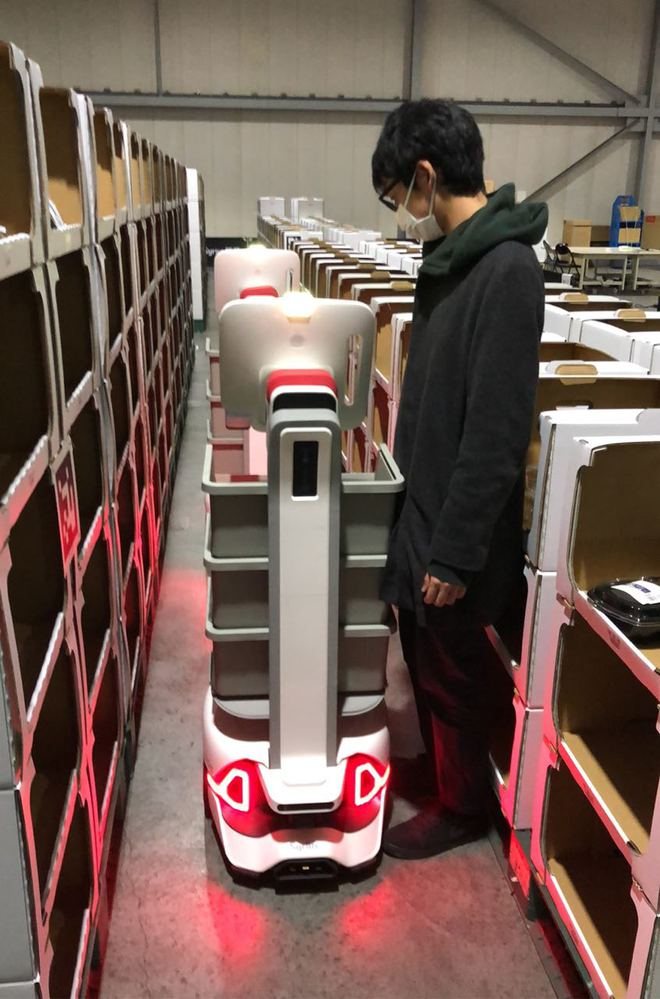 Enligt en rapport från Interact Analysis, en auktoritativ databyrå, var den globala AMR-industrins totala intäkter under 2019 749 miljoner USD, en ökning med 70 % från år till år; även 2020, som är höljt i skuggan av den nya kronan, förväntas den årliga tillväxttakten uppgå till 45 %.
Dess utveckling under eran efter epidemin har väckt stor uppmärksamhet.
Framtid: Scenarier för segmentering av tjänster i flera produkter, mot automatisering med sluten krets
Although the future can be expected, it cannot be ignored that AMR is still in the early stage of landing as a whole. In the sub-scenarios of e-commerce warehousing and logistics such as picking, warehousing, etc., we have seen some commercial-proven solutions, but a mature full-scenario product closed loop has not yet been formed.
There is no doubt that for the application and promotion of new technologies, first focusing on subdivided scenes for refined polishing, and then considering platform expansion is the most practical and reliable path. Even in the companies that have grown from the AGV era, we have seen Hairou's innovation that still focuses on box-type storage robots, and we have also seen Jizhijia who focus on building a product matrix.
In contrast, there are still large blanks of the e-commerce warehousing AMR market to be explored. Whether companies can get through customer pain points and product experience as soon as possible, and whether core technologies can be quickly transplanted and product platformization will be the key to determining the next competitive landscape. We sincerely hope that people who believe in the value of science and technology can move forward steadily with awe and focus, and do not let new production methods become a bargaining chip for capital games.
agv bilar