Cuando quedan dos últimos meses de 2020, la epidemia mundial sigue siendo preocupante. Aunque la epidemia ha abierto la distancia entre las personas, también ha promovido el desarrollo de aplicaciones de industrias individuales. El robot de logística de almacén es uno de ellos.
En la Exposición Internacional de Logística CeMAT Asia Asia, que finalizó la semana pasada, atrajeron mucha atención varias soluciones robóticas. Desde estantes reubicados hasta personas, contenedores y personas, hasta pedidos que enfatizan la ligereza y la flexibilidad, la tecnología de automatización está en todas partes.
No es difícil ver que la epidemia no sólo permite que el público se dé cuenta verdaderamente del valor de tecnologías como los robots y la inteligencia artificial, sino que también promueve que todos los ámbitos de la vida reevalúen la urgencia de reformar los métodos de producción.
At the end of October, the National Development and Reform Commission and other six ministries and commissions jointly issued a document, proposing the implementation of a robot and smart equipment promotion plan, and speeding up the promotion and application of automation and intelligent equipment. For enterprises, it is the general trend to introduce suitable man-machine collaboration solutions to improve efficiency and stability.
Under the joint attention of policy, capital and public opinion, the concept of robot automation that has attracted much attention has been further pushed to the front. However, the lessons learned from the robot industry bubble around 2014 are still vivid. Is this new wave of enthusiasm to follow the trend and create a gimmick, or is it true?
Coincide con el "Doble 11", también podríamos explorar los robots de logística y almacenamiento de comercio electrónico como muestra.
El impulso: Amazon adquirió una empresa de robots de almacén por 775 millones de dólares
En marzo de 2012, Amazon anunció la adquisición de una empresa llamada Kiva Systems por 775 millones de dólares en efectivo e introdujo sus productos AGV (vehículos guiados automáticamente) en la red de almacenes de Amazon.
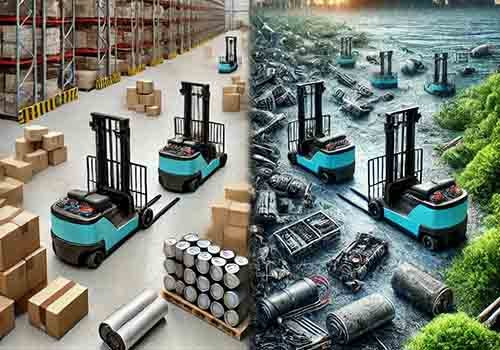
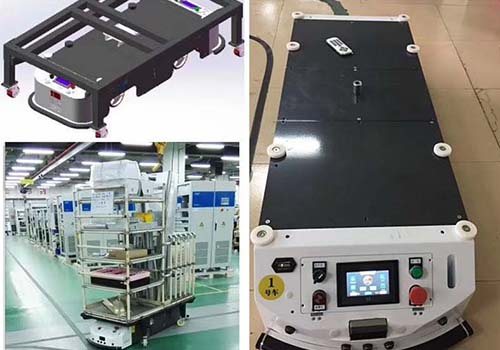
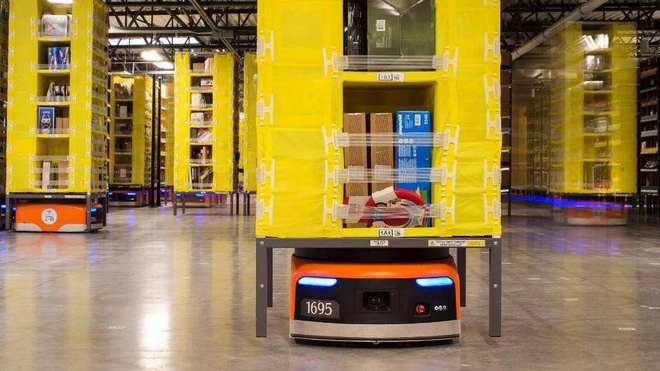 Simply put, an AGV is a robot car that can walk along a prescribed navigation path through navigation methods such as electromagnetic tracks and QR codes. This type of robot was mainly used in the field of manufacturing in the early days. Major global auto factories such as Toyota and Volkswagen all widely used AGV in manufacturing and assembly lines.
With the "blessing" of the big brother and weather vane Amazon, the AGV concept quickly became popular in the e-commerce logistics circle. In China on the other side of the ocean, recruits and veterans such as Hairou Innovation, Siasun, Kuaicang, and Jizhijia are competing to enter the game. According to the Geek Park report, as of the end of 2018, according to incomplete statistics, more than 50 warehousing AGV companies have appeared in China.
In fact, around 2018, the European and American industries began to reassess the general applicability of AGV in the field of e-commerce warehousing. After several years of verification, everyone found that the flexibility of AGV seems to be unable to adapt to the impulsive fluctuations in e-commerce business volume-because every time an AGV is added to the warehouse, the environment must be rearranged. The heavy investment in the early stage and the superimposed cost in the later stage have put the payback cycle to the test.
In the Asian market, e-commerce warehousing AGVs have also experienced inadequacy. For example, Asian customers generally attach great importance to the effective use of the warehouse area, and the navigation guidance such as the QR code and track required by the AGV, as well as its fixed movement track, are not conducive to the improvement of the utilization rate of the warehouse area.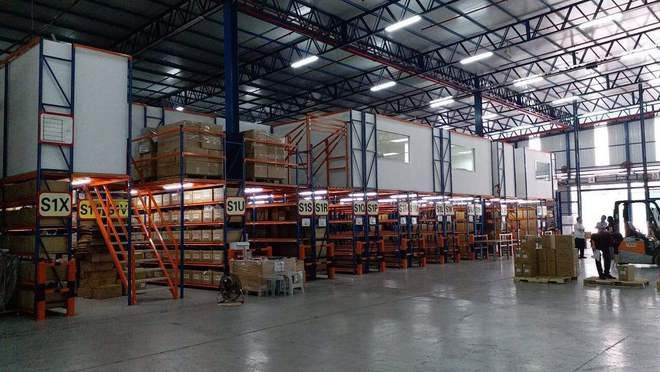 Además, muchos países del sudeste asiático son grandes productores y productores de materias primas, y el proceso desde la producción hasta las ventas del comercio electrónico local es relativamente corto.
Unlike major importing countries such as Europe and the United States, e-commerce warehouses in Southeast Asia do not have excessive storage requirements. Instead, distribution centers and picking centers dominate. Therefore, the AGV that is good at material handling seems to be in a dilemma of uselessness.
Entonces, en los años siguientes, otro tipo de robot reemplazó gradualmente a los AGV y apareció con frecuencia en el debate sobre la logística de almacenamiento del comercio electrónico. Es la RAM.
Evolución: cuando un robot se mueve de forma autónoma como un coche sin conductor
AMR se llama autónomorobots móviles(robots móviles autónomos). Aunque todos empiezan por la letra "A", AGV es "tracción automática" y AMR es "movimiento autónomo", lo que demuestra que existen diferencias esenciales entre ambos.
Relying on visual perception and AI algorithms, the core value of AMR is to perceive the surrounding environment in real time and quickly respond appropriately. Just like a driverless car, the route can be adjusted at any time according to road conditions. In the warehouse environment, AMR is like a "superman" with ultra-high precision, autonomously and flexibly cooperating with human partners. Tomemos como ejemplo la elección de AMR.
After the robot receives the order, it will immediately plan the optimal route according to the location of each product. After "walking" to the corresponding position, the robot in the area will be prompted to put the product into the bin, and then move to the next picking point until The whole order picking is completed and transported to the packing station. Moreover, multiple orders can be picked per trip.
De esta manera, el personal solo necesita cooperar con la carga o embalaje de mercancías en sus respectivas áreas, y AMR aumentará la eficiencia desde la adquisición de pedidos hasta el embalaje y realizará la automatización de pedidos a las personas.
Curiosamente, el primer equipo de Kiva Systems mencionado anteriormente separó las dos marcas de AMR de almacén más conocidas del mundo: Locus Robotics y 6 River Systems. Este último fue adquirido por el gigante del comercio electrónico Shopify por 450 millones de dólares en 2019.
En China, existe tecnología inteligente y la antorcha Syrius, que es popular en los mercados extranjeros, y nacieron otras empresas centradas en la resistencia a los antimicrobianos. Además, un gran número de actores logísticos tradicionales de AGV también se han pasado a AMR.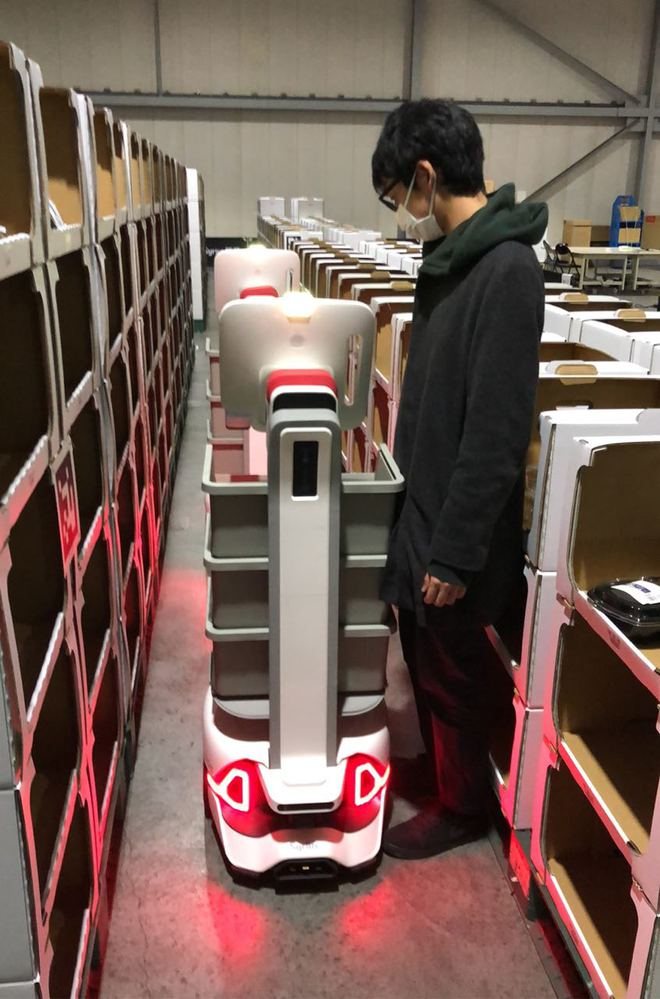 Según un informe de Interact Analysis, una agencia de datos autorizada, los ingresos totales de la industria mundial de AMR en 2019 fueron de 749 millones de dólares, un aumento interanual del 70 %; Incluso en 2020, que está envuelto en la sombra de la nueva corona, se espera que la tasa de crecimiento anual alcance el 45%.
Su desarrollo en la era post-epidemia ha atraído considerable atención.
Futuro: escenarios de segmentación de servicios en forma de múltiples productos, hacia la automatización de circuito cerrado
Although the future can be expected, it cannot be ignored that AMR is still in the early stage of landing as a whole. In the sub-scenarios of e-commerce warehousing and logistics such as picking, warehousing, etc., we have seen some commercial-proven solutions, but a mature full-scenario product closed loop has not yet been formed.
There is no doubt that for the application and promotion of new technologies, first focusing on subdivided scenes for refined polishing, and then considering platform expansion is the most practical and reliable path. Even in the companies that have grown from the AGV era, we have seen Hairou's innovation that still focuses on box-type storage robots, and we have also seen Jizhijia who focus on building a product matrix.
In contrast, there are still large blanks of the e-commerce warehousing AMR market to be explored. Whether companies can get through customer pain points and product experience as soon as possible, and whether core technologies can be quickly transplanted and product platformization will be the key to determining the next competitive landscape. We sincerely hope that people who believe in the value of science and technology can move forward steadily with awe and focus, and do not let new production methods become a bargaining chip for capital games.
coches agv