Dengan baki dua bulan terakhir pada tahun 2020, wabak global masih membimbangkan. Walaupun wabak itu telah membuka jarak antara manusia, ia juga telah menggalakkan pembangunan aplikasi industri individu. Robot logistik gudang adalah salah satu daripadanya.
Pada Pameran Logistik Antarabangsa Asia Asia CeMAT, yang berakhir minggu lalu, pelbagai penyelesaian robot menarik perhatian ramai. Daripada rak yang digunakan semula kepada orang, tong sampah kepada orang, kepada pesanan yang menekankan ringan dan fleksibiliti, teknologi automasi ada di mana-mana.
Tidak sukar untuk melihat bahawa wabak itu bukan sahaja membolehkan orang ramai benar-benar menyedari nilai teknologi seperti robot dan kecerdasan buatan, tetapi juga menggalakkan semua lapisan masyarakat untuk menilai semula keperluan mendesak untuk memperbaharui kaedah pengeluaran.
At the end of October, the National Development and Reform Commission and other six ministries and commissions jointly issued a document, proposing the implementation of a robot and smart equipment promotion plan, and speeding up the promotion and application of automation and intelligent equipment. For enterprises, it is the general trend to introduce suitable man-machine collaboration solutions to improve efficiency and stability.
Under the joint attention of policy, capital and public opinion, the concept of robot automation that has attracted much attention has been further pushed to the front. However, the lessons learned from the robot industry bubble around 2014 are still vivid. Is this new wave of enthusiasm to follow the trend and create a gimmick, or is it true?
bertepatan dengan "Double 11", kita juga boleh meneroka robot pergudangan dan logistik e-dagang sebagai spesimen.
Momentum: Amazon mengambil alih syarikat robot gudang untuk $775 juta
Pada Mac 2012, Amazon mengumumkan pengambilalihan sebuah syarikat bernama Kiva Systems dengan wang tunai $775 juta, dan memperkenalkan produk AGV (kenderaan berpandu automatik) ke dalam rangkaian gudang Amazon.
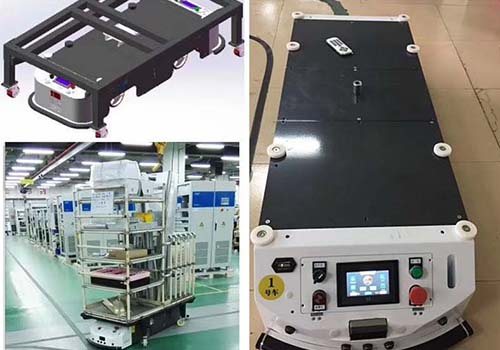
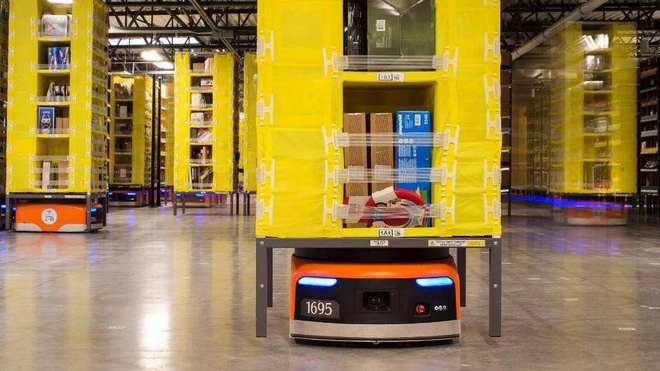 Simply put, an AGV is a robot car that can walk along a prescribed navigation path through navigation methods such as electromagnetic tracks and QR codes. This type of robot was mainly used in the field of manufacturing in the early days. Major global auto factories such as Toyota and Volkswagen all widely used AGV in manufacturing and assembly lines.
With the "blessing" of the big brother and weather vane Amazon, the AGV concept quickly became popular in the e-commerce logistics circle. In China on the other side of the ocean, recruits and veterans such as Hairou Innovation, Siasun, Kuaicang, and Jizhijia are competing to enter the game. According to the Geek Park report, as of the end of 2018, according to incomplete statistics, more than 50 warehousing AGV companies have appeared in China.
In fact, around 2018, the European and American industries began to reassess the general applicability of AGV in the field of e-commerce warehousing. After several years of verification, everyone found that the flexibility of AGV seems to be unable to adapt to the impulsive fluctuations in e-commerce business volume-because every time an AGV is added to the warehouse, the environment must be rearranged. The heavy investment in the early stage and the superimposed cost in the later stage have put the payback cycle to the test.
In the Asian market, e-commerce warehousing AGVs have also experienced inadequacy. For example, Asian customers generally attach great importance to the effective use of the warehouse area, and the navigation guidance such as the QR code and track required by the AGV, as well as its fixed movement track, are not conducive to the improvement of the utilization rate of the warehouse area.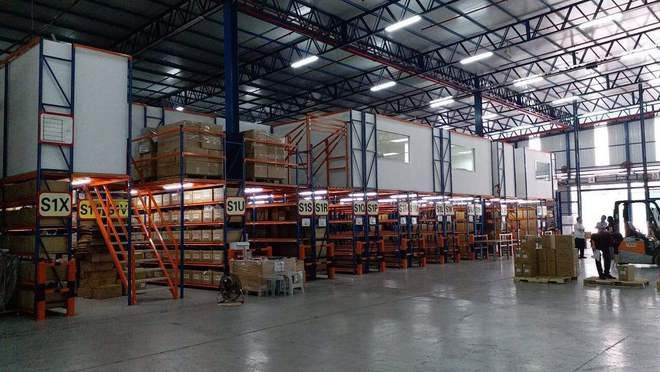 Di samping itu, banyak negara di Asia Tenggara adalah negara bahan mentah dan pengeluaran yang besar, dan proses daripada pengeluaran kepada penjualan e-dagang tempatan agak singkat.
Unlike major importing countries such as Europe and the United States, e-commerce warehouses in Southeast Asia do not have excessive storage requirements. Instead, distribution centers and picking centers dominate. Therefore, the AGV that is good at material handling seems to be in a dilemma of uselessness.
Jadi, dalam beberapa tahun akan datang, satu lagi jenis robot secara beransur-ansur menggantikan AGV dan kerap muncul dalam perbincangan logistik pergudangan e-dagang. Ia adalah AMR.
Evolusi: Apabila robot bergerak secara autonomi seperti kereta tanpa pemandu
AMR dipanggil autonomirobot mudah alih(robot mudah alih autonomi). Walaupun semuanya bermula dengan huruf "A", AGV ialah "daya tarikan automatik" dan AMR ialah "pergerakan autonomi", yang menunjukkan bahawa terdapat perbezaan penting antara kedua-duanya.
Relying on visual perception and AI algorithms, the core value of AMR is to perceive the surrounding environment in real time and quickly respond appropriately. Just like a driverless car, the route can be adjusted at any time according to road conditions. In the warehouse environment, AMR is like a "superman" with ultra-high precision, autonomously and flexibly cooperating with human partners. Ambil AMR sebagai contoh.
After the robot receives the order, it will immediately plan the optimal route according to the location of each product. After "walking" to the corresponding position, the robot in the area will be prompted to put the product into the bin, and then move to the next picking point until The whole order picking is completed and transported to the packing station. Moreover, multiple orders can be picked per trip.
Dengan cara ini, kakitangan hanya perlu bekerjasama dengan pemuatan atau pembungkusan barangan di kawasan masing-masing, dan AMR akan membuka kecekapan daripada pemerolehan pesanan kepada pembungkusan, dan merealisasikan automasi pesanan kepada orang ramai.
Menariknya, pasukan awal Kiva Systems yang disebutkan di atas memisahkan dua jenama AMR gudang paling terkenal di dunia: Locus Robotics dan 6 River Systems. Yang terakhir telah diperoleh oleh gergasi e-dagang Shopify dengan harga $450 juta pada 2019.
Di China, terdapat teknologi pintar dan obor Syrius, yang popular di pasaran luar negara, dan syarikat tertumpu AMR lain telah dilahirkan. Di samping itu, sebilangan besar pemain AGV logistik tradisional juga telah bertukar kepada AMR.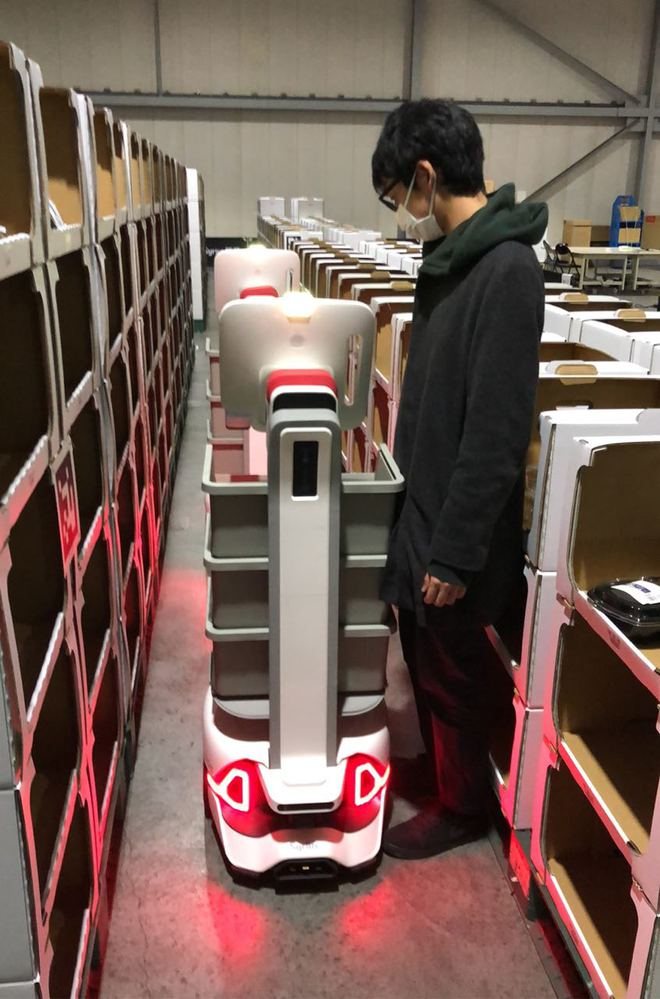 Menurut laporan oleh Interact Analysis, sebuah agensi data berwibawa, jumlah hasil industri AMR global pada 2019 ialah AS$749 juta, peningkatan sebanyak 70% tahun ke tahun; walaupun pada tahun 2020, yang diselubungi bayang-bayang mahkota baru, kadar pertumbuhan tahunan dijangka mencapai 45%.
Perkembangannya dalam era pasca wabak telah menarik perhatian yang besar.
Masa Depan: Senario pembahagian perkhidmatan bentuk berbilang produk, ke arah automasi gelung tertutup
Although the future can be expected, it cannot be ignored that AMR is still in the early stage of landing as a whole. In the sub-scenarios of e-commerce warehousing and logistics such as picking, warehousing, etc., we have seen some commercial-proven solutions, but a mature full-scenario product closed loop has not yet been formed.
There is no doubt that for the application and promotion of new technologies, first focusing on subdivided scenes for refined polishing, and then considering platform expansion is the most practical and reliable path. Even in the companies that have grown from the AGV era, we have seen Hairou's innovation that still focuses on box-type storage robots, and we have also seen Jizhijia who focus on building a product matrix.
In contrast, there are still large blanks of the e-commerce warehousing AMR market to be explored. Whether companies can get through customer pain points and product experience as soon as possible, and whether core technologies can be quickly transplanted and product platformization will be the key to determining the next competitive landscape. We sincerely hope that people who believe in the value of science and technology can move forward steadily with awe and focus, and do not let new production methods become a bargaining chip for capital games.
kereta agv