


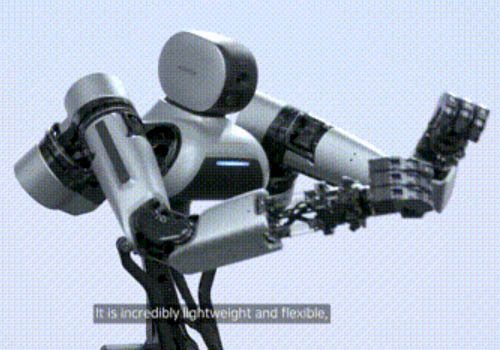
À quoi ressemble un bras robotique conçu pour « l’interaction homme-machine » ?
Ce bras robotique vise à être « sûr » et « flexible » et est encore plus léger qu'un bras humain. Il s'agit d'un robot à deux bras de Corée du Sud - Ambidex. En 2019, nous avons présenté son prototype, développé par NAVER LABS.
Sa société mère NAVER est connue sous le nom de « Google de Corée du Sud ». À cette époque, Ambidex n'avait que deux branches. Lorsque nous nous sommes revus après 5 ans, cela ressemblait davantage à un humain.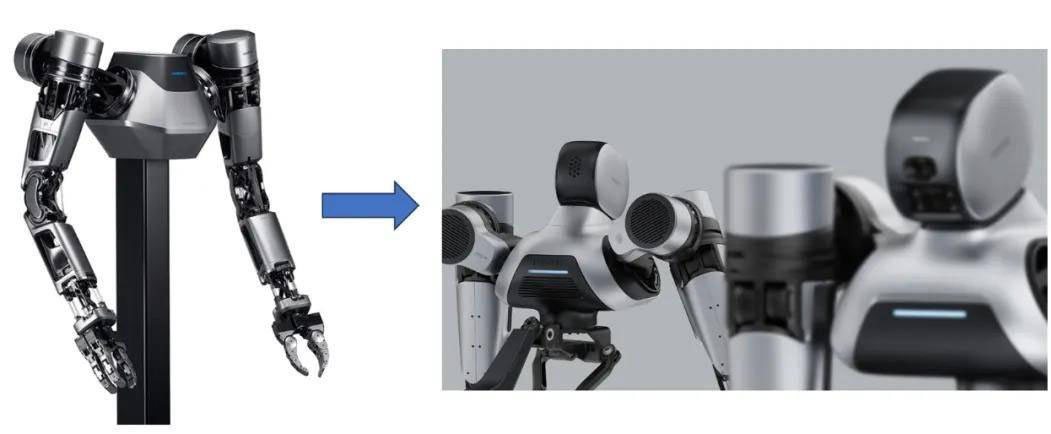
Le plus gros changement est qu'avec la tête + le tronc + la taille, l'amplitude de mouvement et la stabilité ont été grandement améliorées. Ambidex a également amélioré ses dispositifs haptiques et peut désormais accomplir des tâches plus complexes, comme aider ses « collègues » à se laver le visage : je suis aussi un bon assistant en cuisine.
Je vais éplucher une patate douce pour que tu la manges : Si tu n'as rien à faire, amusons-nous et jouons au tennis de table :▍Entraînement par câble + nouveau design de style minimaliste
The AMBIDEX arm uses a cable-driven mechanism that places all the heavy-duty actuators on the shoulder and body parts, which reduces the weight of the arm. A single robotic arm weighs only 2.6 kilograms, which is lighter than an adult male's arm.A lighter arm represents safety and flexibility, allowing it to safely interact with people, such as hugging and shaking hands:Despite its light weight, AMBIDEX can withstand a weight of 3kg and can run at a maximum speed of 5m/s.Like the human arm, the Ambidex arm also has 7 joint degrees of freedom.
Les responsables affirment que son mécanisme innovant peut simultanément améliorer la force et la solidité de chaque articulation, permettant le même niveau de contrôle, de performance et de précision que les robots industriels !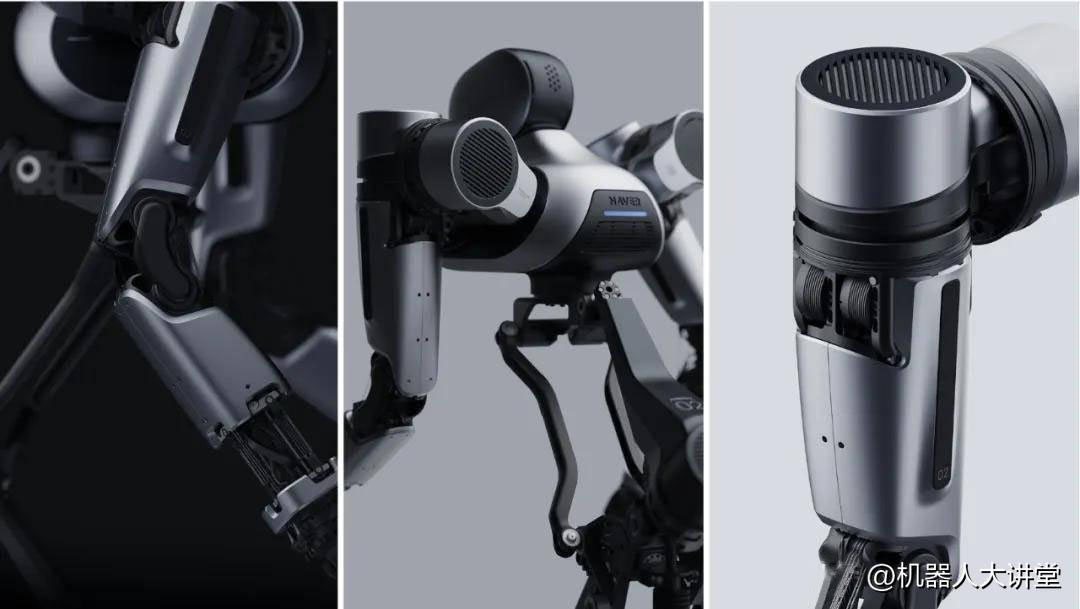
After adding new head, torso and waist designs, Ambidex looks cooler. However, NAVER LABS said that they did not want to sacrifice research efficiency for the sake of external image, so they adopted a "minimalist style" in appearance. The design uses black areas to hide sensors and bolted components, reducing visual complexity.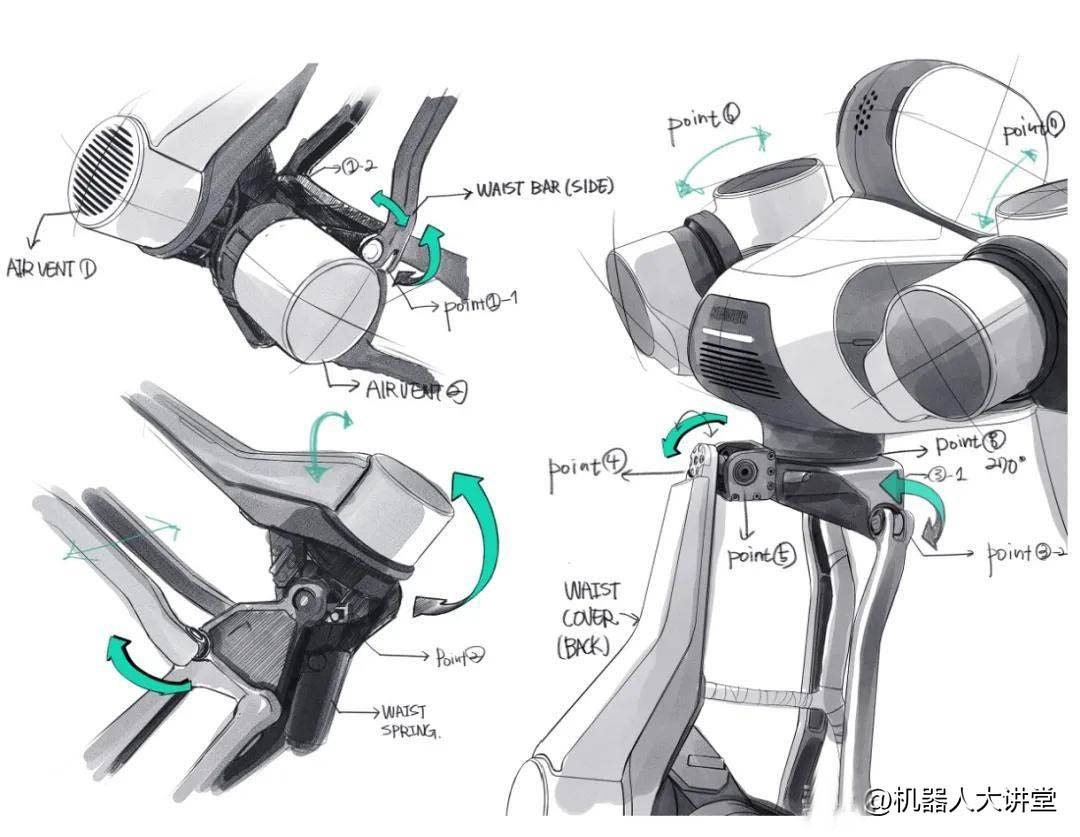
At the same time, considering the movement of the robot and the convenience of assembly, NAVER LABS minimized the cover configuration and focused on the details of the parting line so that the cover can be separated, retaining the wiring while reinterpreting it as a design element, during the display While maintaining the basic structure, it maximizes the overall visual balance and unity.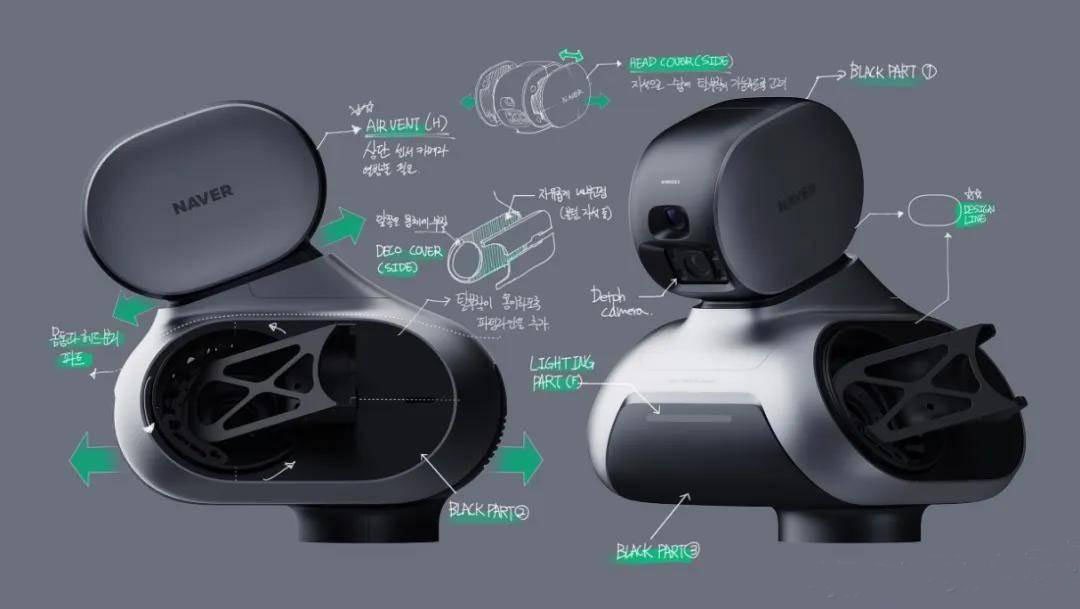
NAVER LABS n'a pas encore annoncé d'autres points forts techniques du "Humanoid Ambidex", mais les mouvements semblent plus fluides et plus flexibles.
▍Apprendre « l’intelligence physique » humaine
Regardez attentivement, lorsqu'Ambidex effectue diverses tâches, il y a un membre du personnel derrière lui qui cache sa renommée et ses réalisations : Il semble que le personnel contrôle Ambidex, mais en fait Ambidex apprend « l'intelligence physique » humaine.
Contrairement à la plupart des bras robotiques qui se déplacent en fonction d'informations de position pré-saisies, Ambidex est conçu pour « l'interaction homme-machine » et doit garantir une sécurité absolue dans les tâches quotidiennes non structurées. Alors, qu'est-ce que l'intelligence physique humaine ?
NAVER LABS said: In addition to conscious activities when humans interact with the external environment, there are many things that are unconscious. For example: when smearing jam, humans do not consider every movement of the fingers or the tiny force exerted on the wrist and fingers. The knowledge and intelligence based on this physical experience are called "physical intelligence".In order to impart "physical intelligence" to robots, NAVER LABS developed a tactile device.
Unlike common control devices, Ambidex's tactile device provides position and force data in a bilateral manner. Not only does it allow the user to send commands to the robot to move its position, but it also enables the user to feel the forces the robot is experiencing. People control robots through tactile devices to perform tasks, and at the same time, robots indirectly acquire human physical intelligence.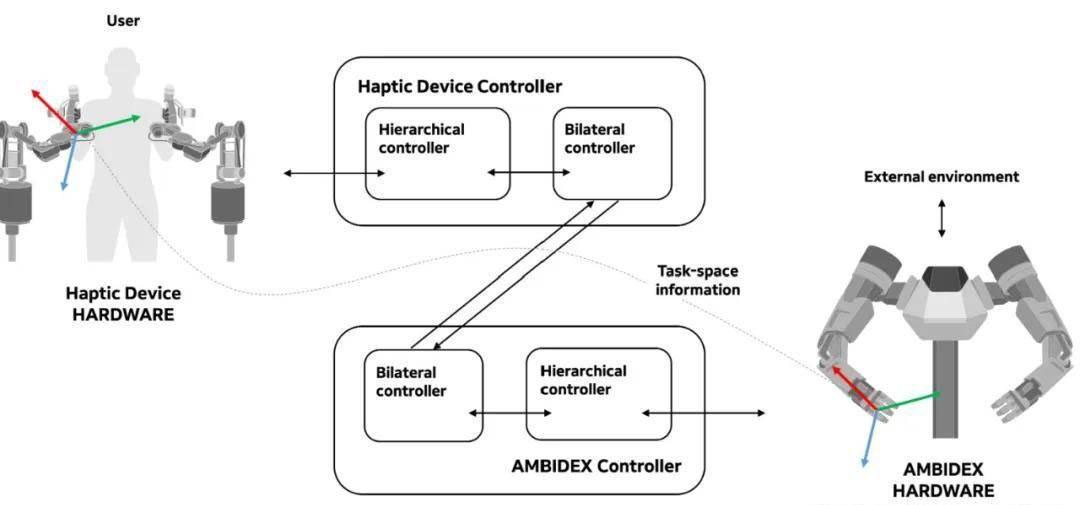
▍Améliorations de l'équipement tactile, de l'épluchage des patates douces au jeu de tennis de table
Voyons comment Ambidex utilise des dispositifs tactiles pour éplucher les patates douces : Bien que cela semble simple, toute l'action est réalisée par le contrôle de force du robot et la transmission bilatérale de force du dispositif haptique.
Si l'un ou l'autre ne fonctionne pas correctement, une friction excessive s'exerce entre le couteau et la pomme de terre, risquant d'endommager l'ingrédient, l'outil ou le robot lui-même.
“Peeling Sweet Potatoes” shows only Ambidex’s first-generation tactile device, which was subsequently upgraded by NAVER LABS. Haptic Device 2.0 has a larger movement space, and task performance for complex and detailed movements has also been significantly improved, including: the speed with which the robot responds to the operator's movements, and the efficiency with which users feel the forces felt by the robot.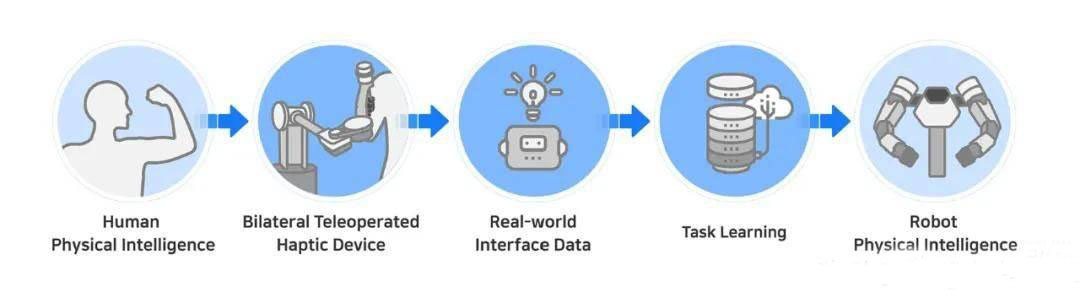
The upgraded haptic device can perform complex tasks involving fast movements, such as playing table tennis, where the racket must be quickly positioned in the correct position to align with the incoming ball.At the moment of impact (when the ball is struck), it must be moving with sufficient speed and in the correct direction.
Si l'inertie du dispositif haptique était légèrement plus grande, ou s'il y avait un retard dans le transfert de l'ampleur et de la direction de la force du mouvement humain au robot, la démonstration de ping-pong ne réussirait pas.
Although Ambidex has not yet achieved autonomous execution of tasks, perhaps this day is not too far away, because the goal of NAVER LABS is to use bilateral haptic devices as an effective tool to collect high-quality training data to improve the intelligence level of Ambidex and ultimately achieve autonomous execution. Task.▍ConclusionLa feuille de route technologique de NAVER LABS pour Ambidex est clairement visible.
Collecte de données d'interaction homme-machine de haute qualité via des dispositifs tactiles bilatéraux pour entraîner le modèle intelligent du robot. Cette idée d'« apprentissage collaboratif homme-machine » peut être considérée comme une innovation technologique importante.
From the perspective of technical implementation, the quality and richness of data collected by bilateral tactile devices will directly affect the performance of robot intelligent algorithms. NAVER LABS needs to be further optimized in hardware design, sensor selection, signal processing and other aspects to ensure the accuracy, real-time and diversity of data. At the same time, how to design an efficient machine learning framework to extract common behavioral patterns and decision-making strategies from massive and complex interactive data is also a key challenge.
Cela nécessite des recherches systématiques dans les domaines de l’apprentissage profond, de l’apprentissage par renforcement, de l’apprentissage par transfert et d’autres domaines.
In addition, data-driven intelligence improvement is closely coupled with the robot's electromechanical control system. If Ambidex wants to finally achieve autonomous operation, it needs to make new breakthroughs in motion planning, force control, and dexterous operation. For example, how to achieve precise grasping and operation based on visual and tactile feedback? How to maintain balance and robustness in a dynamic environment? These are technical difficulties that need to be overcome urgently.
In general, the technical blueprint developed by NAVER LABS for Ambidex is practical and feasible, and its development idea of "people leading machines and being data-driven" represents the cutting-edge direction of robotics research. Currently, Ambidex is still in the stage of technology accumulation and iterative optimization. To truly grow into a fully autonomous intelligent system, it needs to continue to make efforts at multiple levels such as perception, cognition, decision-making, and control.
Robot humanoïde ; Robot IA ; Robot de service IA.


