


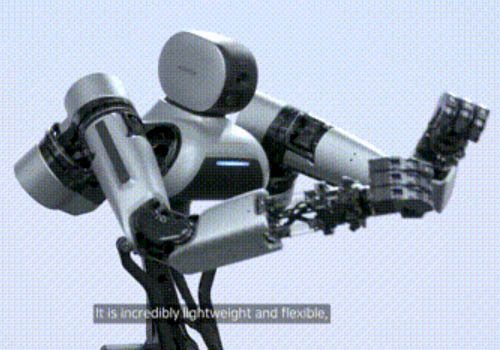
Wie sieht ein Roboterarm aus, der für die „Mensch-Computer-Interaktion“ konzipiert ist?
Dieser Roboterarm legt Wert auf „Sicherheit“ und „Flexibilität“ und ist sogar leichter als ein menschlicher Arm. Es handelt sich um einen zweiarmigen Roboter aus Südkorea – Ambidex. 2019 stellten wir seinen Prototyp vor, der von NAVER LABS entwickelt wurde.
Seine Muttergesellschaft NAVER ist als „Google Südkoreas“ bekannt. Damals hatte Ambidex nur zwei Arme. Als wir uns nach 5 Jahren wieder trafen, sah es eher wie ein Mensch aus.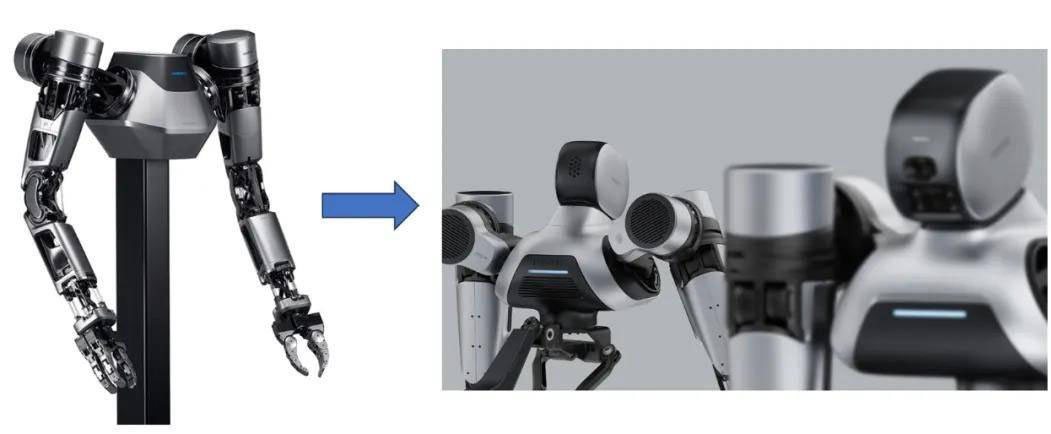
Die größte Veränderung besteht darin, dass mit Kopf + Rumpf + Taille der Bewegungsumfang und die Stabilität deutlich verbessert wurden. Ambidex hat auch seine haptischen Geräte verbessert und kann jetzt komplexere Aufgaben erledigen, wie zum Beispiel seinen „Kollegen“ beim Waschen des Gesichts helfen: „Ich bin auch ein gutes Händchen in der Küche.“
Ich werde eine Süßkartoffel schälen, damit du sie essen kannst: Wenn du nichts zu tun hast, lass uns etwas Unterhaltung haben und Tischtennis spielen:▍Kabelantrieb + neues minimalistisches Design
The AMBIDEX arm uses a cable-driven mechanism that places all the heavy-duty actuators on the shoulder and body parts, which reduces the weight of the arm. A single robotic arm weighs only 2.6 kilograms, which is lighter than an adult male's arm.A lighter arm represents safety and flexibility, allowing it to safely interact with people, such as hugging and shaking hands:Despite its light weight, AMBIDEX can withstand a weight of 3kg and can run at a maximum speed of 5m/s.Like the human arm, the Ambidex arm also has 7 joint degrees of freedom.
Beamte sagen, dass sein innovativer Mechanismus gleichzeitig die Kraft und Festigkeit jedes Gelenks steigern kann und so das gleiche Maß an Kontrolle, Leistung und Präzision wie Industrieroboter ermöglicht!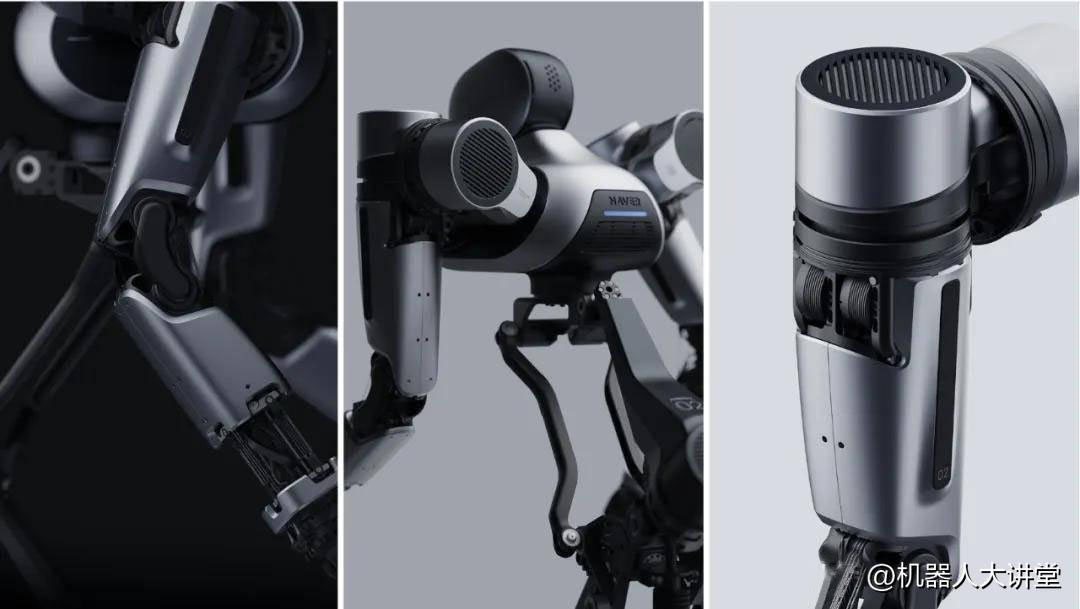
After adding new head, torso and waist designs, Ambidex looks cooler. However, NAVER LABS said that they did not want to sacrifice research efficiency for the sake of external image, so they adopted a "minimalist style" in appearance. The design uses black areas to hide sensors and bolted components, reducing visual complexity.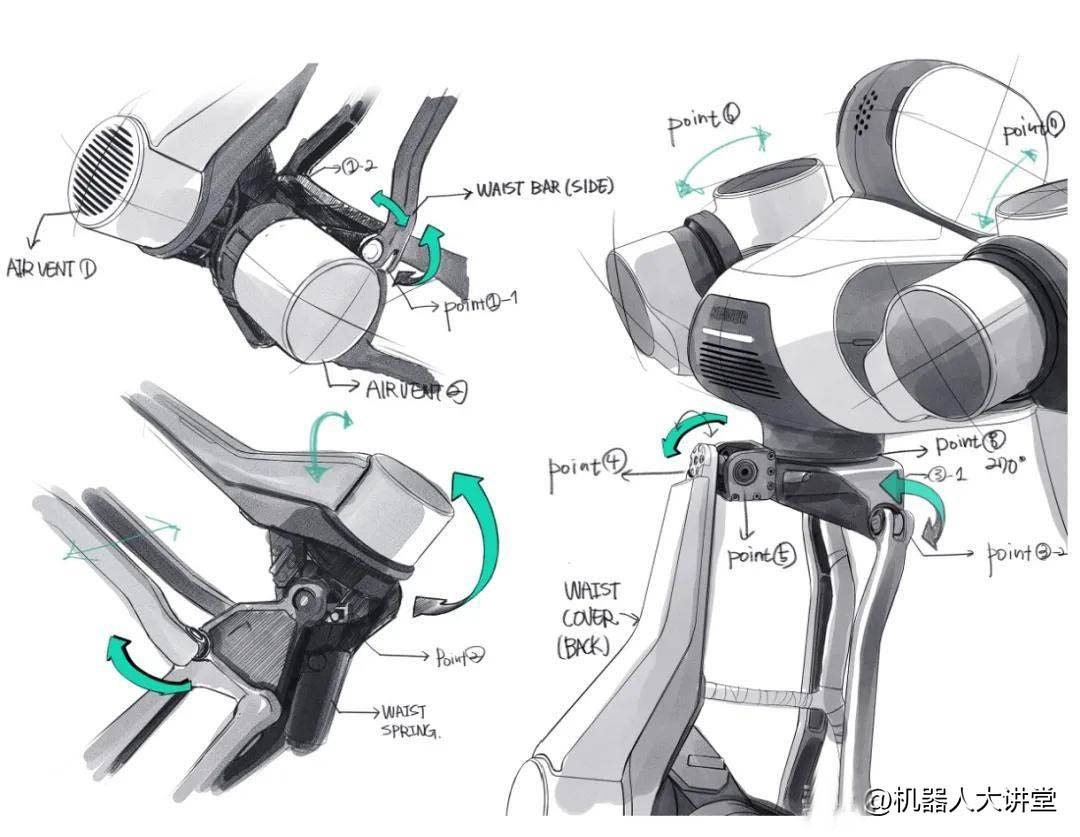
At the same time, considering the movement of the robot and the convenience of assembly, NAVER LABS minimized the cover configuration and focused on the details of the parting line so that the cover can be separated, retaining the wiring while reinterpreting it as a design element, during the display While maintaining the basic structure, it maximizes the overall visual balance and unity.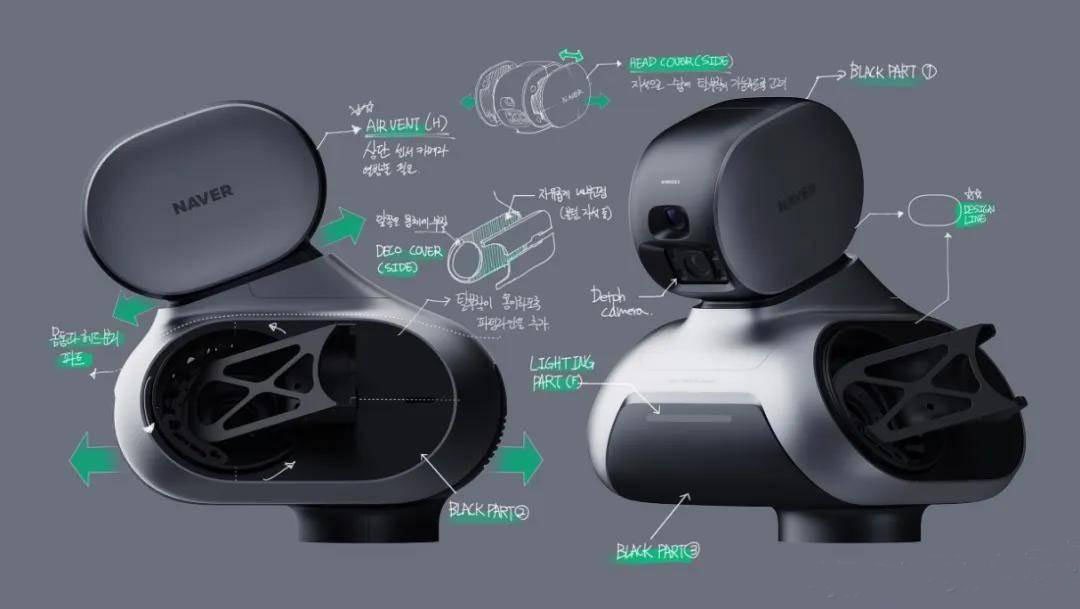
Weitere technische Highlights des „Humanoid Ambidex“ hat NAVER LABS noch nicht bekannt gegeben, die Bewegungen wirken aber durchaus flüssiger und flexibler.
▍Lernen Sie die „physische Intelligenz“ des Menschen
Schauen Sie genau hin, wenn Ambidex verschiedene Aufgaben ausführt, steht hinter ihm ein Mitarbeiter, der seinen Ruhm und seine Erfolge verbirgt: Es scheint, dass der Stab Ambidex kontrolliert, aber tatsächlich lernt Ambidex menschliche „physische Intelligenz“.
Im Gegensatz zu den meisten Roboterarmen, die sich auf der Grundlage vorab eingegebener Positionsinformationen bewegen, ist Ambidex für die „Mensch-Computer-Interaktion“ konzipiert und muss absolute Sicherheit bei unstrukturierten täglichen Aufgaben gewährleisten. Was ist also die physische Intelligenz des Menschen?
NAVER LABS said: In addition to conscious activities when humans interact with the external environment, there are many things that are unconscious. For example: when smearing jam, humans do not consider every movement of the fingers or the tiny force exerted on the wrist and fingers. The knowledge and intelligence based on this physical experience are called "physical intelligence".In order to impart "physical intelligence" to robots, NAVER LABS developed a tactile device.
Unlike common control devices, Ambidex's tactile device provides position and force data in a bilateral manner. Not only does it allow the user to send commands to the robot to move its position, but it also enables the user to feel the forces the robot is experiencing. People control robots through tactile devices to perform tasks, and at the same time, robots indirectly acquire human physical intelligence.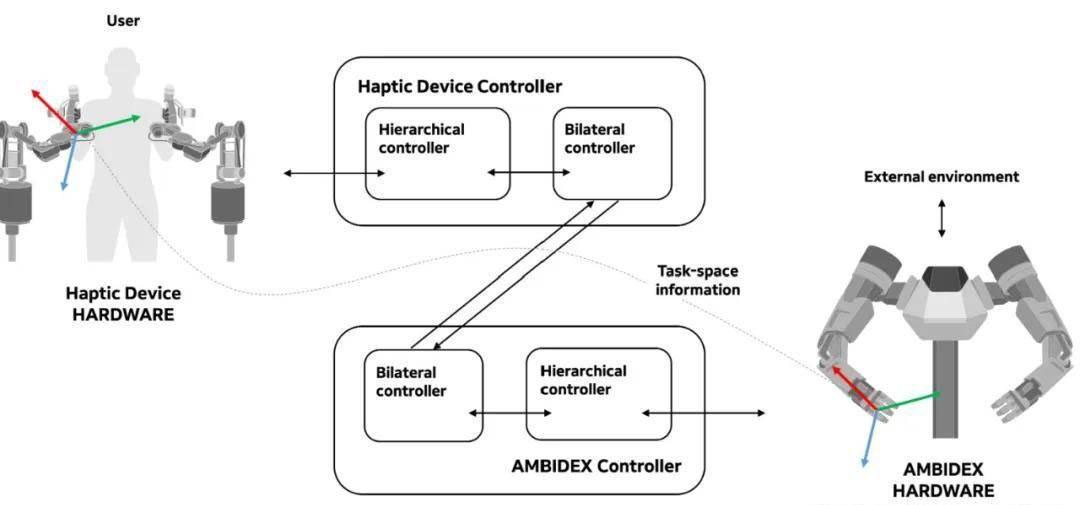
▍Aufrüstung der taktilen Ausrüstung, vom Schälen von Süßkartoffeln bis zum Tischtennisspielen
Sehen wir uns an, wie Ambidex taktile Geräte zum Schälen von Süßkartoffeln verwendet: Obwohl es einfach erscheint, wird die gesamte Aktion durch die Kraftsteuerung des Roboters und die bilaterale Kraftübertragung des haptischen Geräts ausgeführt.
Wenn einer von beiden nicht richtig funktioniert, entsteht übermäßige Reibung zwischen dem Messer und der Kartoffel, wodurch möglicherweise die Zutat, das Werkzeug oder der Roboter selbst beschädigt werden.
“Peeling Sweet Potatoes” shows only Ambidex’s first-generation tactile device, which was subsequently upgraded by NAVER LABS. Haptic Device 2.0 has a larger movement space, and task performance for complex and detailed movements has also been significantly improved, including: the speed with which the robot responds to the operator's movements, and the efficiency with which users feel the forces felt by the robot.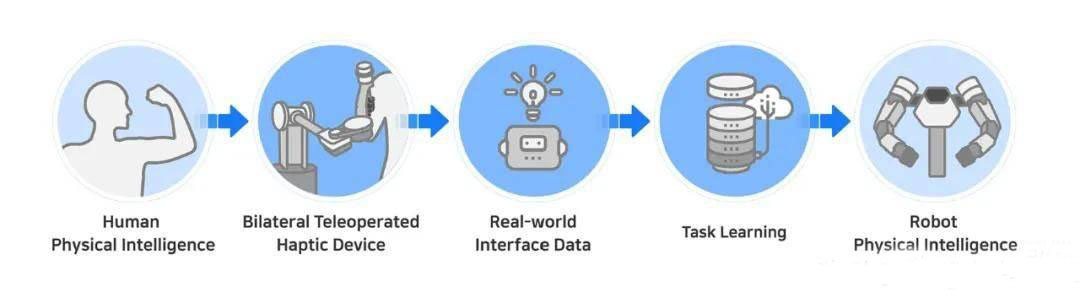
The upgraded haptic device can perform complex tasks involving fast movements, such as playing table tennis, where the racket must be quickly positioned in the correct position to align with the incoming ball.At the moment of impact (when the ball is struck), it must be moving with sufficient speed and in the correct direction.
Wäre die Trägheit des haptischen Geräts etwas größer oder gäbe es eine Verzögerung bei der Übertragung der Stärke und Richtung der Kraft von der menschlichen Bewegung auf den Roboter, wäre die Ping-Pong-Demonstration nicht erfolgreich.
Although Ambidex has not yet achieved autonomous execution of tasks, perhaps this day is not too far away, because the goal of NAVER LABS is to use bilateral haptic devices as an effective tool to collect high-quality training data to improve the intelligence level of Ambidex and ultimately achieve autonomous execution. Task.▍FazitDie Technologie-Roadmap von NAVER LABS für Ambidex ist klar erkennbar.
Erfassung hochwertiger Mensch-Computer-Interaktionsdaten über bilaterale taktile Geräte, um das intelligente Modell des Roboters zu trainieren. Diese Idee des „kollaborativen Lernens zwischen Mensch und Maschine“ kann als wichtige technologische Innovation bezeichnet werden.
From the perspective of technical implementation, the quality and richness of data collected by bilateral tactile devices will directly affect the performance of robot intelligent algorithms. NAVER LABS needs to be further optimized in hardware design, sensor selection, signal processing and other aspects to ensure the accuracy, real-time and diversity of data. At the same time, how to design an efficient machine learning framework to extract common behavioral patterns and decision-making strategies from massive and complex interactive data is also a key challenge.
Dies erfordert systematische Forschung in den Bereichen Deep Learning, Reinforcement Learning, Transfer Learning und anderen Bereichen.
In addition, data-driven intelligence improvement is closely coupled with the robot's electromechanical control system. If Ambidex wants to finally achieve autonomous operation, it needs to make new breakthroughs in motion planning, force control, and dexterous operation. For example, how to achieve precise grasping and operation based on visual and tactile feedback? How to maintain balance and robustness in a dynamic environment? These are technical difficulties that need to be overcome urgently.
In general, the technical blueprint developed by NAVER LABS for Ambidex is practical and feasible, and its development idea of "people leading machines and being data-driven" represents the cutting-edge direction of robotics research. Currently, Ambidex is still in the stage of technology accumulation and iterative optimization. To truly grow into a fully autonomous intelligent system, it needs to continue to make efforts at multiple levels such as perception, cognition, decision-making, and control.
humanoider Roboter; KI-Roboter; KI-Dienstroboter.


