Apakah rupa lengan robot yang direka untuk "interaksi manusia-komputer"?
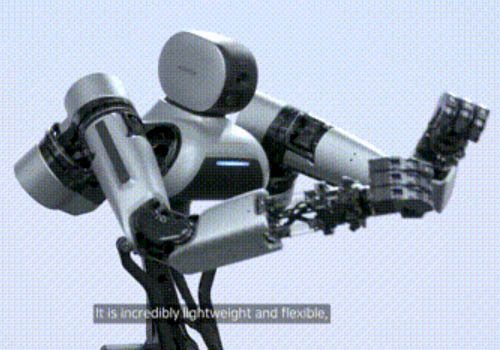
Lengan robotik ini memfokuskan untuk menjadi "selamat" dan "fleksibel" malah lebih ringan daripada lengan manusia. Ia ialah robot dua lengan dari Korea Selatan - Ambidex. Pada 2019, kami memperkenalkan prototaipnya, yang dibangunkan oleh NAVER LABS.
Syarikat induknya NAVER dikenali sebagai "Google Korea Selatan". Pada masa itu, Ambidex hanya mempunyai dua lengan. Apabila kami bertemu semula selepas 5 tahun, ia kelihatan seperti manusia.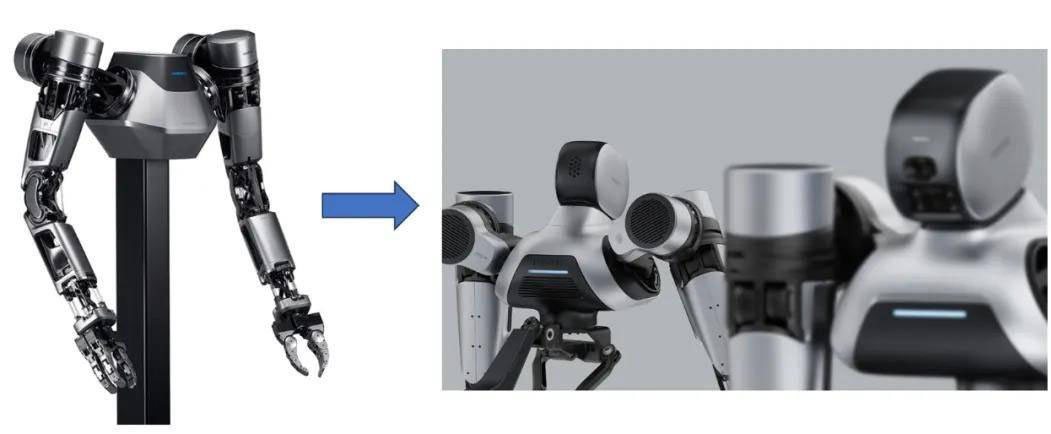
Perubahan terbesar ialah dengan bahagian kepala + batang + pinggang, julat pergerakan dan kestabilan telah dipertingkatkan dengan banyak.
Saya akan mengupas ubi untuk anda makan:Jika anda tiada apa-apa untuk dilakukan, mari berhibur dan bermain pingpong:▍Pemacu kabel + reka bentuk gaya minimalis baharu
The AMBIDEX arm uses a cable-driven mechanism that places all the heavy-duty actuators on the shoulder and body parts, which reduces the weight of the arm. A single robotic arm weighs only 2.6 kilograms, which is lighter than an adult male's arm.A lighter arm represents safety and flexibility, allowing it to safely interact with people, such as hugging and shaking hands:Despite its light weight, AMBIDEX can withstand a weight of 3kg and can run at a maximum speed of 5m/s.Like the human arm, the Ambidex arm also has 7 joint degrees of freedom.
Pegawai berkata mekanisme inovatifnya secara serentak boleh meningkatkan daya dan kekuatan setiap sendi, membolehkan tahap kawalan, prestasi dan ketepatan yang sama seperti robot industri!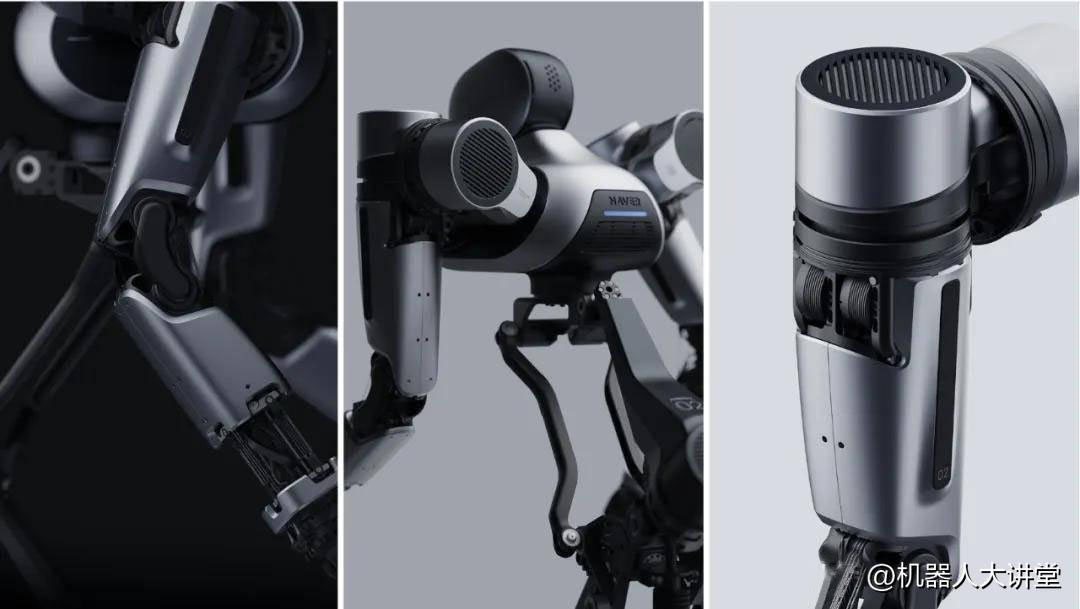
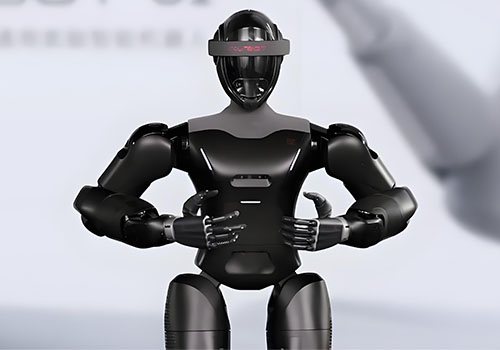
After adding new head, torso and waist designs, Ambidex looks cooler. However, NAVER LABS said that they did not want to sacrifice research efficiency for the sake of external image, so they adopted a "minimalist style" in appearance. The design uses black areas to hide sensors and bolted components, reducing visual complexity.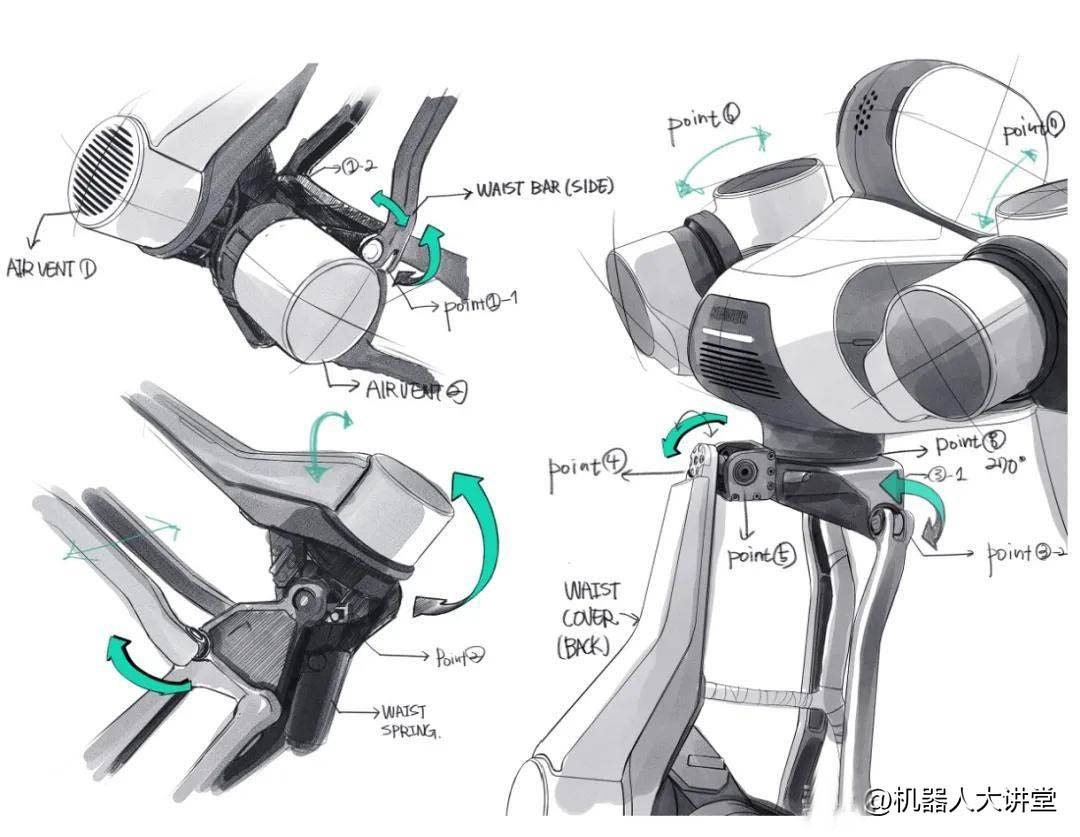
At the same time, considering the movement of the robot and the convenience of assembly, NAVER LABS minimized the cover configuration and focused on the details of the parting line so that the cover can be separated, retaining the wiring while reinterpreting it as a design element, during the display While maintaining the basic structure, it maximizes the overall visual balance and unity.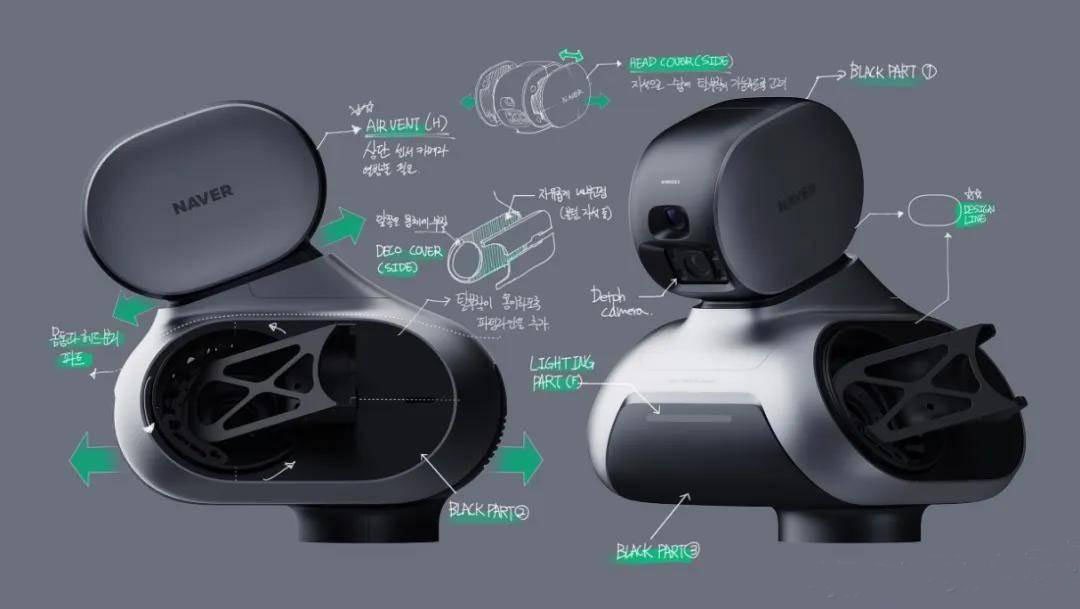
NAVER LABS belum lagi mengumumkan apa-apa lagi sorotan teknikal "Humanoid Ambidex", tetapi pergerakannya kelihatan lebih lancar dan lebih fleksibel.
▍Pelajari "kecerdasan fizikal" manusia
Perhatikan dengan teliti, apabila Ambidex melakukan pelbagai tugas, terdapat seorang kakitangan di belakangnya yang menyembunyikan kemasyhuran dan pencapaiannya: Nampaknya kakitangan itu mengawal Ambidex, tetapi sebenarnya Ambidex sedang mempelajari "kecerdasan fizikal" manusia.
Tidak seperti kebanyakan senjata robotik yang bergerak berdasarkan maklumat kedudukan pra-input, Ambidex direka untuk "interaksi manusia-komputer" dan mesti memastikan keselamatan mutlak dalam tugas harian yang tidak berstruktur. Jadi apakah kecerdasan fizikal manusia?
NAVER LABS said: In addition to conscious activities when humans interact with the external environment, there are many things that are unconscious. For example: when smearing jam, humans do not consider every movement of the fingers or the tiny force exerted on the wrist and fingers. The knowledge and intelligence based on this physical experience are called "physical intelligence".In order to impart "physical intelligence" to robots, NAVER LABS developed a tactile device.
Unlike common control devices, Ambidex's tactile device provides position and force data in a bilateral manner. Not only does it allow the user to send commands to the robot to move its position, but it also enables the user to feel the forces the robot is experiencing. People control robots through tactile devices to perform tasks, and at the same time, robots indirectly acquire human physical intelligence.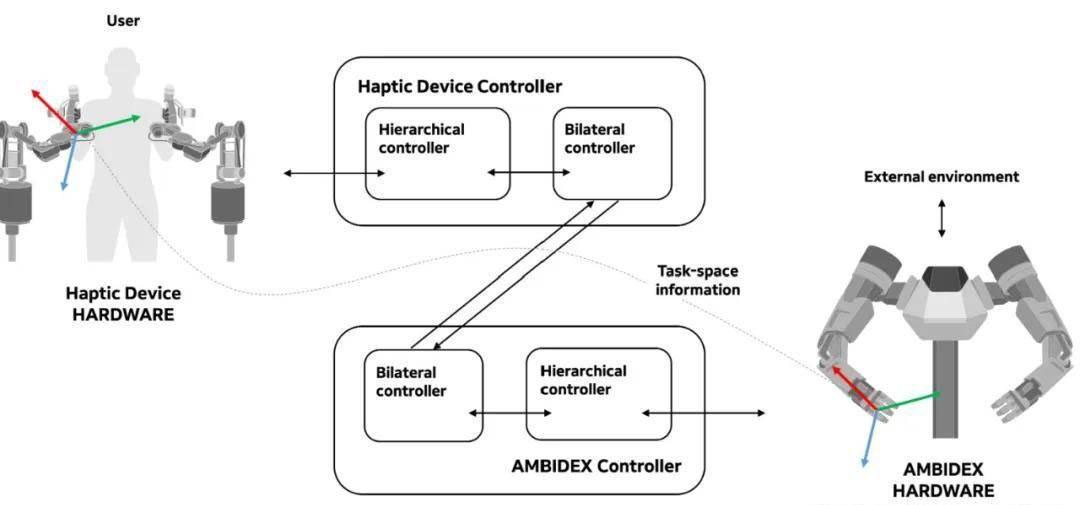
▍Peningkatan peralatan sentuhan, daripada mengupas keledek kepada bermain pingpong
Mari lihat cara Ambidex menggunakan peranti sentuhan untuk mengupas ubi keledek:Walaupun nampak mudah, keseluruhan tindakan dilakukan oleh kawalan daya robot dan penghantaran daya dua hala peranti haptik.
Jika salah satu tidak berfungsi dengan betul, geseran yang berlebihan akan dikenakan antara pisau dan kentang, yang berpotensi merosakkan ramuan, alat atau robot itu sendiri.
“Peeling Sweet Potatoes” shows only Ambidex’s first-generation tactile device, which was subsequently upgraded by NAVER LABS. Haptic Device 2.0 has a larger movement space, and task performance for complex and detailed movements has also been significantly improved, including: the speed with which the robot responds to the operator's movements, and the efficiency with which users feel the forces felt by the robot.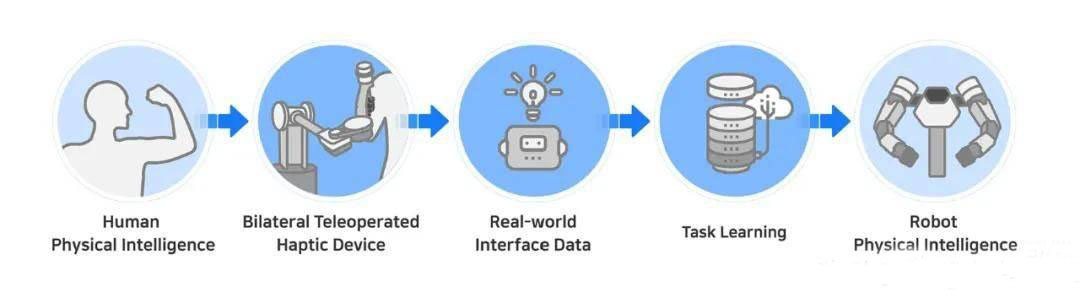
The upgraded haptic device can perform complex tasks involving fast movements, such as playing table tennis, where the racket must be quickly positioned in the correct position to align with the incoming ball.At the moment of impact (when the ball is struck), it must be moving with sufficient speed and in the correct direction.
Jika inersia peranti haptik lebih besar sedikit, atau jika terdapat kelewatan dalam memindahkan magnitud dan arah daya daripada pergerakan manusia ke robot, demonstrasi ping pong tidak akan berjaya.
Although Ambidex has not yet achieved autonomous execution of tasks, perhaps this day is not too far away, because the goal of NAVER LABS is to use bilateral haptic devices as an effective tool to collect high-quality training data to improve the intelligence level of Ambidex and ultimately achieve autonomous execution. Task.▍KesimpulanPelan hala tuju teknologi NAVER LABS untuk Ambidex jelas kelihatan.
Mengumpul data interaksi manusia-komputer berkualiti tinggi melalui peranti sentuhan dua hala untuk melatih model pintar robot. Idea "pembelajaran kolaboratif manusia-mesin" ini boleh dikatakan sebagai inovasi teknologi yang penting.
From the perspective of technical implementation, the quality and richness of data collected by bilateral tactile devices will directly affect the performance of robot intelligent algorithms. NAVER LABS needs to be further optimized in hardware design, sensor selection, signal processing and other aspects to ensure the accuracy, real-time and diversity of data. At the same time, how to design an efficient machine learning framework to extract common behavioral patterns and decision-making strategies from massive and complex interactive data is also a key challenge.
Ini memerlukan penyelidikan sistematik dalam bidang pembelajaran mendalam, pembelajaran pengukuhan, pembelajaran pemindahan dan bidang lain.
In addition, data-driven intelligence improvement is closely coupled with the robot's electromechanical control system. If Ambidex wants to finally achieve autonomous operation, it needs to make new breakthroughs in motion planning, force control, and dexterous operation. For example, how to achieve precise grasping and operation based on visual and tactile feedback? How to maintain balance and robustness in a dynamic environment? These are technical difficulties that need to be overcome urgently.
In general, the technical blueprint developed by NAVER LABS for Ambidex is practical and feasible, and its development idea of "people leading machines and being data-driven" represents the cutting-edge direction of robotics research. Currently, Ambidex is still in the stage of technology accumulation and iterative optimization. To truly grow into a fully autonomous intelligent system, it needs to continue to make efforts at multiple levels such as perception, cognition, decision-making, and control.
Robot humanoid; Robot AI; Robot perkhidmatan AI.