


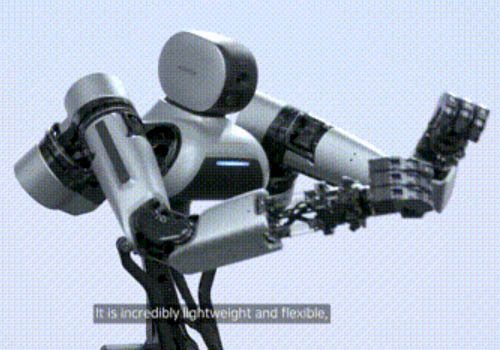
Jak wygląda ramię robota zaprojektowane do „interakcji człowiek-komputer”?
To ramię robota skupia się na byciu „bezpiecznym” i „elastycznym”, a przy tym jest jeszcze lżejsze od ludzkiego ramienia. Jest to robot dwuramienny pochodzący z Korei Południowej – Ambidex. W 2019 roku wprowadziliśmy do sprzedaży jego prototyp, który opracowała firma NAVER LABS.
Jej spółka-matka NAVER znana jest jako „Google Korei Południowej”. W tamtym czasie firma Ambidex miała tylko dwie ręce. Kiedy spotkaliśmy się ponownie po 5 latach, wyglądał bardziej jak człowiek.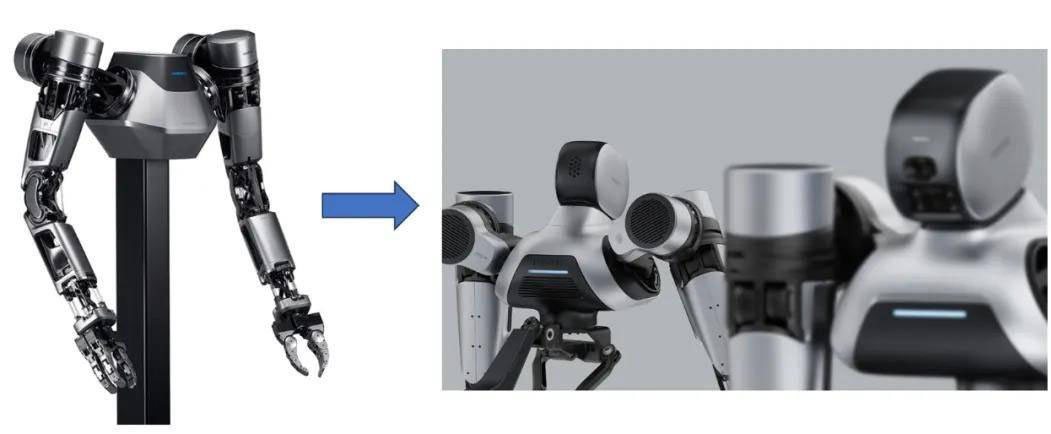
Największą zmianą jest to, że dzięki głowie + tułowiu + talii znacznie poprawiono zakres ruchu i stabilność. Firma Ambidex unowocześniła także swoje urządzenia dotykowe i może teraz wykonywać bardziej złożone zadania, takie jak pomaganie swoim „kolegom” w myciu twarzy: Umiem też pomagać w kuchni.
Obiorę dla Ciebie słodkiego ziemniaka do zjedzenia: Jeśli nie masz nic do roboty, zabawmy się i zagrajmy w tenisa stołowego:▍Napęd kablowy + nowy minimalistyczny styl
The AMBIDEX arm uses a cable-driven mechanism that places all the heavy-duty actuators on the shoulder and body parts, which reduces the weight of the arm. A single robotic arm weighs only 2.6 kilograms, which is lighter than an adult male's arm.A lighter arm represents safety and flexibility, allowing it to safely interact with people, such as hugging and shaking hands:Despite its light weight, AMBIDEX can withstand a weight of 3kg and can run at a maximum speed of 5m/s.Like the human arm, the Ambidex arm also has 7 joint degrees of freedom.
Urzędnicy twierdzą, że innowacyjny mechanizm może jednocześnie zwiększać siłę i wytrzymałość każdego złącza, zapewniając ten sam poziom kontroli, wydajności i precyzji, co roboty przemysłowe!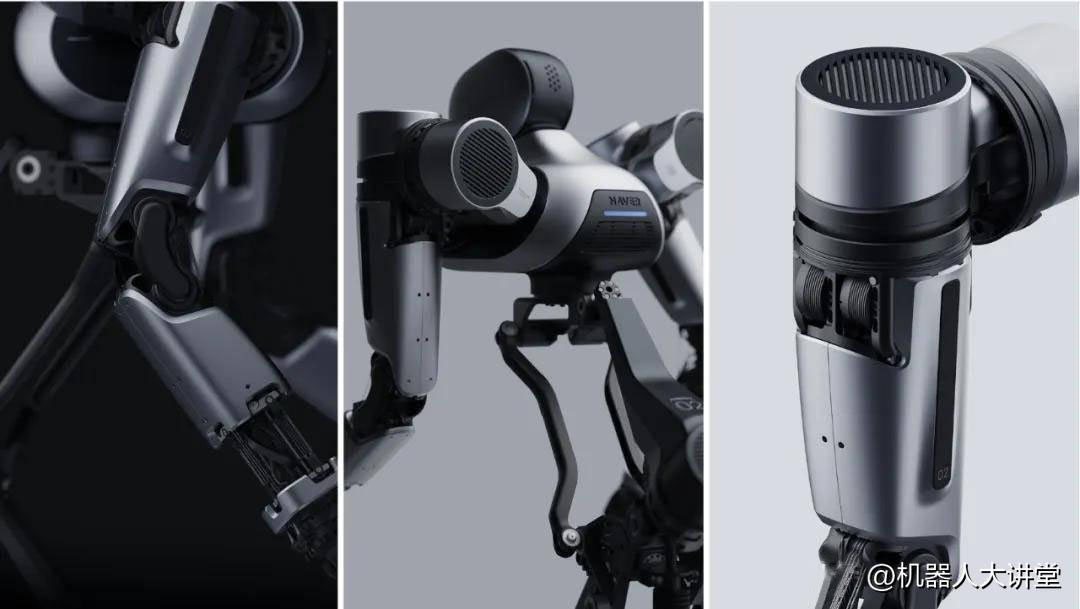
After adding new head, torso and waist designs, Ambidex looks cooler. However, NAVER LABS said that they did not want to sacrifice research efficiency for the sake of external image, so they adopted a "minimalist style" in appearance. The design uses black areas to hide sensors and bolted components, reducing visual complexity.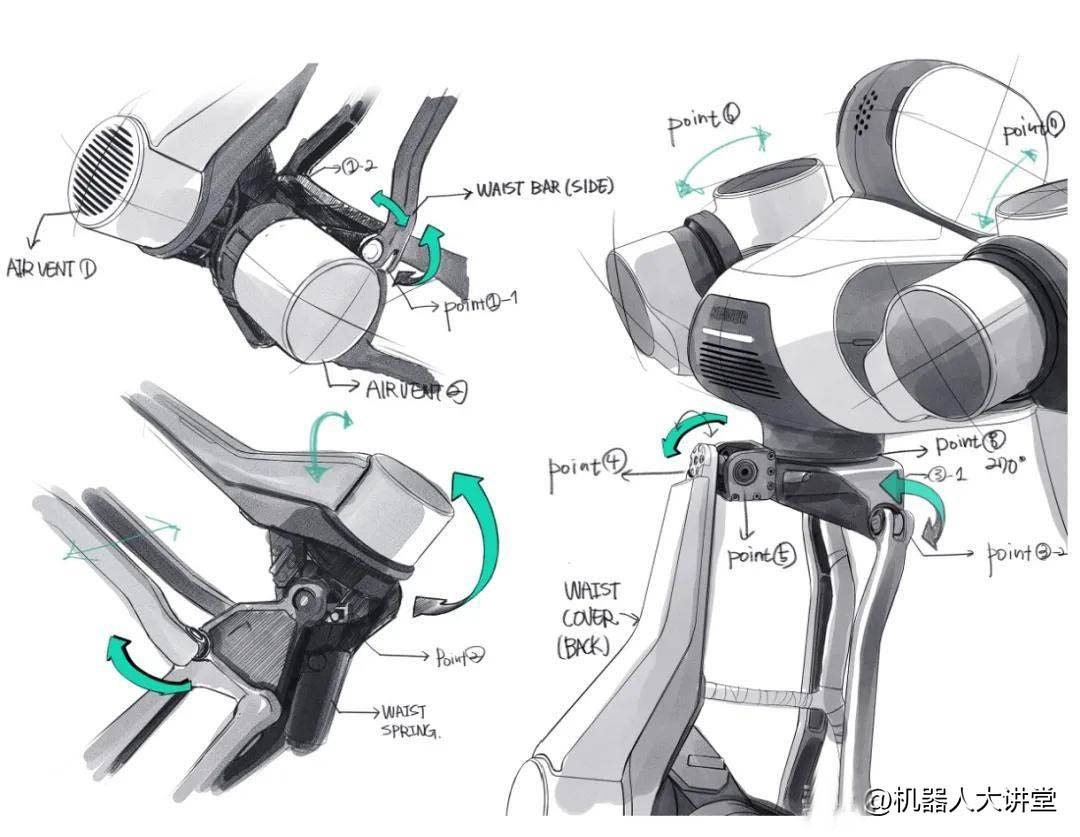
At the same time, considering the movement of the robot and the convenience of assembly, NAVER LABS minimized the cover configuration and focused on the details of the parting line so that the cover can be separated, retaining the wiring while reinterpreting it as a design element, during the display While maintaining the basic structure, it maximizes the overall visual balance and unity.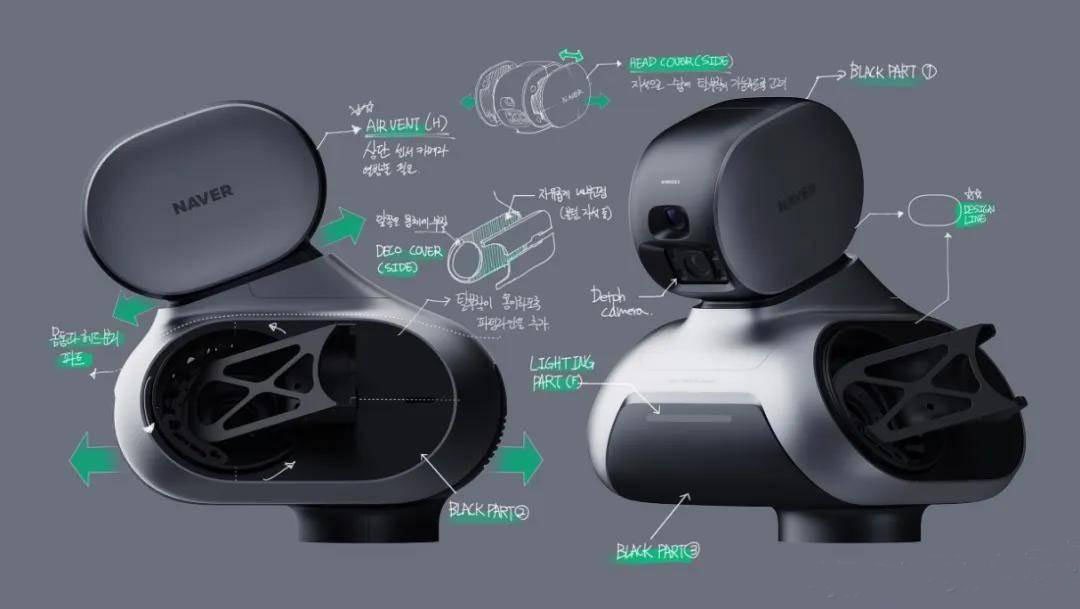
NAVER LABS nie ogłosiło jeszcze żadnych technicznych nowości „Humanoid Ambidex”, ale ruchy wydają się płynniejsze i bardziej elastyczne.
▍Poznaj ludzką „inteligencję fizyczną”
Przyjrzyj się uważnie, gdy Ambidex wykonuje różne zadania, za nim stoi pracownik, który ukrywa swoją sławę i osiągnięcia: Wygląda na to, że personel kontroluje Ambidex, ale tak naprawdę Ambidex uczy się ludzkiej „inteligencji fizycznej”.
W przeciwieństwie do większości ramion robotycznych, które poruszają się w oparciu o wprowadzone wcześniej informacje o pozycji, Ambidex został zaprojektowany z myślą o „interakcji człowiek-komputer” i musi zapewniać absolutne bezpieczeństwo w nieustrukturyzowanych codziennych zadaniach. Czym zatem jest ludzka inteligencja fizyczna?
NAVER LABS said: In addition to conscious activities when humans interact with the external environment, there are many things that are unconscious. For example: when smearing jam, humans do not consider every movement of the fingers or the tiny force exerted on the wrist and fingers. The knowledge and intelligence based on this physical experience are called "physical intelligence".In order to impart "physical intelligence" to robots, NAVER LABS developed a tactile device.
Unlike common control devices, Ambidex's tactile device provides position and force data in a bilateral manner. Not only does it allow the user to send commands to the robot to move its position, but it also enables the user to feel the forces the robot is experiencing. People control robots through tactile devices to perform tasks, and at the same time, robots indirectly acquire human physical intelligence.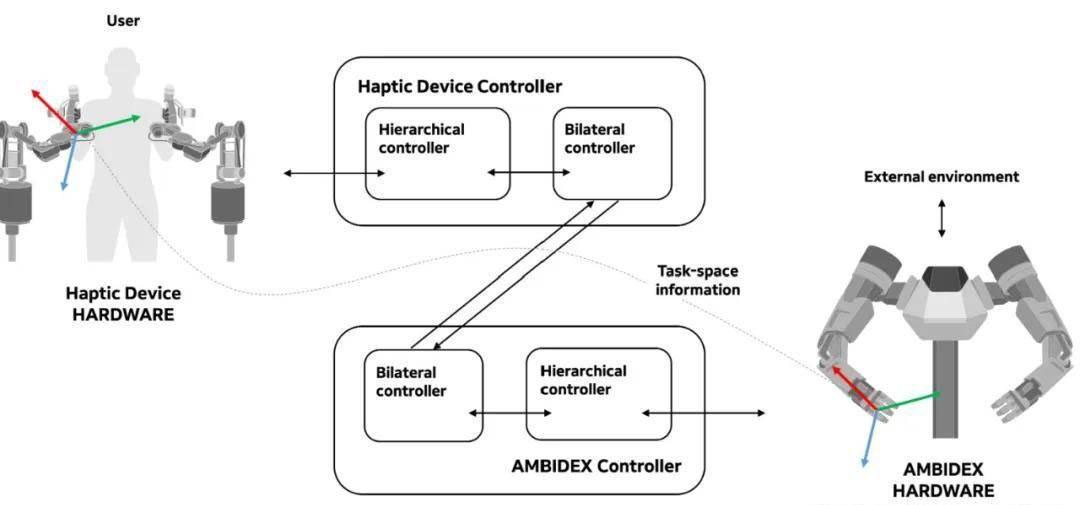
▍Ulepszenia sprzętu dotykowego, od obierania słodkich ziemniaków po grę w tenisa stołowego
Zobaczmy, jak Ambidex wykorzystuje urządzenia dotykowe do obierania słodkich ziemniaków: Choć wydaje się to proste, cała czynność odbywa się poprzez sterowanie siłą robota i dwustronne przenoszenie siły przez urządzenie haptyczne.
Jeśli którykolwiek z nich nie działa prawidłowo, pomiędzy nożem a ziemniakiem powstaje nadmierne tarcie, co może spowodować uszkodzenie składnika, narzędzia lub samego robota.
“Peeling Sweet Potatoes” shows only Ambidex’s first-generation tactile device, which was subsequently upgraded by NAVER LABS. Haptic Device 2.0 has a larger movement space, and task performance for complex and detailed movements has also been significantly improved, including: the speed with which the robot responds to the operator's movements, and the efficiency with which users feel the forces felt by the robot.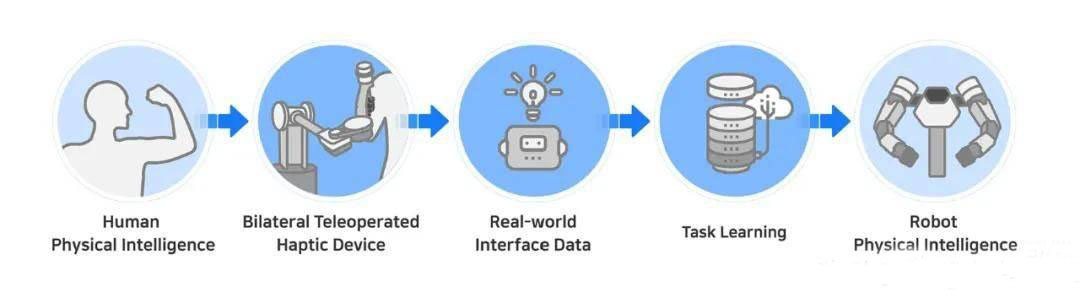
The upgraded haptic device can perform complex tasks involving fast movements, such as playing table tennis, where the racket must be quickly positioned in the correct position to align with the incoming ball.At the moment of impact (when the ball is struck), it must be moving with sufficient speed and in the correct direction.
Gdyby bezwładność urządzenia dotykowego była nieco większa lub gdyby występowało opóźnienie w przekazywaniu wielkości i kierunku siły z ruchu człowieka na robota, demonstracja ping-ponga nie zakończyłaby się sukcesem.
Although Ambidex has not yet achieved autonomous execution of tasks, perhaps this day is not too far away, because the goal of NAVER LABS is to use bilateral haptic devices as an effective tool to collect high-quality training data to improve the intelligence level of Ambidex and ultimately achieve autonomous execution. Task.▍WniosekMapa drogowa technologii NAVER LABS dla Ambidex jest wyraźnie widoczna.
Gromadzenie wysokiej jakości danych dotyczących interakcji człowiek-komputer za pomocą dwustronnych urządzeń dotykowych w celu szkolenia inteligentnego modelu robota. Można uznać koncepcję „wspólnego uczenia się człowieka i maszyny” za ważną innowację technologiczną.
From the perspective of technical implementation, the quality and richness of data collected by bilateral tactile devices will directly affect the performance of robot intelligent algorithms. NAVER LABS needs to be further optimized in hardware design, sensor selection, signal processing and other aspects to ensure the accuracy, real-time and diversity of data. At the same time, how to design an efficient machine learning framework to extract common behavioral patterns and decision-making strategies from massive and complex interactive data is also a key challenge.
Wymaga to systematycznych badań w dziedzinie głębokiego uczenia się, uczenia się przez wzmacnianie, uczenia się transferowego i innych dziedzin.
In addition, data-driven intelligence improvement is closely coupled with the robot's electromechanical control system. If Ambidex wants to finally achieve autonomous operation, it needs to make new breakthroughs in motion planning, force control, and dexterous operation. For example, how to achieve precise grasping and operation based on visual and tactile feedback? How to maintain balance and robustness in a dynamic environment? These are technical difficulties that need to be overcome urgently.
In general, the technical blueprint developed by NAVER LABS for Ambidex is practical and feasible, and its development idea of "people leading machines and being data-driven" represents the cutting-edge direction of robotics research. Currently, Ambidex is still in the stage of technology accumulation and iterative optimization. To truly grow into a fully autonomous intelligent system, it needs to continue to make efforts at multiple levels such as perception, cognition, decision-making, and control.
Robot humanoidalny; Robot AI; Robot usługowy AI.


