


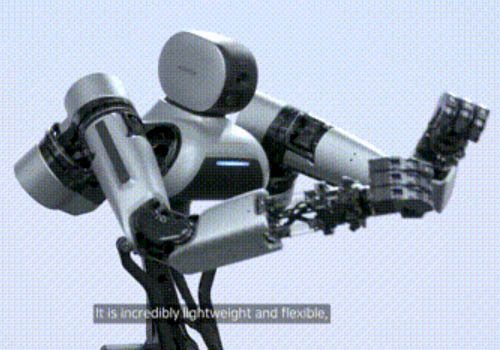
Hur ser en robotarm designad för "människo-datorinteraktion" ut?
Denna robotarm fokuserar på att vara "säker" och "flexibel" och är till och med lättare än en mänsklig arm. Det är en tvåarmad robot från Sydkorea - Ambidex. 2019 introducerade vi dess prototyp, som utvecklades av NAVER LABS.
Dess moderbolag NAVER är känt som "Sydkoreas Google". Vid den tiden hade Ambidex bara två armar. När vi träffades igen efter 5 år såg det mer ut som en människa.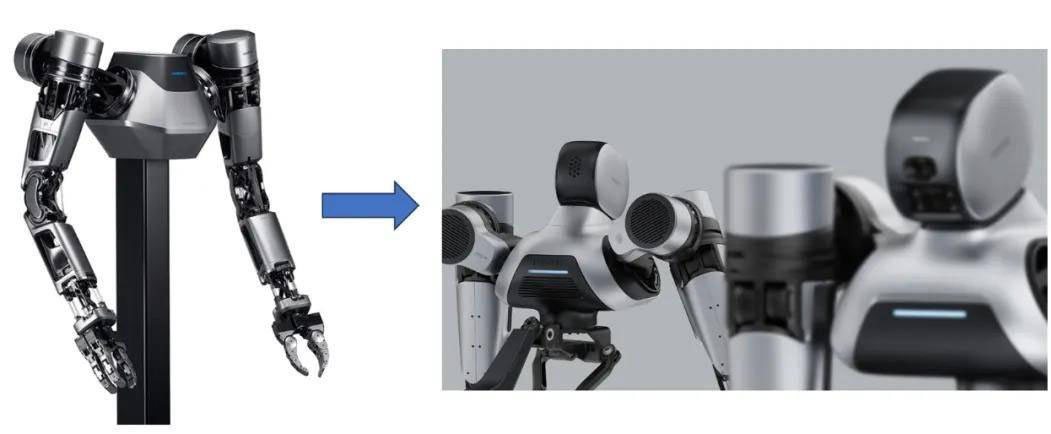
Den största förändringen är att med huvudet + bålen + midjan har rörelseomfånget och stabiliteten förbättrats avsevärt. Ambidex har också uppgraderat sina haptiska enheter och kan nu utföra mer komplexa uppgifter, som att hjälpa sina "kollegor" att tvätta deras ansikten: Jag är också en bra hand i köket.
Jag skalar en sötpotatis som du kan äta: Om du inte har något att göra, låt oss ha lite underhållning och spela bordtennis:▍Cable drive + ny design i minimalistisk stil
The AMBIDEX arm uses a cable-driven mechanism that places all the heavy-duty actuators on the shoulder and body parts, which reduces the weight of the arm. A single robotic arm weighs only 2.6 kilograms, which is lighter than an adult male's arm.A lighter arm represents safety and flexibility, allowing it to safely interact with people, such as hugging and shaking hands:Despite its light weight, AMBIDEX can withstand a weight of 3kg and can run at a maximum speed of 5m/s.Like the human arm, the Ambidex arm also has 7 joint degrees of freedom.
Tjänstemän säger att dess innovativa mekanism samtidigt kan förbättra kraften och styrkan i varje led, vilket möjliggör samma nivå av kontroll, prestanda och precision som industrirobotar!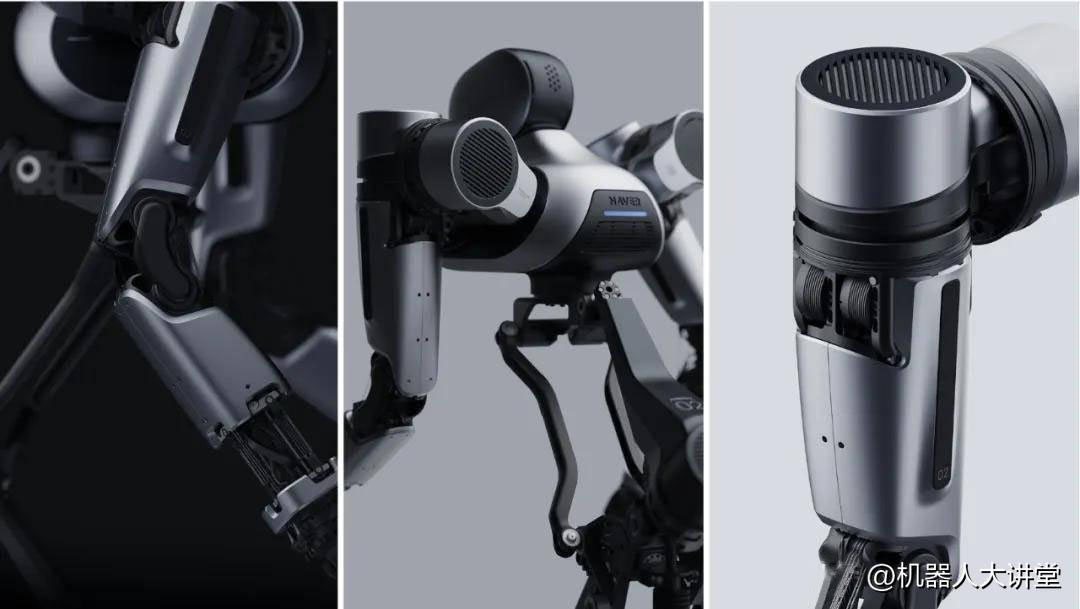
After adding new head, torso and waist designs, Ambidex looks cooler. However, NAVER LABS said that they did not want to sacrifice research efficiency for the sake of external image, so they adopted a "minimalist style" in appearance. The design uses black areas to hide sensors and bolted components, reducing visual complexity.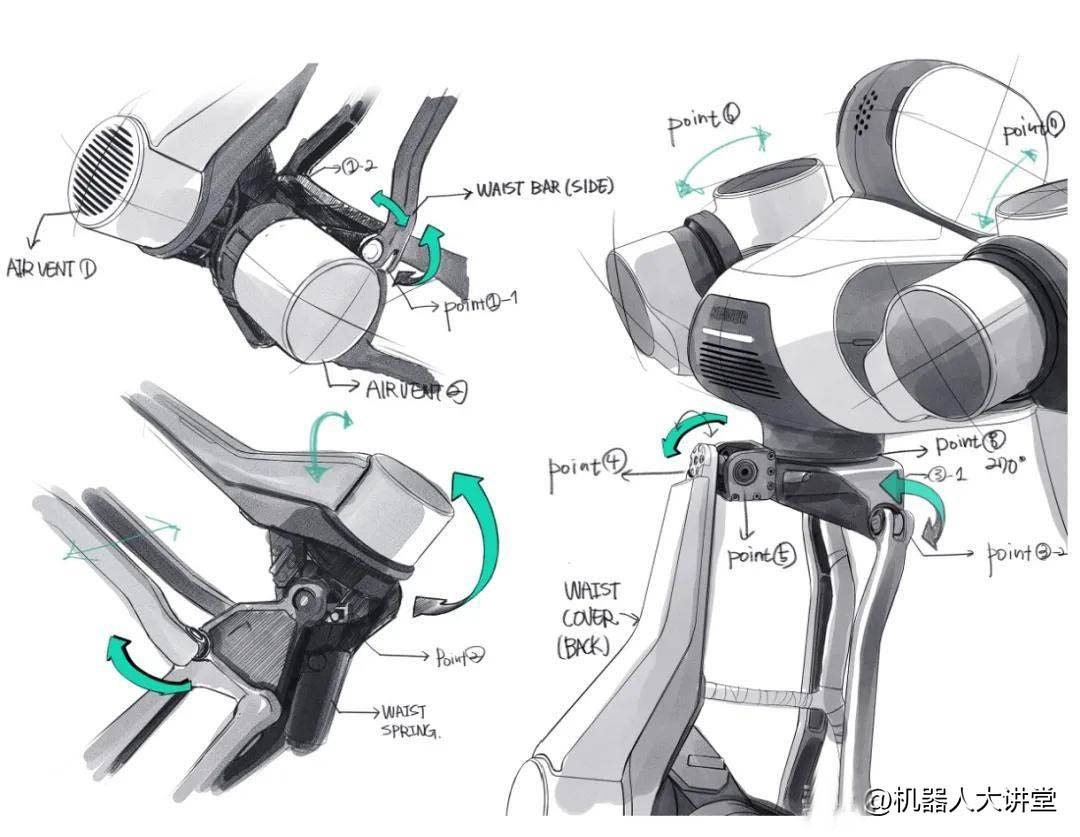
At the same time, considering the movement of the robot and the convenience of assembly, NAVER LABS minimized the cover configuration and focused on the details of the parting line so that the cover can be separated, retaining the wiring while reinterpreting it as a design element, during the display While maintaining the basic structure, it maximizes the overall visual balance and unity.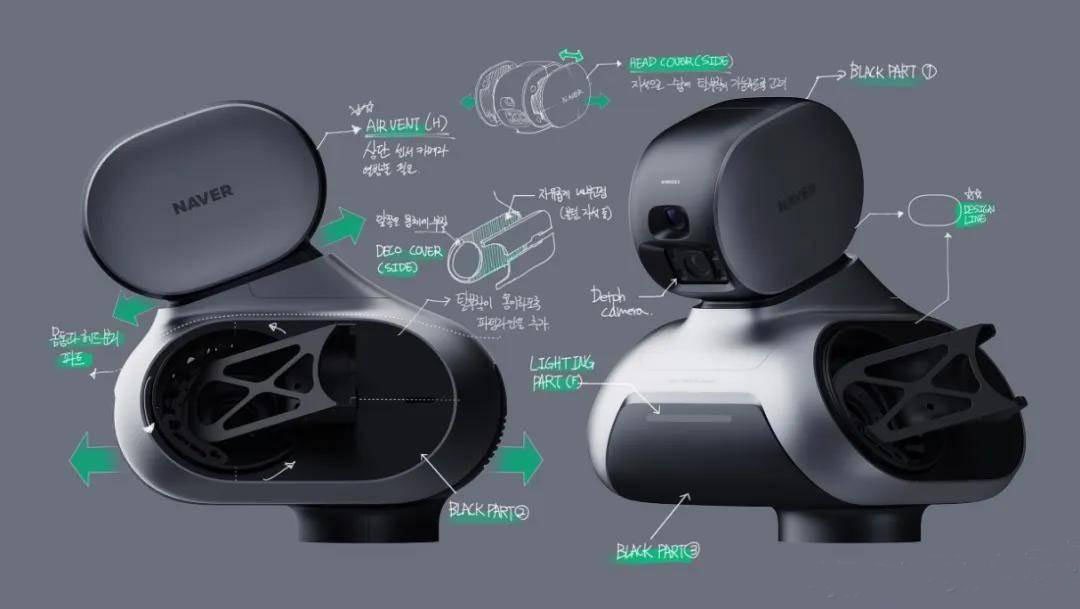
NAVER LABS har ännu inte meddelat några fler tekniska höjdpunkter i "Humanoid Ambidex", men rörelserna verkar smidigare och mer flexibla.
▍Lär dig mänsklig "fysisk intelligens"
Titta noga, när Ambidex utför olika uppgifter, finns det en anställd bakom honom som döljer sin berömmelse och prestationer: Det verkar som att personalen kontrollerar Ambidex, men i själva verket lär Ambidex sig mänsklig "fysisk intelligens".
Till skillnad från de flesta robotarmar som rör sig baserat på förinmatad positionsinformation, är Ambidex designad för "mänsklig-datorinteraktion" och måste garantera absolut säkerhet i ostrukturerade dagliga uppgifter. Så vad är mänsklig fysisk intelligens?
NAVER LABS said: In addition to conscious activities when humans interact with the external environment, there are many things that are unconscious. For example: when smearing jam, humans do not consider every movement of the fingers or the tiny force exerted on the wrist and fingers. The knowledge and intelligence based on this physical experience are called "physical intelligence".In order to impart "physical intelligence" to robots, NAVER LABS developed a tactile device.
Unlike common control devices, Ambidex's tactile device provides position and force data in a bilateral manner. Not only does it allow the user to send commands to the robot to move its position, but it also enables the user to feel the forces the robot is experiencing. People control robots through tactile devices to perform tasks, and at the same time, robots indirectly acquire human physical intelligence.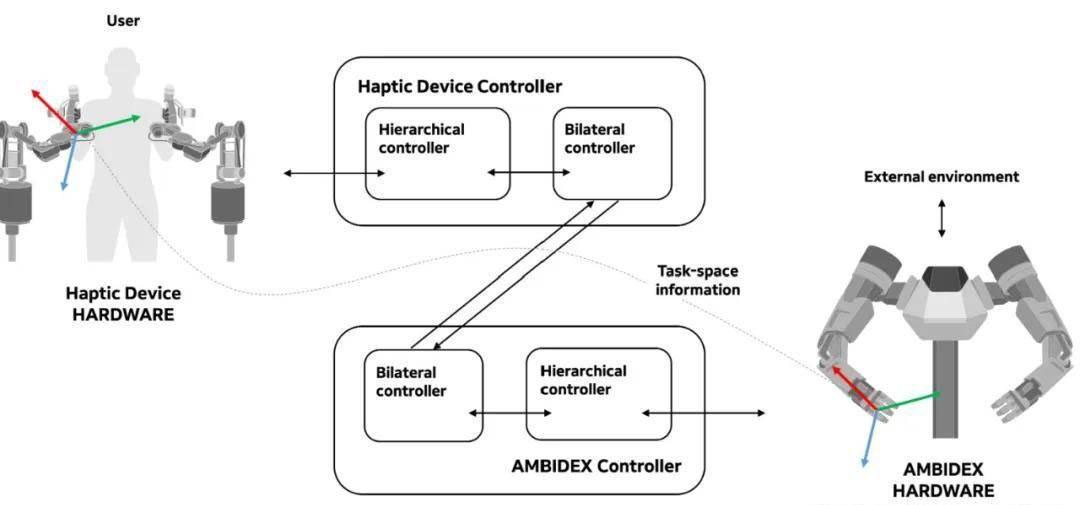
▍Taktila utrustningsuppgraderingar, från att skala sötpotatis till att spela bordtennis
Låt oss se hur Ambidex använder taktila enheter för att skala sötpotatis: Även om det verkar enkelt, utförs hela åtgärden av robotens kraftkontroll och den bilaterala kraftöverföringen av den haptiska enheten.
Om någon av dem inte fungerar korrekt utövas överdriven friktion mellan kniven och potatisen, vilket kan skada ingrediensen, verktyget eller själva roboten.
“Peeling Sweet Potatoes” shows only Ambidex’s first-generation tactile device, which was subsequently upgraded by NAVER LABS. Haptic Device 2.0 has a larger movement space, and task performance for complex and detailed movements has also been significantly improved, including: the speed with which the robot responds to the operator's movements, and the efficiency with which users feel the forces felt by the robot.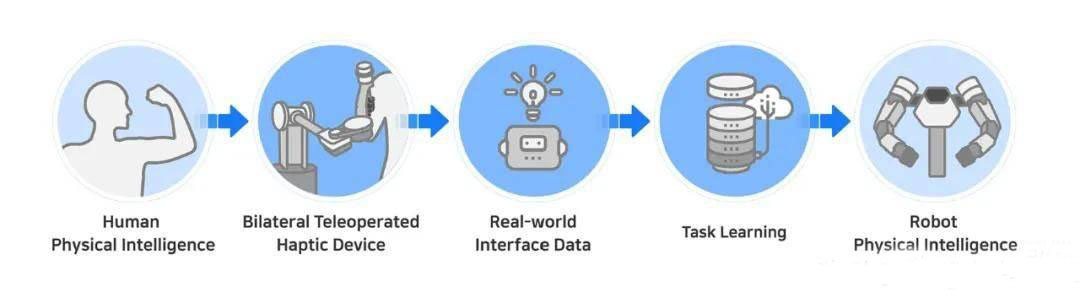
The upgraded haptic device can perform complex tasks involving fast movements, such as playing table tennis, where the racket must be quickly positioned in the correct position to align with the incoming ball.At the moment of impact (when the ball is struck), it must be moving with sufficient speed and in the correct direction.
Om trögheten hos den haptiska enheten var något större, eller om det fanns en fördröjning i överföringen av kraftens storlek och riktning från den mänskliga rörelsen till roboten, skulle pingisdemonstrationen inte bli framgångsrik.
Although Ambidex has not yet achieved autonomous execution of tasks, perhaps this day is not too far away, because the goal of NAVER LABS is to use bilateral haptic devices as an effective tool to collect high-quality training data to improve the intelligence level of Ambidex and ultimately achieve autonomous execution. Task.▍SlutsatsNAVER LABS:s tekniska färdplan för Ambidex är tydligt synlig.
Samla in data om interaktion mellan människa och dator av hög kvalitet genom bilaterala taktila enheter för att träna robotens intelligenta modell. Denna idé om "human-machine collaborative learning" kan sägas vara en viktig teknisk innovation.
From the perspective of technical implementation, the quality and richness of data collected by bilateral tactile devices will directly affect the performance of robot intelligent algorithms. NAVER LABS needs to be further optimized in hardware design, sensor selection, signal processing and other aspects to ensure the accuracy, real-time and diversity of data. At the same time, how to design an efficient machine learning framework to extract common behavioral patterns and decision-making strategies from massive and complex interactive data is also a key challenge.
Detta kräver systematisk forskning inom områdena djupinlärning, förstärkningsinlärning, överföringsinlärning och andra områden.
In addition, data-driven intelligence improvement is closely coupled with the robot's electromechanical control system. If Ambidex wants to finally achieve autonomous operation, it needs to make new breakthroughs in motion planning, force control, and dexterous operation. For example, how to achieve precise grasping and operation based on visual and tactile feedback? How to maintain balance and robustness in a dynamic environment? These are technical difficulties that need to be overcome urgently.
In general, the technical blueprint developed by NAVER LABS for Ambidex is practical and feasible, and its development idea of "people leading machines and being data-driven" represents the cutting-edge direction of robotics research. Currently, Ambidex is still in the stage of technology accumulation and iterative optimization. To truly grow into a fully autonomous intelligent system, it needs to continue to make efforts at multiple levels such as perception, cognition, decision-making, and control.
humanoid Robot;AI Robot;AI tjänst Robot.


