De acordo com relatos da mídia estrangeira, os robôs estão acelerando sua integração na vida humana e participando cada vez mais na produção empresarial e na vida diária das pessoas.
"Weak Chicken Robot" se tornou uma nova tendência
De acordo com um relatório de Nihon Keizai Shimbun de 14 de março, robôs incompetentes e enfadonhos estão ganhando popularidade, e os desenvolvedores os chamam de “robôs frangos fracos”. Na era da inteligência artificial, "fraco e pequeno" tornou-se uma vantagem. por que é que?
A soft cloth ball with a diameter of over 20 cm spins on the floor. It has a nose and a tail, and when its round eyes turn to the reporter's side, it will make a whispering voice to greet it. It is the robot "NICOBO" jointly developed by Toyohashi University of Technology Professor Michio Okada and Panasonic Corporation.
NICOBO can’t clean or cook. It has a camera and sensor that can recognize human faces and will respond when hugged, but it can only say simple sentences such as "hello" and "um". Masuda Yoichiro, director of the NICOBO project at Panasonic, said: "Living with weak and helpless robots makes people feel superior."
Este robô é obviamente um dispositivo mecânico, mas as pessoas não podem deixar de querer ajudá-lo. No passado, o popular robô tipo animal de estimação era feito para se parecer com um cachorro, o que pode fazer as pessoas sentirem empatia. A aparência do novo robô é mundana, mas é caracterizada por sua fraqueza.
In order to put this robot into practical use, Panasonic has offered a price of 35,800 to 39,800 yen (about 327 to 363 US dollars) on the crowdfunding network kraudfandingovoy platform. In less than 7 hours, the product raised 10 million yen. Starting in March 2022, buyers will receive the product. The company is also considering bringing it to the mass market.Why do these types of robots sell well? That is because aging and urbanization have led to more and more people living alone.
Juntamente com a propagação da nova epidemia da coroa, algumas pessoas caíram na solidão porque estão longe do trabalho e dos amigos. Mas apenas usar o ditado “tem um efeito curativo e pode aliviar a solidão” não pode explicá-lo completamente.
There is a certain revelation implicit in the development intention. In the past, Professor Okada began to develop "weak chicken robots" that needed human assistance, such as trash can-type sweeping robots that could not pick up trash by themselves, and slow-moving robots that distributed tissues on the sidewalk. He has made 30 kinds of robots in total.
Depois de experimentar os dois robôs acima, descobriu-se que as pessoas recolhiam o lixo sozinhas ou tomavam a iniciativa de avançar para recolher toalhas de papel. Eles não conseguem ver a sombra de “robôs poderosos” que salvam a humanidade com um poder superpoderoso.
As ideias do Professor Okada atingiram um certo nível. Ele ressaltou: “Quanto melhor o robô, mais exigente ele é e mais arrogantes as pessoas se tornam. Mas diante de robôs fracos, as pessoas terão uma psicologia atenciosa e atenciosa com os outros”.
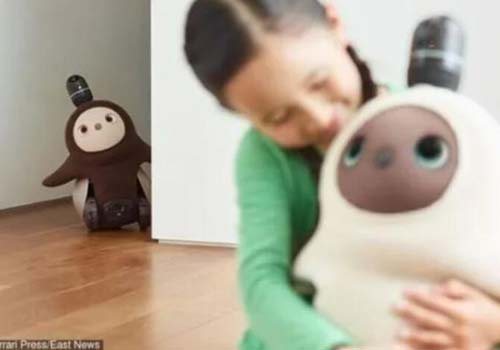
Now that weak chicken robots are popular, it is not so much refreshing, as it is because people's mood has changed a lot. There may be more people who are tolerant of others or willing to be altruistic. The super cute robot "LOVOT" developed by the start-up company "GROOVE X" engaged in robot development is also very popular. Company manager Lin Yao said that the purpose of developing this robot is to "make the owner more gentle."
In terms of relationships with others, the spread of the new crown epidemic has brought changes. Threatened by the virus, people really feel the difficulty of supporting social workers, and their willingness to be considerate to the people around them has increased sharply, hoping to care about the emotions of the people around them also to the objects. After all the previous mentality of relying on advanced technology has changed, the way people treat robots has also changed. This is not surprising, a robot that only obeys commands and orders can't catch people's hearts.
The rapid advancement of robotics and artificial intelligence technology is likely to make everyone resist cutting-edge technology for fear of threats to human dignity. The user's mentality will have an impact on the popularization of technology. If showing the weak and small can play a role in alleviating the contradiction between people and cutting-edge technology, it will become a new trend in technology research and development in the future.
"Weakness" is becoming an advantage. If the "NAMIDA" robot developed by Professor Okada and others is placed next to the driver's seat of a car, its sight will turn to the curve, pedestrians and red lights ahead from time to time. Although it has only two eyes on its spherical body, it can produce great effects.
Unlike car voice navigation with an imposing sensation, NAMIDA displays the direction with the line of sight. After taking it on the test drive, the drivers gave praise one after another, believing that "it is easier to know the way forward and can be psychologically prepared in advance." Its weakness and helplessness make drivers willing to cooperate with it, which in turn makes it play a role beyond voice navigation.
“robôs colaborativos” exploram novas áreas
According to a report on the website of Spain’s "Abbeza" on March 21, "collaborative robots" are seeking to conquer new areas. Keeping pace with human colleagues, they are already an important part of many factories. But now, they are seeking to reach new heights: conquering those sectors where their existence is still anecdotal, and entering small and medium-sized enterprises on a large scale.
"Collaborative Robots" are designed for performing repetitive and low value-added tasks, and they are widely used in the automotive industry. But now, they are increasingly appearing in other manufacturing activities, such as food and drug production. Jordi Pellegri, Divisional Manager of Universal Robots (industrial collaborative robot manufacturer) in Spain and Portugal, pointed out that the application of "collaborative robots" in small factories has begun to become less and less new.
. This technology is "exponentially growing." Spain has performed quite well in the application and promotion of "collaborative robots". Specifically, according to data from the Spanish consulting agency Alterán, Spain ranks fourth in the European Union in terms of industrial robot applications, second only to Germany, Italy and France.One of the advantages of having this type of robot is that by automating repetitive workflows that humans cannot provide "too much added value", companies can become more cost-competitive.
Os robôs desempenham um papel importante nessas tarefas, para que os funcionários humanos possam se concentrar na execução de tarefas mais criativas. Isso favorece o aumento da produtividade, e mais recursos são investidos em pesquisa e desenvolvimento e na busca por outras tendências do mercado.
Will these "collaborative robots" destroy employment? Pellegri doesn't think it will. A single piece of data is enough to explain this. Pellegri said: “The countries with the lowest unemployment rate are precisely those countries with the highest number of industrial robots per inhabitant, such as South Korea and Germany.” In these countries, as should happen in Spain, What is done is not to choose between human employees and robots, but to achieve collaboration between the two.
"Isto ajuda a melhorar a competitividade neste mundo cada vez mais globalizado." Miguel Ahorna, chefe de I&D da Altland, destacou que os robôs colaborativos “devem sempre trabalhar com funcionários humanos, especialmente na produção, a fase final do processo”.
"Cluster de robôs" será conectado em rede
In addition, the German "Business Daily" website reported on March 15 that researchers in Erlangen, Bavaria, Germany have developed robots for cleaning work, and this new cleaning robot can continuously communicate with each other and learn new things. . Experts see great potential in the service industry.
Artificial intelligence is one of the most important trends in robotics. However, not only is a single robot becoming more and more intelligent, in the future, the entire group of robots should also be connected to each other so that they can exchange knowledge with each other and learn new things in the process.
For example, cleaning robots. Armed with cluster knowledge, their work efficiency will be higher. The medical technology cluster-Erlangen Medical Valley Center and the start-up company Ceus jointly developed this cleaning robot. Rafael Chacon, general manager of Ceus, pointed out that the future belongs to the mobile robot cluster. "Many people don't even know what is possible." The technology has "huge potential."
O robô de serviço é uma das grandes esperanças da indústria robótica no futuro. “Acreditamos que as vendas de robôs de serviços profissionais e pessoais continuarão a crescer fortemente.” disse Milton Gehry, presidente da Federação Internacional de Robótica.
Por exemplo, as vendas globais de robôs de serviço utilizados em logística, medicina e residências ultrapassaram os 11 mil milhões de dólares americanos, com uma taxa de crescimento de dois dígitos. A nova epidemia da coroa pode acelerar a tendência de desenvolvimento de robôs. Muitos hospitais agora usam robôs de desinfecção.
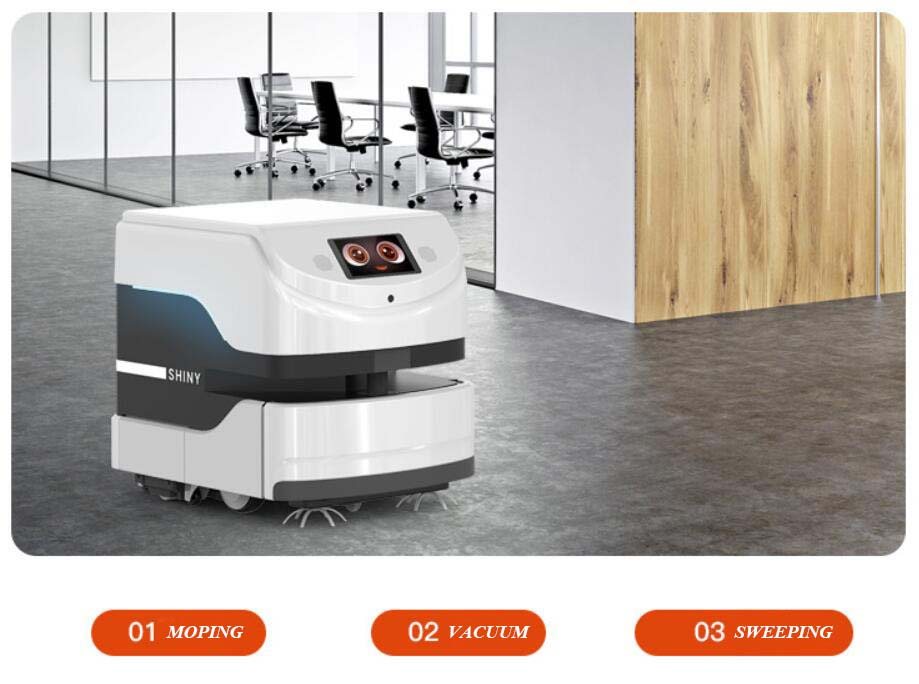
It is no surprise that cleaning robots have been developed in the medical technology cluster. Robots have been used in medicine for many years, said Sava Savchev, innovation manager of Erlangen Medical Valley. For example, the most advanced sensors and image processing are also put into use. He said: "We have noticed that people can use robots extensively in other fields."
There is one area that is particularly suitable. "We already know too well: the stairs are very expensive to clean, and they are also very tiring." Erlangen Medical Valley business manager Matthias Sieg pointed out. In fact, the main task of the cluster is to rent out space and help build the network. "However, it attracted us to develop something with one of the tenants."
The cleaning robot jointly developed by Union R&D will be used for the first time in the future. "They are small units that connect to the Internet and share work," Sieg explained. For example, there are units dedicated to vacuuming and wiping. They can coordinate with each other, such as when the mop robot sees that it is best to vacuum first.
Além disso, por exemplo, quando o canal é bloqueado, o robô pode notificar outros membros do grupo. Todos os robôs podem acessar bancos de dados públicos e tomar medidas preventivas.
In Germany, many companies are involved in service robot technology. For example, Berlin startup Insystems and Boos Technical Lighting, a company that produces lighting equipment, have developed a mobile disinfection robot. The new coronavirus is a global problem that affects millions of people. In order to minimize infections caused by viruses and bacteria and protect people, Metralabs, a technology company in Ilmenau, has introduced a Sterybot disinfection robot to the market, which has a fast and effective UV-C radiation surface disinfection function.
Neste setor, empresas como a Arculus estão impulsionando o desenvolvimento de robôs móveis.
Helmut Schmid, presidente da Federação Alemã de Robótica, disse: “Alguns clusters de robôs já possuem capacidades inteligentes e podem lidar com pedidos de transporte complexos”.
Currently, many robot manufacturers are working on the integration of artificial intelligence. "Classic programming quickly reached its limit in the field of robotics, precisely because robots interact with the physical world." said Andreas Lieber, general manager of the Applied Artificial Intelligence Initiative, an innovation and entrepreneurship incubator under the Technical University of Munich. Therefore, manufacturers are more using artificial intelligence-based systems for object recognition, planning or movement. He said: "This trend will continue to grow."
A SIG acredita firmemente que o futuro pertence a um cluster de robôs em rede.
Ele disse: “Em 5 a 10 anos, sistemas móveis autônomos nas calçadas farão parte da vida cotidiana, como entrega de pacotes ou pizza”.