Selon les médias étrangers, les robots accélèrent leur intégration dans la vie humaine et participent de plus en plus à la production des entreprises et à la vie quotidienne des gens.
"Weak Chicken Robot" est devenu une nouvelle tendance
Selon un rapport de Nihon Keizai Shimbun du 14 mars, les robots incompétents et ennuyeux gagnent en popularité, et les développeurs les appellent « robots poulets faibles ». À l’ère de l’intelligence artificielle, « faible et petit » est devenu un avantage. pourquoi donc?
A soft cloth ball with a diameter of over 20 cm spins on the floor. It has a nose and a tail, and when its round eyes turn to the reporter's side, it will make a whispering voice to greet it. It is the robot "NICOBO" jointly developed by Toyohashi University of Technology Professor Michio Okada and Panasonic Corporation.
NICOBO can’t clean or cook. It has a camera and sensor that can recognize human faces and will respond when hugged, but it can only say simple sentences such as "hello" and "um". Masuda Yoichiro, director of the NICOBO project at Panasonic, said: "Living with weak and helpless robots makes people feel superior."
Ce robot est évidemment un appareil mécanique, mais les gens ne peuvent s'empêcher de vouloir l'aider. Dans le passé, le populaire robot de type animal de compagnie était conçu pour ressembler à un chien, ce qui pouvait inciter les gens à faire preuve d'empathie. L’apparence du nouveau robot est banale, mais elle se caractérise par sa faiblesse.
In order to put this robot into practical use, Panasonic has offered a price of 35,800 to 39,800 yen (about 327 to 363 US dollars) on the crowdfunding network kraudfandingovoy platform. In less than 7 hours, the product raised 10 million yen. Starting in March 2022, buyers will receive the product. The company is also considering bringing it to the mass market.Why do these types of robots sell well? That is because aging and urbanization have led to more and more people living alone.
Couplé à la propagation de la nouvelle épidémie de couronne, certaines personnes sont tombées dans la solitude parce qu'elles sont loin du travail et des amis. Mais le simple fait d’utiliser le dicton « a un effet curatif et peut atténuer la solitude » ne peut pas l’expliquer complètement.
There is a certain revelation implicit in the development intention. In the past, Professor Okada began to develop "weak chicken robots" that needed human assistance, such as trash can-type sweeping robots that could not pick up trash by themselves, and slow-moving robots that distributed tissues on the sidewalk. He has made 30 kinds of robots in total.
Après avoir expérimenté les deux robots ci-dessus, il a été constaté que les gens ramassaient les ordures eux-mêmes ou prenaient l'initiative d'avancer pour ramasser des serviettes en papier. Ils ne peuvent pas voir l’ombre des « robots puissants » qui sauvent l’humanité grâce à un pouvoir surpuissant.
Les idées du professeur Okada ont atteint un certain niveau. Il a souligné : « Plus le robot est performant, plus il est exigeant et plus les gens deviennent arrogants. Mais face à des robots faibles, les gens auront une psychologie bienveillante et attentionnée envers les autres. »
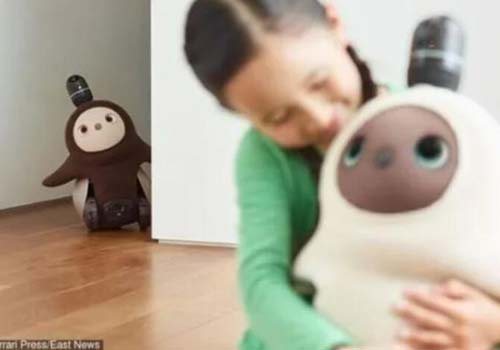
Now that weak chicken robots are popular, it is not so much refreshing, as it is because people's mood has changed a lot. There may be more people who are tolerant of others or willing to be altruistic. The super cute robot "LOVOT" developed by the start-up company "GROOVE X" engaged in robot development is also very popular. Company manager Lin Yao said that the purpose of developing this robot is to "make the owner more gentle."
In terms of relationships with others, the spread of the new crown epidemic has brought changes. Threatened by the virus, people really feel the difficulty of supporting social workers, and their willingness to be considerate to the people around them has increased sharply, hoping to care about the emotions of the people around them also to the objects. After all the previous mentality of relying on advanced technology has changed, the way people treat robots has also changed. This is not surprising, a robot that only obeys commands and orders can't catch people's hearts.
The rapid advancement of robotics and artificial intelligence technology is likely to make everyone resist cutting-edge technology for fear of threats to human dignity. The user's mentality will have an impact on the popularization of technology. If showing the weak and small can play a role in alleviating the contradiction between people and cutting-edge technology, it will become a new trend in technology research and development in the future.
"Weakness" is becoming an advantage. If the "NAMIDA" robot developed by Professor Okada and others is placed next to the driver's seat of a car, its sight will turn to the curve, pedestrians and red lights ahead from time to time. Although it has only two eyes on its spherical body, it can produce great effects.
Unlike car voice navigation with an imposing sensation, NAMIDA displays the direction with the line of sight. After taking it on the test drive, the drivers gave praise one after another, believing that "it is easier to know the way forward and can be psychologically prepared in advance." Its weakness and helplessness make drivers willing to cooperate with it, which in turn makes it play a role beyond voice navigation.
Les "robots collaboratifs" explorent de nouveaux domaines
According to a report on the website of Spain’s "Abbeza" on March 21, "collaborative robots" are seeking to conquer new areas. Keeping pace with human colleagues, they are already an important part of many factories. But now, they are seeking to reach new heights: conquering those sectors where their existence is still anecdotal, and entering small and medium-sized enterprises on a large scale.
"Collaborative Robots" are designed for performing repetitive and low value-added tasks, and they are widely used in the automotive industry. But now, they are increasingly appearing in other manufacturing activities, such as food and drug production. Jordi Pellegri, Divisional Manager of Universal Robots (industrial collaborative robot manufacturer) in Spain and Portugal, pointed out that the application of "collaborative robots" in small factories has begun to become less and less new.
. This technology is "exponentially growing." Spain has performed quite well in the application and promotion of "collaborative robots". Specifically, according to data from the Spanish consulting agency Alterán, Spain ranks fourth in the European Union in terms of industrial robot applications, second only to Germany, Italy and France.One of the advantages of having this type of robot is that by automating repetitive workflows that humans cannot provide "too much added value", companies can become more cost-competitive.
Les robots jouent un rôle majeur dans ces tâches, de sorte que les employés humains pourront se concentrer sur l’exécution de tâches plus créatives. Cela favorise l’augmentation de la productivité et davantage de ressources sont investies dans la recherche et le développement et dans la recherche d’autres tendances du marché.
Will these "collaborative robots" destroy employment? Pellegri doesn't think it will. A single piece of data is enough to explain this. Pellegri said: “The countries with the lowest unemployment rate are precisely those countries with the highest number of industrial robots per inhabitant, such as South Korea and Germany.” In these countries, as should happen in Spain, What is done is not to choose between human employees and robots, but to achieve collaboration between the two.
"Cela contribue à améliorer la compétitivité dans un monde de plus en plus globalisé." Miguel Ahorna, directeur R&D d'Altland, a souligné que les robots collaboratifs « devraient toujours travailler avec des employés humains, en particulier dans la phase finale du processus de production ».
Le « cluster de robots » va être mis en réseau
In addition, the German "Business Daily" website reported on March 15 that researchers in Erlangen, Bavaria, Germany have developed robots for cleaning work, and this new cleaning robot can continuously communicate with each other and learn new things. . Experts see great potential in the service industry.
Artificial intelligence is one of the most important trends in robotics. However, not only is a single robot becoming more and more intelligent, in the future, the entire group of robots should also be connected to each other so that they can exchange knowledge with each other and learn new things in the process.
For example, cleaning robots. Armed with cluster knowledge, their work efficiency will be higher. The medical technology cluster-Erlangen Medical Valley Center and the start-up company Ceus jointly developed this cleaning robot. Rafael Chacon, general manager of Ceus, pointed out that the future belongs to the mobile robot cluster. "Many people don't even know what is possible." The technology has "huge potential."
Le robot de service est l’un des grands espoirs de l’industrie robotique pour l’avenir. "Nous pensons que les ventes de robots de services professionnels et personnels continueront à croître fortement." a déclaré Milton Gehry, président de la Fédération internationale de robotique.
Par exemple, les ventes mondiales de robots de service utilisés dans la logistique, la médecine et les ménages ont dépassé 11 milliards de dollars, avec un taux de croissance à deux chiffres. La nouvelle épidémie de couronne pourrait accélérer la tendance au développement des robots. De nombreux hôpitaux utilisent désormais des robots de désinfection.
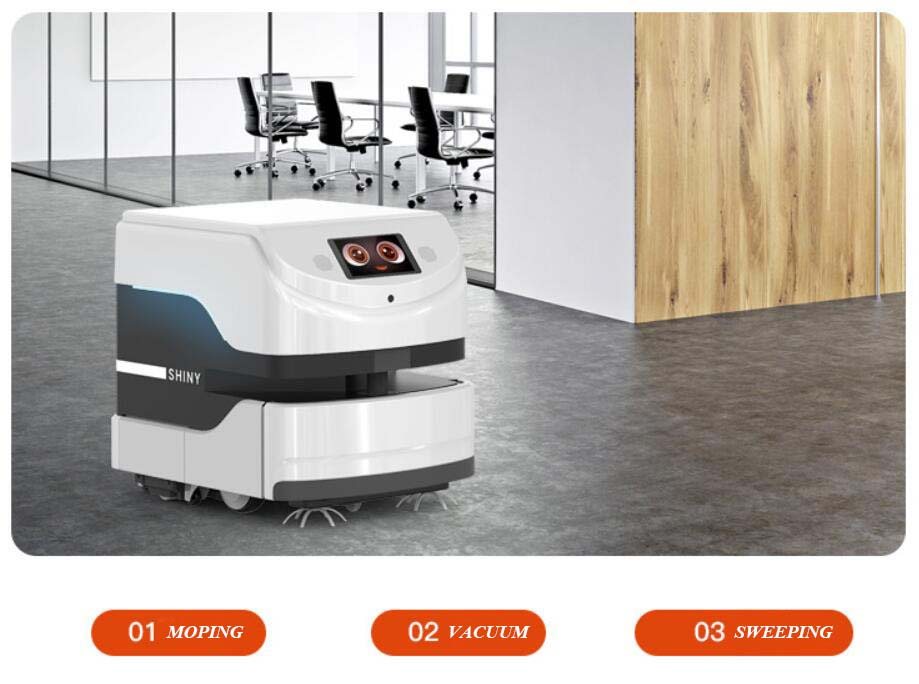
It is no surprise that cleaning robots have been developed in the medical technology cluster. Robots have been used in medicine for many years, said Sava Savchev, innovation manager of Erlangen Medical Valley. For example, the most advanced sensors and image processing are also put into use. He said: "We have noticed that people can use robots extensively in other fields."
There is one area that is particularly suitable. "We already know too well: the stairs are very expensive to clean, and they are also very tiring." Erlangen Medical Valley business manager Matthias Sieg pointed out. In fact, the main task of the cluster is to rent out space and help build the network. "However, it attracted us to develop something with one of the tenants."
The cleaning robot jointly developed by Union R&D will be used for the first time in the future. "They are small units that connect to the Internet and share work," Sieg explained. For example, there are units dedicated to vacuuming and wiping. They can coordinate with each other, such as when the mop robot sees that it is best to vacuum first.
De plus, par exemple, lorsque le canal est bloqué, le robot peut avertir les autres membres du groupe. Tous les robots peuvent accéder aux bases de données publiques et prendre des mesures préventives.
In Germany, many companies are involved in service robot technology. For example, Berlin startup Insystems and Boos Technical Lighting, a company that produces lighting equipment, have developed a mobile disinfection robot. The new coronavirus is a global problem that affects millions of people. In order to minimize infections caused by viruses and bacteria and protect people, Metralabs, a technology company in Ilmenau, has introduced a Sterybot disinfection robot to the market, which has a fast and effective UV-C radiation surface disinfection function.
Dans ce secteur, des entreprises comme Arculus poussent le développement de robots mobiles.
Helmut Schmid, président de la Fédération allemande de robotique, a déclaré : « Certains clusters de robots disposent déjà de capacités intelligentes et peuvent gérer des commandes de transport complexes. »
Currently, many robot manufacturers are working on the integration of artificial intelligence. "Classic programming quickly reached its limit in the field of robotics, precisely because robots interact with the physical world." said Andreas Lieber, general manager of the Applied Artificial Intelligence Initiative, an innovation and entrepreneurship incubator under the Technical University of Munich. Therefore, manufacturers are more using artificial intelligence-based systems for object recognition, planning or movement. He said: "This trend will continue to grow."
SIG croit fermement que l’avenir appartient à un cluster de robots en réseau.
Il a déclaré : "Dans 5 à 10 ans, les systèmes mobiles autonomes sur les trottoirs feront partie de la vie quotidienne, comme la livraison de colis ou de pizzas."