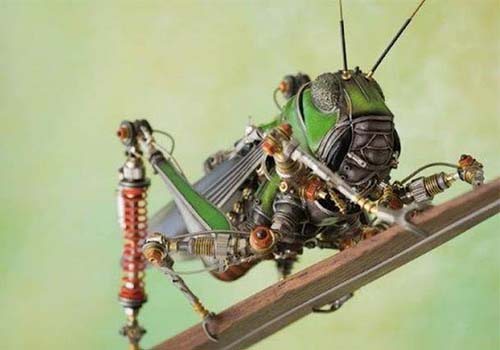
To build a robot from live beetles is not to create an insect robot from scratch, but to use the insect itself as a flying machine. In this way, heavy batteries and micro-processing technologies are avoided, and only manual control systems are required. In other words, the circuits implanted in its nervous system will control it, a semi-mechanical aircraft-half an insect and half a machine.
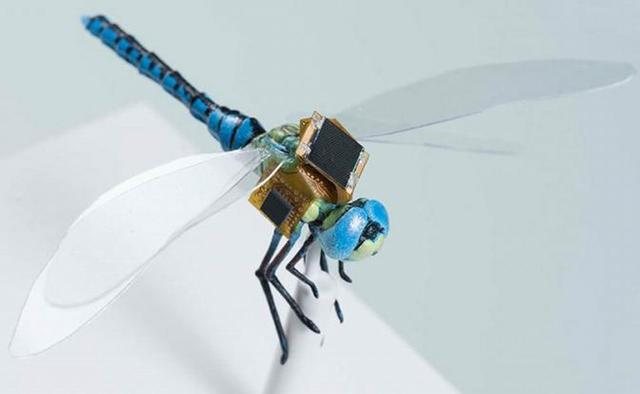 Denk niet dat dit een grap is. Dit is precies het project dat wordt bestudeerd door de Amerikaanse Defense Advanced Research Projects Administration (DARPA).
Al vijftien jaar geleden startte de Advanced Research Projects Administration van het Amerikaanse ministerie van Defensie een programma van hybride micro-elektromechanische systemen gecombineerd met levende organismen. Ze begonnen "robotinsecten" te bestuderen.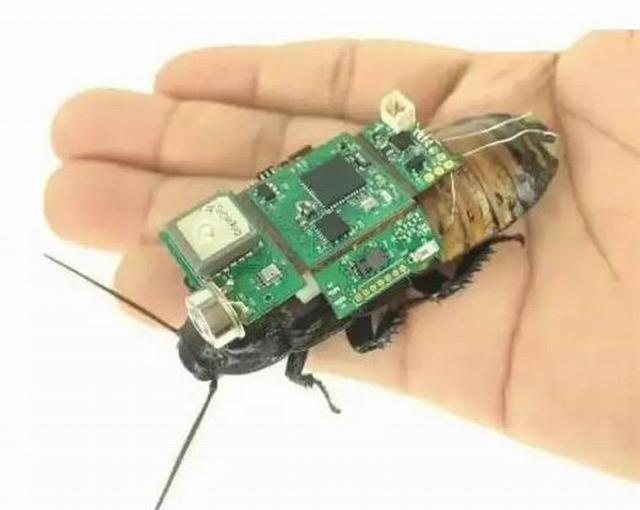 De eerste reeks resultaten verscheen al in 2008. Vervolgens demonstreerde het Amerikaanse leger een thoracaal implantaat en ‘vliegende insecten onder controle van de operator’. De elektronische apparatuur controleerde ook met succes de kakkerlakken.
The cockroaches were able to turn left, right and accelerate after the order was given. These commands are transmitted from a computer via wireless transmission to a receiver installed on the back of the cockroach. Humans can control the behavior of these insects, can take off the insects remotely, control their turning and speed when needed, and stop them when they reach a predetermined location. In theory, cockroaches can even survive a nuclear explosion and can be used for nuclear radiation detection.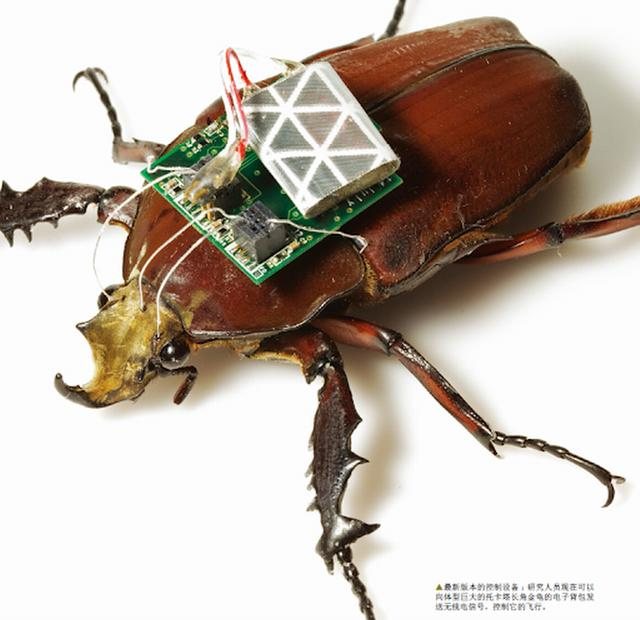 De Amerikaanse bloemkever kan slechts een gewicht van 200 tot maximaal 450 mg dragen en is daarin geslaagd bij de Amerikaanse bloemkever.
Het slagingspercentage bij het behouden van vleugeltrillingscontrole is 97%. Natuurlijk is dit slechts een vleugelslagactie, en de feitelijke besturing is erg ingewikkeld.
Currently, researchers are studying the algorithms and control of dragonflies, bees, mice, and pigeons. There is evidence that the locust experiment ended in success. In these arthropods, "remote explosive detectors" can be installed. By the way, the power is generated by the insect itself, so there is no need for an engine and fuel.
However, the former employee of the Office of the Special Task Center of the Russian Federal Security Service and retired Lieutenant Colonel Alexei Filatov strongly doubts the authenticity of this information. He believes that these stories are the same as the US military training dolphins. Everyone has heard of them, but no one has seen them blow up or dismantle the bomb. He thinks that insect robots don't make much sense.
Als het Amerikaanse leger zich succesvol ontwikkelt, bouw dan de zogenaamde ‘vliegende insectenrobot in de lucht’. Ze zijn klein en hoewel ze vrij langzaam vliegen, kunnen ze lang in de lucht blijven. Als het gewicht toeneemt, wordt het een aanvalsdrone voor gevechten.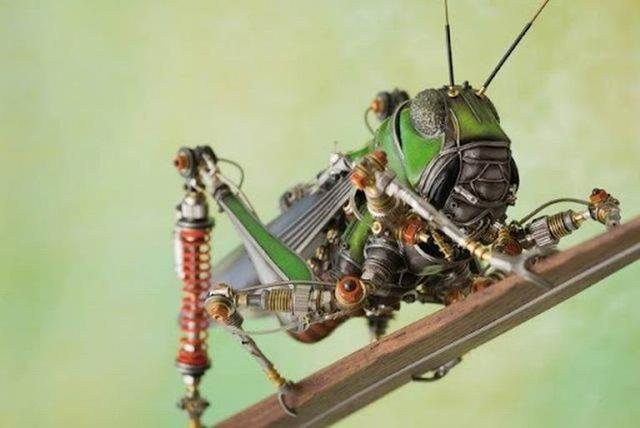 Natuurlijk kunnen deze insectendrones voor elk doel worden gebruikt, en ze zijn waarschijnlijk vermomd als grote insecten: libellen, vlinders, sprinkhanen. Dit zal geen aandacht trekken en onverwachte resultaten opleveren.
Of course, Americans will not throw money in the wind. Behind artificial intelligence is the future. Robot insects are likely to be another weapon. The current military combat theory will develop, and a group of insect robots may change the battlefield in the future. Whether remote control insect robots will be as practical as robots, the answer is yes.
The main problem with artificial intelligence now is that it is not always able to fully evaluate the environment. For example, artificial intelligence may now distinguish children from adults. However, if a child is holding a stick, they are likely to mistake the stick as an assault rifle. In special operations or battles, it will be more difficult for artificial intelligence to assess the situation.
But when using the insect robot complex, everything is much easier. Even if you program complex tasks, you will get 100% results. You only need to set certain parameters and then you are ready. However, we must remember that the use of robots in the proving ground can solve many problems, but the battle is unpredictable. Therefore, artificial intelligence is still growing.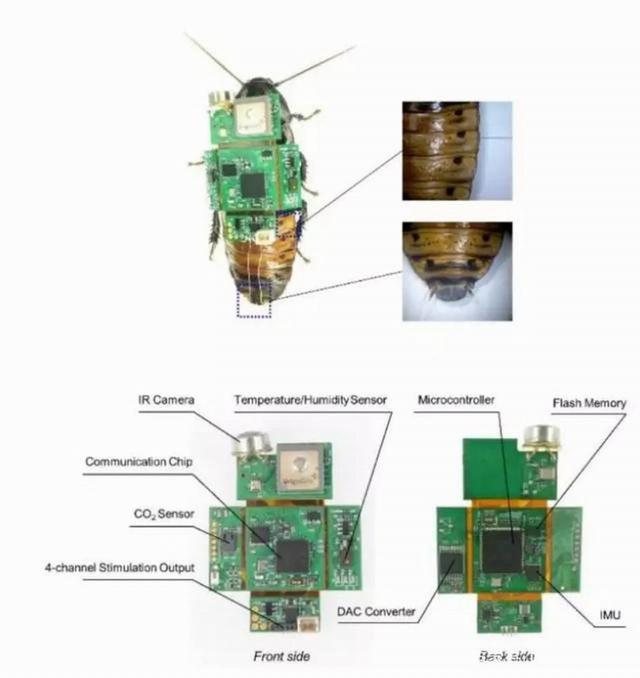 Hoewel sommige experimentele resultaten zeer in het oog springend zijn, is het voor het maken van een eenvoudige cyborg-insectenrobot noodzakelijk ervoor te zorgen dat het signaal rechtstreeks naar het neuromusculaire circuit van het insect zelf kan worden verzonden.
Op deze manier kan het insect, zelfs als het andere dingen probeert te doen, handmatig worden geblokkeerd. Maar als het insect de handmatige instructies negeert, betekent dit dat de insectenrobot niet gekwalificeerd is.
Ten tweede kunnen insecten 20% tot 30% van hun lichaamsgewicht dragen. Daarom bepaalt de grootte van het insect de maximale grootte van het besturingsapparaat.
Ten derde gebruiken insecten visuele informatie en zijn ze gevoelig voor lichtinterferentie bij het vliegen, inclusief klappende vleugels en frequentie.
Semi-robotinsect; Semi-AI robotbesturingssysteem; mini-drone