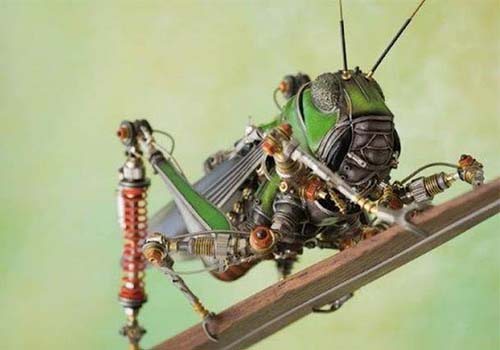
To build a robot from live beetles is not to create an insect robot from scratch, but to use the insect itself as a flying machine. In this way, heavy batteries and micro-processing technologies are avoided, and only manual control systems are required. In other words, the circuits implanted in its nervous system will control it, a semi-mechanical aircraft-half an insect and half a machine.
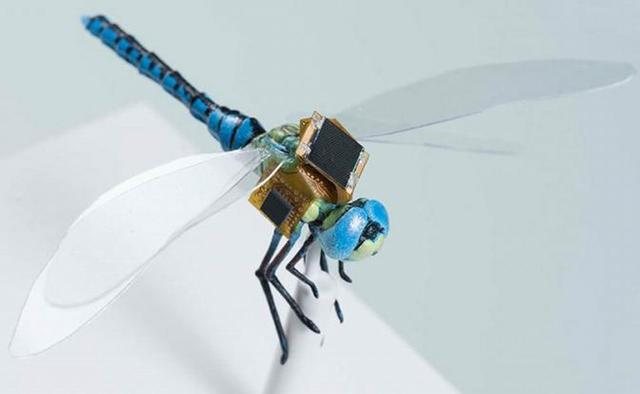 Nemyslete si, že je to vtip. Přesně to je projekt, který studuje US Defense Advanced Research Projects Administration (DARPA).
Již před 15 lety zahájila Správa projektů pokročilého výzkumu amerického ministerstva obrany program hybridních mikroelektromechanických systémů spárovaných s živými organismy. Začali studovat „robotický hmyz“.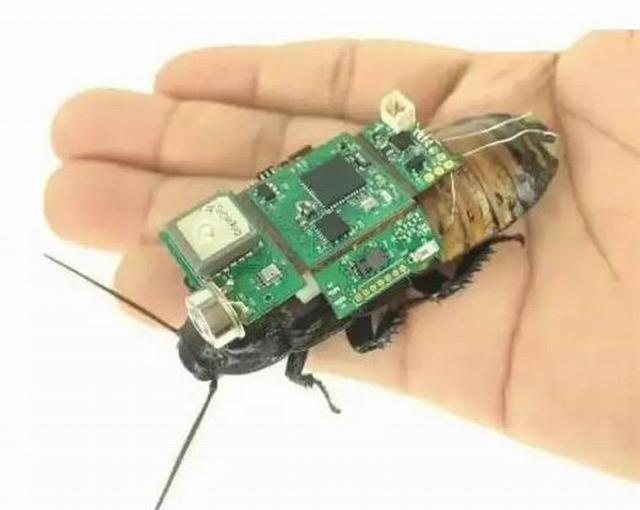 První várka výsledků se objevila již v roce 2008. Tehdy americká armáda předvedla hrudní implantát a „létající hmyz pod kontrolou operátora“. Elektronické zařízení úspěšně kontrolovalo i šváby.
The cockroaches were able to turn left, right and accelerate after the order was given. These commands are transmitted from a computer via wireless transmission to a receiver installed on the back of the cockroach. Humans can control the behavior of these insects, can take off the insects remotely, control their turning and speed when needed, and stop them when they reach a predetermined location. In theory, cockroaches can even survive a nuclear explosion and can be used for nuclear radiation detection.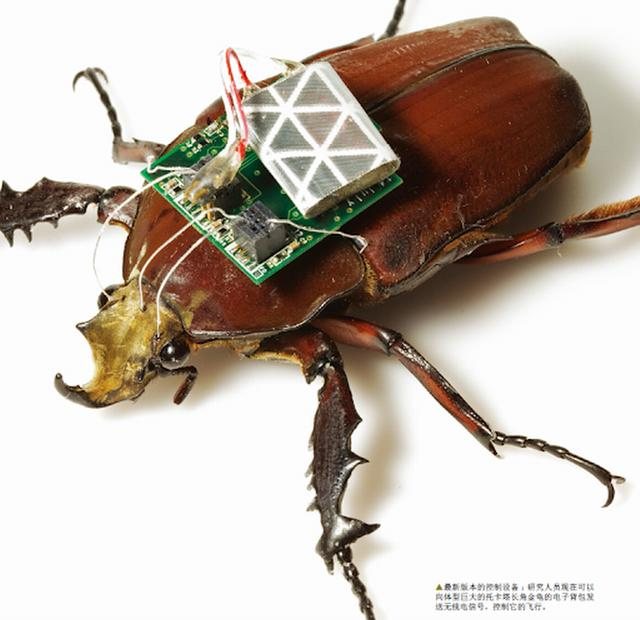 Květináč americký unese hmotnost maximálně 200 až 450 mg a podařilo se mu to u květonosce amerického.
Úspěšnost udržení kontroly vibrací křídla je 97 %. Samozřejmě se jedná pouze o mávnutí křídlem a vlastní ovládání je velmi komplikované.
Currently, researchers are studying the algorithms and control of dragonflies, bees, mice, and pigeons. There is evidence that the locust experiment ended in success. In these arthropods, "remote explosive detectors" can be installed. By the way, the power is generated by the insect itself, so there is no need for an engine and fuel.
However, the former employee of the Office of the Special Task Center of the Russian Federal Security Service and retired Lieutenant Colonel Alexei Filatov strongly doubts the authenticity of this information. He believes that these stories are the same as the US military training dolphins. Everyone has heard of them, but no one has seen them blow up or dismantle the bomb. He thinks that insect robots don't make much sense.
Pokud se americká armáda bude úspěšně rozvíjet, postavte takzvaného „létajícího hmyzího robota ve vzduchu“. Jsou malí, a přestože létají docela pomalu, mohou zůstat ve vzduchu po dlouhou dobu. Pokud se zvýší hmotnost, stane se útočným dronem pro boj.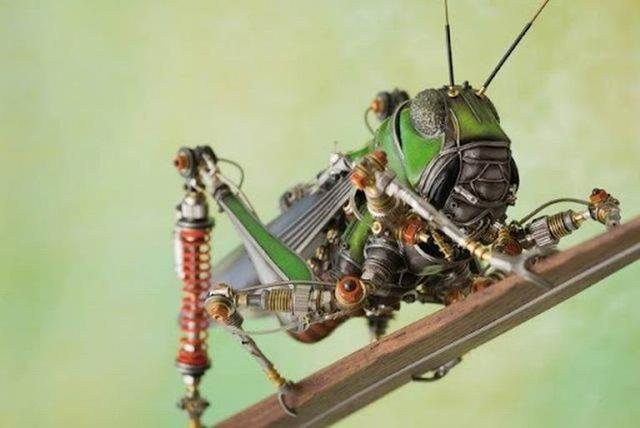 Samozřejmě, že tyto hmyzí drony lze použít pro jakýkoli účel a pravděpodobně budou maskovány jako velký hmyz: vážky, motýli, sarančata. To nebude přitahovat pozornost a dosáhnout neočekávaných výsledků.
Of course, Americans will not throw money in the wind. Behind artificial intelligence is the future. Robot insects are likely to be another weapon. The current military combat theory will develop, and a group of insect robots may change the battlefield in the future. Whether remote control insect robots will be as practical as robots, the answer is yes.
The main problem with artificial intelligence now is that it is not always able to fully evaluate the environment. For example, artificial intelligence may now distinguish children from adults. However, if a child is holding a stick, they are likely to mistake the stick as an assault rifle. In special operations or battles, it will be more difficult for artificial intelligence to assess the situation.
But when using the insect robot complex, everything is much easier. Even if you program complex tasks, you will get 100% results. You only need to set certain parameters and then you are ready. However, we must remember that the use of robots in the proving ground can solve many problems, but the battle is unpredictable. Therefore, artificial intelligence is still growing.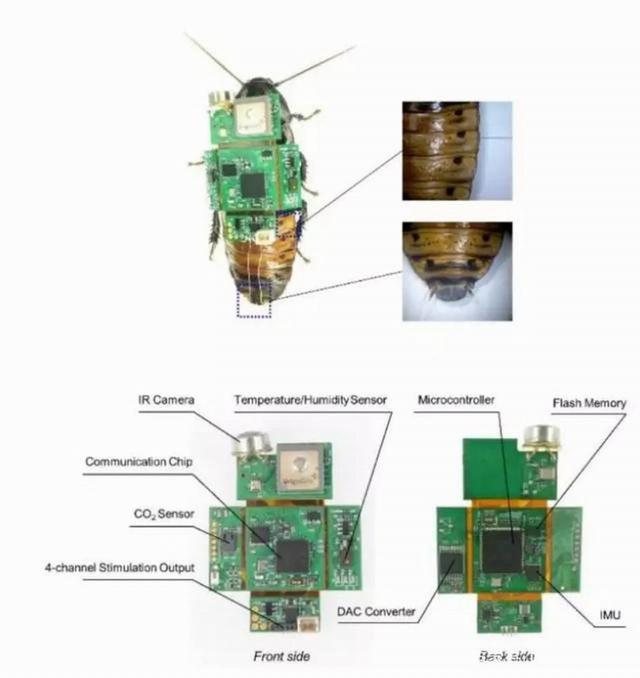 Přestože některé experimentální výsledky jsou velmi poutavé, pro výrobu základního hmyzího robota kyborga je nutné zajistit, aby signál mohl být přímo přenášen do vlastního neuromuskulárního okruhu hmyzu.
Tímto způsobem, i když se hmyz pokusí dělat jiné věci, může být ručně zablokován. Ale pokud hmyz ignoruje manuální pokyny, znamená to, že hmyzí robot je nekvalifikovaný.
Za druhé, hmyz unese 20 % až 30 % své tělesné hmotnosti. Velikost hmyzu tedy určuje maximální velikost ovládacího zařízení.
Zatřetí, hmyz používá vizuální informace a je náchylný na rušení světla, včetně mávání křídel a frekvence.
Semi-Robot hmyzu;Semi-AI Robot řídicí systém;mini dron