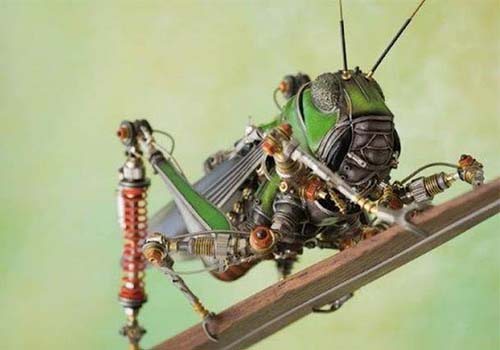
To build a robot from live beetles is not to create an insect robot from scratch, but to use the insect itself as a flying machine. In this way, heavy batteries and micro-processing technologies are avoided, and only manual control systems are required. In other words, the circuits implanted in its nervous system will control it, a semi-mechanical aircraft-half an insect and half a machine.
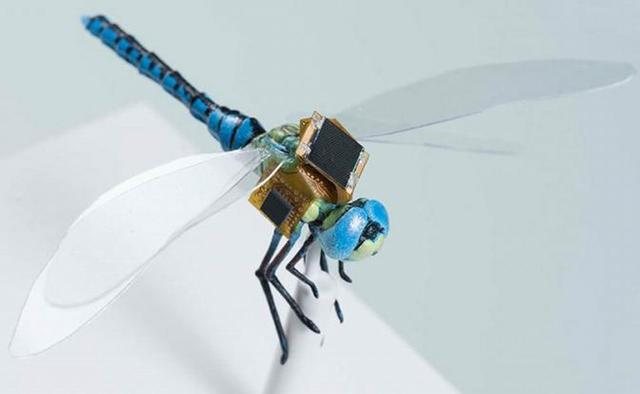 Non pensare che questo sia uno scherzo. Questo è esattamente il progetto allo studio della DARPA (Defence Advanced Research Projects Administration) degli Stati Uniti.
Già 15 anni fa, l’Amministrazione dei progetti di ricerca avanzata del Dipartimento della Difesa degli Stati Uniti ha avviato un programma di sistemi microelettromeccanici ibridi accoppiati con organismi viventi. Cominciarono a studiare gli "insetti robot".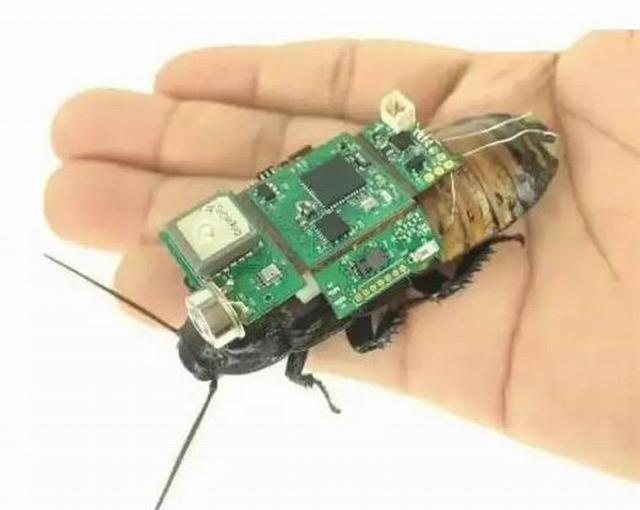 I primi risultati sono apparsi già nel 2008. Successivamente, l’esercito americano ha dimostrato un impianto toracico e “insetti volanti sotto il controllo dell’operatore”. L'attrezzatura elettronica ha anche controllato con successo gli scarafaggi.
The cockroaches were able to turn left, right and accelerate after the order was given. These commands are transmitted from a computer via wireless transmission to a receiver installed on the back of the cockroach. Humans can control the behavior of these insects, can take off the insects remotely, control their turning and speed when needed, and stop them when they reach a predetermined location. In theory, cockroaches can even survive a nuclear explosion and can be used for nuclear radiation detection.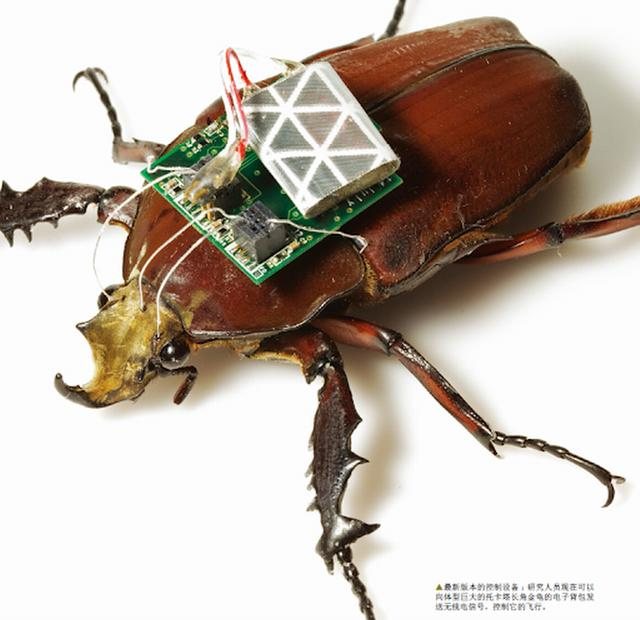 Il coleottero americano può trasportare solo un peso compreso tra 200 e 450 mg al massimo ed è riuscito a sconfiggere il coleottero americano.
La percentuale di successo nel mantenere il controllo delle vibrazioni dell'ala è del 97%. Naturalmente, questa è solo un'azione di battito d'ali e il controllo effettivo è molto complicato.
Currently, researchers are studying the algorithms and control of dragonflies, bees, mice, and pigeons. There is evidence that the locust experiment ended in success. In these arthropods, "remote explosive detectors" can be installed. By the way, the power is generated by the insect itself, so there is no need for an engine and fuel.
However, the former employee of the Office of the Special Task Center of the Russian Federal Security Service and retired Lieutenant Colonel Alexei Filatov strongly doubts the authenticity of this information. He believes that these stories are the same as the US military training dolphins. Everyone has heard of them, but no one has seen them blow up or dismantle the bomb. He thinks that insect robots don't make much sense.
Se l'esercito americano si sviluppa con successo, costruisci il cosiddetto "robot insetto volante nell'aria". Sono piccoli e, sebbene volino abbastanza lentamente, possono restare in aria a lungo. Se aumenta di peso, diventa un drone d'attacco per il combattimento.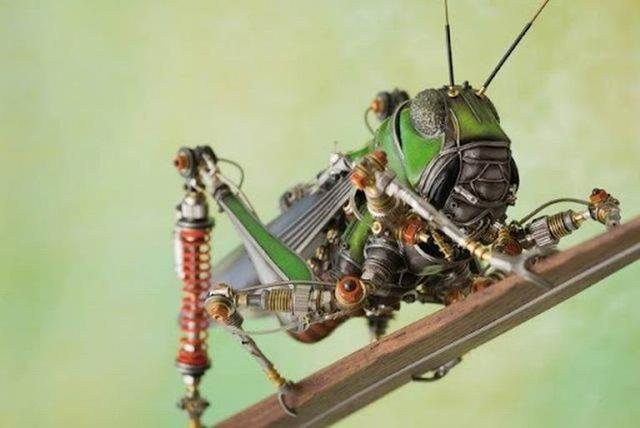 Naturalmente, questi droni insetti possono essere utilizzati per qualsiasi scopo, ed è probabile che siano camuffati da grandi insetti: libellule, farfalle, locuste. Ciò non attirerà l'attenzione e non otterrà risultati inaspettati.
Of course, Americans will not throw money in the wind. Behind artificial intelligence is the future. Robot insects are likely to be another weapon. The current military combat theory will develop, and a group of insect robots may change the battlefield in the future. Whether remote control insect robots will be as practical as robots, the answer is yes.
The main problem with artificial intelligence now is that it is not always able to fully evaluate the environment. For example, artificial intelligence may now distinguish children from adults. However, if a child is holding a stick, they are likely to mistake the stick as an assault rifle. In special operations or battles, it will be more difficult for artificial intelligence to assess the situation.
But when using the insect robot complex, everything is much easier. Even if you program complex tasks, you will get 100% results. You only need to set certain parameters and then you are ready. However, we must remember that the use of robots in the proving ground can solve many problems, but the battle is unpredictable. Therefore, artificial intelligence is still growing.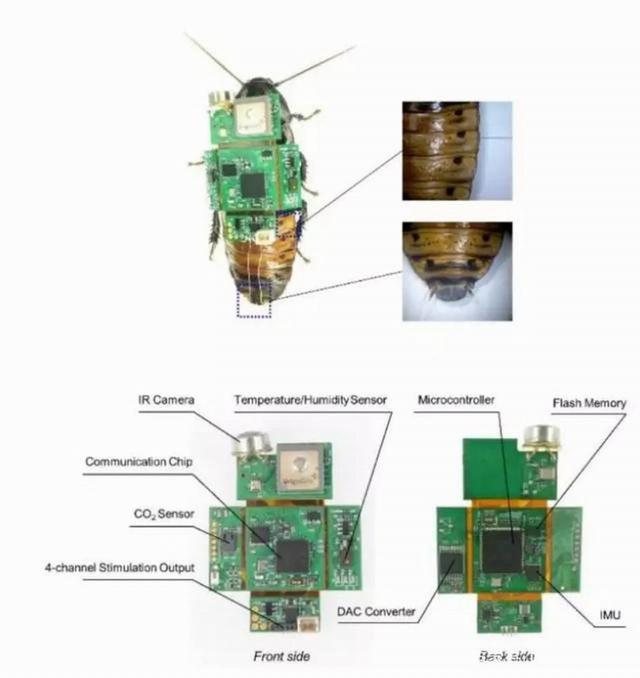 Sebbene alcuni risultati sperimentali siano molto accattivanti, per realizzare un semplice insetto robot cyborg è necessario garantire che il segnale possa essere trasmesso direttamente al circuito neuromuscolare dell'insetto.
In questo modo, anche se l'insetto tenta di fare altro, può essere bloccato manualmente. Ma se l'insetto ignora le istruzioni del manuale, significa che il robot insetto non è qualificato.
In secondo luogo, gli insetti possono trasportare dal 20% al 30% del loro peso corporeo. Pertanto la dimensione dell'insetto determina la dimensione massima del dispositivo di controllo.
In terzo luogo, gli insetti utilizzano le informazioni visive e sono suscettibili alle interferenze della luce per volare, compreso il battito delle ali e la frequenza.
Insetto semi-robot; sistema di controllo robot semi-AI; mini drone