Según el "Informe de estadísticas globales de robots 2020" publicado, en 2019, las ventas globales de robots logísticos se dispararon un 110% y los robots médicos aumentaron un 28%.
The International Federation of Robotics (IFR) reported in Frankfurt, Germany on October 28 that the global sales of professional service robots increased by 32% to 11.2 billion USD (2018-2019). The new crown epidemic will further stimulate the service robot market. The current surge in market demand for robot disinfection solutions, factory and warehouse robot logistics solutions, and home delivery robots shows this trend.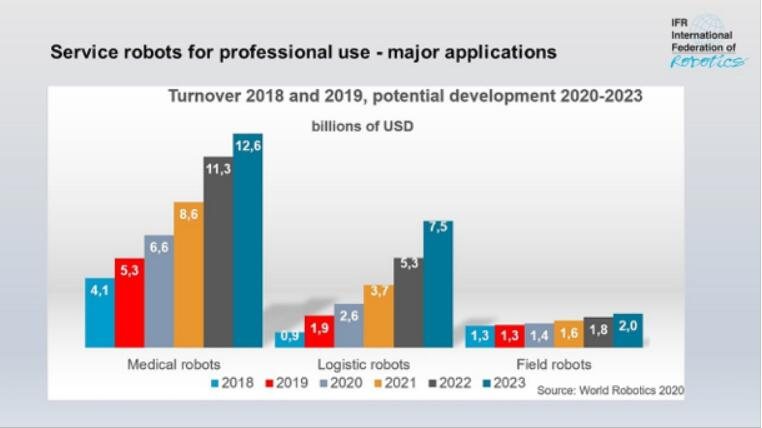 Según el Informe Anual Global Robots IFR2020, las ventas de robots médicos en 2019 representaron casi la mitad (47%) de las ventas totales derobots de servicio profesional, de los cuales los sistemas quirúrgicos robóticos fueron los que más contribuyeron, porque estos robots de servicio tienen el precio más alto.
In 2019, sales of medical robots reached 5.3 billion U.S. dollars, an increase of 28% year-on-year, a record high. By 2022, the sales potential of medical robots will more than double and is expected to reach 11.3 billion US dollars. Among them, about 90% of medical robots come from suppliers in the United States and Europe.
Robot de servicio profesional-robot logístico.
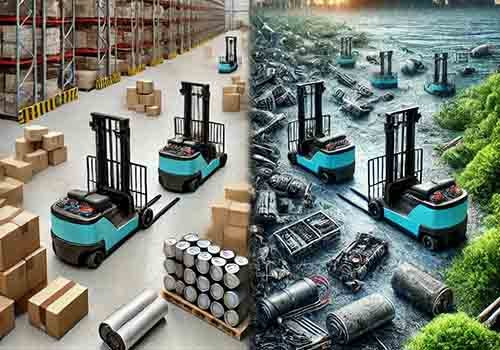
En 2019, las ventas o el arrendamiento de robots logísticos aumentaron un 110% hasta los 1.900 millones de dólares estadounidenses, y la mayoría de las ventas provinieron de robots de aplicación en interiores.Robots móviles autónomosse han utilizado en el almacenamiento de producción digital, y también forman parte de la fabricación inteligente actual. Por lo tanto, la facturación anual de los robots logísticos puede seguir manteniendo un fuerte crecimiento del 40% o incluso más.
IFR Chairman Milton Guerry said: "In the manufacturing process, the investment cost of logistics service robots can be quickly recovered. If it runs uninterrupted for 24 hours, the investment of logistics service robots can be recovered within 2-3 years, which is actually even faster. The service life is 15 years, and the operating cost is about 5% of the annual investment. A well-developed system can usually be at least 98% efficient."
 The current popular "Robot as a Service (RaaS)" business model lowers the threshold for customers to achieve automation through robots. The advantage of this model is that customers do not need to invest in hardware, so the company does not need to have fixed funds, fixed costs, and does not require specialized robot operators.
The driving force for the application of robotic logistics systems in non-manufacturing industries mainly comes from the warehousing solutions implemented by large e-commerce companies. Hospitals also have great potential and use professional service robots to assist in handling hospital logistics. In the field of professional service robots, about 90% of the logistics robots in the above applications are produced in Europe and North America, and about 10% are in Asia.
Robot de campo de servicio profesional
Field robots include agriculture, dairy, animal husbandry and other field robots. Sales in 2019 increased by 3% year-on-year to reach US$1.3 billion. The new crown epidemic may have boosted the application of such robots. For example, due to travel restrictions, workers in Eastern Europe cannot work in Western Europe during the harvest season as usual, resulting in a labor shortage. Local farmers may use field robots to solve this problem. Compared with the previous year, the sales growth of agricultural robots is expected to exceed 30%.
Robots de servicios personales y familiares.
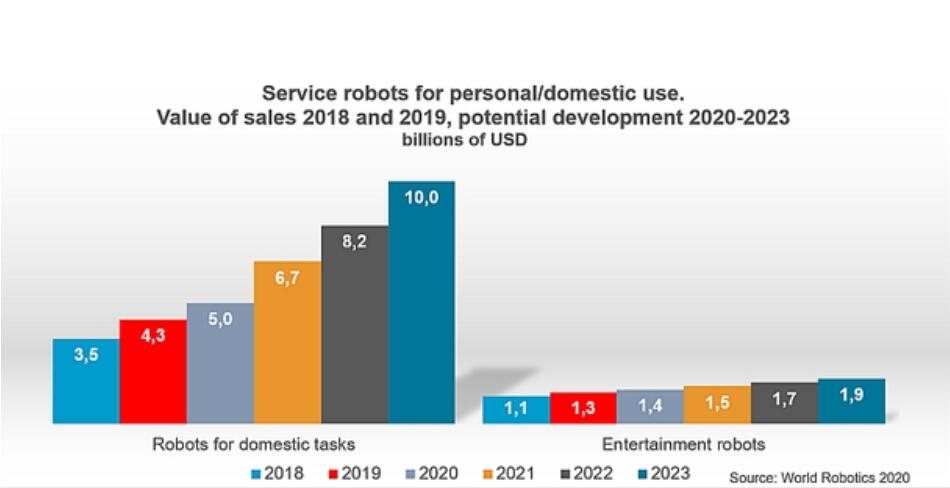
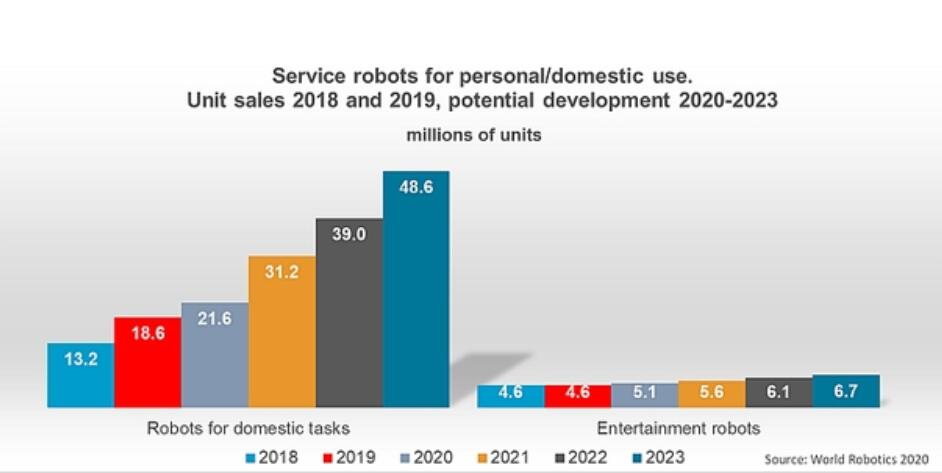
Los robots de servicios personales y domésticos producidos para el mercado masivo se refieren principalmente al campo de los robots domésticos, incluidos los aspiradores yrobots de limpieza de pisos, robots cortacésped y robots de entretenimiento. En 2019, las ventas totales de robots de servicios personales y domésticos superaron los 23,2 millones de unidades, un aumento del 34% respecto al mismo período del año anterior; las ventas aumentaron un 20% hasta alcanzar los 5.700 millones de dólares.
In recent years, the unit prices of the two most important products-robot vacuum cleaners and toy robots have been declining. Currently, the basic robot vacuum cleaner sells for less than $100. In 2019, 75% of the world's domestic service robots-vacuum cleaners and floor cleaners, lawn mowers and other household robots-were produced by American companies. Asian companies account for 19% of the global market, and European companies account for 6%.
 Assistive robots for the elderly/the disabled are a rapidly growing market. In 2019, sales of assistive robots reached US$91 million, an increase of 17% year-on-year. Numerous research projects around the world have gathered in the field of service robots, and many countries attach great importance to this market with great development potential. Unlike most entertainment robots, assistive robots for the elderly/disabled are high-tech products.
Milton Guerry, presidente de la Federación Internacional de Robótica, dijo: "Esperamos que las ventas de robots de servicios profesionales y de robots de servicios personales sigan manteniendo un fuerte crecimiento en el futuro".