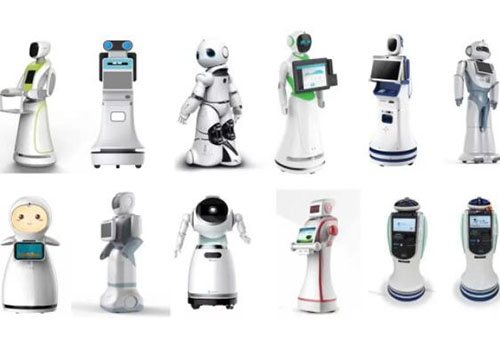
Podle zveřejněné „2020 Global Robot Statistics Report“ v roce 2019 celosvětový prodej logistických robotů vzrostl o 110 % a lékařských robotů vzrostl o 28 %.
The International Federation of Robotics (IFR) reported in Frankfurt, Germany on October 28 that the global sales of professional service robots increased by 32% to 11.2 billion USD (2018-2019). The new crown epidemic will further stimulate the service robot market. The current surge in market demand for robot disinfection solutions, factory and warehouse robot logistics solutions, and home delivery robots shows this trend.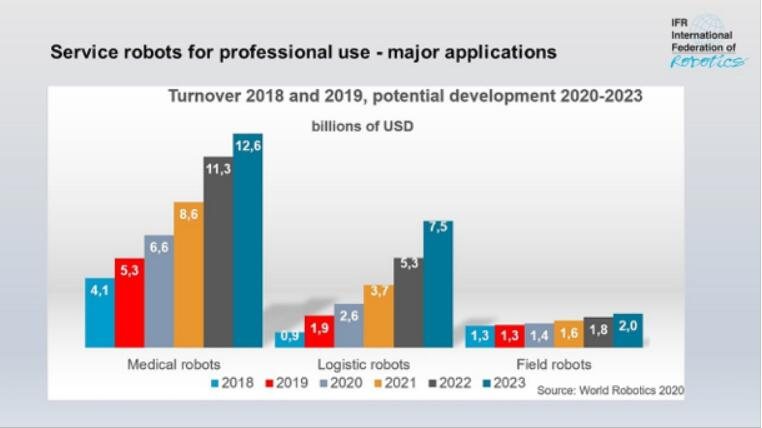 Podle výroční zprávy IFR2020 Global Robots Annual Report tvořily prodeje lékařských robotů v roce 2019 téměř polovinu (47 %) celkových prodejůprofesionální servisní roboti, z čehož nejvíce přispěly robotické chirurgické systémy, protože takové servisní roboty mají nejvyšší cenu.
In 2019, sales of medical robots reached 5.3 billion U.S. dollars, an increase of 28% year-on-year, a record high. By 2022, the sales potential of medical robots will more than double and is expected to reach 11.3 billion US dollars. Among them, about 90% of medical robots come from suppliers in the United States and Europe.
Profesionální servisní robot-logistický robot
V roce 2019 vzrostl prodej nebo pronájem logistických robotů o 110 % na 1,9 miliardy amerických dolarů a většina tržeb pochází z vnitřních aplikačních robotů.Autonomní mobilní robotise používají v digitálním výrobním skladování a jsou také součástí současné inteligentní výroby. Roční obrat logistických robotů si proto může i nadále udržet silný růst o 40 % nebo dokonce vyšší.
IFR Chairman Milton Guerry said: "In the manufacturing process, the investment cost of logistics service robots can be quickly recovered. If it runs uninterrupted for 24 hours, the investment of logistics service robots can be recovered within 2-3 years, which is actually even faster. The service life is 15 years, and the operating cost is about 5% of the annual investment. A well-developed system can usually be at least 98% efficient."
 The current popular "Robot as a Service (RaaS)" business model lowers the threshold for customers to achieve automation through robots. The advantage of this model is that customers do not need to invest in hardware, so the company does not need to have fixed funds, fixed costs, and does not require specialized robot operators.
The driving force for the application of robotic logistics systems in non-manufacturing industries mainly comes from the warehousing solutions implemented by large e-commerce companies. Hospitals also have great potential and use professional service robots to assist in handling hospital logistics. In the field of professional service robots, about 90% of the logistics robots in the above applications are produced in Europe and North America, and about 10% are in Asia.
Profesionální servisní robot-polní robot
Field robots include agriculture, dairy, animal husbandry and other field robots. Sales in 2019 increased by 3% year-on-year to reach US$1.3 billion. The new crown epidemic may have boosted the application of such robots. For example, due to travel restrictions, workers in Eastern Europe cannot work in Western Europe during the harvest season as usual, resulting in a labor shortage. Local farmers may use field robots to solve this problem. Compared with the previous year, the sales growth of agricultural robots is expected to exceed 30%.
Osobní a rodinné servisní roboty
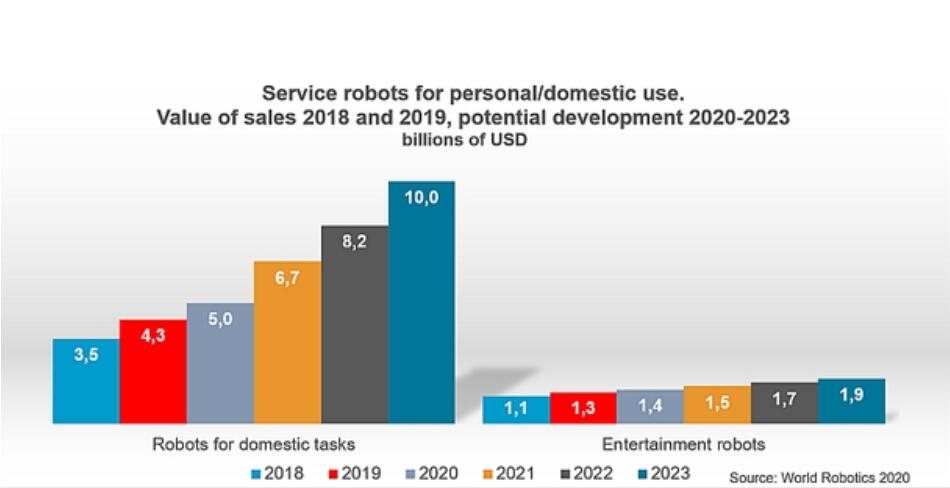
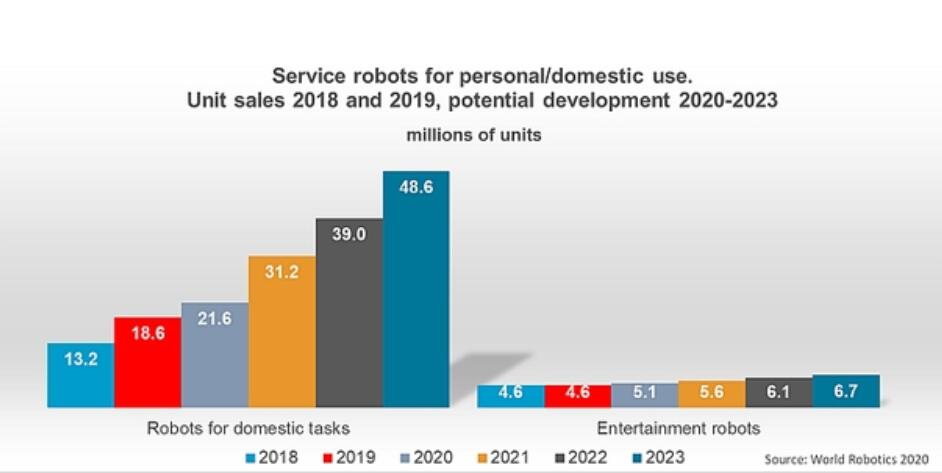
Osobní a domácí servisní roboty vyráběné pro masový trh se týkají především oblasti domácích robotů, včetně vakuových aroboty na čištění podlah, roboty sekačky na trávu a zábavní roboti. V roce 2019 celkový prodej osobních a domácích servisních robotů přesáhl 23,2 milionu kusů, což představuje nárůst o 34 % oproti stejnému období předchozího roku; tržby vzrostly o 20 % na 5,7 miliardy USD.
In recent years, the unit prices of the two most important products-robot vacuum cleaners and toy robots have been declining. Currently, the basic robot vacuum cleaner sells for less than $100. In 2019, 75% of the world's domestic service robots-vacuum cleaners and floor cleaners, lawn mowers and other household robots-were produced by American companies. Asian companies account for 19% of the global market, and European companies account for 6%.
 Assistive robots for the elderly/the disabled are a rapidly growing market. In 2019, sales of assistive robots reached US$91 million, an increase of 17% year-on-year. Numerous research projects around the world have gathered in the field of service robots, and many countries attach great importance to this market with great development potential. Unlike most entertainment robots, assistive robots for the elderly/disabled are high-tech products.
Milton Guerry, předseda Mezinárodní federace robotiky, řekl: "Očekáváme, že prodej profesionálních servisních robotů a osobních servisních robotů si v budoucnu zachová silný růst."