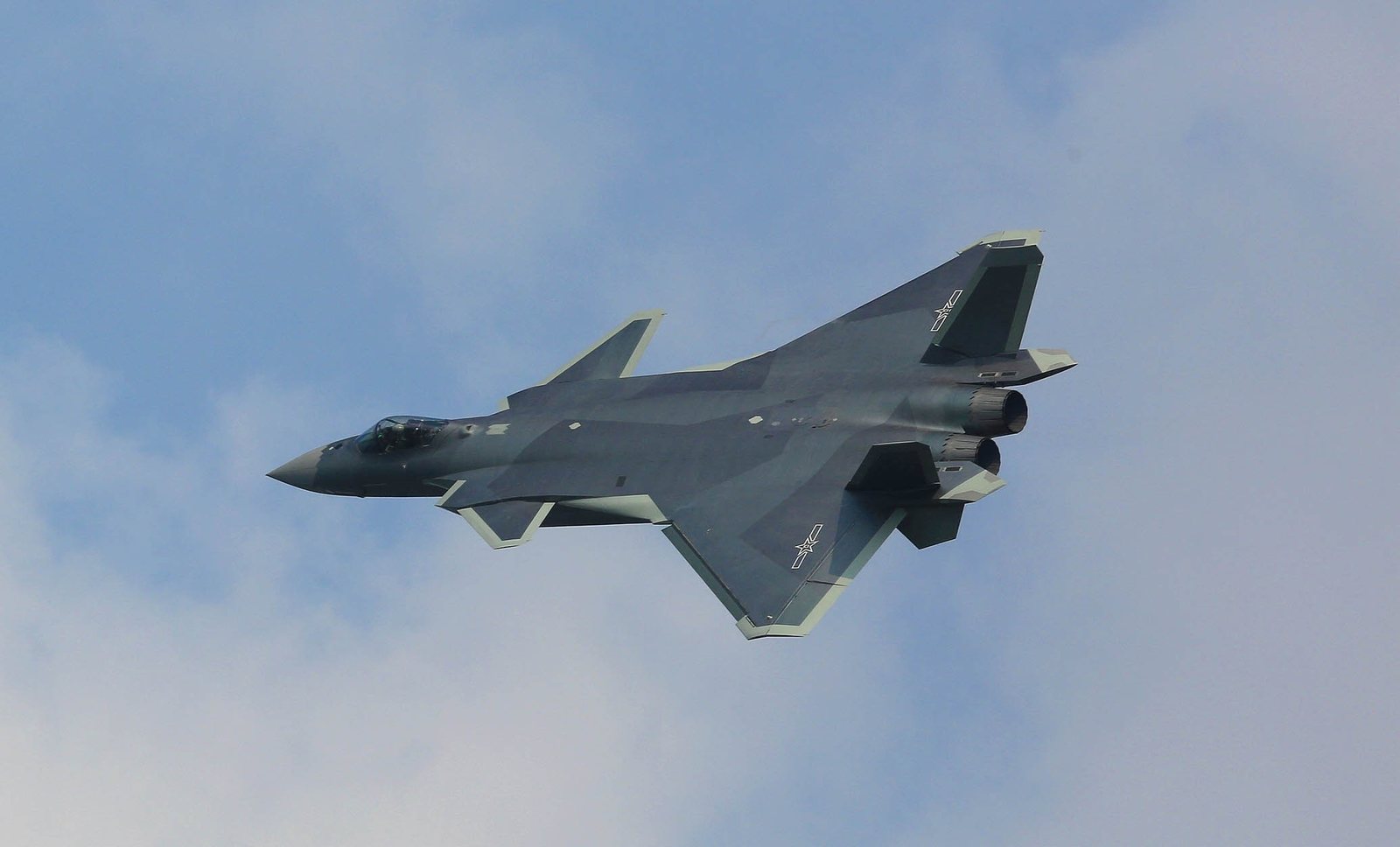
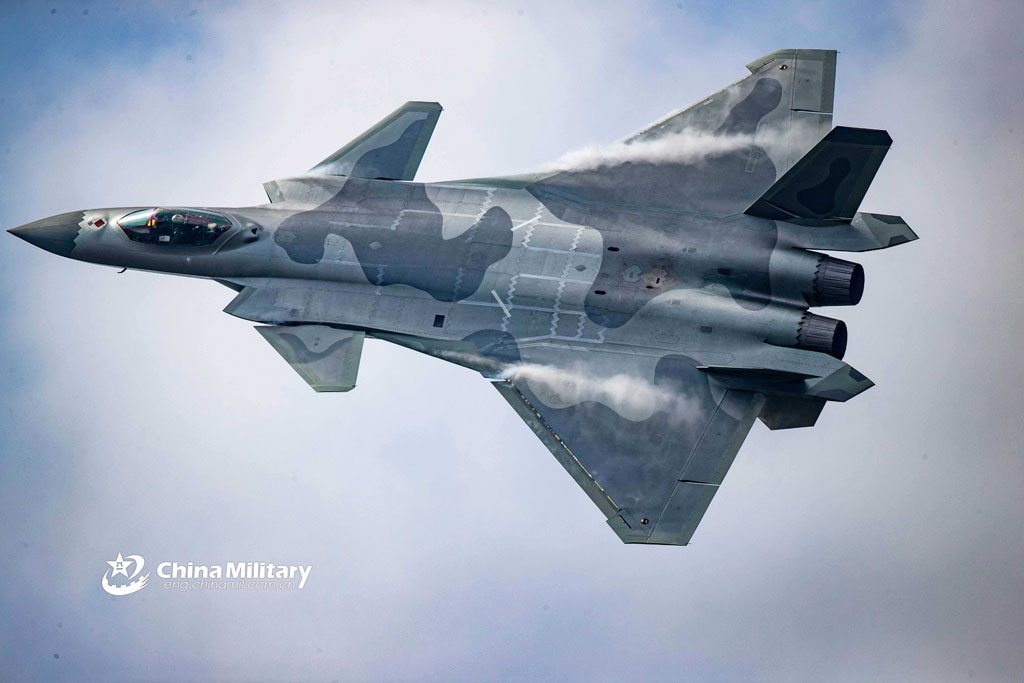
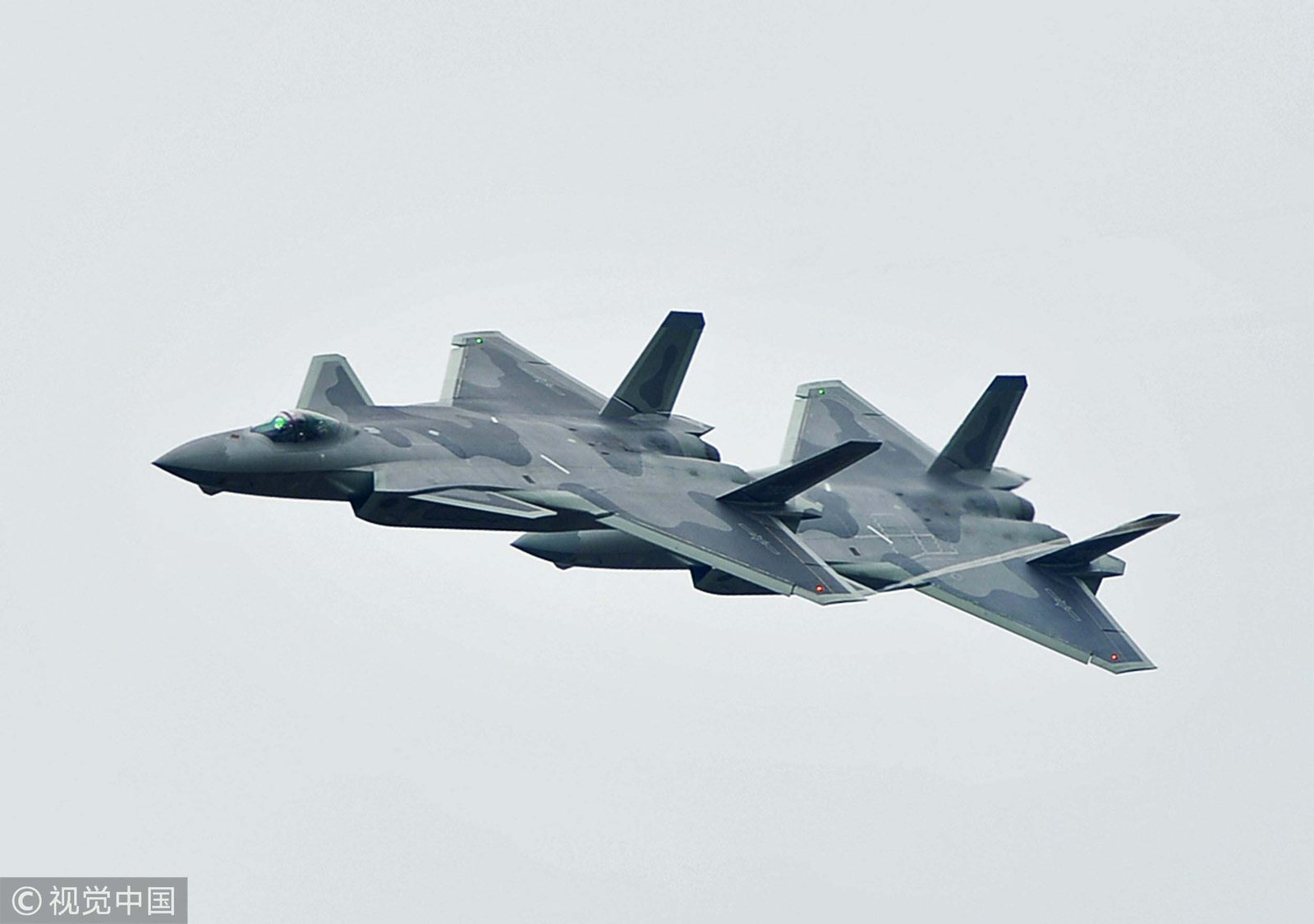
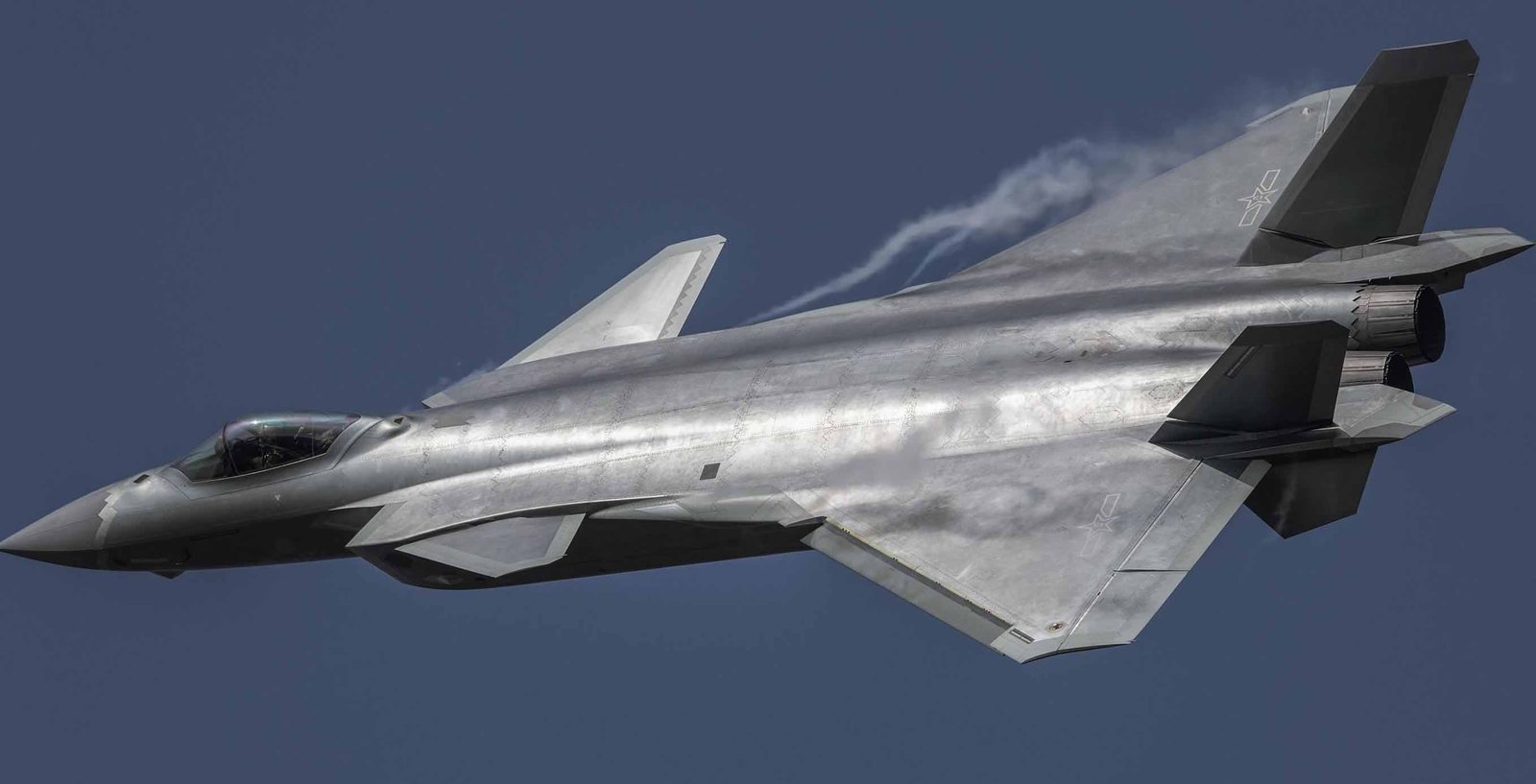
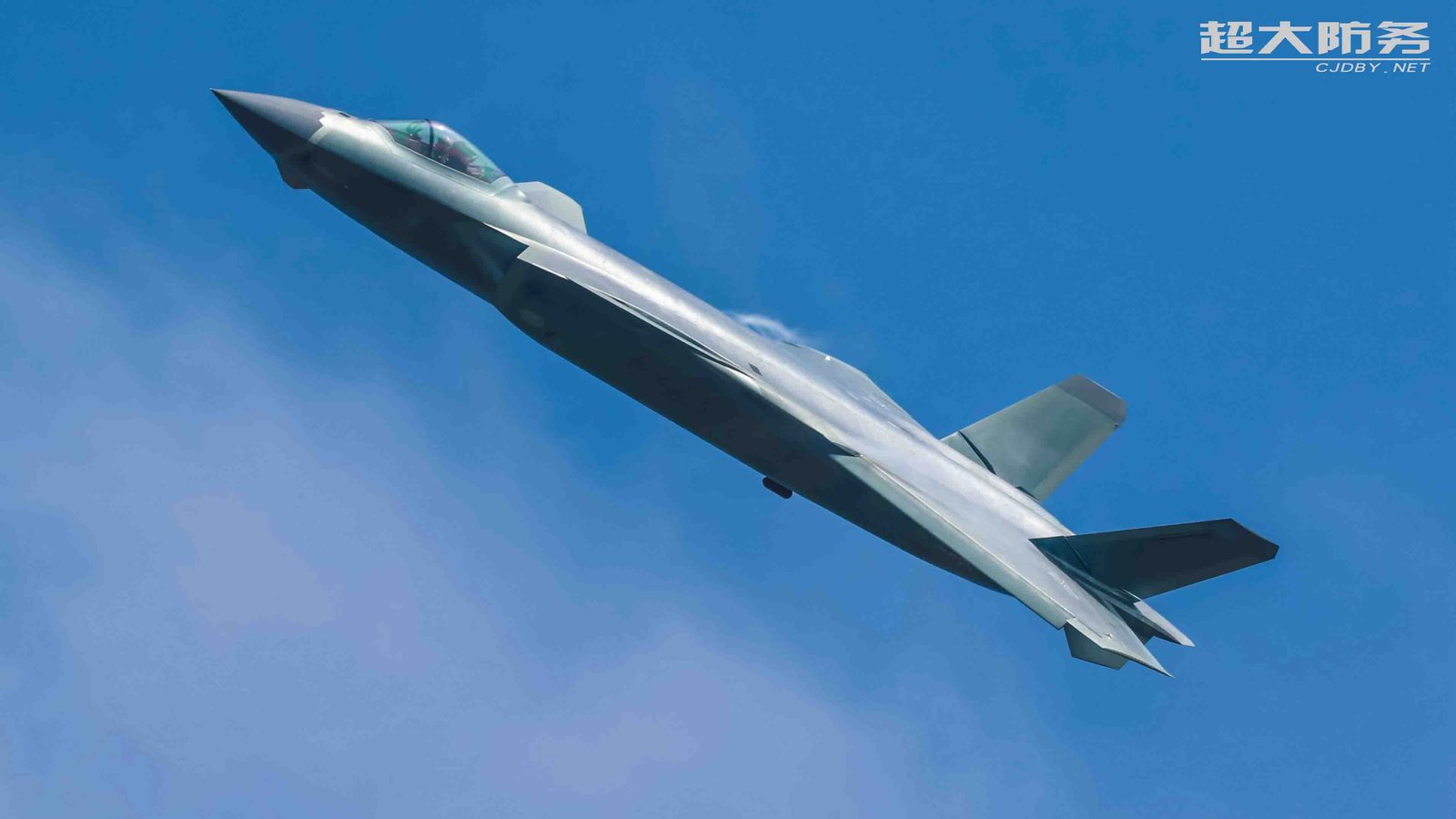
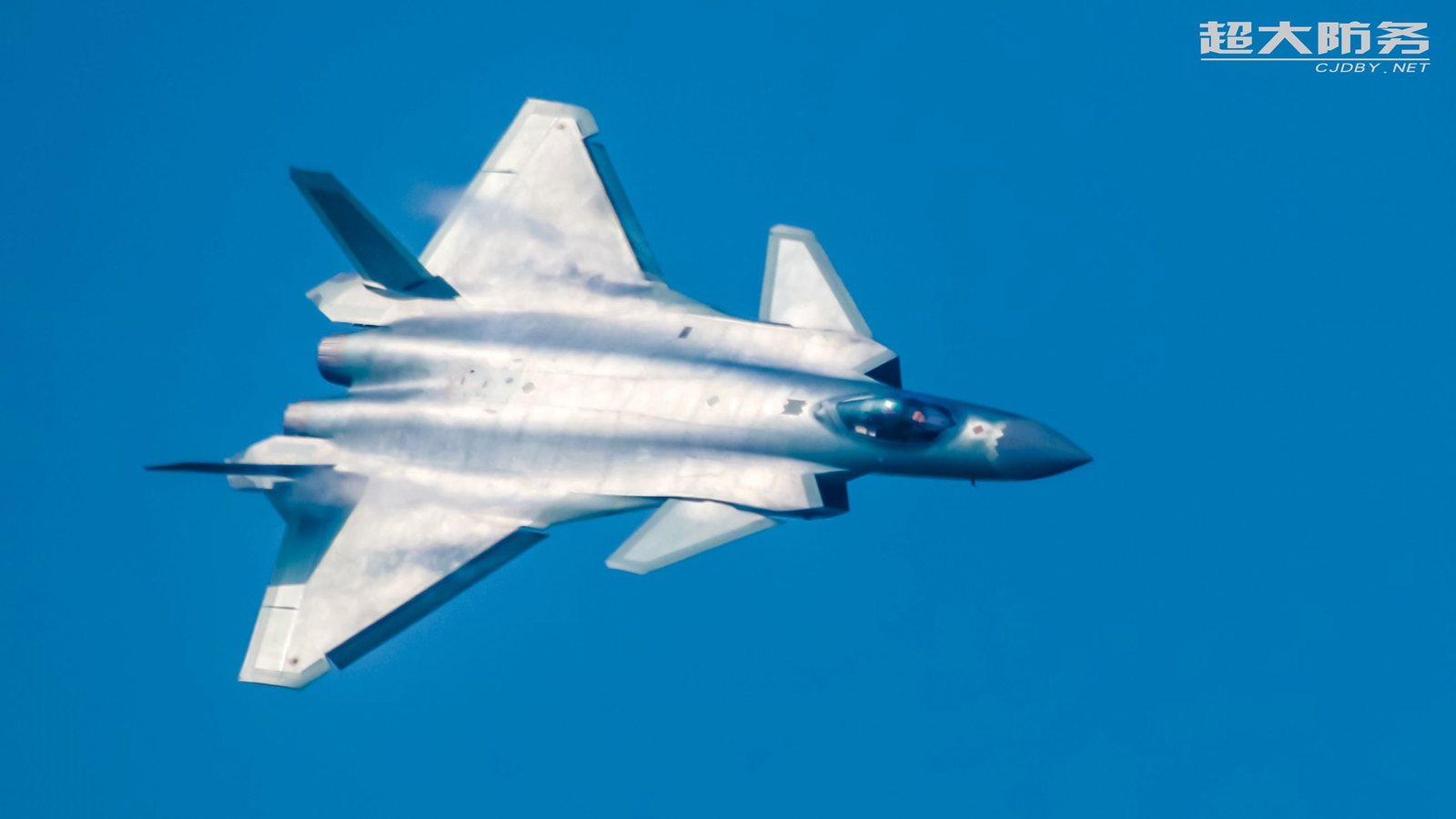
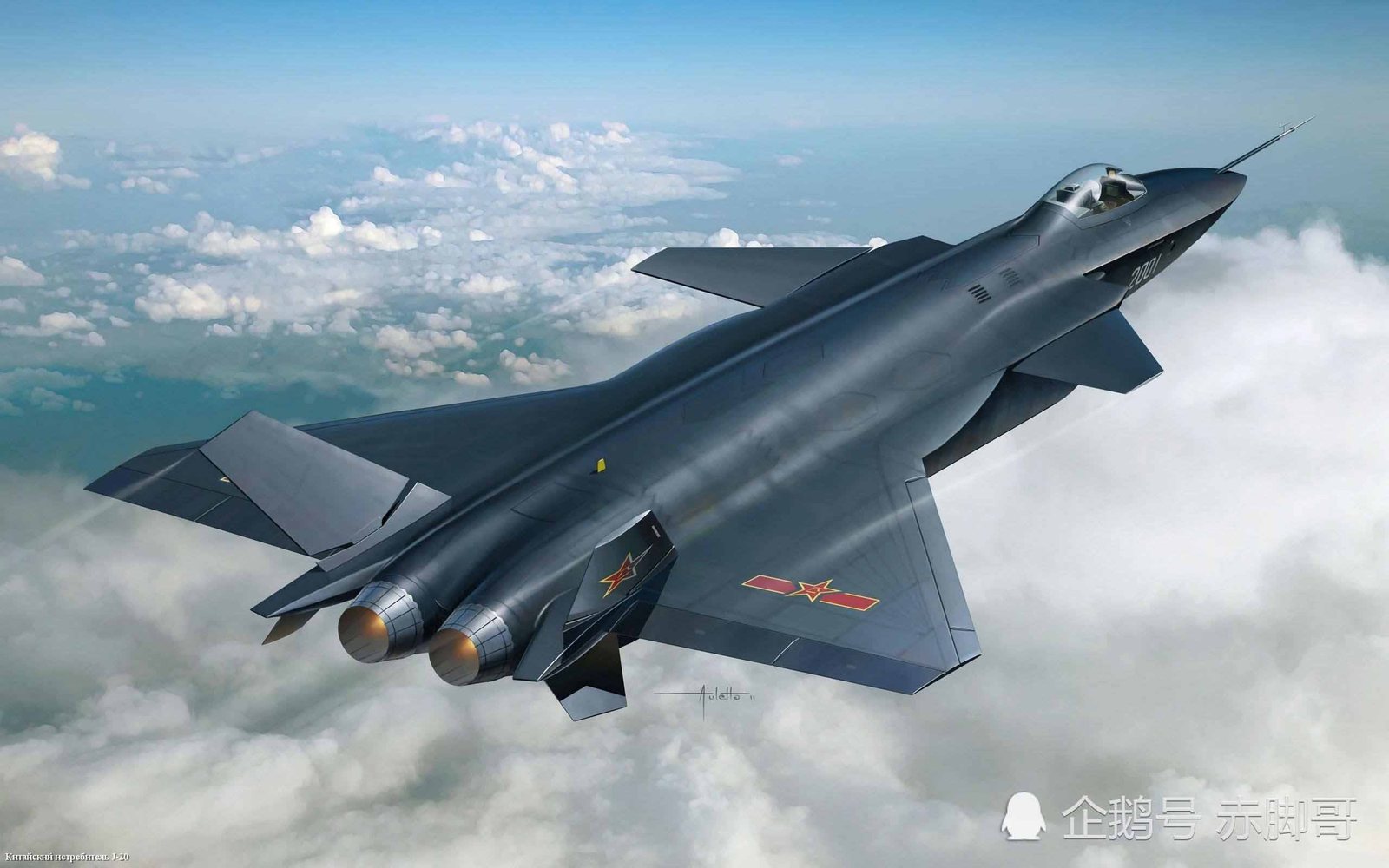
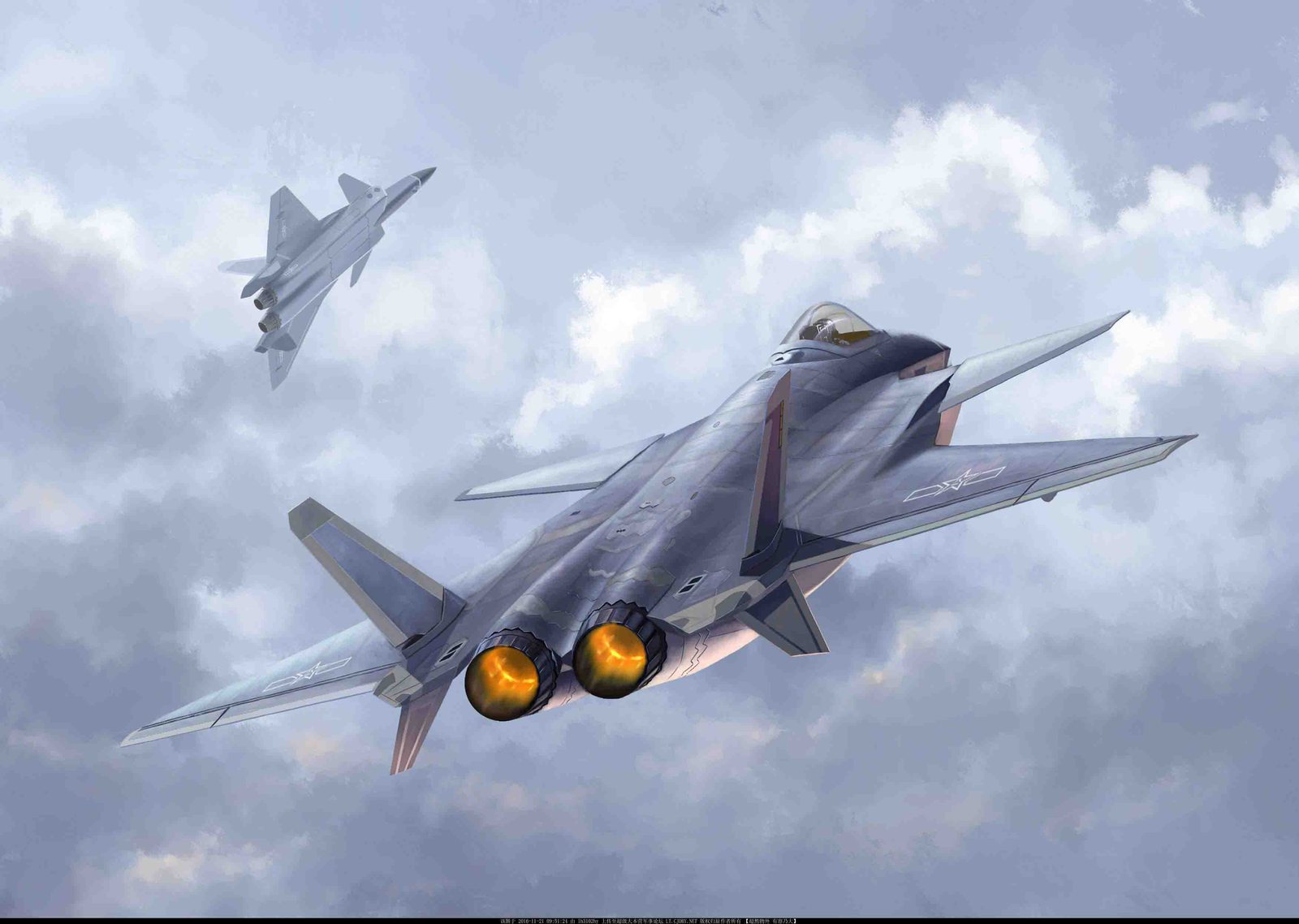
J-20, nicknamed "Vigorous Dragon" and NATO reporting name "Fire Fang," is a latest-generation (fourth generation by old European and American standards, fifth generation by new and Russian standards) twin-engine heavy stealth fighter developed by the Chengdu Aircraft Industry Group for the People's Liberation Army of China. Designed to succeed third-generation air superiority/multi-role fighters like the J-10 and J-11, it will be responsible for safeguarding China's future air and maritime sovereignty.
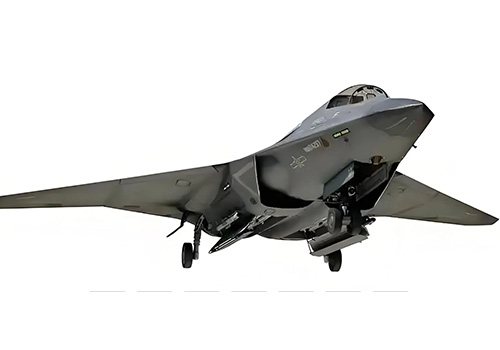
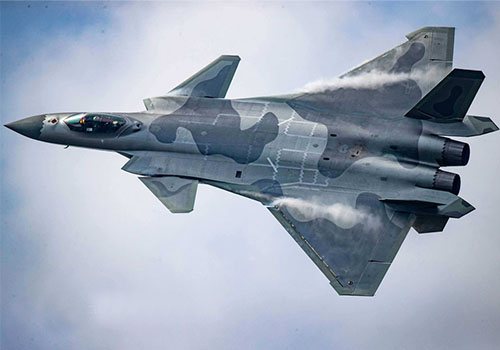
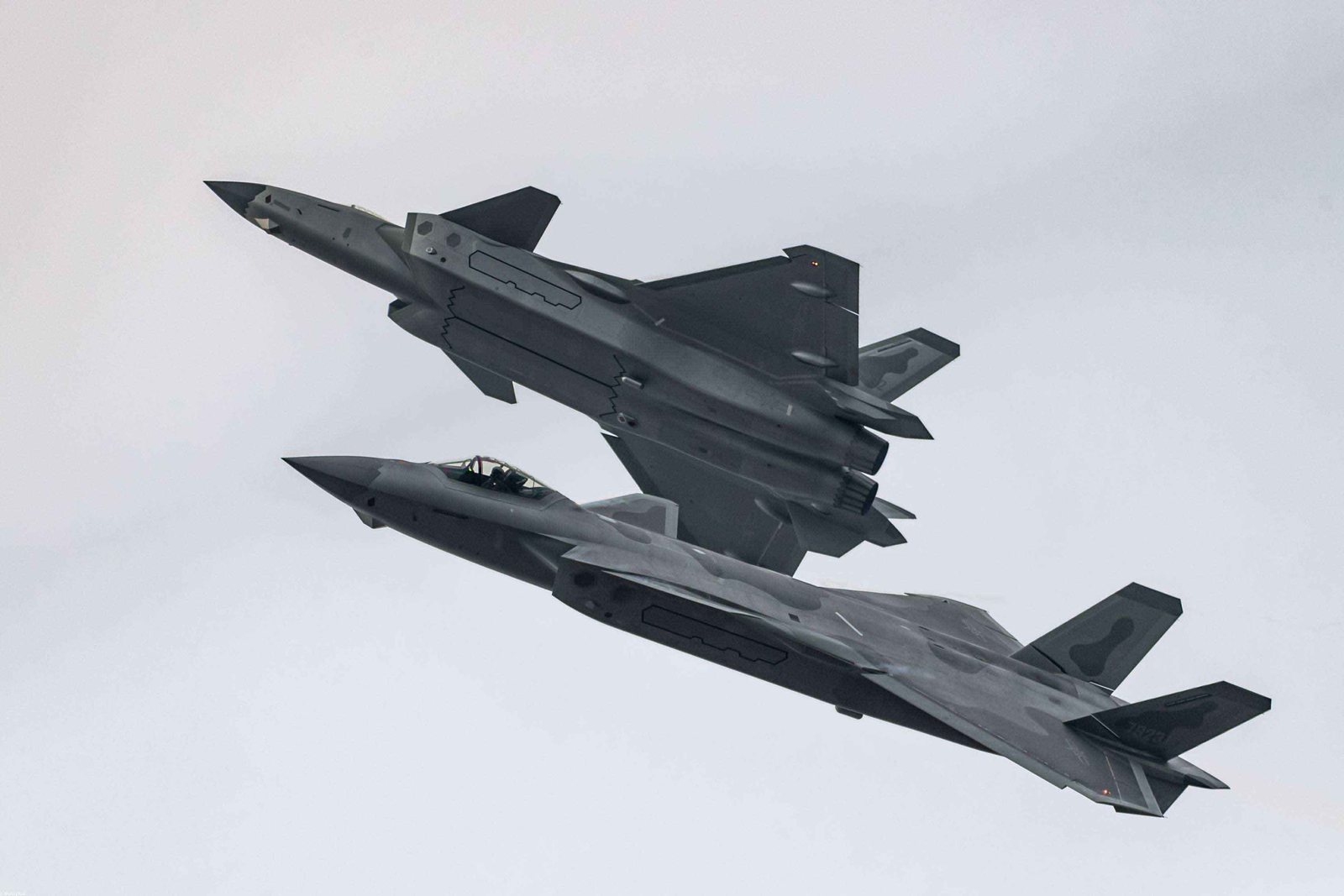
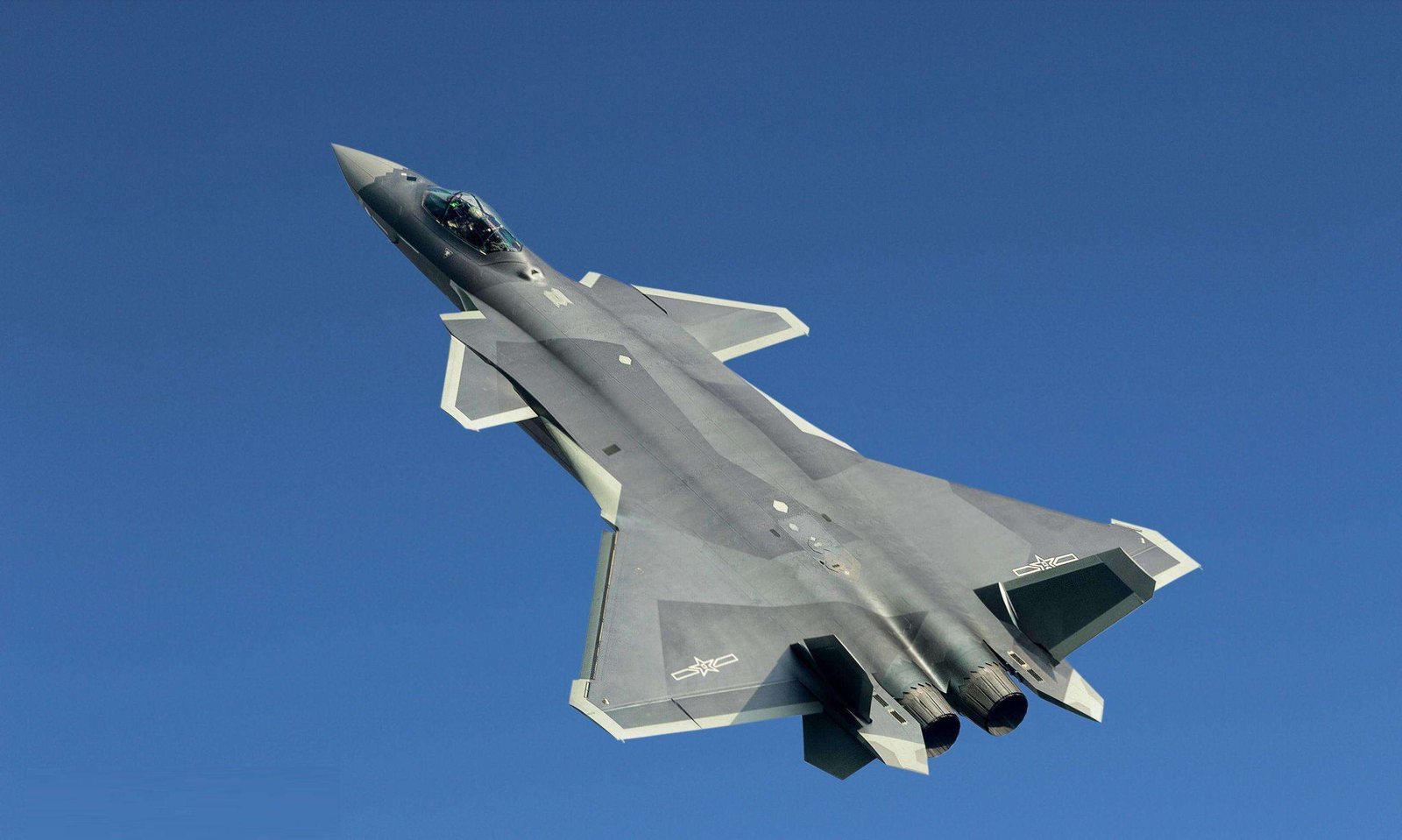
The J-20 features a single-seat, twin-engine design with fully movable twin vertical tails, a DSI bulge-type air intake, and an upturned canard with pointed arch strakes. The nose and fuselage are diamond-shaped, with an outward-canted vertical tail and serrated landing gear doors. The fuselage is painted a deep dark green, appearing almost black from a distance. The side bomb bays utilize an innovative design that allows missile launchers to be pre-enclosed and externally mounted.
그들은 중국의 가장 진보된 신형 공대공 미사일을 갖추고 있습니다.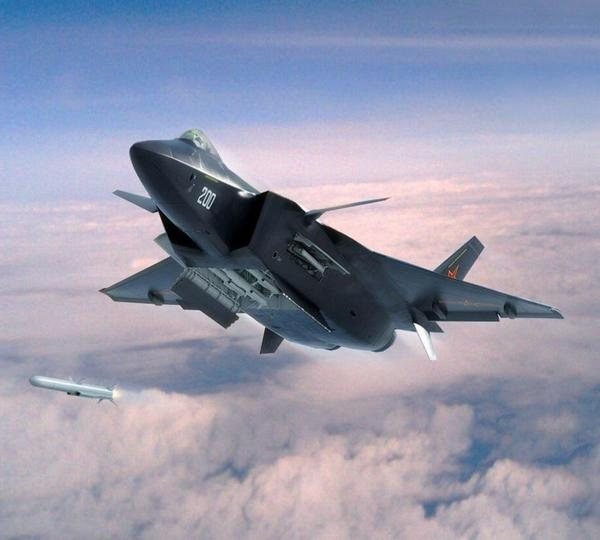 J-20 전투기 종합 성능 분석:
I. 기본 매개 변수 및 외관 디자인
1. 크기 및 무게- Fuselage Length: 21.2 meters- Wingspan: 13.01 meters- Height: 4.69 meters- Empty Weight: 17 tons, Maximum Takeoff Weight: 37 tons- Exterior Features: Adopts a canard-style aerodynamic layout, a diamond-shaped nose, fully movable twin vertical tails, and DSI air intakes. The fuselage is primarily painted dark green. Its stealth design significantly reduces its radar cross-section.
2. 스텔스 디자인- Low observability is achieved through a diamond-shaped cross-section, parallel edges, and radar-absorbing materials.- The innovative side bomb bay design allows for pre-installed missile launchers, reducing bay opening time.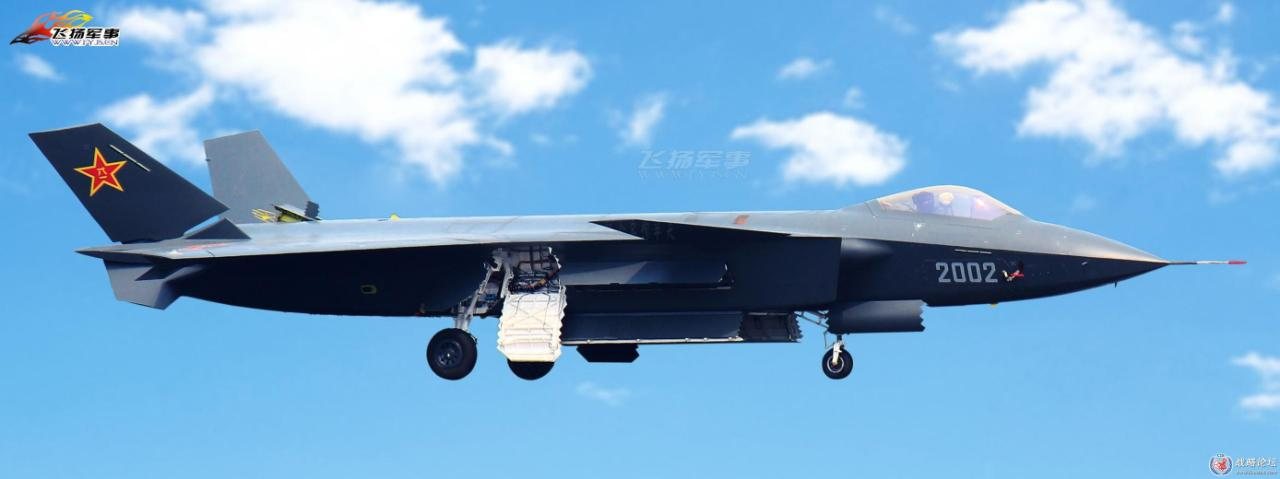 II. 파워트레인 및 기동성
1. 엔진 구성
- WS-15 engine: Maximum thrust of 18.5 tons per engine, equipped with a three-axis vectoring nozzle, supports supersonic cruise (Mach 1.83) and a maximum speed of Mach 2.8.
- Compared to the earlier WS-10C engine, which has a thrust of 145 kN (approximately 14.8 tons) and a thrust-to-weight ratio of approximately 10.
2. 초음속 속도와 기동성
- Supersonic cruise capability (Mach 1.8) significantly improves battlefield responsiveness.
- Canard + fully movable vertical tail + leading edge vortex design enhances maneuverability at high angles of attack.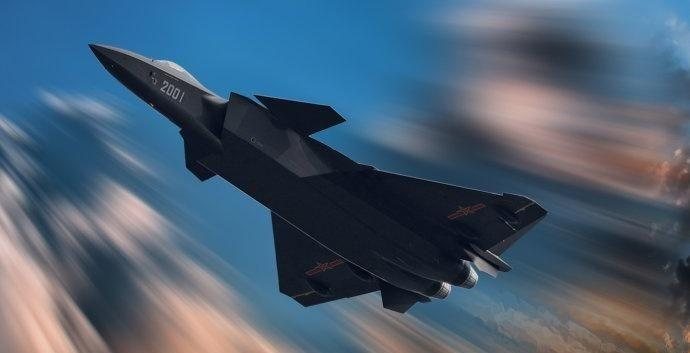 III. 부하 및 무기 시스템
1. 무기 부하
- Internal bomb bay: The main bomb bay can carry 4 PL-15 medium- and long-range air-to-air missiles, and the side bomb bay can carry 2 PL-10E close-range combat missiles.
- External hang capability: 4 underwing hang points (usually not used for stealth missions), with a maximum load of 11 tons.
2. 탄약 업그레이드
- In the future, it may be adapted to the new "pencil bullet", and the main bomb bay capacity will be increased to 6 ([8]).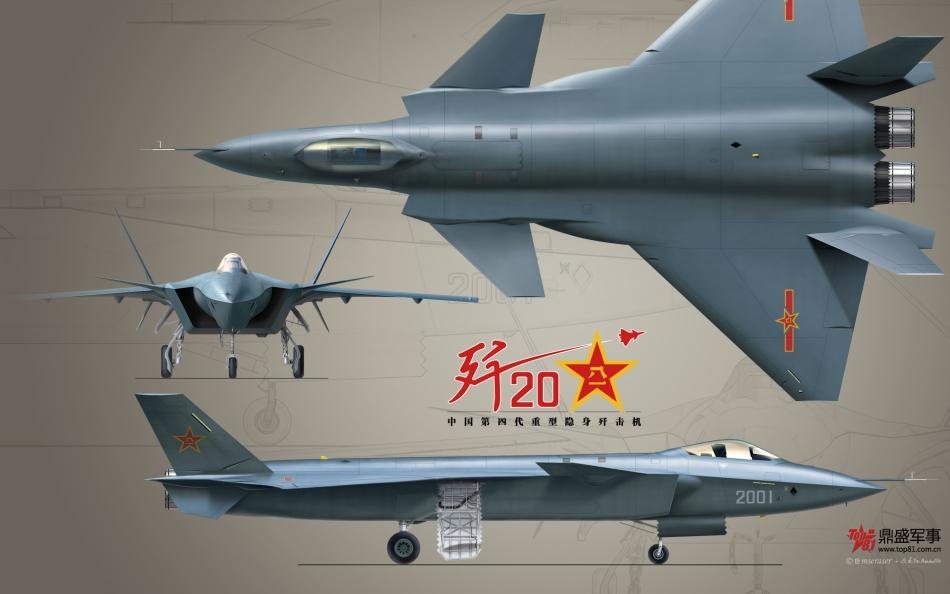 IV. 범위 및 전투 반경
1. 범위 데이터
- Maximum range: 6,000 km (WS-15 version, [4]); 5,500 km for early versions.
- Combat radius: 2,000 km (without aerial refueling), covering the first island chain; can extend to Guam after a single refueling.
2. F-22와의 비교
- The combat radius of the F-22 is only 800-1,000 km, and the J-20 has a significant advantage in long-range strike capability. V. 전자 장비 및 협력 운영
1. 레이더 및 인식 시스템
- Type 1475 Active Phased Array Radar: Detection range 200 kilometers, capable of tracking 20 targets and locking onto 4.
- Multi-spectrum Detection: Integrated EOST (Electronic-Electronic Targeting System) and EODAS (Distributed Aperture System) enhance stealth target identification.
2. 협업 운영 역량
- Collaborative with drones to build an "information super node" significantly enhances battlefield situational awareness.
- In simulated combat, the J-20S (two-seat version) achieved a 95% success rate against the F-22 through drone collaboration.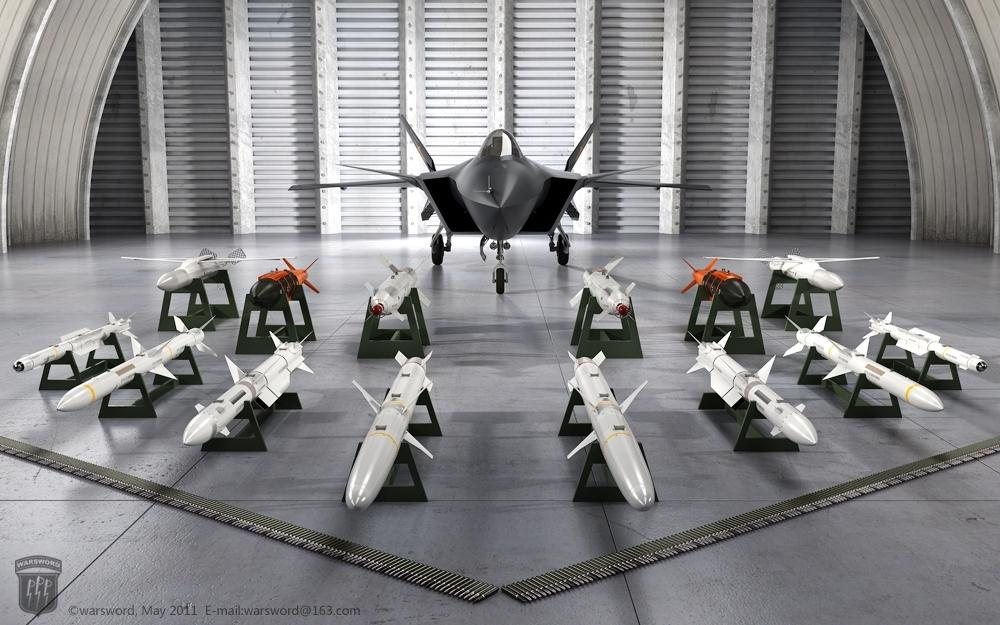 6. 전투능력 요약
1. 핵심 장점
- Stealth + Supersonic Speed: Combining low observability with high-speed penetration capabilities, it offers an overwhelming advantage over third-generation aircraft (such as the J-10).
- Long-Range Strike: Its extended range and aerial refueling support cross-regional operations, encompassing key nodes in the Western Pacific.
- Systematic Collaboration: Utilizing drone swarms and information networks, it enables asymmetric air combat.
2. 국제 5세대 항공기와의 비교
- F-22: The J-20 excels in range, supersonic cruise, and coordinated operations; however, maintenance issues with the F-22's stealth coating weaken its combat effectiveness.
- F-35: The J-20 surpasses it in speed and payload, but the F-35 boasts a higher level of information integration (needs integration with its early warning system).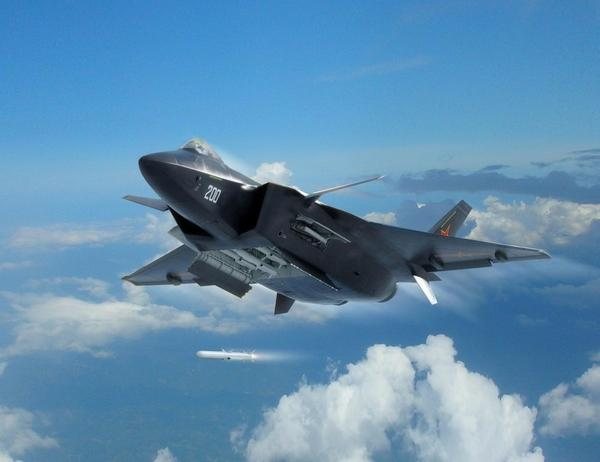
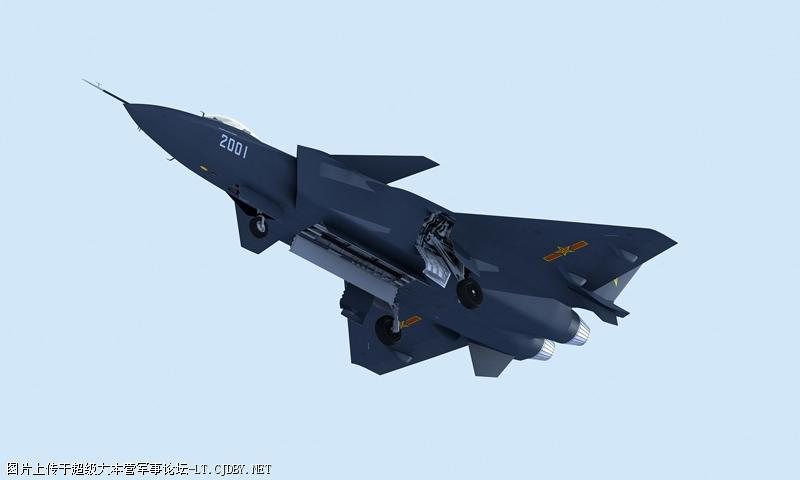
J-20 fighter jet; J-20.