


1. Introduzione al robot esoscheletro
UNrobot esoscheletrico refers to a robot that is sheathed outside the human body, also known as a "wearable robot". Its essence is a wearable intelligent structure with human-machine coupling. The principle is to combine human intelligence with the mechanical energy of an external mechanical power device. It can enhance human heavy load capacity and walking ability by providing power assistance and an intelligent platform.
E altre funzioni, utilizzate principalmente nella riabilitazione medica, nell'industria, negli sport all'aria aperta, nell'industria militare e in altri campi.
2. Principali tipologie di prodotto dei robot esoscheletrici
According to the different organs that provide strength support, the current mainstream exoskeleton robots are divided into three categories in terms of product form: upper limb exoskeleton robot, lower limb exoskeleton robot and waist exoskeleton robot. On this basis, a more "economical" single-joint exoskeleton robot has emerged, and a soft exoskeleton robot with a completely new technological path. Different forms of exoskeleton are used in different scenarios, such as medical field, industrial field, civil field, etc.
(1) Robot esoscheletro degli arti inferiori
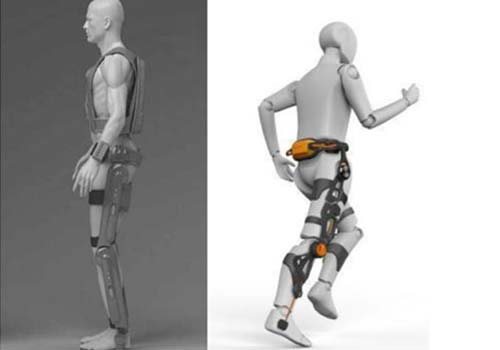
Il robot esoscheletro degli arti inferiori può essere suddiviso in due tipi dalla morfologia: tipo a copertura completa e tipo a mezza copertura.
Full coverage type: including the main box on the waist and back, the metal structure that completely wraps the outside of the two legs, and the metal structure of the sole. Some products will have matching crutches to achieve control and support functions, and some products will be supplemented by brackets or hanging rope. There are hardware modules such as system operating platform and power supply in the main box, and their size and weight vary with each product.
Nella struttura degli arti inferiori, le articolazioni dell’anca, del ginocchio e della caviglia sono generalmente progettate come articolazioni mobili. Il numero di giunti liberamente mobili viene solitamente chiamato "grado di libertà". Il grado di libertà è strettamente correlato alla capacità del robot di simulare la forma umana.
Semi-covered type: Except for the main box, the lower limbs have only leg fixing structure, joints and connection structure, and the product design is more compact and light. Generally speaking, the heavier the product, the higher the demand of the applicable people for the machine, and the greater the support provided by the machine, such as paralyzed patients and hemiplegic patients; the use scenarios of lightweight products are also relatively more flexible, and the applicable population has a certain degree of support.
Capacità di camminare.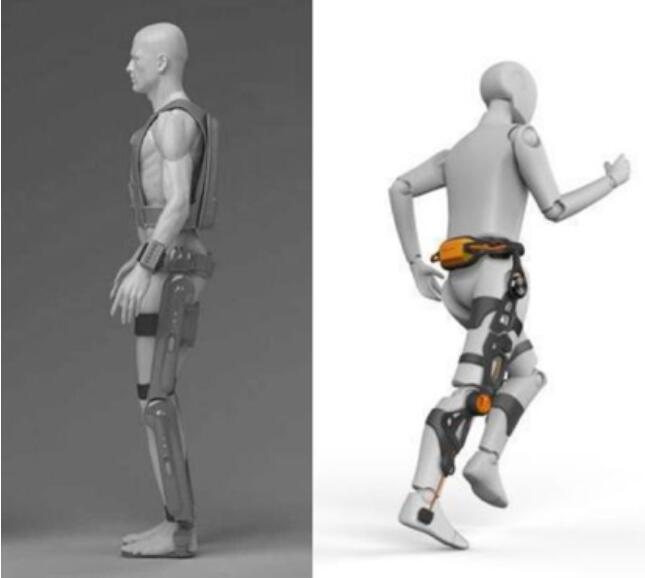 (2) Robot esoscheletro degli arti superiori
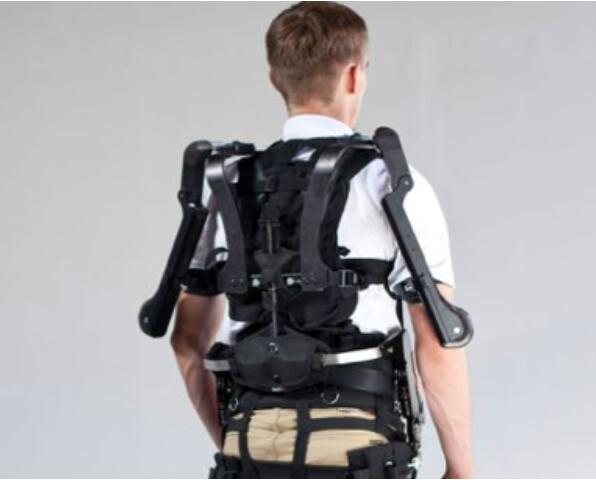
The shape of the upper limb exoskeleton robot is very similar to the semi-covered lower limb product, except that the structure fixed on the lower limb is transferred to the upper limb. From the structural point of view, it mainly assists the movement of the human body through the joints with degrees of freedom.
 (3) Robot esoscheletro in vita
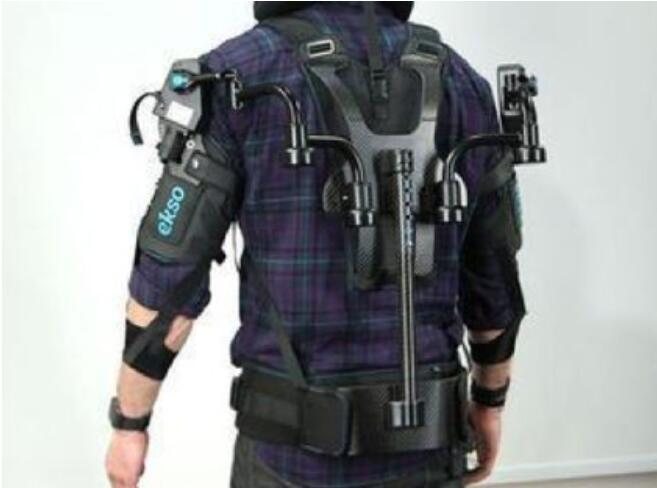
The shape of the waist exoskeleton robot is similar to the once smashing "back and back". The product is fixed on the back through fabric. The main body of the product is the main box on the body, and various functional modules are arranged inside the box. It is mainly used in scenes of frequent bending and transportation, such as logistics and construction sites.
 (4) Robot esoscheletro morbido
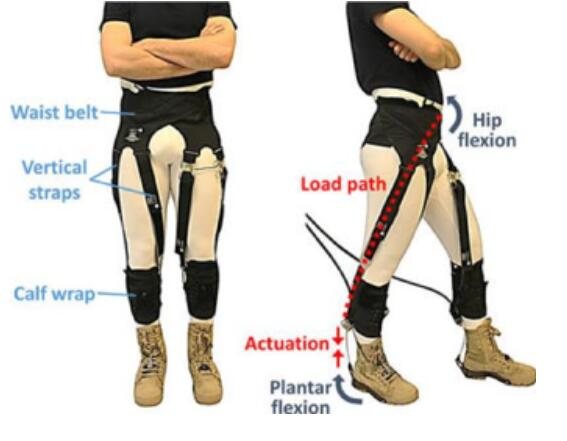
The soft exoskeleton robots currently on the market are actually a kind of lower limb exoskeleton robots. In terms of usage scenarios, they also overlap with lightweight metal structure exoskeleton robots, but their shape and technical path are similar to those of metal structure lower exoskeleton robots. It's totally different. The main box still exists, but the structure is more compact, the lower limbs are fixed to the human body through textiles, and the ropes are used to provide assistance instead of the joint structure.
 In terzo luogo, la composizione principale del robot esoscheletrico
Il robot esoscheletro è composto principalmente da tre sistemi principali: sistema di rilevamento, sistema di controllo e sistema di azionamento
(1) Sistema di rilevamento
The sensor system collects the user's gait information or movement intention through sensors distributed in different positions of the exoskeleton, and then transmits these data to the control system in a certain form. From the type of information collected, it can be divided into physical quantity sensors (position, angle, torque, pressure, etc., which can determine the user's gait cycle) and biomass sensors (electromyogram signals, which can determine the user's movement consciousness).
(2) Sistema di controllo
The control system is the central hub of the exoskeleton robot. By analyzing the data fed back from the sensor system and planning the gait mode, closed-loop control of the drive system is achieved. The difficulties involved include a series of software modules such as sensor fusion algorithms and control algorithms. . Generally speaking, the controller is located on the back and implements global control, including the system host, signal acquisition board, motor drive board, power management and other modules.
Tuttavia, man mano che il grado di libertà dell’esoscheletro aumenta e l’algoritmo del modello diventa più complesso, il controllo distribuito può essere utilizzato anche per ridurre il carico sul sistema di controllo centrale e migliorare la velocità di risposta del sistema.
(3) Sistema di azionamento
The drive system is located at the end of the machine's operation and is responsible for driving the mechanical structure and performing specific tasks passed by the control system. According to the different drive forms, there are mainly three drive modes: motor drive, pneumatic drive, and hydraulic drive.
Azionamento del motore: struttura semplice, alta precisione, facile controllo automatico, è attualmente il programma più utilizzato.
Azionamento pneumatico: dimensioni ridotte, basso costo, funzionamento conveniente; ma la precisione non è elevata, è difficile da controllare e il raggio di movimento è limitato.
Azionamento idraulico: trasmissione stabile, elevata dinamica, elevata sicurezza, ma struttura complessa, peso elevato e costi elevati.
(4) Lo stato di sviluppo della tecnologia dei robot esoscheletrici
The exoskeleton robot interacts with the above three systems to realize the coordinated movement of the entire robot, which involves multidisciplinary knowledge such as sensing technology, mechanical control, and human mechanics, which is a complex and comprehensive task. At this stage, there are still many technical bottlenecks that are difficult to break through, which limits the ease of use of the product, such as insufficient response speed under complex motions, unstable center of gravity of lower limb robots, and difficulty in coordinated control under multiple degrees of freedom.
Specifically, the difficulties are mainly concentrated in the control system, including: multi-sensor fusion technology, intention recognition, center of gravity adjustment, joint freedom and the balance of modeling complexity, etc. These are the difficulties at the software level. In addition, in the drive system, due to the slow development of materials science, the performance of the motor is restricted, which in turn limits the applicable scenarios of the robot, which is a difficulty at the hardware level.In quarto luogo, le principali applicazioni di mercato e la scala di mercato dei robot esoscheletrici
(1) Riabilitazione medica
my country’s rehabilitation medical industry is in the early stages of development. On the one hand, neurodegenerative diseases such as stroke, cerebral palsy, and Parkinson’s mobility are affected by huge and urgent market demands. On the other hand, there is low capital investment, small number of rehabilitation institutions, and small scale. There is a serious imbalance between demand and supply in the current situation of backward equipment research and development.
The wearable exoskeleton robot is designed based on the principle of bionics, combined with ergonomics, and can be worn on the affected limb. Each joint corresponds to a separate driving device. After the patient wears it, it can ensure that the motion mode of the robot is coaxial with the degree of freedom of the human body, which can achieve more effective rehabilitation training.
At present, there are about 4,000 general hospitals in my country with rehabilitation departments. With an average of 1-2 units of equipment purchased by a hospital, the stock demand for rehabilitation exoskeleton robots in my country is 9,000. According to the price of 300,000 to 3 million per unit, the stock market size is about In the billions.
(2) Assistenza alla mobilità
The goal of mobility assistance exoskeleton robots is to provide users with continuous assistance in their daily lives. The population of assistance needs are mainly: physically disabled, elderly people with mobility impairments and people without walking disabilities (climbing enthusiasts). The market prices of the products range from 100,000 to 300,000 RMB (average price of 150,000 RMB), tens of thousands of RMB (average price of 30,000 RMB), and thousands to tens of thousands of RMB (average price of 8,000 RMB).
The potential market demand for mobility-aided exoskeleton robots is about 15 million units, and the market size is about 120 billion yuan. Compared with the rehabilitation market, the market size of mobility-assisted exoskeleton robots is more promising, and 2C is an incremental market. The market ceiling is high enough and the market space is large enough.
(3) Industria
1. Gestione della logistica
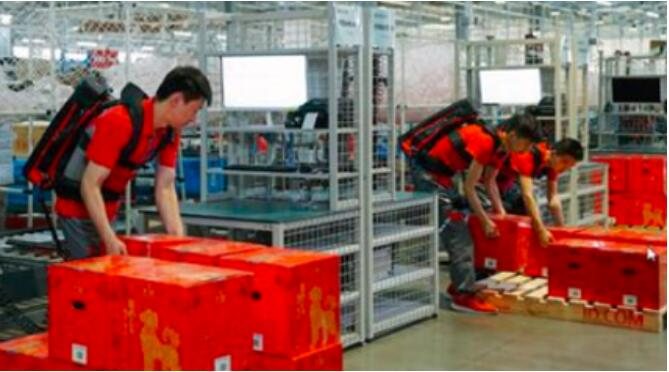
Logistics handling is the largest application scenario in the industrial field. my country's express logistics continues to prosper, with an annual express delivery volume of more than 40 billion pieces, maintaining a rapid growth of more than 50%. The sorting and distribution of express delivery are labor-intensive and high labor costs. After the wearer puts on the exoskeleton robot, it can improve the high-intensity load-bearing capacity of core parts (such as the lower back) and core muscles (such as the lumbar erector spinae) , Effectively slow down the fatigue speed of working muscles and protect the waist muscles of the courier.
Ridurre il consumo di energia durante il movimento umano e migliorare l'efficienza del lavoro.
I robot esoscheletri possono migliorare notevolmente l’efficienza logistica e ridurre i costi di manodopera. Attualmente, giganti come JD.com e Suning stanno sviluppando attivamente robot esoscheletrici che aiutano nella manipolazione e hanno iniziato a usarli.
 2. Automobile industriale:
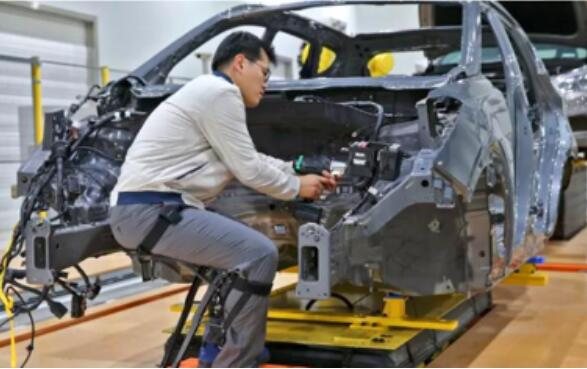
The current front-end manufacturing stations of the automobile assembly line have basically realized automated operations, but the auto assembly line stations at the end still cannot be replaced by automated equipment. These station operations have brought great damage to the workers' shoulder and waist bone joints. Take overhead operations as an example. Workers need to lift about 5-6 kilograms of parts and tools, and repeat them about 3000-4000 times a day.
Un singolo movimento tutto l'anno e la pressione della gravità possono facilmente causare tensioni alle spalle e alla vita, che influiranno anche sulla fabbrica. L'efficienza del gasdotto.
I robot esoscheletri possono migliorare notevolmente la forza degli arti superiori umani, ridurre l’intensità del lavoro, ridurre l’incidenza del dolore lombare e migliorare l’efficienza complessiva del lavoro.
 (4) Scala di mercato
Secondo un rapporto di ricerca di ABI Research, nel 2018, le spedizioni globali di robot esoscheletri sono state di 7.000 unità e il fatturato globale dell’hardware è stato di 192 milioni di dollari. Si prevede che le spedizioni totali supereranno le 91.000 unità entro il 2023 e le 301.000 unità entro il 2028.
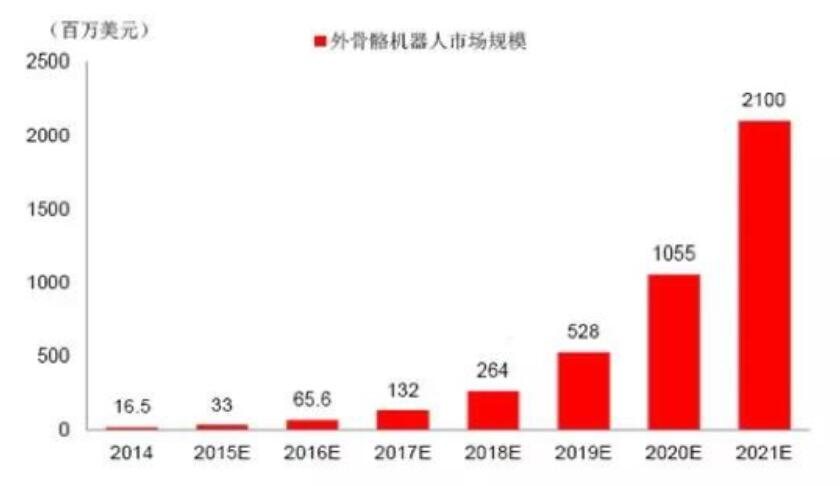
I dati globali del China Industry Information Network mostrano che entro il 2021 il valore di mercato dei robot esoscheletri raggiungerà i 2,1 miliardi di dollari USA e crescerà a un ritmo quasi raddoppiato ogni anno.
 Quinto, Riassunto
(1) Domanda di mercato
1. Mercato della riabilitazione medica
The number of physically disabled people in my country currently exceeds 20 million, but there are 7,858 rehabilitation institutions for the disabled in the country, and only 1.357 million people with physical disabilities have received basic rehabilitation services. In addition, with the accelerating arrival of an aging society, the population of patients with cerebrovascular disease is also expanding, if more effective measures are not taken.
By 2030, there will be 31.77 million stroke patients in China. At present, the number of rehabilitation physiotherapists in my country is seriously insufficient, and the market gap is huge. The huge gap can be met by exoskeleton robots. Therefore, the demand for exoskeleton robots in the medical rehabilitation market will be huge.
2. Mercato industriale
With the continuous development of robotics technology, robots have been widely used in industry, medical care, transportation, consumption and other fields. However, with the support of existing technology, industrial automation has developed to a platform period with many refinements. In non-standardized work scenarios, automated machines are difficult to perform, and manpower is still an indispensable source of productivity in industrial production.
According to the data disclosed by the National Bureau of Statistics, in recent years, the number of employees in heavy manual labor industries such as mining, industrial manufacturing, construction, loading and unloading and warehousing has continued to decrease. With the decrease in the number of employees, the number of employees has increased. The phenomenon continues to increase. Most workers are physically unable to adapt to the high-speed production environment and needs.
Le malattie professionali causate dal lavoro ripetitivo a lungo termine riducono ulteriormente la produttività dei lavoratori. Questa parte ha un grande potenziale per la domanda di robot esoscheletrici che possono rafforzare i lavoratori e ridurre i loro oneri.
(2) Sviluppo del mercato
It has been a hundred years since the development of exoskeleton robots, from R&D to application. From the earliest military field, applications in medical, industrial, logistics and other fields began. Products such as Ekso Labs in the United States, Rewalk in Israel, CyberDyne in Japan, and exoskeleton robots from Panasonic have begun to be gradually applied all over the world. The domestic exoskeleton robot industry application is still in its infancy.
Whether it is in the medical field or the industrial field, it will take a few years to truly realize large-scale commercial use. Although the large-scale implementation of the industry is still far away, related technologies and products have begun to develop. Some manufacturers have trial production lines, as well as small-scale mass production and application.
Xin Guobin, Vice Minister of the Ministry of Industry and Information Technology, said at the 2019 World Robotics Conference, “Since the second half of 2018, China’s industrial robot output has slowed down year-on-year, and the robot industry has entered a stage of in-depth adjustment, expanding new application areas and improving quality. Increased efficiency has become an urgent need for the healthy development of the industry. "After the robotics industry enters in-depth adjustments, the exoskeleton robot market will usher in new development opportunities.
(3) Problemi nella tecnologia e direzione dello sviluppo futuro
Although the development prospects of the entire exoskeleton robot market are good, the current technology still has many areas that need to be improved, such as battery life issues; comfort issues, how to make the fuselage lighter; human-computer interaction issues, robots need to know the intentions of people ; And more powerful data acquisition capabilities and driving capabilities.
L'integrazione dei sistemi, l'interazione uomo-computer, la progettazione strutturale, il riconoscimento percettivo e le capacità di apprendimento cognitivo diventeranno le direzioni principali per lo sviluppo futuro dei robot esoscheletrici.


