Efter epidemin (COVID-19), den inhemskaindustrirobotindustrin har gått in i en period av snabb återhämtning.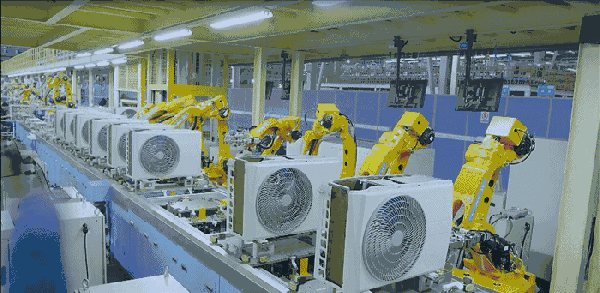
On September 16, the 21st Century Business Herald reporter learned from the 6th CEO Roundtable Conference of the Robot Exhibition of China Industry Fair that from January to February this year, affected by the new crown pneumonia epidemic, the output of domestic industrial robots was 21,300 sets, a year-on-year decrease of 19.4 %; Since March, robot output has rebounded rapidly, and robot output in August increased by 32.5% year-on-year.
Enligt uppgifter från National Bureau of Statistics uppgick den inhemska produktionen av industrirobotar från januari till augusti i år till 136 900 uppsättningar, en ökning med 13,9 % jämfört med föregående år.
In the first half of this year, my country’s industrial robot output reached 93,794 sets, an increase of 10.3% year-on-year. In July, the output of industrial robots continued to maintain high growth, and the demand for the industry was picking up. At the CIIF, the Robot Pavilion has also become the biggest attraction. In addition to the collective appearance of hundreds of robots, kuka, AUBO and other brands have launched first-launch robots with independent intellectual property rights.
It is not difficult to see that mechanization, automation and intelligence have become the current focus of robot development. In an interview with 21st Century Business Herald, Academician Ni Guangnan of the Chinese Academy of Engineering believes that artificial intelligence machines, especially robots used in physiotherapy, health and other scenarios, already have strong technical capabilities, which can be autonomous and controllable, and cannot be controlled by humans. Stuck your neck.
Men trots det står robotproduktionen fortfarande inför många flaskhalsar. För närvarande är kärntekniken iinhemsk robotindustriär i akut behov av genombrott, och kvaliteten på robotar behöver också förbättras, särskilt för att stärka konkurrenskraften för styrmjukvara och styrsystem. Endast genom att förbättra både produktion och kvalitet kan optimering av kostnaderna främjas för att bli mer allmänt implementerad.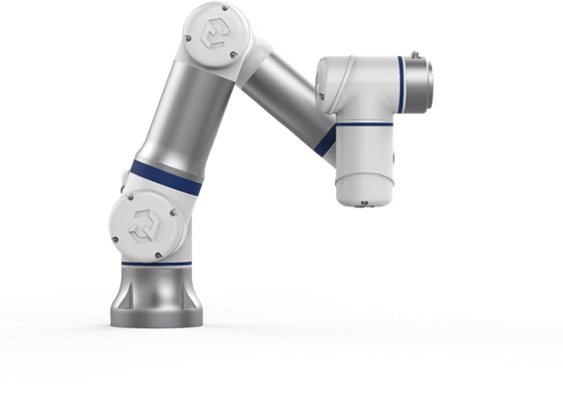
Samarbete mellan människa och maskin går snabbare
In recent years, domestic industrial robots have developed rapidly. China has become the world's largest robot application market for six consecutive years. Therefore, digitalization, networking, and intelligence have become the inevitable trend of a new generation of industrial production. The report released by IDC predicts that new business formats and new models represented by the Industrial Internet will bring new development momentum and more business opportunities to the manufacturing industry.
År 2024 kommer 60 % av de inhemska tillverkarna att använda digital tvillingteknologi i en process som drivs av Internet of Things och maskininlärning för att uppnå 10 % besparingar i driftskostnader.
However, China's manufacturing industry still faces many challenges in the practice of digital intelligence upgrading. The "Research Report on China's "New Infrastructure" Development" issued by CCID Research Institute in 2020 pointed out that due to the lack of methodology for the implementation of industrial Internet platforms in specific industries, most companies have not yet formed a clear understanding of the digital intelligence model.
Dessutom är de grundläggande stödbranscherna för utvecklingen av vissa industriella internetplattformar svaga och antalet, kvaliteten och säkerheten och tillförlitligheten av plattformslösningar är otillräckliga, vilket har fått många företag att vänta och se efter uppgraderingar av digital intelligens.
In addition, high costs have also formed a threshold. On the one hand, due to the impact of the epidemic, some companies’ capital chains are under pressure, and it is difficult to support investment in digital intelligence; on the other hand, due to the lack of accurate measurement methods for the application value of industrial Internet platforms, some companies are hesitant and restrict the further development of the platform. Popularize.
Therefore, although some traditional manufacturing companies regard digital intelligence as an important development goal, they have not been included in the priority implementation content in actual operations. The good news is that some industry leaders not only realize the importance of digital intelligence, but also make some useful explorations and achieve more results.
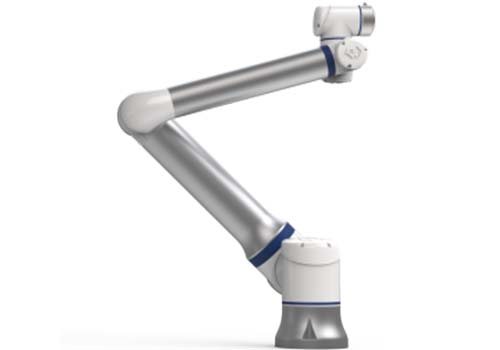
At the CIIF, Midea Group’s four major digital intelligence businesses were also unveiled, including KUKA, Meiyun Smart Number, Ande Smart Connect, and central air conditioning. Take KUKA KR4AGILUS as an example. This is the first robot independently developed by the KUKA China team and sold globally. It can help companies in the automotive industry, electronics industry, consumer goods industry, logistics/e-commerce industry, medical care and other industries to cut into robots, achieve single-point upgrades, quickly deploy the underlying architecture of intelligent manufacturing, and take a digital and intelligent transformation.
första steget.
"The digital intelligence upgrade of pan-manufacturing enterprises cannot be achieved in one step, and there is no universal template." Midea Group Vice President and CIO, President of the IoT Business Unit Zhang Xiaoyi told the 21st Century Business Herald reporter that as digital intelligence technology penetrates into products In the whole process of design, manufacturing, delivery and user experience, not only the traditional home appliance 3C industry, but also the pan-manufacturing industry including shoes and clothing, automobiles, food, metal products, daily chemicals, etc., the entire scene has been redesigned Definition, the upgrading of digital intelligence requires iterative solutions that can fit each sub-industry and scenario, and cannot copy past digital intelligence theories and models.
In the eyes of industry professionals, the changes in China's robotics industry contain huge opportunities and challenges. On the one hand, national policies have brought opportunities to the industry; on the other hand, the industry urgently needs innovation and breakthroughs, which has become an inevitable challenge.
"In the era of society 5.0, the role of digital intelligence technology in robots has evolved from simulation and rehearsal to process control, making human-machine collaboration and robot operation and maintenance smoother and more efficient." Professor, School of Mechanical and Power Engineering, Shanghai Jiaotong University Cao Qixin told a reporter from 21st Century Business Herald.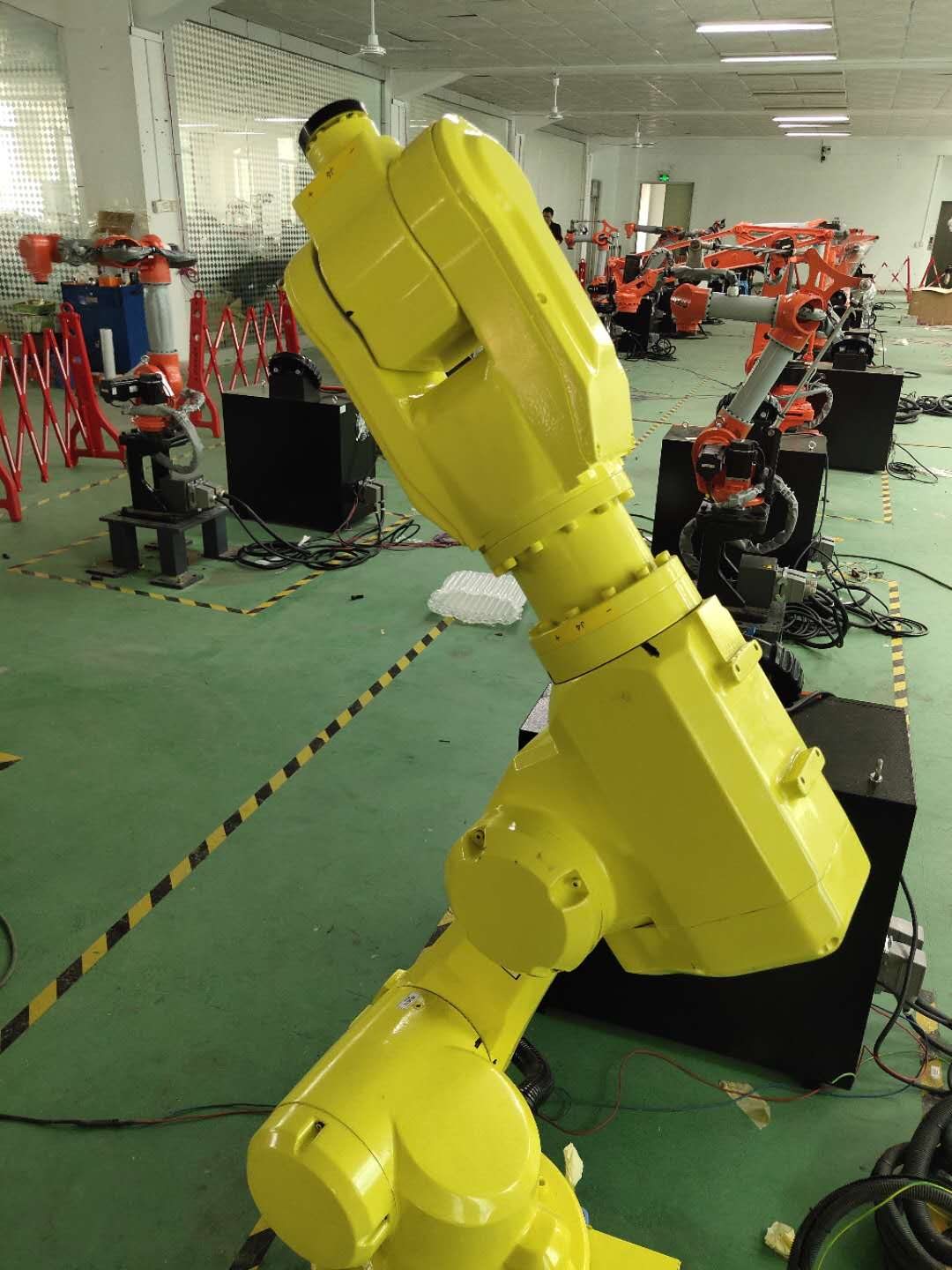
Expansion av applikationsscenario
Professor Feng Xiao, dekanus för den kinesisk-tyska tekniska högskolan vid Tongji University, anser att smart tillverkning är ett framtidsinriktat val av utvecklingsstrategi, som kan ge mitt lands ekonomi en årlig tillväxttakt på 3 % till 4 % på medellång och lång sikt.
At the same time, the application scenarios of robots are gradually landing and expanding. At present, my country's medical industry is facing challenges such as an aging population and a shortage of high-level medical personnel. At the CIIF, related medical and health robots have also attracted much attention. In the hospital's laboratory scientific research and logistics links, "robot nurses" can help medical staff reduce repetitive and time-consuming tasks such as drug delivery and testing.
Enligt uppskattningar kan automatisering öka slutförandehastigheten för repetitiva uppgifter med cirka 50 % jämfört med manuellt arbete.
At this CIIF, AUBO Intelligent and Xiuyu jointly released massage physiotherapy robot products. The robot can complete all physiotherapy tasks, surpassing the physiotherapy level of most technicians, and can be used in medical, rehabilitation, nursing, and physiotherapy scenarios. Academician Ni Guangnan believes that innovation has always been the first driving force for the development of the robotics industry. Under the trend of industrial intelligence and collaboration, the robotics industry needs to improve its extensive connectivity with other industries and expand the industry’s new additions, new scenarios, and new spaces.
.
It is reported that as the ecosystem of the robot industry becomes more and more abundant, in addition to the industrial field, AUBO Intelligence is also expanding into the health and service industries. In the automotive industry that has received much attention, in 2019, due to the slowdown in the industry's growth rate, the growth rate of the domestic robot industry has also declined. According to data from the National Bureau of Statistics, there were a total of 186,900 domestic industrial robots in 2019, a year-on-year decrease of 6.1%.
In an interview with 21st Century Business Herald reporters, Dr. Zhang Sheng, a researcher at Ningbo Research Institute of Zhejiang University, believes that in the field of medical and health, the most important thing for robot applications is the high accuracy of position and movement repetition rate and the controllable strength. At the same time, the robot's physical therapy time is longer. However, there are also many industry pain points.
"For example, the cost is too high, the actions are single, the inability to adapt to changes, and even safety is also dangerous. In terms of touch, the robot cannot achieve the real skin-friendly feeling, and it is too rigid. These must be overcome one by one to become A real humanoid physical therapy robot."
Enligt hans uppfattning har de flesta inhemska företag under de senaste åren använt robotar som avancerad mekanisk utrustning, vilket tyder på att robotindustrin fortfarande är i sin linda. Den övergripande intelligenta applikationsmjukvaran och starkare alternativ måste alla lösas omgående.