


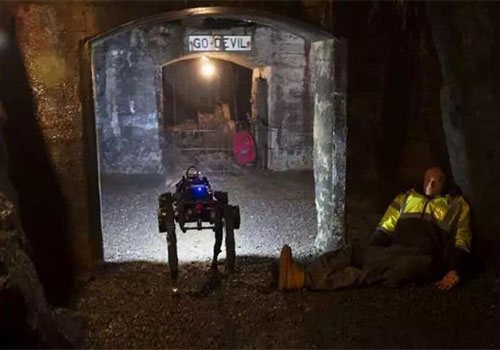
DARPA’s challenge is to inspire innovative solutions to complex problems. SubT’s goal is to develop robots that can be sent to places that are too dangerous for humans, such as subway tunnels behind four mines or mines where workers are trapped. . These robots can then report what it sees to someone who can stay in a safe place and deal with it quickly.
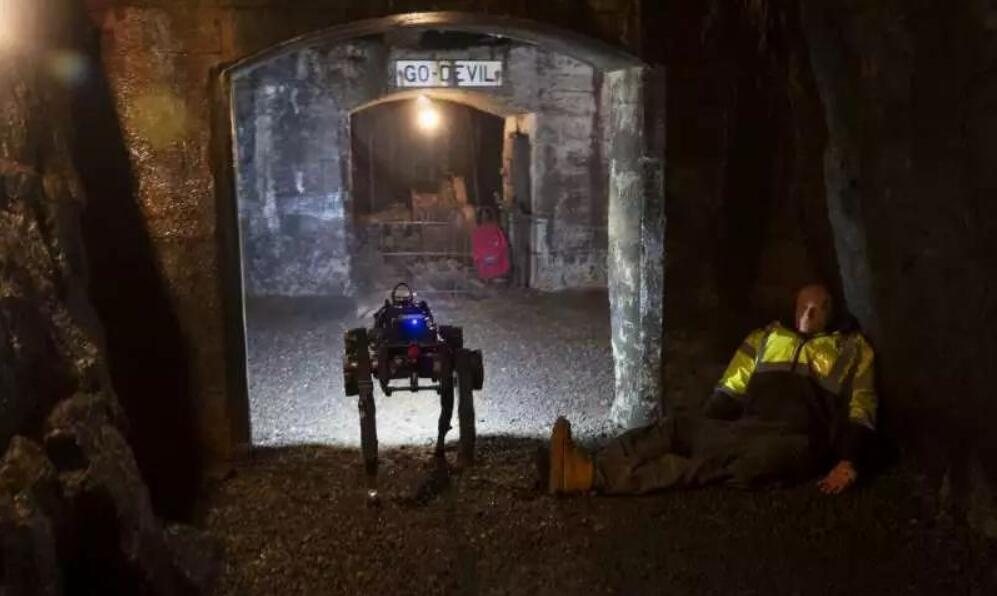
Members of the Pennsylvania Underground Tunnel Operation Laboratory team (PLUTO, translated as Pluto) have worked with drones in challenging environments, but going underground means that another platform is needed to carry heavy equipment, and at the same time in a narrow space. In space. By combining Ghost Robotics' legged "dog" platform with Exyn technology drones, PLUTO combines the advantages of the legged system and combines the previous areas of expertise. In order to successfully traverse the mine, robots need to be able to see the surroundings so that they can avoid obstacles and also share what they see with human operators. Each dog carries a light detection and sequencing device that uses lasers to create a three-dimensional map, stereo RGB cameras to view artifacts, thermal cameras to detect thermal signals, and an onboard computer to process the data. Pluto’s robots also need to be able to decide where to go next, recognize artifacts, and transmit information to other dogs and humans outside the mine. The program developed by Ph.D student Anthony Cowley is used to generate a map of the location of the robot based on the images collected by the sensor, while cultural relics such as backpacks and mobile phones are detected using a program developed by PhD student Shrias Shiva Kumar . Because radio waves cannot pass through thick cave walls, underground communication is particularly challenging. Led by master student Fernando Cladella, Pluto’s strategy is to create a “bucket brigade” system for robots to share data with each other. In this way, if a robot cannot return to the entrance, the data it collects can still be transmitted to the base station by other dogs.
Combining all these capabilities requires a high degree of autonomy to allow the robot to plan its exploration strategy without direct human input. PhD student Ian Miller led the work and helped ensure that all sensors, hardware, and algorithms work together. Earlier this year, Pluto spent a period of time at the No. 9 Coal Mine and Museum in Lansford, Pennsylvania, and the experimental mine of the Colorado School of Mines, observing the performance of their automated systems underground. After months of preparation, in the first round of the challenge in August, they competed against ten other teams at a test mine near Pittsburgh. Each group completed two mine courses and tried to find items twice in each course, including backpacks, mobile phones, fire extinguishers, and virtual personnel. The time limit was one hour. No team member was allowed to enter the mine, only Miller was allowed to interact with the robot while collecting data. Although their robot did not find as many man-made objects as hoped, the Pluto team is satisfied with the performance of this system in such a challenging and unknown environment. Components that work well include how dogs detect and explore tunnels, their ability to recognize objects, and dogs that have failed to share data through a "bucket brigade" provide several detections, showing that their system works even when individual robots trip over. How to recover. 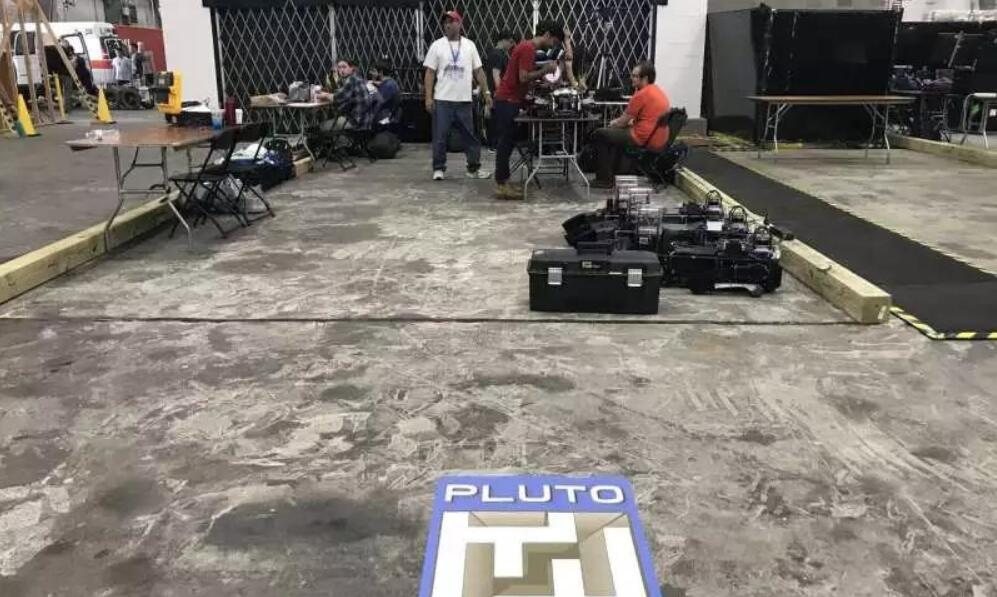
Adarsh Kulkarni, a master's student who also works at Ghost Robotics, said he is satisfied with the mechanical stability of the dogs and their performance after multiple falls. "This is the most difficult time for us to run robots so far, and it is also the worst environment they are in. " "They are beaten every day and they are still working the next morning," Shivakumar added jokingly. "This is really commendable." Although some of their designs have been over-suited to the challenges of Robot 9, including sensors designed for narrow, textured walls, and SubT's walls are wider and smoother, the experience is directly shown to the team To understand how difficult it is to design a robot in an unknown environment, it is a rare opportunity to test the robot in a new environment. "This is very different from the normal academic workflow," Miller said. From an algorithm to something that you have never seen before, it is a completely different problem. This "last 10%" in robotics makes automated systems robust and reliable. This is a challenge that is usually solved by combining the most advanced technology and practical perspectives. Sometimes these systems themselves are not new, but the novelty lies in their implementation in an untested environment. The novelty is how to solve all these problems and make the robot work reliably in harsh environments. " The team is still discussing their SubT plan for the next few rounds. The next round will take place in an urban environment in February, which means more man-made structures and shapes such as sharp angles, smooth walls and stairs no matter what happens in the future. , Creating robots and sending them into challenging real-world environments is critical to the progress of the University of Pennsylvania and the entire robotics field. Especially in the future, automated systems may undertake a range of tasks ranging from driving cars to searching for survivors. Challenging task. Researchers at the General Robotics, Automation, Sensing and Perception Laboratory in Pennsylvania are fully capable of meeting these challenges, thanks in part to a culture that encourages collaboration and communication. "This is what we instill in everyone who walks into our facility," Taylor said. If you don’t worry about having a project only suitable for your field of expertise, if you are willing to have a broader understanding of your ideas, it will let you do Bigger things."


